Kathmandu
Saturday, December 27, 2025





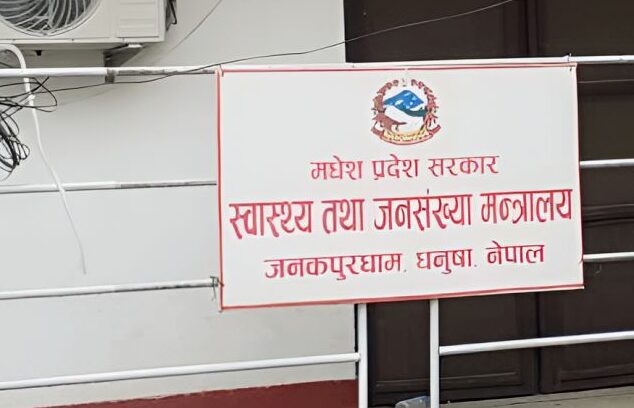
JANAKPURDHAM: The Ministry of Health and Population in Madhes Province has disclosed that 71 percent of patients in Nepal are afflicted by non-communicable diseases.
During a public awareness event held today by the Department of Food Technology and Quality Control in Janakpur, focusing on ‘Enhancing Drinking Water to Mitigate Non-Communicable Diseases,’ it was reiterated that approximately 71 percent of patients are suffering from these conditions.
Dr Bipin Kumar Jha, Head of the Health Division of the Ministry, presented details indicating a daily increase in the number of patients with non-communicable diseases. He pointed out that the rise in non-communicable diseases is outpacing that of communicable diseases.
The primary non-communicable diseases identified include heart disease, diabetes, cancer, and chronic respiratory conditions, according to Dr Jha.
He stressed that the leading contributors to non-communicable diseases are the intake of contaminated and unfit food items, polluted air and water, poor dietary habits, and a sedentary lifestyle. Dr Jha urged that improvements in lifestyle and dietary practices are essential for prevention. He also noted that this issue is becoming more prevalent in Madhes Province.
At the event, Umesh Yadav, Head of the Public Health Office in Dhanusha, highlighted the necessity for collaboration between government and non-government organizations to address health challenges, while expressing concerns that budget reductions have hindered his office’s ability to deliver quality services.
Chief of Ayurveda Hospital in Dhanusha, Dr Rudra Narayan Thakur, remarked that incorporating Ayurvedic treatments alongside yoga and meditation can be beneficial for managing and treating chronic diseases.
He indicated that Ayurveda is progressively enhancing its capability to effectively address even the most intricate health issues.
Bimal Dahal, head of the Department of Food Technology and Quality Control in Janakpur, emphasized that clean and quality food is necessary for a healthy life, adding that the office regularly monitors food hygiene as well as prevents the production and distribution of substandard food products and tests such items in laboratories.
The programme, which included participation from women, social workers, and heads of various offices from different wards under Janakpurdham Sub-Metropolitan City, was concluded under the chairmanship of Dahal, head of the Department of Food Technology and Quality Control.