Kathmandu
Thursday, February 26, 2026





At times, the finance ministry cites the excuse of not having a separate fund, at others, the absence of an action plan
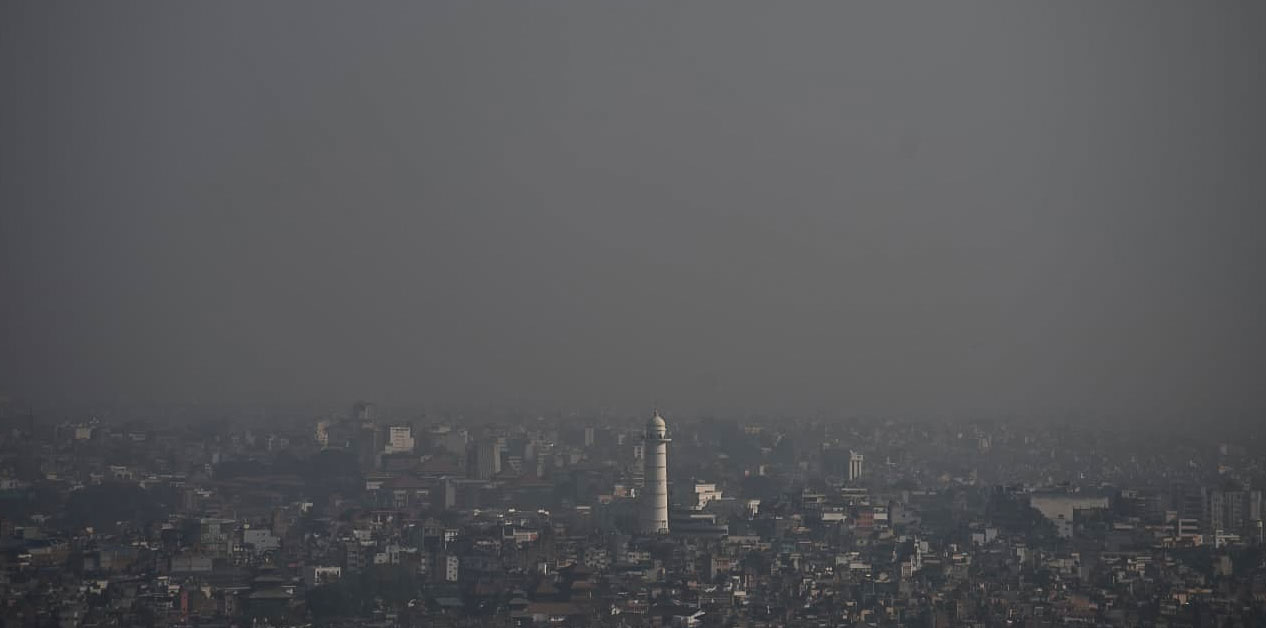
KATHMANDU: According to the State of Global Air 2025 report, more than 41,000 people die every year in Nepal due to air pollution. The World Bank says air pollution has become the number one health risk in Nepal. The report concludes that air pollution is not only the leading cause of death among Nepalis but is also responsible for increasing disability.
Whenever questions are raised about air pollution and the damage it causes, the government responds by saying it lacks budgetary resources. This is also an easy way to evade accountability. In the case of the Ministry of Forests and Environment, however, this response appears only partially true. This is because the Ministry of Finance is currently exercising control over nearly Rs 27 billion that should have gone to the forest ministry.
For the past 18 years, the government has been collecting a “pollution control fee” from consumers of petroleum products specifically for pollution control, yet the Ministry of Finance continues to hesitate to transfer this money to the Ministry of Forests and Environment.
After Nepal News published a report on January 2 titled “Government failing to secure people’s basic right to breathe clean air” which revealed that the forest ministry did not have access to the money collected through the pollution control fee, Minister for Forests and Environment Madhav Prasad Chaulagain sought information from officials. “On the one hand, pollution control fees are being collected; on the other, the Department of Environment is always operating with an insufficient budget. When we looked into it, there appeared to be a lack of coordination between the Ministry of Forests and the Ministry of Finance,” Minister Chaulagain said. “In this context, a meeting of the action plan coordination committee has been called for tomorrow, Tuesday.”
According to the Air Quality Management Action Plan for Kathmandu Valley prepared in 2019, a coordination committee chaired by the Minister for Forests and Environment – with representation from the Office of the Prime Minister and Council of Ministers and other ministries linked to pollution control – was to be formed.
Director General of the Department of Environment, Gyanraj Subedi, says that in principle – and in line with international practice – fees collected under a specific heading should be spent for that very purpose. However, he says the department has not even received a budget under that heading.
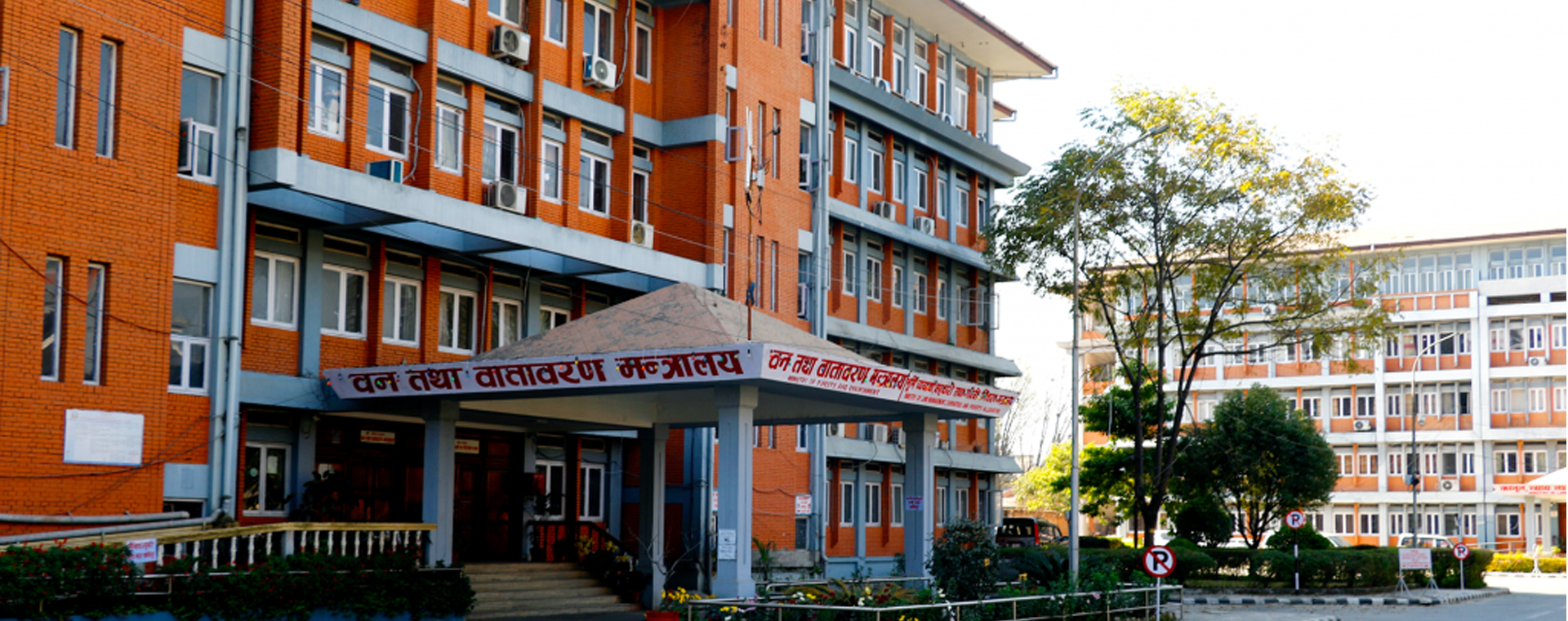
Photo: Ministry of Forests and Environment
“In meetings with the Ministry of Finance, the Department of Environment’s budget kept shrinking. I repeatedly raised the issue that at least five percent of the pollution control fee should be allocated to the department,” Subedi said. “But they say they have constitutionally deposited it into the ‘consolidated fund’ through the regular budget.”
The Financial Act 1996 stated that a pollution control fee of 50 paisa per liter would be levied on petrol and diesel sold within the Kathmandu Valley, collected through the Nepal Oil Corporation’s sale price, deposited into a separate fund, and spent on pollution control for environmental protection. When this was not implemented, the same provision was included again in the Financial Act 2007.
Initially applicable only in the Kathmandu Valley, the provision was expanded nationwide from fiscal year 2009/10 (2066/67 BS). From fiscal year 2019/20 (2076/77 BS), the fee rate was increased to Rs 1.50 per liter. According to the Nepal Oil Corporation, by mid-November of fiscal year 2024/25 (2081/82 BS), a total of Rs 26.86 billion had been collected as pollution control fees.
The credit for implementing the pollution control fee also goes to the then finance minister Baburam Bhattarai. He says the government began collecting the fee after concluding that old petrol- and diesel-run vehicles in Kathmandu were causing dust and smoke pollution.
“We introduced the fee to raise awareness to discourage the use of carbon-emitting vehicles and to foster a sense of public ownership toward environmental protection,” he recalled.
Senior advocate Padam Bahadur Shrestha, an expert in environmental law, says citizens were charged fees citing a lack of budget for pollution control in the Kathmandu Valley.
“But one thing was said, and another is being done,” he said.
Article 116 of the Constitution states that, except for Guthi funds, all types of revenue received by the government; all loans raised against revenue; all money received from loan recovery under the authority of law; and any other money received by the government shall, unless otherwise provided by federal law, be credited to a single government fund known as the consolidated fund.
Citing this provision of the consolidated fund, the Ministry of Finance has been freely spending the pollution control fee. Ministry Spokesperson Tank Prasad Pandey says that, in accordance with the constitutional provisions, the pollution control fee is deposited into the consolidated fund as revenue and spent on government operations.
“Since it does not go directly under that heading, budgets are indirectly allocated from the consolidated fund to whatever sectors require them. This does not mean that no budget has gone to pollution control,” Pandey said. “In fact, more than Rs 26 billion goes to the forests and environment sector.”
Former finance secretary Krishna Hari Baskota says the pollution control fee could not be transferred directly because the Ministry of Forests and Environment failed to submit a detailed action plan for spending the money through a separate fund.
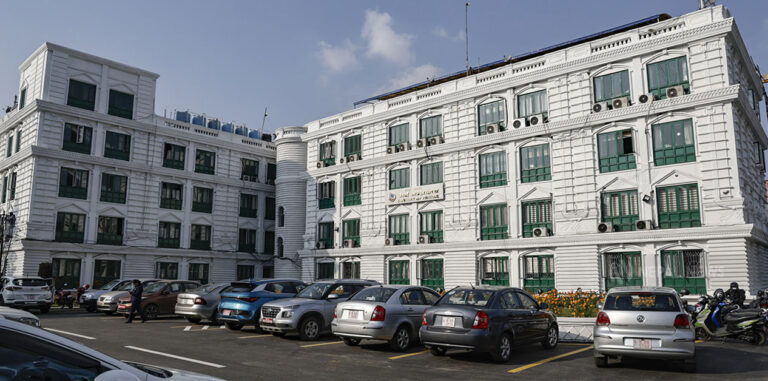
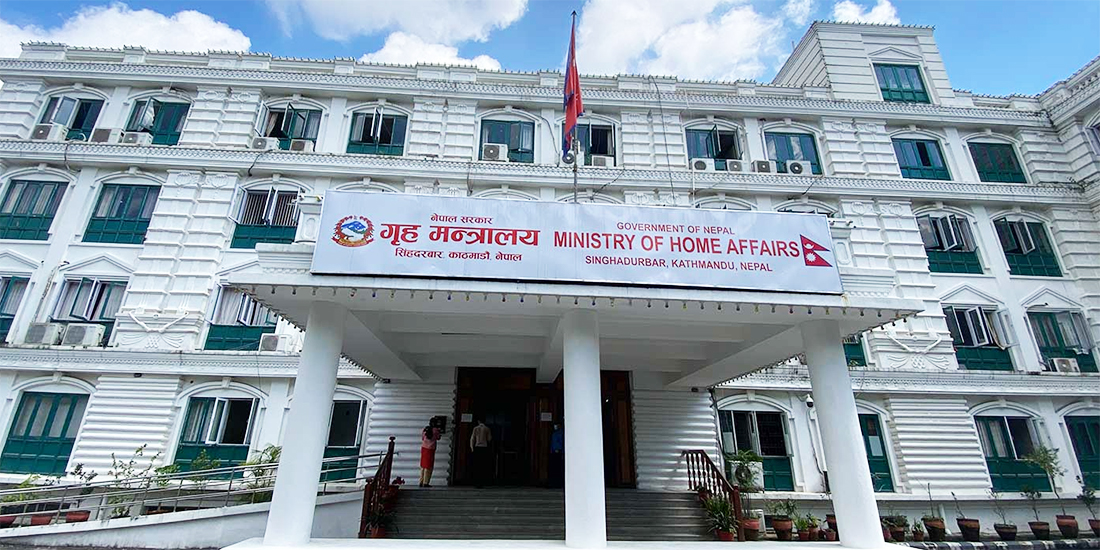
Ministry of Finance. Photo: Bikram Rai
“The Ministry of Finance has other priorities as well. We told them that if they came with a detailed action plan, we would allocate the money even by cutting from elsewhere,” he said. “But they could not come up with an action plan.”
Senior advocate Shrestha, however, says the Ministry of Finance is “abusing” the pollution control fee by making excuses such as the need for a fund or an action plan.
“Keeping under the control of the Ministry of Finance the money that the Ministry of Environment should be able to spend easily is an abuse,” he said. “Moreover, this is a special fee, not a tax. The day pollution is controlled, this fee should also stop being collected.”
The Office of the Auditor General has also pointed out that the fee collected from consumers has not been used properly.
“The said fee should be used for the prescribed purpose,” states the 62nd Annual Report (2082 BS).
Environmental protection and sustainable development activist Saurabh Dhakal says it is wrong to dump into general revenue the money that should be spent on pollution control, such as buying electric buses, building cycle lanes, controlling forest fires, and planting trees.
“This is like collecting money from citizens to stop pollution, only to end up buying fuel again with it,” he said.
Awaiting the full verdict
Seeking to ensure that the pollution control fee is spent on pollution control and prevention, law students Shreena Nepal and Abhyudaya Bhetwal filed a writ petition at the Supreme Court on July 24, 2022.
The petition sought to annul the government’s act of depositing the pollution control fees into the federal consolidated fund and to prevent misuse by creating a separate fund. The petitioners argued that the government’s failure to mobilize the fee according to its purpose was forcing ordinary citizens to live in a polluted environment, and demanded immediate formulation of procedures, guidelines, or appropriate laws to utilize the funds.
On June 30, 2025, the Supreme Court issued a directive order in this case.
Shreena and Abhyudaya came across the issue of pollution control fees while studying the misuse of legal loopholes. Initially, they filed Right to Information requests with the Nepal Oil Corporation, the Ministry of Forests, and the Ministry of Finance regarding the purpose of the fee. The oil corporation responded by disclosing the amount collected up to that point.
“But the Forest and Finance ministries did not give clear answers on how much had been collected and where it was being spent,” Nepal said. “We also found that the Auditor General had repeatedly said the fee should be spent for the purpose for which it was collected. After that, we went to the Supreme Court with the writ petition. The full text of the verdict is still awaited.”
Earlier, advocate Bhojraj Aire had also filed a writ petition against the Prime Minister and the Office of the Prime Minister and Council of Ministers, stating that the provision in the Financial Act 1996 to collect pollution control fees and establish a separate fund for environmental protection had not been implemented. In that case, on 15 April 2004, a joint bench of Justices Ram Nagina Singh and Anup Raj Sharma issued a directive order instructing the government to determine the date of implementation of the provision by publishing a notice in the Nepal Gazette.