Kathmandu
Sunday, January 25, 2026





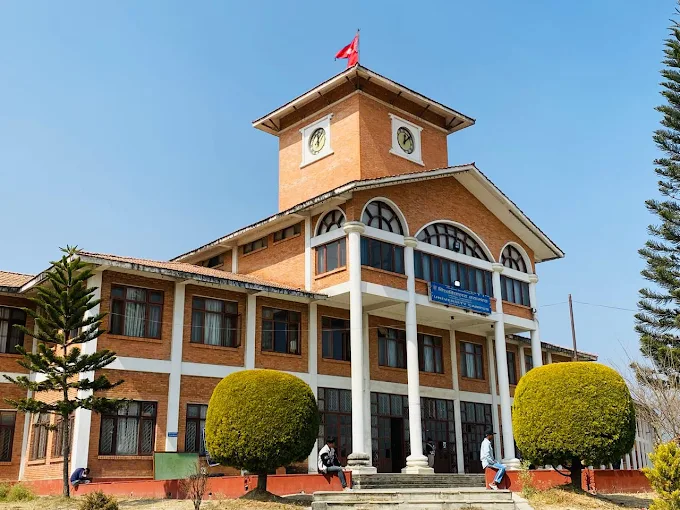
KATHMANDU: Students at Tribhuvan University will now receive academic credits on their certificates not only for their academic achievements but also for their talents and contributions in extracurricular activities.
This marks the first time in the country that the university has implemented a policy to officially recognize extracurricular activities as academic credits.
Dr. DipendraParajuli, the Director of the Directorate of Student Welfare and Sports, explained that if students excel in areas such as social service, disaster management, sports, fine arts, science and technology, innovation, entrepreneurship, and management, their accomplishments will be evaluated and credited on their academic certificates.
He emphasized, ‘Students will not simply earn credits by presenting certificates that demonstrate outstanding performance in competitions, programmes, or opportunities both within and outside the university. Prior to that, all student activities will be monitored, documented, and verified through a centralized system.’
To facilitate this, coordinators at each campus level for the National Service Scheme, National Service Corps, Vice-Chancellor Cup Sports, Fine Arts, and Science, Innovation, Technology, and Entrepreneurship Programmes are tasked with submitting official records of student participation, engagement hours, and performance for every semester.
These records will be certified and validated by the Directorate of Student Welfare and Sports at Tribhuvan University. Furthermore, a centralized digital system will be established to log all student activities, participation hours, and accumulated credit points.
An integrated dashboard utilizing Google Forms and Google Sheets will provide a clear view of the credits earned by each student, those who have fulfilled the required hours as per the programmes, and the comparative status across campuses. Only after thorough central monitoring and certification will the accomplishments reflected in the certificates submitted by students be factored into their academic grades.
Dr. Parajuli states that this policy is set to enhance students’ overall grades while significantly assisting in the identification, development, and institutional support of hidden talents across various domains. Students excelling in national service programmes, national service corps, Vice-Chancellor Cup sports, fine arts, and ITE programmes—already part of the university’s educational framework—will reap direct benefits from this initiative.
Furthermore, the policy suggests that students achieving the highest marks in each central department will be appointed as teaching or research assistants, thus granting them opportunities to contribute within the university.
Additionally, there is a proposal to offer special admission facilities for students who have shown exceptional performance in various fields outside the university.
Dr. Parajuli mentioned that the concept paper is currently being prepared and that the policy will be formally enacted once it receives approval from the Academic Council. ‘For the first time in the country, we are integrating extracurricular activities into the academic credit system,’ he remarked.