Kathmandu
Sunday, January 25, 2026





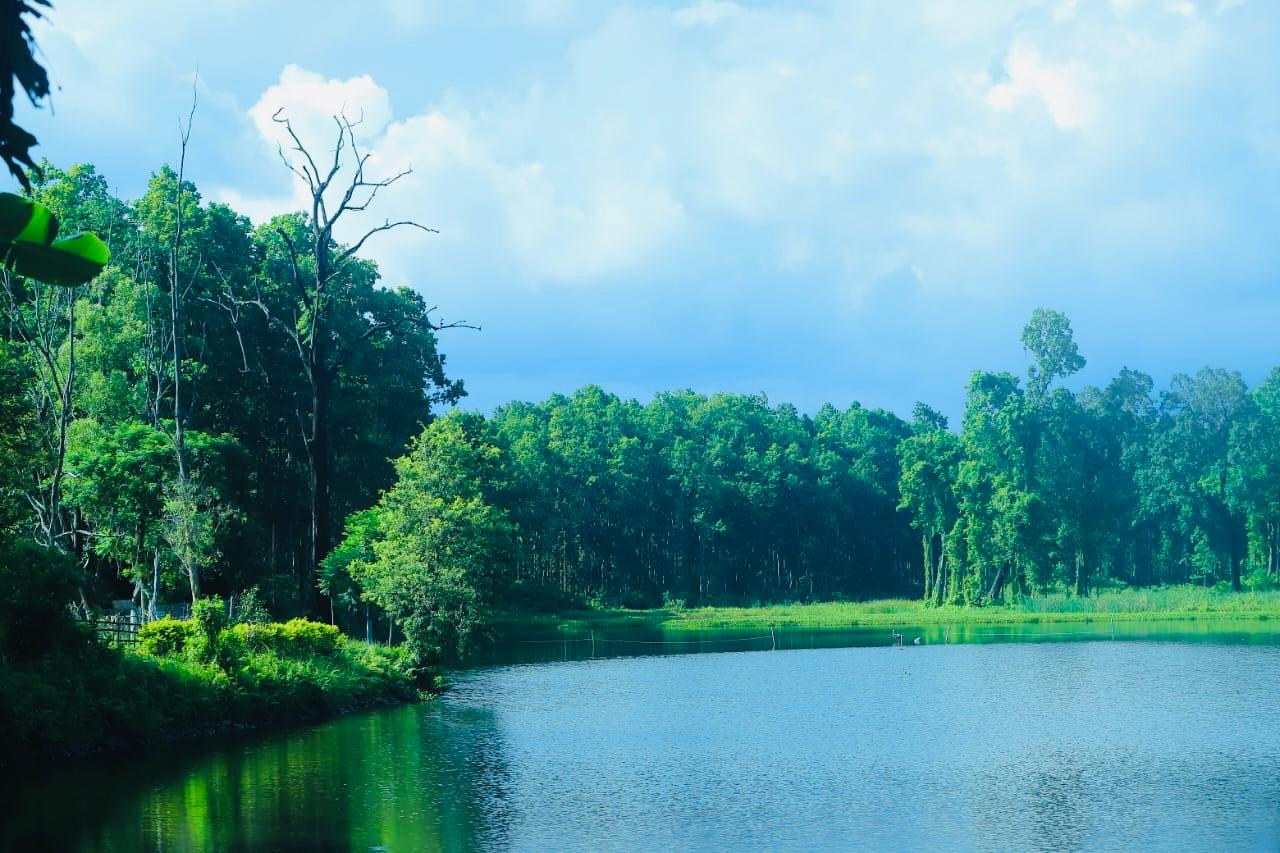
MORANG: Betana Wetland with an abundance of natural beauty has become a favourite among domestic tourists.
Around five hundred domestic tourists visit this wetland daily during the winter months. Besides savouring nature, the visitors can also get to see migratory birds from Siberia and animals such as turtles, fish, crocodiles, and deer.
After travelling 16 kilometres east from Itahari Chowk in Sunsari, one is greeted by dense green forest and a few metres away is the Betana wetland along the East-West Highway in Belbari, Morang.
The area has started to become a favourite among domestic tourists especially because of the cold water, clean air and scenic views along with the presence of birds, fish and turtles, said Shambhu Bhattarai, the President of the Betana Wetland Community Forest User Group.
Rajan Prasai, the Group joint secretary, says that since the wetland area is connected to the highway, there is a daily rush of people coming for picnics in winter.
According to him, pedal boats are also available for tourists who want to enjoy boating in the lake of the wetland.
He said that a water fountain is also being constructed there at a cost of Rs 2 million with the support of Koshi Province Government’s the Ministry of Tourism, Forests and Environment.
This wetland, covering an area of about 65 bighas, is home to birds coming from Siberia as well as 25 species of rare birds. In addition, more than two dozen individuals of the critically endangered the ‘Black Softshell’ turtles have been released in the pond, said Bhattarai, the President of the Betana Wetland Community Forest User Group.
According to him, the community forest user group is engaged in the conservation of flora and fauna found here. He said rare species of turtles, various types of fish, animals, and plants are found in this area.
According to Dil Prasad Rai, the head of Belbari Municipality, Betana Wetland will be developed as an important tourist destination in eastern Nepal.
In recent days, various biologists have also been coming to this wetland area for wildlife research, said Bhattarai.
“Since the protection of local wildlife is our primary responsibility, we have focused on their conservation,” he said.