Kathmandu
Tuesday, July 21, 2026





Why did the government turn tyrannical toward its own citizens, evicting residents from unsafe locations under the guise of management and pushing them into hardship and uncertainty?
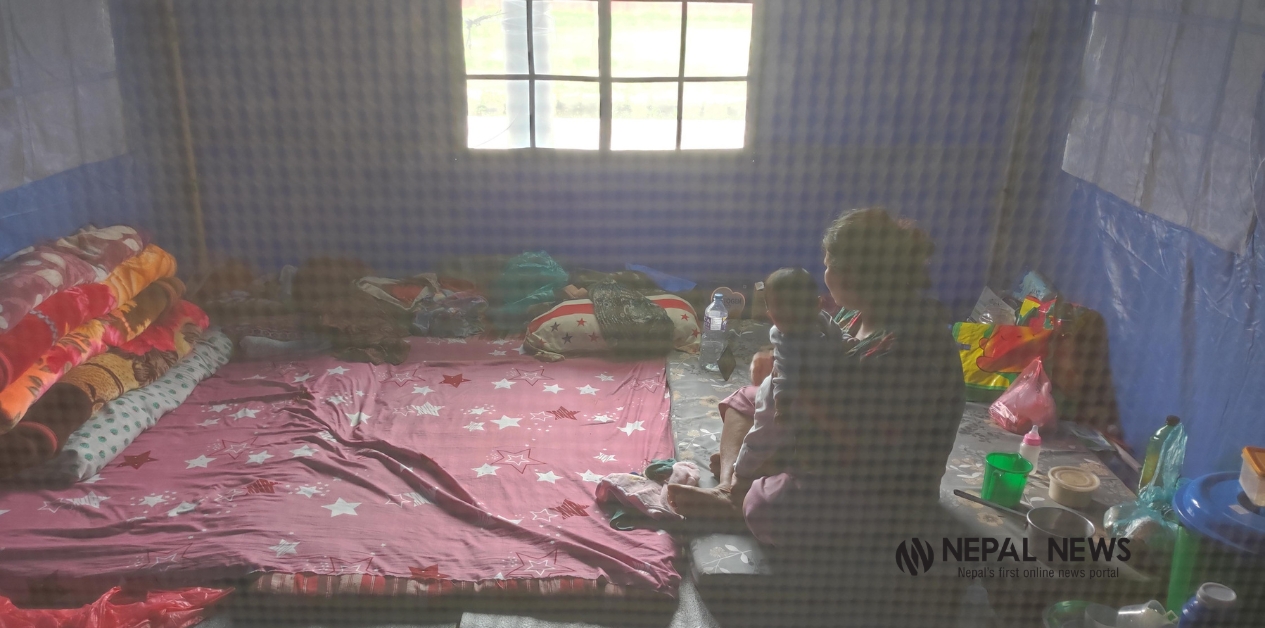
KATHMANDU: It has been nearly a month and a half since landless people and unregulated residents, who had been living in various locations within the Kathmandu Valley for decades, were forcibly displaced and moved to temporary shelters. Even after being inhumanely removed without a concrete alternative management plan, the injustice against these landless people did not stop. Countless stories of misery, mismanagement, and deprivation are emerging from the “holding centers” where they have been kept. Being relocated far away after their eviction has cost them their employment and livelihood. The suffering ranges from new mothers and the sick lacking nutritious food to individuals being deprived of medical treatment. In a situation where regular life has been completely disrupted, who can even begin to calculate the toll on their mental health?
Under the guise of safely and systematically relocating citizens living in hazardous and unsafe areas along the riverbanks, the government has crammed them into temporary housing. No proactive steps have been taken toward their long-term management. Several questions remain unanswered regarding the displaced individuals currently living with uncertainty in these temporary shelters: How long will they be kept in temporary housing? In other words, when will permanent housing be arranged for them? What is the government’s concrete plan for their management? How will their lost employment be compensated? How will their children’s regular education move forward?
The volume of these questions has expanded further because the government, which was in a rush to evict them, appears to have made no adequate plans for their subsequent management.
Why are landless people in the city?
From building the city, constructing its luxurious buildings, and creating beautiful roads to keeping the city running on a daily basis—laborers and workers have made a massive contribution. Yet, today, those very people are landless people and poor, struggling on the margins and corners of the city. Having lived in hazardous areas near the rivers, they were swept away by the state without any proper alternatives.
Facts indicate that people originally migrated from villages to areas around the city at various times due to internal migration, the decade-long armed conflict, natural disasters, poverty, and the search for work. Entering the city was primarily driven by dreams of labor opportunities and an easier life. Many entered the city because they lacked land ownership and access for housing and farming even in rural regions.
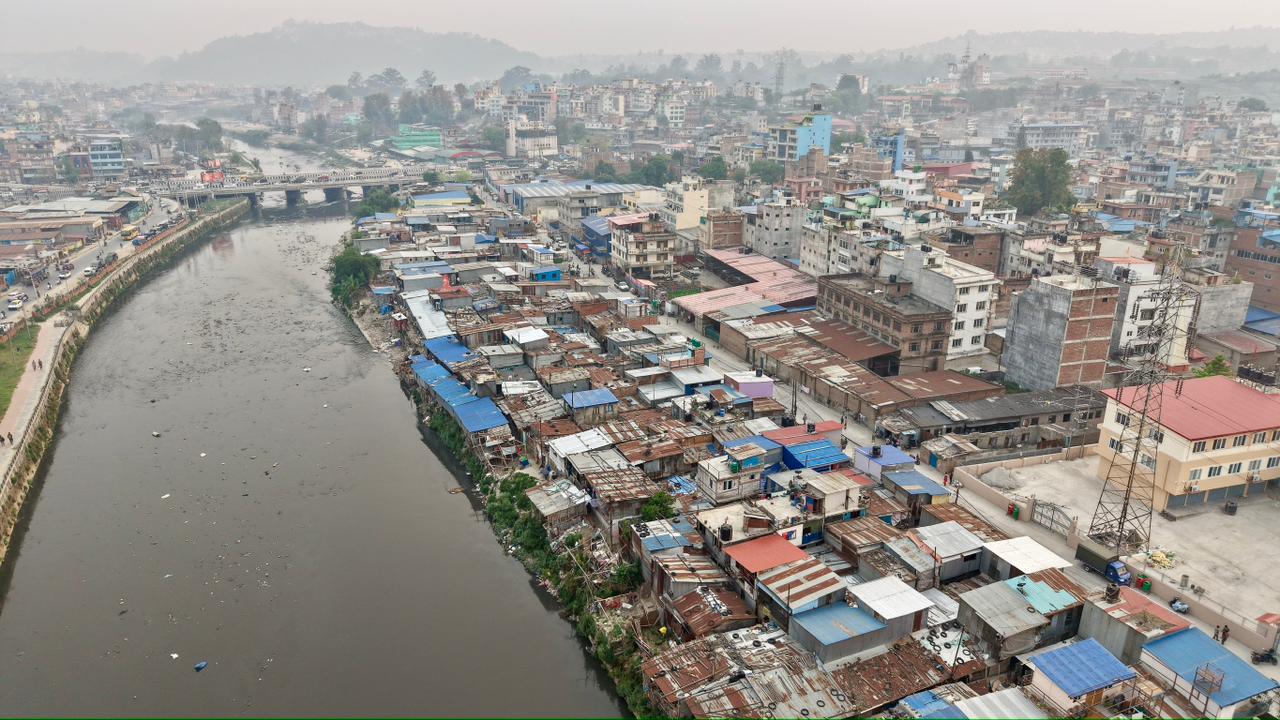
Nepal Photo Library
Landless people who entered Kathmandu were not in a position to acquire land and houses through their own earnings and status. Wherever they saw empty land, they settled there. Those lands were the public, government, and unregistered lands around the Bagmati, Manohara, and Bishnumati rivers and streams. They built small huts and shanties according to their means and began living there. Their families expanded there, and as time passed, the number of residents grew.
The problem of landlessness
The accusation heavily leveled against the landless today—that they captured riverbank lands—is largely inaccurate. The development of human civilization itself began along riverbanks. When humanity transitioned from the Stone Age to the Agricultural Age, an unbreakable bond with the soil was forged. From that point onward, the importance of land grew. Human civilization’s history shows that the initial start of the agricultural era occurred near riverbanks. Water was and remains crucial for agricultural yield, which is why our ancestors spent a vast portion of human existence near streams and river areas.
In the past, there was no practice of land ownership certificates. There was no calculation of “yours and mine” regarding the soil. Following the inception of the family system, when people began living in one place, fences were put up, and borders and boundaries began to be defined. Once land was regarded as private property, its value escalated.
Following the birth of the state, land was used as the foundation to raise revenues for state governance. Taxes began to be collected from the citizens utilizing the land. In the early days, taxes or land revenue were paid in the form of food grains. It was also customary for government employees to receive land instead of cash, which was referred to as “Jagir-Jamin”. Those who were rulers, administrators, or close to them received Birta land, land as salary, land for flattery, or land as a royal reward. Some came to own registered land, while others kept plowing fields for landlords, remaining bonded laborers and landless people.
The practice of obtaining land ownership certificates and registering land started much later. Those within the reach of state power registered land and secured certificates. The bottom stratum of society—particularly Dalits, indigenous groups, nationalities, and marginalized communities—was denied access to land in the past, and is still denied it today. That is precisely why a certain class has been struggling for land for a very long time.
Along with physical development, villages began transforming into cities, urbanization accelerated, and rural areas grew empty. Finding work in villages became impossible, prompting people to migrate to cities due to economic distress and in search of a secured future. They dreamed of owning land and houses based on their capacities. Some managed to study and write, engage in labor, acquire skills to earn good money, and become wealthy. However, many remain trapped in landlessness and live as landless people to this day.
The fundamental root of inequality is the unequal distribution of land. This was not created by today’s rulers; the current generation is suffering the consequences of discrimination perpetrated by historical rulers.
The eviction and understanding of the landless
When the state evicted the landless on the grounds that they were residing on riverbanks, public, and government lands, it did not just infringe upon their right to life; it severely impacted their human rights, land rights, dignified living, and human dignity. While on the surface it looked like a shantytown was being cleared, it inflicted a deep wound on the self-respect of the poor and vulnerable class, pushing them further into a quagmire of problems and uncertainty.
This issue is not merely a question of occupying public and government land; it is deeply intertwined with Nepal’s historical, political, and economic structures. The state is supposed to untie the knots of problems for people entangled in complex hardships. Here, however, signs point toward the state mucking up the situation and abandoning it.
Landless people are not the problem; the inability to manage them is the problem. Landless workers are vital components of the urban economy. As construction workers, domestic help, rickshaw pullers, small vendors, and informal sector workers, they have made incomparable contributions to the development of Kathmandu. Many of the city’s grand structures and services would have been impossible without their labor. Viewed from this perspective, landless people are not the enemies of the city, but rather the co-creators of its development. More importantly, they are one hundred percent Nepali citizens. Landless citizens must also have equal access to employment, education, and healthcare services, as well as equal access to state resources.
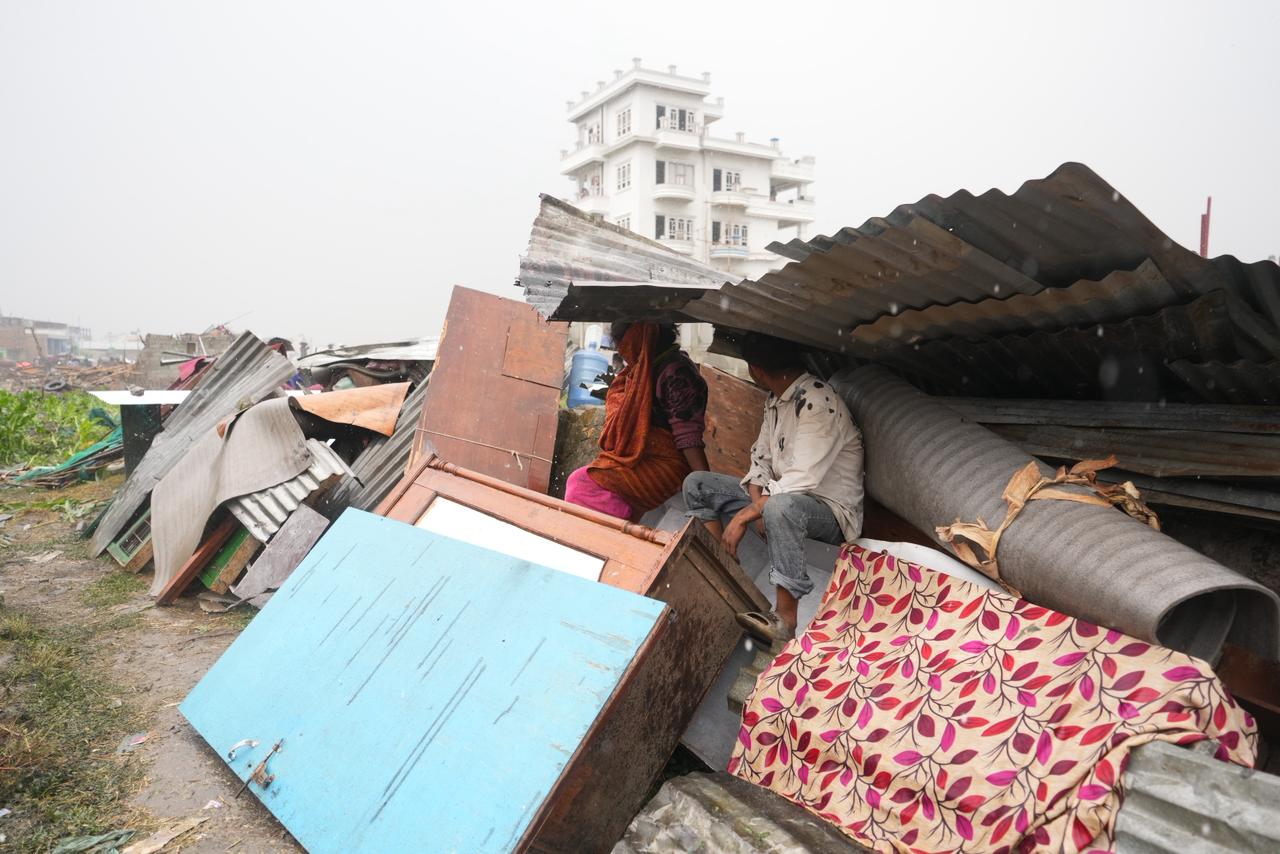
Nepal Photo Library
Eviction compounds problems instead of solving them; it merely transfers the issue from one location to another. People displaced from one area are forced to resettle in another. Until the root cause of landlessness is investigated and addressed, such problems will keep reoccurring. Because of this, a long-term and inclusive policy is imperative, and its execution side is even more critical. The primary shortcoming in managing landless people to date has been the weak implementation of existing policy frameworks.
To remove unregulated residents encroaching on public lands, the Ministry of Home Affairs and the Ministry of Federal Affairs and General Administration had sent letters to District Administration Offices and local governments. However, certain municipalities presented an exemplary model of human dignity by standing firmly with the landless. On May 6, 2024, Madhyabindu Municipality of Nawalparasi issued a statement stating: “Because a working style that leaves one’s own citizens homeless and creates insecurity deals a blow to the very essence of a democratic state, this municipality cannot agree under any circumstances to the displacement of residents whose processes are currently underway. The municipality reiterates its commitment to stand firmly by their side until the land rights of the citizens are secured.”
The local levels and governments we seek should be like Madhyabindu. This is because the local government, by virtue of being the closest administration, knows and ought to know who the landless people are, who the unregulated residents are, what kind of specific issues individuals face, and how to resolve them. Therefore, the primary liability and responsibility for managing the landless people and unregulated residents residing within their respective territories must belong to local governments. They should be provided with the legal authority and the necessary resources for management. Only then can a durable and permanent solution to these problems be achieved.
The recent evictions carried out across various locations constitute an injustice. This has become crystal clear because the settlements were cleared without arranging adequate alternatives or proper management. Landless people possess the right to live and reside just like any other human being. We live under a democratic system of governance. Forcible eviction ran completely contrary to the fundamental rights enshrined in the Constitution of Nepal in the past, and it remains so today.
Let us investigate why people are landless, why they are forced to live harsh lives, and why they reside in hazardous areas. Let us study the issue, and then carry out proper management. The point to contemplate is that nobody chooses to live a life of landlessness out of desire. Everyone possesses a longing and a dream for a prosperous life; failing to respect that is a systemic failure.
The government must guarantee a state of affairs where no citizen is forced to spend their life without shelter. No citizen should ever face eviction from their own home simply because they lack registered land ownership. To ensure this, it is crucial to establish an empowered body to resolve land issues and execute tasks with honesty and responsibility.