Kathmandu
Monday, March 2, 2026





Despite decades of commissions, billions in public spending, and repeated campaign pledges, more than 1.27 million families nationwide, including tens of thousands in Rupandehi, remain without land ownership certificates, trapped between flood-prone settlements and unfulfilled political vows
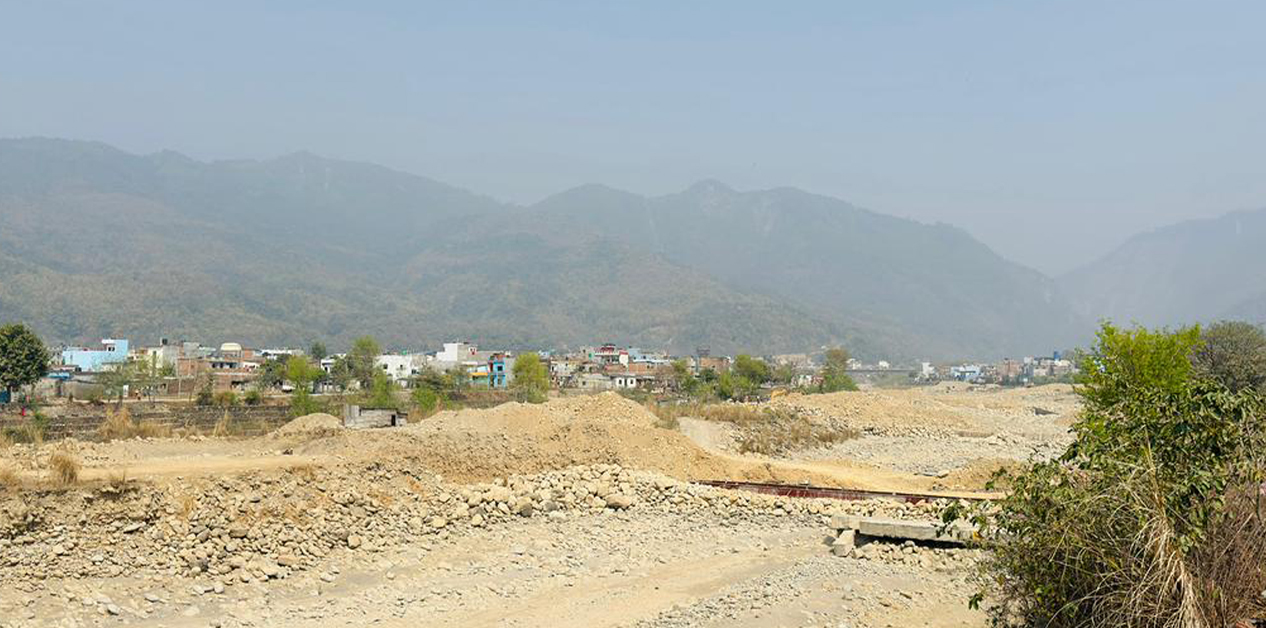
BUTWAL: Rita Baral, who came to Butwal from Lumpek in Gulmi, has been living in Pragatinagar, Butwal-11, for 22 years. Her yard is connected to the Tinau River. During last year’s monsoon, floodwaters reached right up to the embankment edge. The local government has built a riverbank embankment on the Tinau to stop flooding, but it is not sufficient. “The flood reaches up to the edge; the embankment is down at the base,” Rita says. “Even now, candidates come promising to stop floods and provide land ownership certificates, but every time elections come, the land certificate never arrives.”
Over 22 years of witnessing the Tinau’s floods and the dry-season drought, Baral’s youth and life have changed. But the land she lives on has not changed its fate. For land to change its status, it needs a land ownership certificate (lalpurja).
The suffering of Hari Bahadur Pariyar, who migrated to Butwal from Tansen, Palpa in 2062 BS (2005/06), is similar. Pariyar, who has been living on 15 dhur of land in the Hattisunda area of Butwal-11, is also waiting for a land ownership certificate.
Baral and Pariyar are only representative characters. In Butwal, considered an attractive center for migrants from various regions, it is estimated that 16,892 families lack land ownership certificates. Among them, 16,395 families in Sainamaina Municipality of Rupandehi, 14,453 in Devdaha Municipality, and 7,963 in Tilottama Municipality are landless. Similarly, 12,686 households in Kanchan Rural Municipality, 796 in Mayadevi, 4,142 in Gaidahawa, 1,294 in Siyari, and 2,225 in Shuddhodhan are without land ownership certificates.
At the district level nationwide, Rupandehi ranks second among the seven districts with the highest numbers of landless people, squatters, and unplanned settlers.
According to the Land Commission, Rupandehi has the highest number of unplanned settlers. Here, 68,471 families are unplanned settlers, 5,953 families are landless squatters, and 2,881 families are landless Dalits. Because of the large number of landless and squatter households, it has become common for candidates to promise distribution of land ownership certificates during elections. However, in reality, land certificates have never been distributed.
According to Kumar Thapa, chairperson of the Land Problem Resolution Commission, Rupandehi, among the 16 local bodies of Rupandehi, the problems of landless squatters (sukumbasi) and irregular settlers exist in Tilottama, Devdaha, Sainamaina, Siddharthanagar, and Lumbini Cultural municipalities, as well as in Kanchan, Gaidahawa, Mayadevi, Sammarimai, Siyari, and Shuddhodhan rural municipalities. According to the commission, among the seven provinces, Lumbini Province has the highest number of families without land ownership certificates (lalpurja)—301,347. In Koshi Province, there are 231,922 such families; in Madhesh Province, 106,093; in Bagmati Province, 125,236; in Gandaki Province, 86,959; in Karnali Province, 48,899; and in Sudurpashchim Province, 223,194 families are without land ownership certificates.
At the district level nationwide, Rupandehi ranks second among the seven districts with the highest numbers of landless people, squatters, and unplanned settlers.
In Rupandehi, out of approximately 75,000 families, around 60,000 are irregular settlers. This number is highest in Kailali, at approximately 110,000 people. Similarly, it is estimated that there are more than 70,000 in Dang, more than 54,000 in Bardiya, more than 52,000 in Jhapa, more than 46,000 in Banke, and approximately 4,000 in Kathmandu. According to researcher Ramchandra Shrestha, squatter settlements in Butwal expanded around the time of the 2036 BS (1979/1980 AD) referendum, during the period from 2046 to 2048 BS (1989–1991 AD), and during the conflict period after 2058 BS (2001 AD). In a study on squatter settlements in Butwal, Shrestha writes: “Local bodies had been dissolved. Parliamentary parties were in disarray, and at that time, a wave of establishing squatter settlements swept across Butwal. Its main center was Ward No. 11, which adjoined the Tinau River floodplain and had abundant public land.”
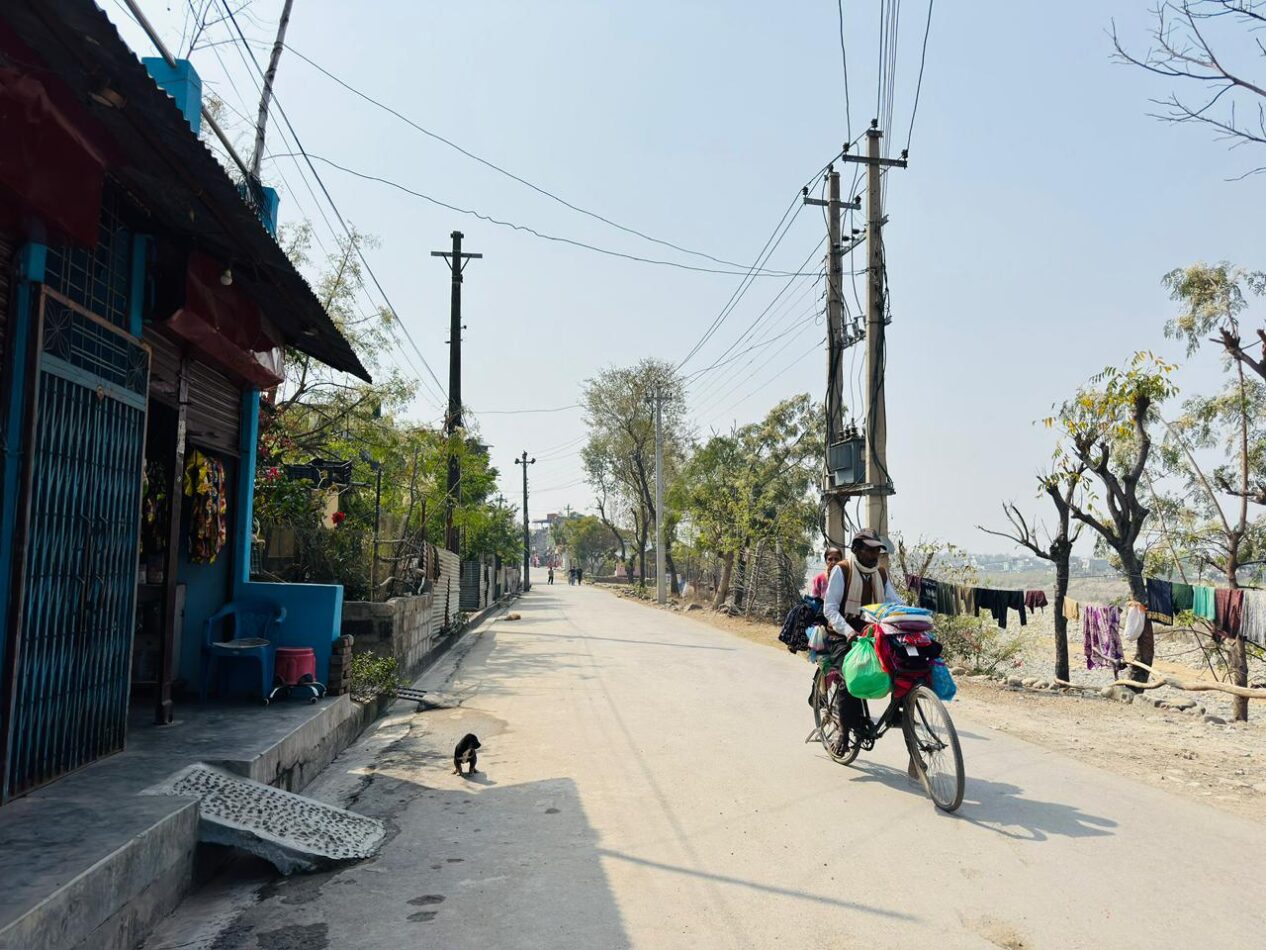
Butwal’s Sukumbasi area
Claiming to apply balm to the suffering of landless squatters, candidates and political parties come making promises in every election. This time too, land ownership certificates (lalpurja) remain at the very center of candidates’ electoral agendas. Sarita Pariyar of Majhgaun, Butwal-11, says, “Just yesterday a party came, said it would give everyone certificates this time, and left. Those who come today will also talk about giving certificates. But the land certificate will never come.”
Major political parties have expressed their commitment in their election manifestos to provide land ownership certificates to irregular settlers and landless squatters. Although parties prioritize the issue of landless squatters in their manifestos and speeches, it never gets implemented, says Kumar Karki, chairperson of the landless squatters’ organization Nepal Residential Settlement Protection Society (Nepal Basobas Basti Sanrakshan Samaj). He says, “They give assurances of providing certificates during elections, but they do not do what needs to be done; this has become merely an electoral issue.”
Even now, across the country, 1,271,557 families do not have ownership certificates for the land they are occupying.
According to data entered into the Land Problem Resolution Commission’s land information system, there are 96,339 landless Dalits, 175,109 landless squatters, and 914,618 unplanned settler families. Among these, detailed records exist for 1,151,401 families.
Different definitions of squatters
According to the Nepali Comprehensive Dictionary 2075 published by the Nepal Academy, a squatter is understood as a person without land or property, without assets, someone who may have a dwelling but no farmland, and a tenant without ownership. Meanwhile, the National Land Commission’s document “Basis and Criteria for Identification and Verification of Landless Dalits, Landless Squatters, and Unplanned Settlers 2078” defines terms such as “landless squatter,” “landless Dalit,” and “unplanned settler.” According to it, a “landless squatter” refers to a person who has no land ownership in Nepal in their own or their family’s name and who is unable to secure land through their or their family’s income, resources, or efforts, including dependent family members.
By the time the Land Problem Resolution Commission was formed in 2082 BS (2025 AD), no fewer than 20 commissions had already been formed over the course of 35 years.
‘Landless Dalits’ refers to landless squatters belonging to castes listed as Dalit by the National Dalit Commission. Likewise, ‘unmanaged settlers’ refers to a person who, despite the land being government, public, fallow, or recorded as forest in official records, has been cultivating and residing there by building a house for at least 10 years, along with dependent family members.
Although it began as early as the late 1990s BS (early 1940s AD), the squatter (sukumbasi) issue became an electoral agenda and slogan of political parties only after the end of the Panchayat system. In 2047 BS (1990 AD), after the Forest Conservation Task Force led by Dronacharya Acharya recommended the formation of a Squatter Problem Resolution Commission to reduce forest encroachment, a Squatter Commission was formed that very year under the leadership of the then Minister for Housing and Physical Development Planning, Achyut Raj Regmi. By the time the Land Problem Resolution Commission was formed in 2082 BS (2025 AD), no fewer than 20 commissions had already been formed over the course of 35 years.
Cycle of draining the state treasury
A large amount of state funds has been spent in the name of providing land to the landless. In commissions formed to distribute land ownership certificates, federal and local government funds have been spent on appointing officials, deploying staff, and technical work. According to Land Commission data, more than 2,000 political leaders and party workers have so far been appointed to the Land Problem Resolution Commission for land-certificate distribution. The commission’s administrative expenditure is about 700–720 million rupees annually, with total spending around 1.5 billion.
In addition, municipalities with land issues are hiring contract staff and spending from their own resources. At district-level commissions, government political appointments include four officials and five staff, totaling nine. Local governments deploy additional manpower for surveying and other technical work in their areas.
Last fiscal year alone, Butwal Sub-Metropolitan City had allocated Rs 7.5 million to hire contract staff to survey land occupied by landless squatters, demarcate blocks, prepare maps, conduct inspections, and identify individuals.
Of this amount, Rs 2,854,447 has been spent, says Damodar Gyawali, Deputy Director of the Land Management Section of Butwal Sub-Metropolitan City. By the end of last Ashar (mid-July 2025), survey and measurement of land belonging to 10,616 individuals had been completed and maps for most of them had been prepared; however, during the Gen Z movement on September 8–9, arson at the sub-metropolitan city’s administrative building reduced all documents, including the maps, to ashes, states Gyawali. According to him, the sub-metropolitan city has allocated a budget of Rs 20 million in the current fiscal year to work in the area of landless squatters.