Kathmandu
Tuesday, July 21, 2026





The draft bill proposes sweeping immigration reforms, including new visa categories, revised fees and penalties, and the introduction of e-gates.
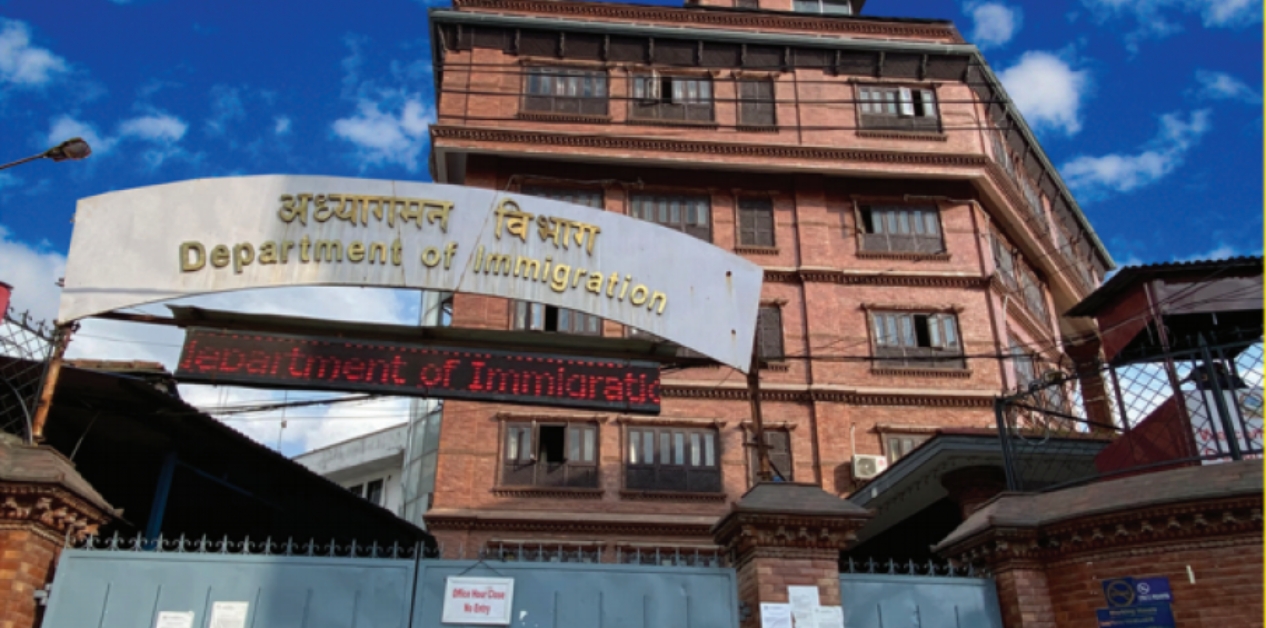
KATHMANDU: The government is preparing to amend the immigration law to issue 17 categories of visas. While the Immigration Rules, 1994, formulated under the prevailing Immigration Act, 1992, provide for nine types of visas, a draft bill has been prepared to introduce 17 categories with revisions.
The draft of the ‘Bill Formulated to Amend and Integrate Immigration Laws,’ prepared by the Ministry of Home Affairs, proposes numerous changes, including a revision of visa fees and fines levied on those coming to Nepal, alongside the conception of ‘E-Gates.’
Tikaram Dhakal, Director and Spokesperson of the Department of Immigration, states that although the draft bill has been prepared, it remains under discussion. According to him, the classification of visas issued by Nepal has been expanded to align with changing circumstances. “The number of visa categories has been increased to 17 based on suggestions from the Home Administration Reform Plan Committee, led by the then Secretary Leela Mani Poudyal, and the High-Level Investigation Committee on Visit Visas, coordinated by Shanker Das Bairagi,” he says.
The existing Immigration Act states that the types of visas shall be ‘as prescribed,’ meaning according to the rules. Under the rules framed pursuant to this Act, nine types of visas were arranged. The drafted bill provides for 17 types of visas. These specify the issuance of Diplomatic, Official, Tourist, Study, Teaching, Research and Scientific, Working, Business, Family, Press, Temporary, Residential, Non-Residential Nepali (NRN), Mountaineering, Movie, Sports, and medical visas.
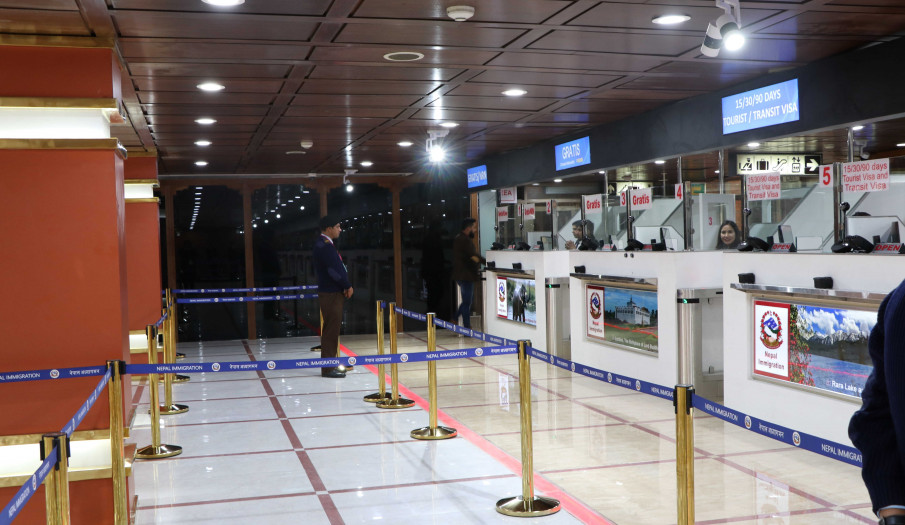
While the existing law allows Immigration Officers to issue visas, the new law seeks to alter this arrangement. “Discussions are underway regarding whether to permit the appointment of agencies for visa applications, as practiced in various countries,” says Director Dhakal.
The draft includes a provision for a ‘Medical Visa’ for foreigners coming to Nepal for medical treatment and staying for an extended period. A provision for such a visa does not exist in current legislation. According to Dhakal, some tourists visit Nepal believing that staying in the Himalayan region benefits their health. “Because Nepal has excellent weather, foreign nationals arrive saying that their health will improve simply by staying in the Himalayan region without any medical treatment,” he says. “Currently, there is no visa arrangement available for such individuals to stay for a long duration.”
In the new bill, a research visa has been added to the study visa currently provided to students. Furthermore, a movie visa has also been introduced. Department Director Dhakal explains that this visa is designated for foreign nationals or film production companies arriving to shoot movies in the Himalayan districts and various other locations across the country.
Under the existing law, foreign athletes coming to play in Nepal face procedural hassles as a ‘Tourist Visa’ is their only option; hence, a ‘Sports Visa’ has been added to the new law. Currently, athletes arriving on tourist visas must navigate a tedious process to acquire work concurrence and labor permits. Additionally, a provision for a business visa has been included to incentivize those wishing to stay and do business in Nepal for an extended duration. “This visa was added so that tourists stay in Nepal for a longer time, spend money, and invest here,” Dhakal says.
Discussions are ongoing to finalize the draft of the bill, which will be tabled in Parliament once the procedures are complete. After being passed by Parliament and authenticated by the President, it will replace the Immigration Act of 1992 (2049 BS). The old Act has been amended four times so far, with the latest revision taking place on February 25, 2016 (13 Fagun 2072 BS).
Punishments to deter ‘Ineligible Persons’
From the perspective of international laws and regulations, immigration authorities face a burden when various airlines fly ‘ineligible persons’—those lacking entry permits, possessing faulty documentation, or presenting other issues—into Nepal. Such individuals must be kept in detention for investigation and inquiry. The draft bill intends to make airline companies more accountable by ensuring problematic individuals are stopped in their respective departure countries. Provisions have been made to penalize airlines bringing such individuals based on a report by the Director General of the Department of Immigration. A new provision imposes a fine ranging from Rs 100,000 up to double that amount on airline companies that fly unauthorized foreign nationals into Nepal.
The bill also introduces changes regarding punishments, fines, adjudicating authorities, and appeals. Previously, deportation was under the jurisdiction of the Secretary of the Ministry of Home Affairs; under the new provision, this responsibility has been transferred to the Director General of the Department of Immigration.
The draft bill treats counterfeit passports and visas as severe offenses. For those using a fake passport or visa, the fine has been increased from up to Rs 50,000 to up to Rs 500,000, alongside the existing provision of up to five years of imprisonment, or both. The provision allowing a fine of up to Rs 50,000 for other infractions has been amended to up to Rs 100,000. The District Court has been designated to hear cases of this nature. Similarly, cases related to misconduct, entry into restricted areas, etc., will be adjudicated by the Director General, with appeals directed to the District Court.
NRN Visa
The government has adopted the slogan “Once a Nepali, always a Nepali.” Director Dhakal mentions that whether Non-Resident Nepalis (NRNs) should be required to obtain a visa or not is still under discussion.
Provisions have been made to grant Non-Resident Nepalis coming to reside in Nepal a free non-residential visa for up to 10 years, similar to previous arrangements. Preparations are also underway to arrange a residential visa valid for two years at a time, complete with multiple-entry facilities.