Kathmandu
Thursday, January 8, 2026





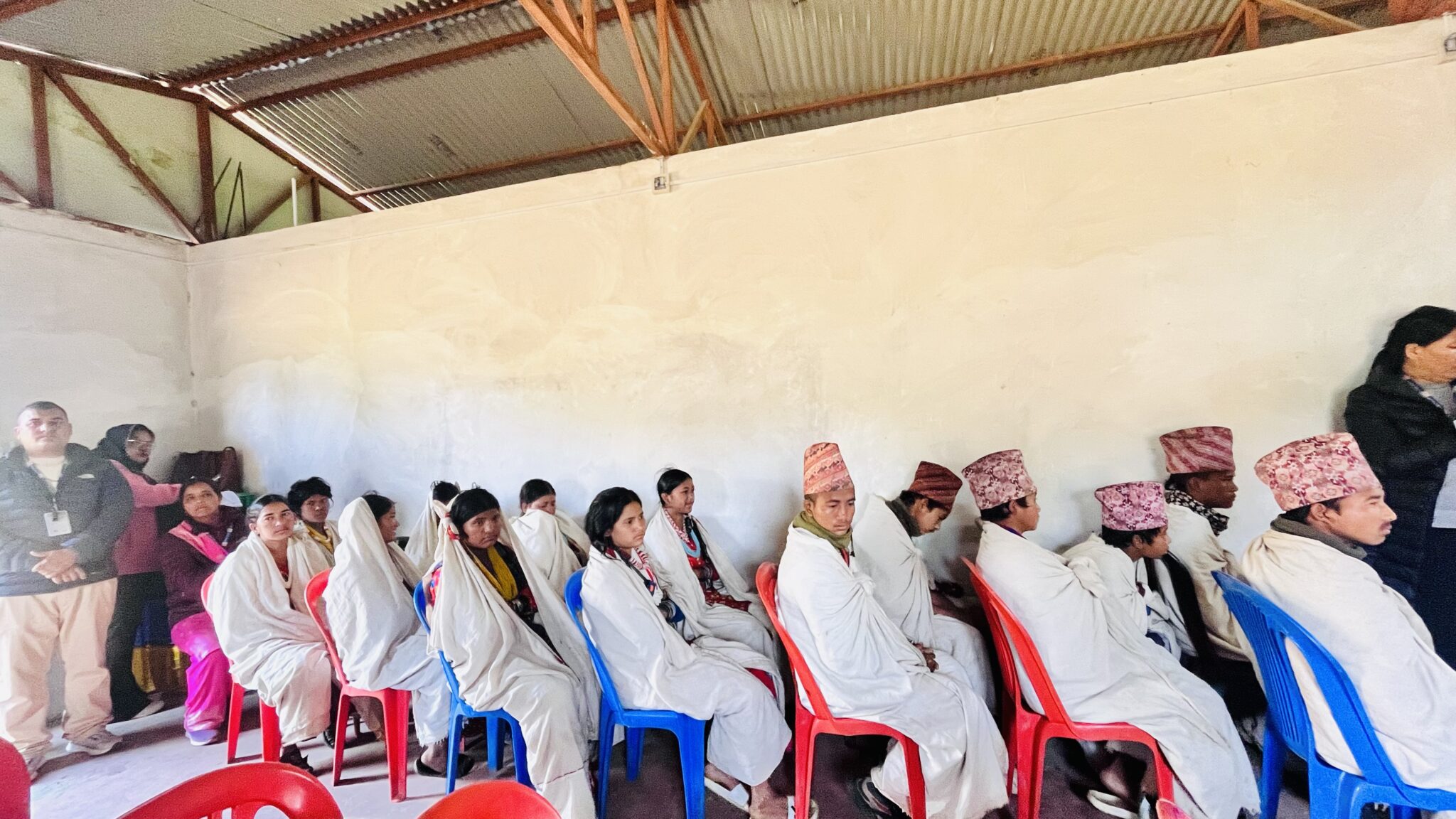
SURKHET: Youths from a nomadic community have attended a first aid training organized in Surkhet.
Eight women and seven men from the Raute community took part in the training.
The Ministry of Social Development in Karnali Province informed that the Raute people live nomadic life in Surkhet, Dailekh, Jajarkot and Salyan districts.
The community in a population of 1,033 has lately witnessed a decline owing to changed lifestyle- especially food and culture.
They are currently living in a jungle of Lekbensi municipality-7 of Surkhet. The health workers at Nepal Red Cross Society Surkhet chapter provided the attending Raute youths the basic skills of first aid along the practical exercise, according to Ram Lal Acharya, Surkhet chapter Chair of Nepal Red Cross.
The training is expected to make them aware about the injury and need of emergency health support before taking the injured ones to hospital.
Minister for Social Development, Ghanashyam Bhandari, inaugurated the training on Tuesday.
He said it is a common responsibility of all to preserve the Raute community, which bears a special identity in Karnali Province. “The interest shown by Raute youths in health and treatment should be taken positively,” he observed, adding that this aboriginal group has a unique civilization, language and culture.
According to him, the province government was for socialization of the Raute people without hampering their original culture and civilization. The establishment of ‘Raute corridor’ and launch of ‘Raute policy’ were in the offing.
While linking the Raute people to modern practices, their lifestyle bearing unique identity will not be infringed, he vowed. At the programme, mayor of Gurans rural municipality, Top Bahadur BC, informed that the Raute people were provided identity cards and social security allowances.
The local level had taken an initiative to facilitate the process to ensure citizenship certificates to the aboriginal tribe. The proposal to this regard had reached the district administration office.
Hira Singh Thapa, executive director at a non-governmental organization, Social Service Centre, informed that the Raute people were getting attracted to modern treatment, so the training on first aid would be beneficial to them.