Kathmandu
Friday, February 20, 2026





Residents of Timalbesi in Kavrepalanchowk district remain deprived of quality education, healthcare, and transportation
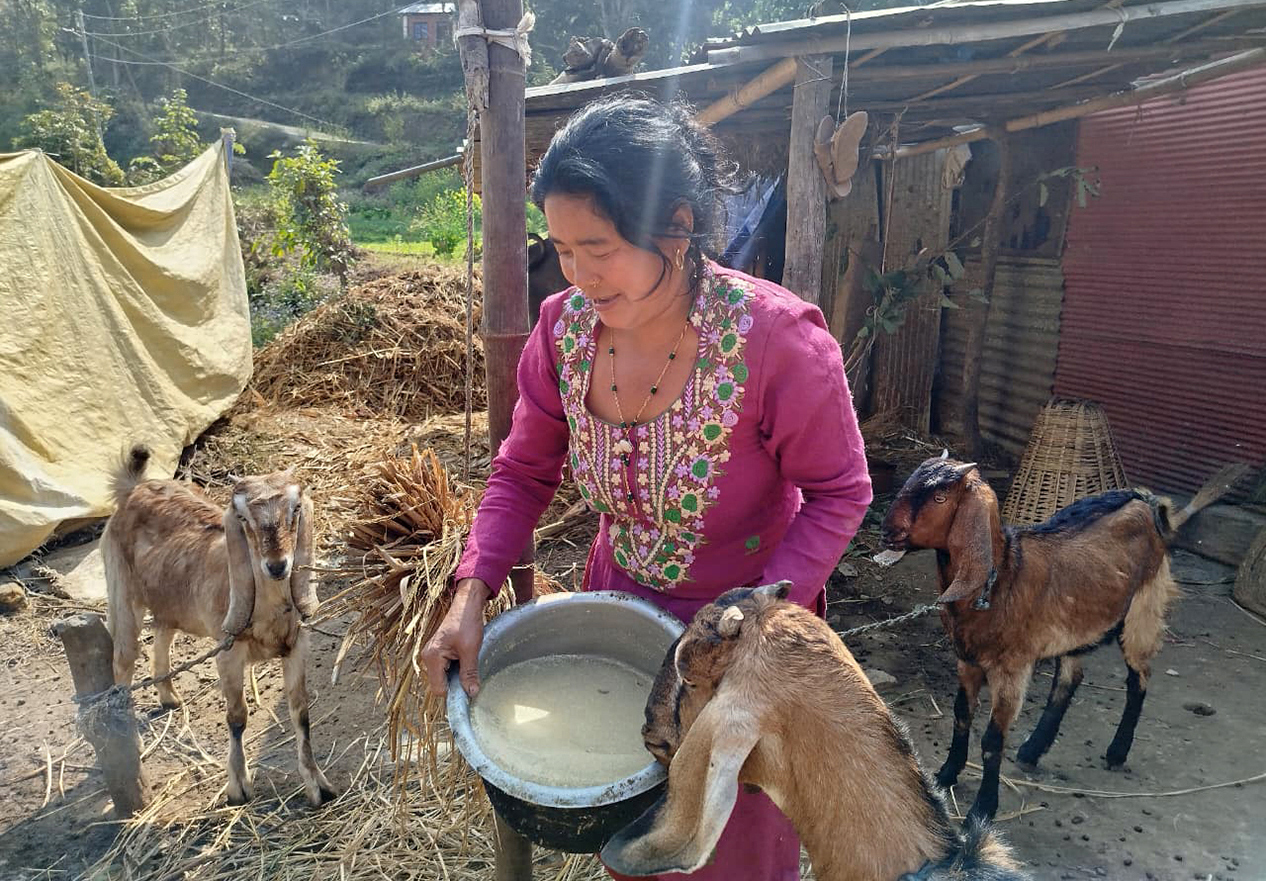
It has been four years since Sarita Tamang’s family moved down to Timalbesi in Ward 13 of Panchkhal Municipality from Kanpur in Ward 5 of Namobuddha Municipality, Kavrepalanchowk. Unable to make ends meet on a single annual maize harvest in Kanpur, the family relocated to Timalbesi along the banks of the Sunkoshi River. With ample irrigation from the river, agricultural production in the Timalbesi plains is good. Farmers harvest three crops a year – paddy, maize, and wheat. In addition to staple grains, pulses and vegetables also yield well.
Sarita’s family farms leased land, which sufficiently meets their food needs. Yet the residents of the area, including Sarita’s family, remain deprived of quality education, healthcare, and transportation facilities. She has three children – two daughters studying in Grades 3 and 2, and a son in kindergarten. “There is a school up to Grade 5 near our home, but the quality of teaching is poor,” Sarita says. “If we think of relocating, we can’t afford it. And if we go elsewhere to earn, we have no skills other than farming and raising livestock.”
Timalbesi lies about 50 kilometers from Kathmandu. Despite being close to the federal capital, the settlement remains remote.
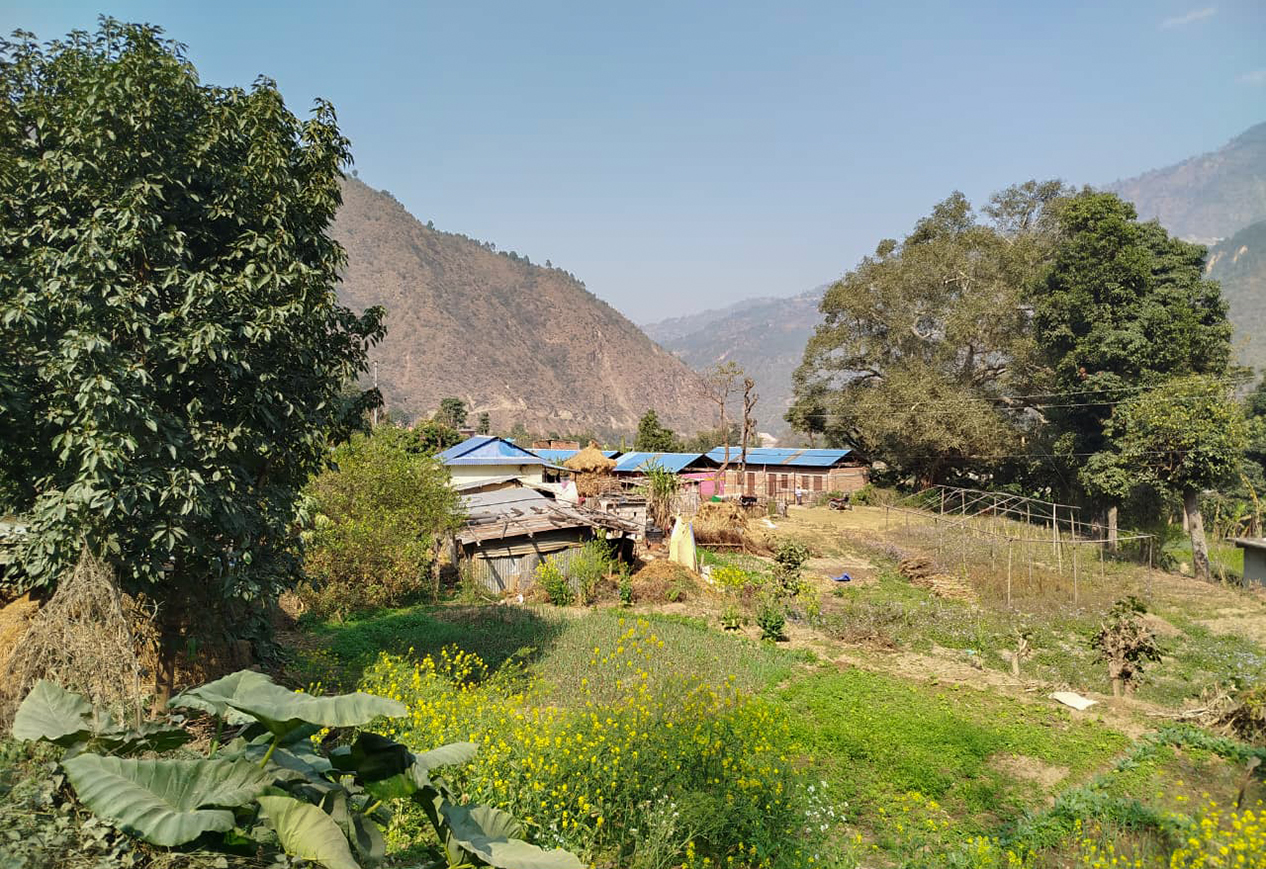
Timalbesi village
For even minor health issues, residents must walk an hour and a half uphill to reach the health post near the ward office. Those unable to make the climb have to travel to clinics in Dolalghat Bazaar along the Araniko Highway. Reaching Dolalghat requires a two-hour walk along the banks of the Sunkoshi. Although roads exist both toward the ward office and Dolalghat, vehicles do not operate regularly. Families without motorcycles must pay high fares. Motorcycles ferry passengers along the 7.3-kilometer stretch between Dolalghat and Timalbesi, charging Rs 500 one way.
Local resident Saraswati Tamang says, “At a glance, this place seems close to the city. But there’s no reliable transport, no proper health facility. Even for a common cold, we have to go all the way to Dolalghat.”
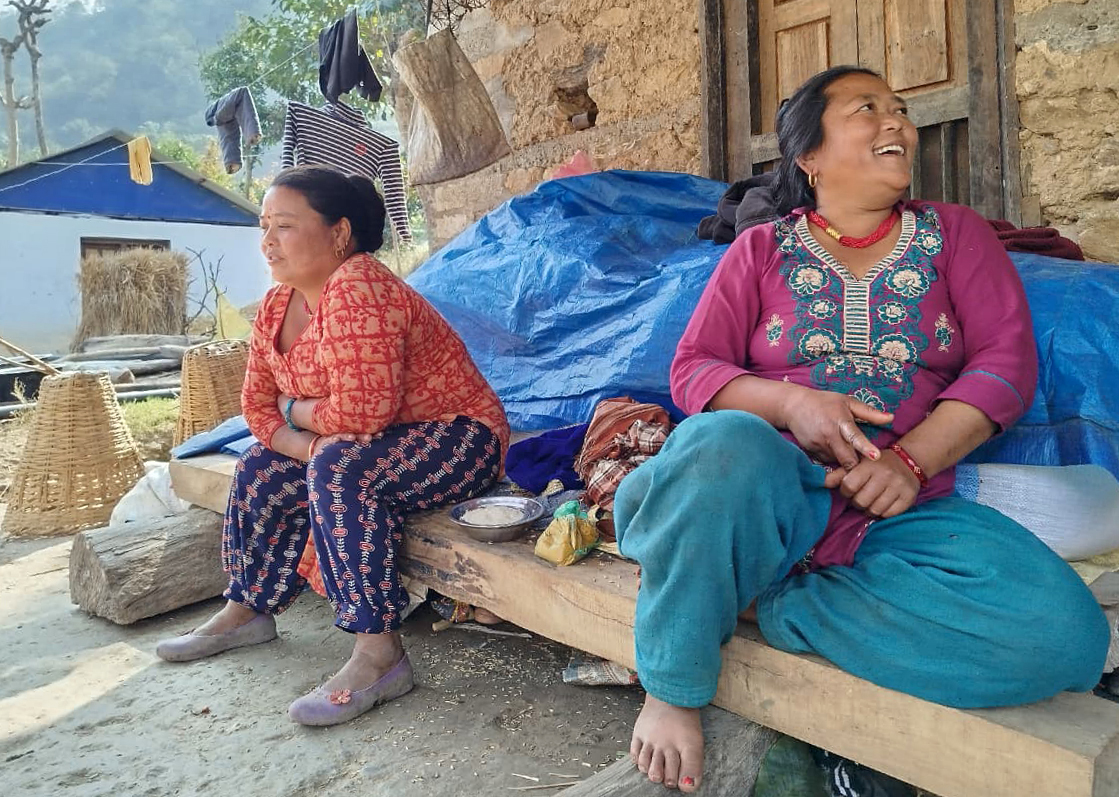
Saraswati Tamang and Parbati Tamang
According to Junu Acharya, a teacher at Ganga Primary School in Timalbesi, it can take an entire day to reach Kathmandu from the village despite the 50-kilometer distance, due to rough and unpaved roads. “During the monsoon, when the road deteriorates, even hired bikes don’t operate. We have to walk to the nearest point where vehicles are available. Sometimes, if we leave Timalbesi in the morning, we only reach Kathmandu by evening,” she says.
Due to the lack of basic services such as education, healthcare, and roads, many residents have already left Timalbesi.
The road from Palanchok Bhagwati to the Ward 13 office of Panchkhal Municipality was constructed as early as 2024 BS (1967/68) and upgraded in 1991. From the ward office onward, a paved road connects to Kathmandu. The road toward Dolalghat was built in 2018. Previously, it was only a risky foot trail along steep cliffs. Although the road was expanded to create a shorter route to Dolalghat, residents of Timalbesi have not felt much relief due to the lack of regular transportation. Tipper trucks transporting construction materials from crushers operating along the Sunkoshi frequently damage the road, making motorcycle travel risky.
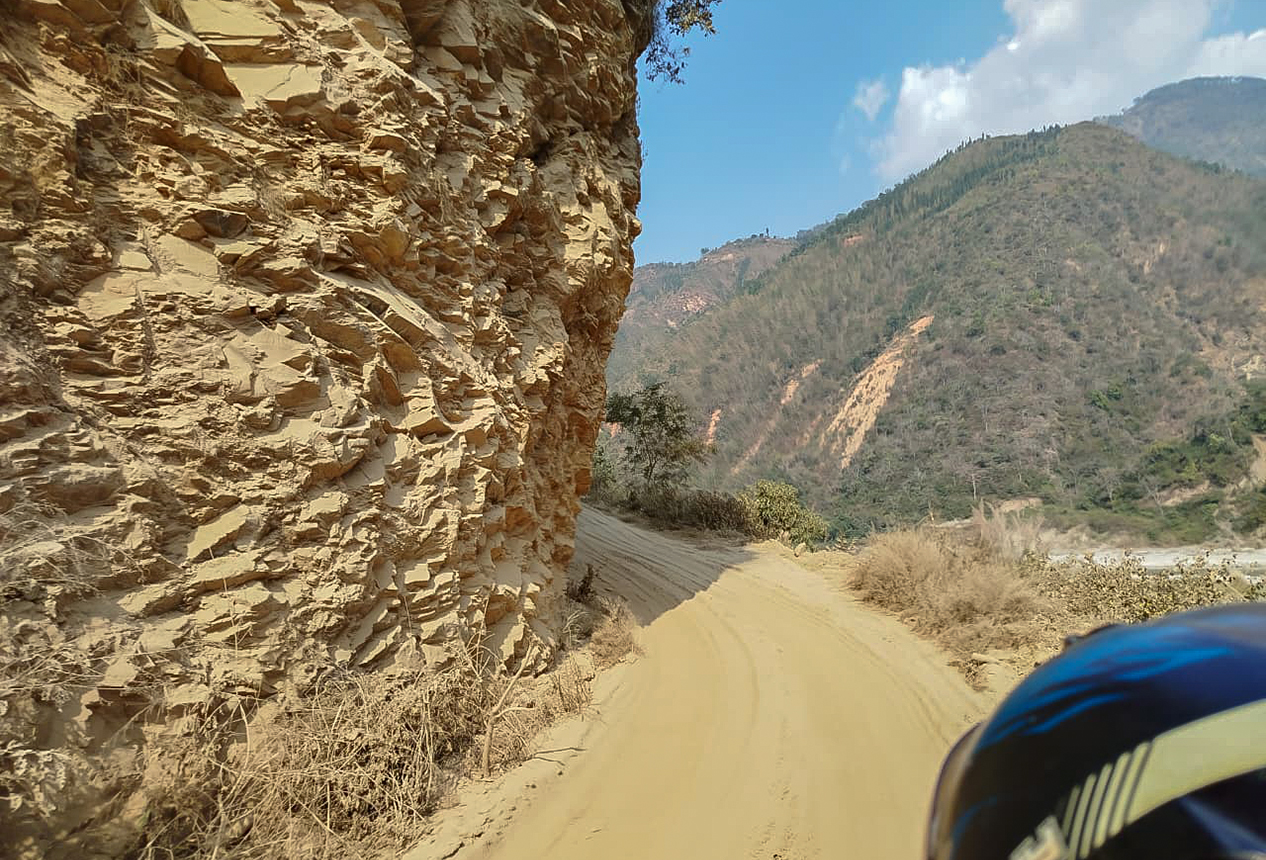
The Dolalghat–Timalbesi road section, where a track was opened in 2018.
Due to the lack of basic services such as education, healthcare, and roads, many residents have already left Timalbesi. Wealthier families have built houses in Kathmandu and moved there. Some rent rooms in Panchkhal Bazaar, while many others live in Kathmandu, working as laborers and educating their children, to sustain their livelihoods. According to Ward 13 Chair Sukubir Tamang, Timalbesi has 200 households, of which about 30 houses are already locked. “In most homes, only elderly people remain as caretakers. It is hard to find a household where all members are still present,” he says.
The younger generation has gone abroad for employment. It has been two years since Nima Tamang’s second daughter left for foreign employment. “We can grow enough to eat,” she says. “But to buy salt, oil, clothes, we need cash. Someone in the family has to earn.”
The lack of quality education, healthcare, and transportation in a settlement so close to the federal capital stands as a stark irony – and an indictment of the city itself.
Sarita’s husband, Suresh Tamang, has been working in Poland for the past three years after settling his family in the lowlands. Saraswati’s daughter left for Dubai a year ago.
Ward Chair Tamang claims that facilities in Timalbesi have improved compared to the past. “When you come straight from the city and see the hills, it looks remote. But compared to before, there have been significant improvements in roads and drinking water,” he says.
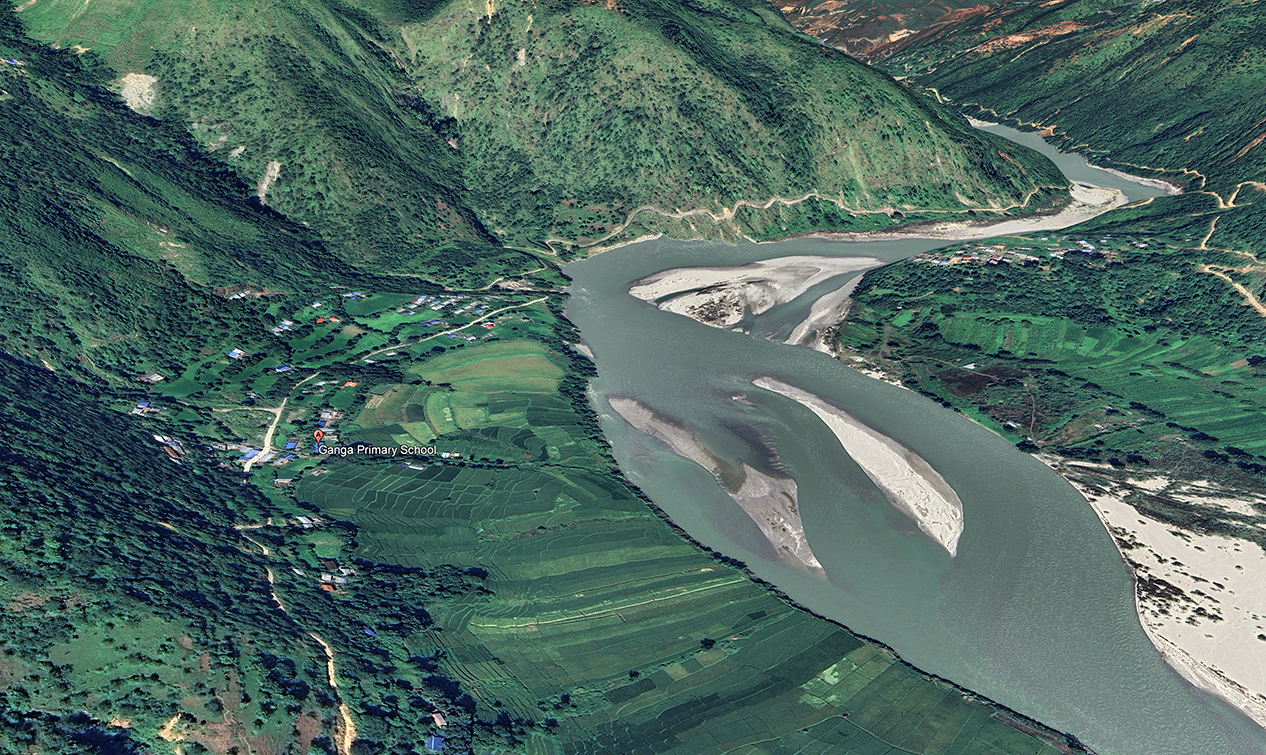
Timalbesi as seen on a satellite system in October 2025. Photo: Google Earth Pro.
Five years ago, a drinking water system was installed by lifting water from the Sunkoshi River. Before that, residents had to carry water from the river itself. Yet despite some comparative improvements, the lack of quality education, healthcare, and transportation in a settlement so close to the federal capital stands as a stark irony – and an indictment of the city itself.