Kathmandu
Monday, February 23, 2026





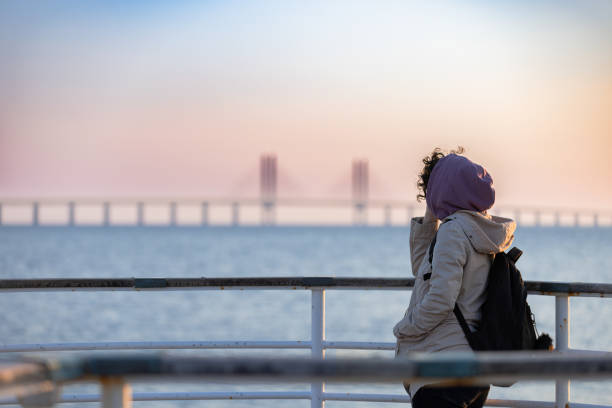
In the quiet corridors of Bal Mandir orphanage in Naxal, Kathmandu, a little girl named Sita Sharma couldn’t have known that her life would span continents, cultures, and eventually come full circle. This is the story of Anna Bergström, born Sita Sharma, and her remarkable journey from Nepal to Sweden and back again in search of her roots.
Beginnings at Bal Mandir
In the mid-1970s, tragedy struck when Sita’s mother died following complications from an attempted home abortion during her fourth pregnancy. Left with three young children and overwhelming grief, Sita’s aunt and other relatives made the difficult decision to place the two youngest children—Sita and her brother Raju—in the care of Bal Mandir, Nepal Children’s Organization’s oldest and most established orphanage.
According to Anna’s later interviews with relatives, she was actually present when her mother died—a traumatic event that occurred too early in her life to form conscious memories, but that may have left deeper psychological imprints. At just two and a half years old, Sita entered Bal Mandir with her brother. Later, she learned from her aunt and other relatives that their father initially intended to reclaim them once his situation improved. Fate, however, had different plans.
The Swedish Connection
Erik and Maria Bergström were a Swedish couple working for the UN Food and Agriculture Organization (FAO) in Nepal. After five years of marriage and two years living in Nepal, they began seriously discussing adoption. The couple was drawn to the idea of providing a home for children who needed one, and Nepal’s relatively straightforward adoption process at the time made this possible. In Sweden, they had been impressed by a couple who had adopted a Korean child and were very happy with this experience.
What made the Bergströms particularly special was their insistence on keeping siblings together—they didn’t want to separate Sita from her brother. In April 1978, both children were adopted by the Swedish couple in a process that, by today’s standards, was remarkably simple and transparent. No excessive fees, no complicated bureaucracy—just a minimal processing fee and the genuine desire to create a family.
Growing Up Between Worlds
Life with the Bergströms took Sita—now Anna—around the world. The family lived in Tanzania and other African countries because of their parents’ international work. While this multicultural upbringing provided incredible experiences, it also left Anna with a sense of rootlessness that would later drive her search for identity.
Throughout her childhood, Anna’s adoptive parents were remarkably open about her origins. They shared what little they knew: that her mother had died, her father couldn’t care for his children, and that she had been born in Nepal. This transparency was crucial to Anna’s development and her later quest.
A significant moment came when 14-year-old Anna was attending an international school in Tanzania. She was chewing gum when a familiar taste triggered something profound in her memory—a taste she would later recognize during her visits to Nepal. Despite having few conscious memories of her early life at Bal Mandir, her body remembered.
The Questions Begin
Growing up looking different from her peers in Sweden naturally led to questions. “Where are you from?” became a common refrain, to which Anna would proudly answer, “Nepal.” But as she matured, this answer felt incomplete. Who were her parents? Did she have other relatives? What was her story before Sweden?
The birth of her first child while she was still a university student was a pivotal moment. Holding her own daughter created a profound sense of connection and belonging, intensifying her curiosity about her origins. This feeling only strengthened with the birth of her second and third daughters in the years that followed.
The First Return: 2004
In 2004, Anna made her first journey back to Nepal, accompanied by her Swedish mother Maria. Their destination: Bal Mandir orphanage, where her life had taken its dramatic turn decades earlier. The visit yielded some information but also confusion. Different people offered contradicting stories, and the trail to find her biological family seemed to go cold.
Interestingly, Anna’s brother—renamed Lars in Sweden but born Krishna—had visited Nepal earlier during a trek and found some documents at Bal Mandir. Unlike Anna, however, he showed little interest in pursuing their biological connections, preferring to focus on his career and life in Sweden.
Persistence Pays Off: 2014
Despite the initial disappointment, Anna never abandoned her quest. In 2014, she returned to Nepal, this time having made more deliberate preparations. She booked her trip through a travel agency and specifically requested assistance with translation and local contacts to support her search.
“When I booked the trip and planned the trekking with the company,” Anna recalls, “I told the guide, ‘Is it possible for you to find people who can help me with translation, you know, do all these things? Because I really want to do a better job this time.'”
This strategic approach made all the difference. On just the second day of her February 2014 trip, she revisited Bal Mandir, this time with more determination, experience, and proper support.
A Crucial Encounter
It was during this 2014 visit that Anna had a fateful meeting that would change everything. She met me at Creating Possibilities Nepal, a charity that supports children and youths from Bal Mandir. Having been trained by International Social Service (ISS) in the sensitive process of origin tracing, I was able to provide the professional guidance Anna needed.
I met her at Bal Mandir where she was trying to trace her biological parents, brother, or any relatives. I helped her with her search, and on her second attempt, she was successful. She was overjoyed with this assistance.
My training with ISS proved invaluable in offering professional counsel on how to approach relatives and navigate the complex emotions involved in reunion. The specialized training equipped me to handle the delicate balance between an adoptee’s right to know their origins and the potential impact on birth families.
Discovering the Truth
Through our meetings and with professional assistance, Anna finally began to piece together the truth about her family history. She learned that she had three older siblings, and that her mother had died attempting a home abortion during her fourth pregnancy, not from natural causes during childbirth as she had previously been told.
“This is what I’ve heard,” Anna explains. “She had an abortion. Why? I don’t know. She underwent an abortion at home, and it didn’t go well. So, she died. I was with her, according to relatives.”
This revelation was both painful and illuminating, providing context for why she and her brother had been placed in Bal Mandir. The cultural and socioeconomic realities that led to her mother’s death helped Anna understand the circumstances that shaped her early life.
A Tale of Two Families
What makes Anna’s story particularly compelling is her gratitude for both worlds. She expresses deep appreciation for her Swedish parents, who gave her opportunities she might never have had otherwise. Their open approach to her adoption and identity allowed her to embrace both her Swedish upbringing and Nepali heritage.
At the same time, discovering her Nepali roots has filled gaps in her understanding of herself. Learning about her biological father’s difficult decision, connecting with relatives, and understanding the cultural context of her early years has given her a sense of completeness. Though she could not meet her father while he was alive—according to her relatives, he died around 2007/2008—finding her extended family brought significant closure.
Return with Her Swedish Father
In a particularly moving chapter of this story, Anna returned on April 12, 2025, to Nepal accompanied by her adoptive father, Erik. For him, it was a nostalgic journey, returning after 45 years to the country where he and his late wife had made the life-changing decision to adopt. They visited not only Bal Mandir but also places that held special memories for him, like the Royal Golf Club where he and Maria used to play golf during their time in Nepal. Maria had even served as the lady captain during that period when only a few Nepalese played golf.
For Erik, seeing his daughter connect with her birth culture and family brought their family story full circle. The journey represented not just Anna’s search for identity but also a testament to the enduring bonds of their chosen family.
During this visit, I had the privilege of conducting an in-depth interview with both Anna and Erik at the Creating Possibilities Nepal office. As a member of International Social Service (ISS) and through my work with Creating Possibilities Nepal, I was particularly interested in documenting their unique experiences to help other adoptees with similar stories.
What made their case particularly special was the ethical manner in which the original adoption had occurred—no excessive fees or bureaucratic obstacles had complicated their family formation. The officials at Bal Mandir had only requested that the couple not change the children’s names and religion. This request reflected respect for the children’s cultural identity even in the 1970s.
The Next Generation
Today, Anna’s three daughters—now 30, 26, and 23—express keen interest in visiting Nepal themselves. They are curious about this part of their mother’s identity and, by extension, their own heritage. For Anna, this represents the beautiful continuation of her journey—the story extending into new generations.
A Continuing Connection
Today, Anna maintains contact with Creating Possibilities Nepal and has expressed interest in supporting educational and life skills programs for underprivileged students in Nepal. Having found her brother, aunt, and other relatives, she plans to visit Nepal regularly to strengthen these newfound connections while also giving back to the community she once belonged to.
“Now I am thrilled,” Anna shared during our interview. “I found my brother, my aunt, and other relatives. I want to visit Nepal from time to time and, if possible, help underprivileged students with education and life skills training.”
Anna’s journey wasn’t just about finding blood relatives but about understanding herself more completely. By embracing both her Swedish upbringing and Nepali heritage, she has created a rich, multicultural identity that spans continents. Her story reminds us that family connections can take many forms, and that understanding our beginnings—however complex—can help us better navigate our futures.
Through my work with numerous adoptees seeking their origins, I’ve observed that those who receive professional support throughout the process typically experience more positive outcomes. Anna’s story stands as a testament to the importance of ethical adoption practices, professional guidance in origin tracing, and the enduring human need to understand where we come from.
Dinesh Raj Sapkota is a social worker with Creating Possibilities Nepal and a trained professional with International Social Service (ISS), specializing in origin tracing for international adoptees.
Note: Names have been changed for privacy.