Kathmandu
Wednesday, January 14, 2026





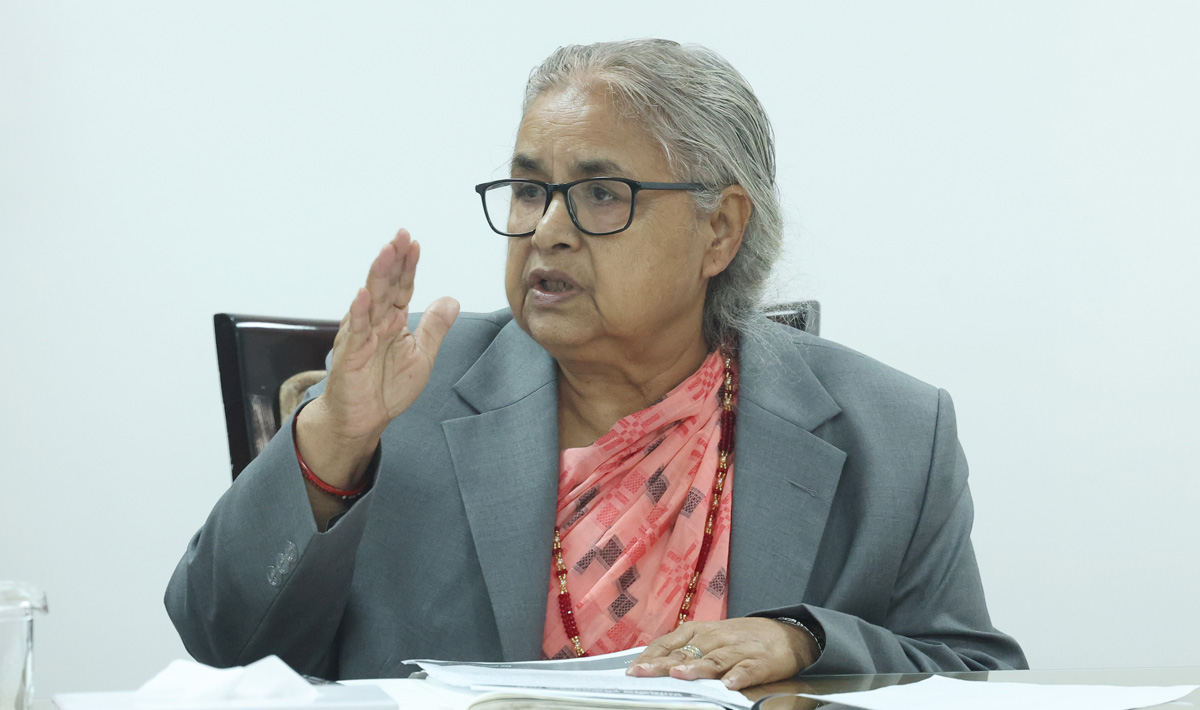
In a public address in Kathmandu, interim Prime Minister Sushila Karki stated, “We will not let Nepal become another Bangladesh.” This remark has captured public attention, not as a criticism of Bangladesh, but as an expression of a significant worry faced by transitional governments in South Asia. Karki’s statement highlights the challenge of transitioning from popular uprisings to stable democratic governance while avoiding the pitfalls of prolonged uncertainty.
Nepal is in a precarious situation, governed by an interim administration following political turmoil, with upcoming elections. There is heightened public anticipation and diminishing patience while political unity is still weak. Karki’s warning highlights ‘the Bangladesh path’ as a cautionary symbol in regional politics, representing prolonged instability after mass mobilizations, ongoing public pressure on governmental institutions, and challenges in re-establishing normal governance.
Across South Asia, recent years have shown that while it may be easier to dismantle an entrenched political order through popular movements—largely led by youth—replacing it with a stable alternative poses significant challenges. Following these movements, the resultant period often suffers from confusion regarding legitimacy, authority, and future direction.
Nepal’s political history is marked by numerous transitions, each promising reform and inclusion. Currently, the situation is uniquely influenced by younger, digitally connected citizens who are politically engaged and demanding swift change. Their vigorous involvement has broadened democratic participation but has simultaneously created immense pressure on interim institutions that were not intended to facilitate such rapid, transformative shifts.
Bangladesh’s recent history demonstrates significant risks during periods of political upheaval. Triggered by a student-led uprising, the nation has faced extensive unrest, characterized by regular protests, disruptions in administration, and ambiguity regarding future political outcomes. Although elections are set to occur, the turbulent pre-election phase raises doubts about the ability to convert revolutionary energy into lasting institutional changes. This very uncertainty is what Nepal’s interim leadership seems determined to sidestep.
The Burden of Interim Government
Prime Minister Karki described her administration as akin to a ‘sudden storm,’ illustrating its abrupt onset and the significant challenges it encounters. Interim governments are placed in a precarious position, tasked with stabilizing the nation, addressing public demands, organizing elections, and ensuring impartiality, all while lacking the complete legitimacy derived from an elected mandate.
In Nepal, the interim administration faces intense scrutiny from various factions, including established political parties that criticize its authority and perceived inefficiency, alongside activist groups demanding quicker reforms and fulfillment of revolutionary standards. Karki, the head of government, has recognized the frequent calls for her resignation, often without a clear alternative plan from critics.
This situation illustrates a wider regional shift where procedural politics—centered on elections, legislation, and timelines—are increasingly overshadowed by the demands of the populace. While public pressure is a vital aspect of democracy, it risks undermining institutional integrity by focusing on replacement rather than reform.
Youth Activism: Democratic Asset or Governance Challenge?
One of the most sensitive aspects of Karki’s remarks is the role of youth, particularly Generation Z activists. She observed that small groups often approach the government with varying, occasionally conflicting demands. Her statements were not intended to dismiss youth participation but rather to convey frustration over the lack of coordination, continuity, and institutional engagement among these groups.
Youth activism has significantly influenced South Asian politics by challenging complacency, highlighting injustices, and bringing moral urgency to public discussions. Nevertheless, moving from activism to governance necessitates a distinct set of skills, including negotiation, compromise, and an appreciation for institutional boundaries.
In Nepal and Bangladesh, there exists a significant gap between the revolutionary aspirations of the populace and the practical realities faced by interim governments. These governments struggle to dismantle outdated systems, create new structures, and implement immediate improvements in people’s lives all at once. Failing to recognize this disparity leads to increased frustration among the citizens, resulting in a continuous cycle of protests and governmental inaction.
Karki’s warning emphasizes the need to adjust our expectations regarding democracy, highlighting that it encompasses not just resistance but also the virtues of patience, process, and shared responsibility.
Why Bangladesh Has Become a Cautionary Reference
In referencing Bangladesh, Nepal’s interim prime minister highlighted a pattern of continued popular protest post-regime change, known as the ‘Bangladesh path.’ This phenomenon hinders authority consolidation and compromises the state’s ability to function effectively.
Prolonged uncertainty leads to economic stagnation, diminishes public trust in institutions, and fosters governance by disruption, ultimately causing citizens to become disillusioned with both leaders and democratic processes.
For Nepal, ensuring electoral credibility is vital as it approaches elections. This credibility hinges not solely on the voting day itself but also on the overall environment surrounding the elections. Ongoing instability, frequent changes in administration, and continuous public unrest can erode public confidence even before votes are cast.
Karki emphasizes that the preservation of institutional continuity is crucial for democracy, arguing that it cannot rely solely on popular mobilization. Functioning courts, bureaucracies, security institutions, and electoral bodies are essential. Instead of suppressing dissent, the focus should be on directing political energy towards accountable frameworks that can withstand public pressure without leading to institutional collapse.
Responsibility for democratic transition in Nepal involves not just the government but also political parties, civil society, and activist groups. The fragile nature of the system can be exacerbated by disagreements. Sushila Karki’s statement on avoiding a fate like Bangladesh serves as a caution, emphasizing the challenges that arise after initial enthusiasm in democratic change fades.
Nepal faces a pivotal moment to show that popular movements and institutional governance can coexist, transforming protest into process and disruption into stability. This balance necessitates restraint from authorities and patience from change advocates.
Revolutions occur rapidly, but democracies develop gradually. Karki emphasizes stability, continuity, and elections as pivotal to Nepal’s political discourse, and the nation’s ability to confront these challenges will determine both the interim government’s success and the credibility of its democratic future.
Yasir Silmy is a Bangladeshi academic and columnist, currently serving as the Chairman of the Department of Journalism and Media Studies at BGC Trust University Bangladesh. He is a former journalist with the Daily Sun, a leading English-language daily in Bangladesh. He regularly writes op-eds for prominent news outlets at home and abroad, focusing on geopolitics, media, environmental issues, and contemporary national and international affairs, with the aim of raising public awareness. He is also a talk show host on Bangladesh Television (BTV).