Kathmandu
Monday, February 23, 2026





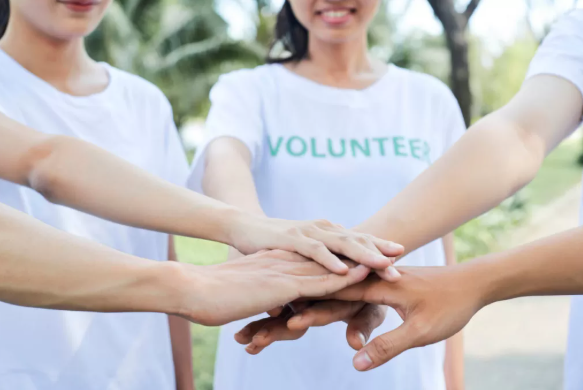
Volunteerism or the BIG V as I call it has been one of my greatest passions. My first ever opinion piece, written more than 10 years ago for The Kathmandu Post, was on this issue. The BIG V is not only an incredible and important way of expressing the best of humanity; it is also one of the most underappreciated, undervalued experiences that enhances and boosts leadership skills while, at the same time, contributing to the betterment of society.
I always believed that any society that aspires to be just, fair and inclusive for all, must leverage the potential of volunteerism. But promoting volunteerism is not just an issue of social justice, a way to embrace universal values like solidarity, altruism and generosity. Any nation that wants to thrive economically by creating opportunities for its citizens, should also invest in the BIG V. Because being involved and engaged in any volunteering activity can really help societies to become better as a whole.
Citizens, irrespective of their social and economic status, can work together, united by a common cause whose final outputs would benefit the entire community. Yet volunteerism should not be seen as a panacea that can solve all the issues and problems. Nor should it be taken as a shortcut taken by politicians to dodge their responsibilities, that, in all the effects, are actually their duties to meet the constitutional rights of the citizens who voted them in power.
Ideally, you can have a strong welfare state with effective investments in the field of healthcare and education where the state performing its functions at different levels of governance, delivers quality and most importantly, affordable services for all. Providing incentives and enabling volunteerism in such a scenario would offer a further toolkit to a variety of provisions that are constitutionally guaranteed and delivered professionally.
It can offer a value for money approach led by the state mechanisms or in a complementary fashion, through non state actors that are contracted and funded publicly. So volunteerism is part of a wider mix and it is important to emphasize and stress this aspect because oftentimes volunteerism is just seen as the “emergency” tool that is mobilized while the state is failing to uphold and implement its duties.
All this reasoning leads to imply that the BIG V is an important aspect of a dynamic welfare nation or any state that aims to become one, including Nepal, a land full of contrasts. It is a land of dreams and frustrations where visible, sometimes even ostentatious wealth and privilege inhabit and share space with vulnerability, discrimination and hopelessness.
Yet the people of the nation have aspirations. No state or government, even the most authoritarian, can stop and prevent people from setting some goals. Achieving some of these might imply departing for menial jobs overseas or burdening families with huge loans to pay third-rate universities abroad with the hope of being able to settle down in “better” nations.
Others might have less “room” and less possibilities to achieve their aspirations but nevertheless they keep going, working hard in jobs that hardly pay their expenses. It is easy and it is also convenient to neglect the importance of the BIG V in helping people meet their aspirations. After all, common opinion says that the focus of the state should be to run its services transparently and efficiently by focusing on strong development indicators.
It is important to ensure that the taxes paid by the citizens are properly used: more and better roads, more and bigger hydro-power projects, better provisions for the private sector and yes, ultimately also better health and educational services.
Supposedly, these are the national priorities of the country. Volunteerism is nowhere in the policy agenda. Having in place an effective policy and regulation to promote it and run efficient programs that can mobilize the people who are ready to invest their time for the common good, is not even remotely a priority for politicians and public officials who run the country.
Imagine an effective national volunteering policy or effective programs that mobilize professionals, students and workers alike in some “national missions” that, if achieved, could transform the nation. There are so many unresolved problems in Nepal and it should not be too hard to list out some of these critical “missions” where the BIG V can contribute.
From providing quality education to affordable public health to fighting pollution and combating climate change and tackling marginalization and isolation, citizens, with and without skills, can be mobilized if, in place, there are a proper vision and plan that receive public financing and support. Local governments are better positioned to leverage volunteers in fulfilling their mandate of providing good governance.
But volunteerism, in order to be really trans-formative and effective, should be part of a broader effort and ecosystem centered on promoting civic engagement. When there is an emergency, an urgent gap to fulfill, then the BIG V can always be mobilized but this should not be the default rule, the standard approach. Even in such scenarios, the deployment of volunteers must be extremely well thought and executed.
Instead, by not investing in volunteerism, the state misses a huge opportunity and the reason is simple. Without creating more possibilities for the citizens to volunteer and help each other, the daunting attempt of reaching the next level of national development considerably slows down and remains more difficult.
Every year, the 5th of December is celebrated as the International Volunteer Day. These special days offer a platform to reflect on the role volunteers have in society and how the state can do a better job at creating the enabling conditions for them to carry out their “missions”. Yet volunteerism is too important and deserves much more attention than a once a year’s commemoration.
Fortunately, the new year will provide an important opportunity to talk more about volunteerism. The year 2026 is significant because the United Nations has officially declared 2026 the International Volunteer Year (IVY 2026).
I am not very confident that this chance will be seized. I am not optimistic that there will be any serious effort to talk more about the role volunteerism should have in Nepal. For years, a draft National Volunteer Policy has been gathering dust in the corridors of power. Of course, volunteerism is not a priority; the country has more urgent needs to deal with as the usual refrain goes.
Yet, think well and reflect: could the aspirations of Gen Z also be met by an effective use of volunteerism? Can somehow the BIG V be part of a broader equation to help the new generations to find purpose and develop themselves?
As I wrote at the beginning of this piece, the BIG V is both a means to develop a nation if it is part of a bigger plan, and a tool to instill leadership and other skills in the people. It is undeniable that there are already many youths doing volunteerism all over the places in Nepal but these are mostly uncoordinated and fragmented efforts. In addition, very little is being done to recognize and acknowledge their contributions.
Leveraging the BIG V while also doing something to celebrate the real volunteers of the nation can definitely contribute to the creation of a “New Nepal” where universal principles based on social justices are not just talked about but also practiced for real. If the readers are still skeptical, please trust me, volunteerism not only transforms communities but also empowers those who engage in it. We should definitely give it a try because the BIG V can help meet the aspirations of many young citizens of this land.