Kathmandu
Thursday, January 15, 2026





I was born into an indigenous family, so it’s hard for me to say I never took part in hunting or fishing. These things were just part of life, part of how people lived and survived. I went with my father when he used a fish net in the river. I don’t even remember knowing the proper words for what he was doing. It wasn’t explained as a tradition or a practice. It just happened. I only remember that when the fish got caught, something in me didn’t feel right. Quietly, when no one noticed, I would throw the fish back into the water. I didn’t argue. I didn’t make a scene. I just did it. After a while, I stopped going with him altogether.
My uncle used to hunt deer and birds. He enjoyed it, and no one questioned it. Once, I tried to kill a bird using a catapult. I still remember the moment clearly. When the bird fell from the nest, there was a sudden heaviness inside me. Guilt, maybe. Or something very close to it. I didn’t have a word for it at the time, but I knew something had gone wrong. That moment stayed with me. After that, I completely stopped taking part in those activities. No one told me to stop. No one scolded me or praised me. There were no books, no lessons, no moral lectures. Just that moment, and the feeling that followed me afterward.
I think about this often now, especially because I teach ethics. I stand in front of students and explain theories, moral frameworks, philosophers’ arguments. I talk about right and wrong, duty and consequences, virtues and principles. I can do it well. The students seem satisfied. Sometimes they are even impressed. But somewhere inside me, a question keeps returning: is this really what ethics is? Or am I simply performing it? Am I showing that I know how to organize arguments, cite thinkers, and make difficult ideas sound clear?
When I think back to my childhood, ethics didn’t come from books. It didn’t come from rules written down somewhere. It didn’t come from authority. It came from an encounter. From seeing a living being suffer and realizing that I was the one who caused it. That realization didn’t feel intellectual. It didn’t feel like reasoning my way to a conclusion. It felt personal. Almost physical. Something tightened inside me. And that experience shaped me more deeply than any theory I would later study or teach.
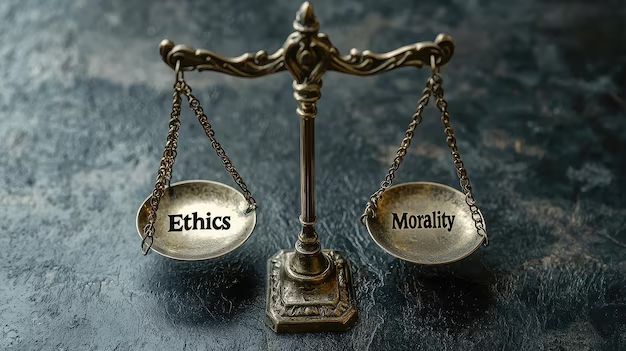
This is why I sometimes struggle with the language of ethics as an academic discipline. It often assumes that morality begins with knowledge: knowing what is right, knowing what is wrong, knowing how to justify one’s actions. But my own experience tells me something else. Morality, at least for me, began before knowing. It began as a kind of resistance. A refusal. A sense that certain actions were no longer possible for me, even if they were normal, accepted, or expected.
So, I find myself asking where this thing we call morality actually comes from. Is it biological, something wired into us through evolution? Is it psychological, shaped by emotions like empathy, fear, or guilt? Is it social, slowly formed through relationships, family, and community? Or is there something else, something harder to name, that appears in certain moments and interrupts us, quietly but firmly, saying, “not this”?
Then there is another question that troubles me just as much. If this sense of right and wrong exists, wherever it comes from, why do we still do wrong things? Sometimes even when we think we know better. Or maybe we don’t really know at all. Maybe what we call “knowing” in ethics classrooms is not the same kind of knowing that actually stops your hand when you are about to harm someone. Maybe moral knowledge is not primarily about clarity, but about vulnerability.
This is where academic discussions sometimes start to feel hollow to me. We debate what is good and bad as if agreement or logical consistency were enough. As if being able to defend a position guarantee that we will live by it. But my own life suggests otherwise. The moments that shaped me morally were not moments of understanding, but moments of discomfort. Of shame. Of being unable to continue as before.
I don’t have answers to these questions. I’m not even sure ethics is something that can be delivered the way a syllabus promises. Maybe ethics is less about learning what is right, and more about becoming someone who cannot easily do certain things anymore. Someone who hesitates. Someone who feels disturbed. Maybe morality begins not in certainty, but in unease.
Perhaps the most honest thing I can do, as a teacher, is to acknowledge this uncertainty. To admit that morality is not clean, not settled, and not guaranteed by knowledge. That it often arrives before language, before theory, before justification. That it troubles us. And maybe that trouble is not a failure of ethics, but its beginning. Even today, as we discuss modern issues—technology, digital responsibility, or any new challenge—the heart of ethics remains the same: it begins in feeling, reflection, and the quiet, painful recognition of responsibility.