Kathmandu
Tuesday, February 10, 2026





The country’s political landscape changed but the situation remains much the same

KATHMANDU: Today marks 100 days since the Gen Z revolt. The revolt, which took place on 8 and 9 September, not only displaced the joint coalition government of the Nepali Congress and the CPN (UML) led by the then Prime Minister KP Sharma Oli, but also led to the formation of an interim government led by former chief justice Sushila Karki. The revolt has sidelined major political parties from power and changed the political landscape of the country. However, there has been no fundamental change in the country’s situation in these 100 days. The interim government faces the challenge of changing that sooner than later.
Following the Gen Z protests, Gen Z leaders seem to be more active in the country’s politics and media instead of political party leaders. One of them, Binita Bogati, has been in her home district of Surkhet for the past week. She reveals that most of the citizens who participated in the discussions with her hoped that the country’s situation would change. She says, “Youths sacrificed their lives, and now the common people hope that corruption will stop and leaders and employees will improve their conduct.”
Binita, who believes that the new generation itself should come to power rather than pinning hopes on the same old politicians to fulfill the hopes and expectations of the new generation, is preparing to run for the upcoming elections from Surkhet Constituency No. 2. She says, “I and my generation are not just hopeful, but we believe that the situation in the country must change at any cost, because the Gen Z revolt has changed the landscape of the country. But the situation of the people has not changed.”
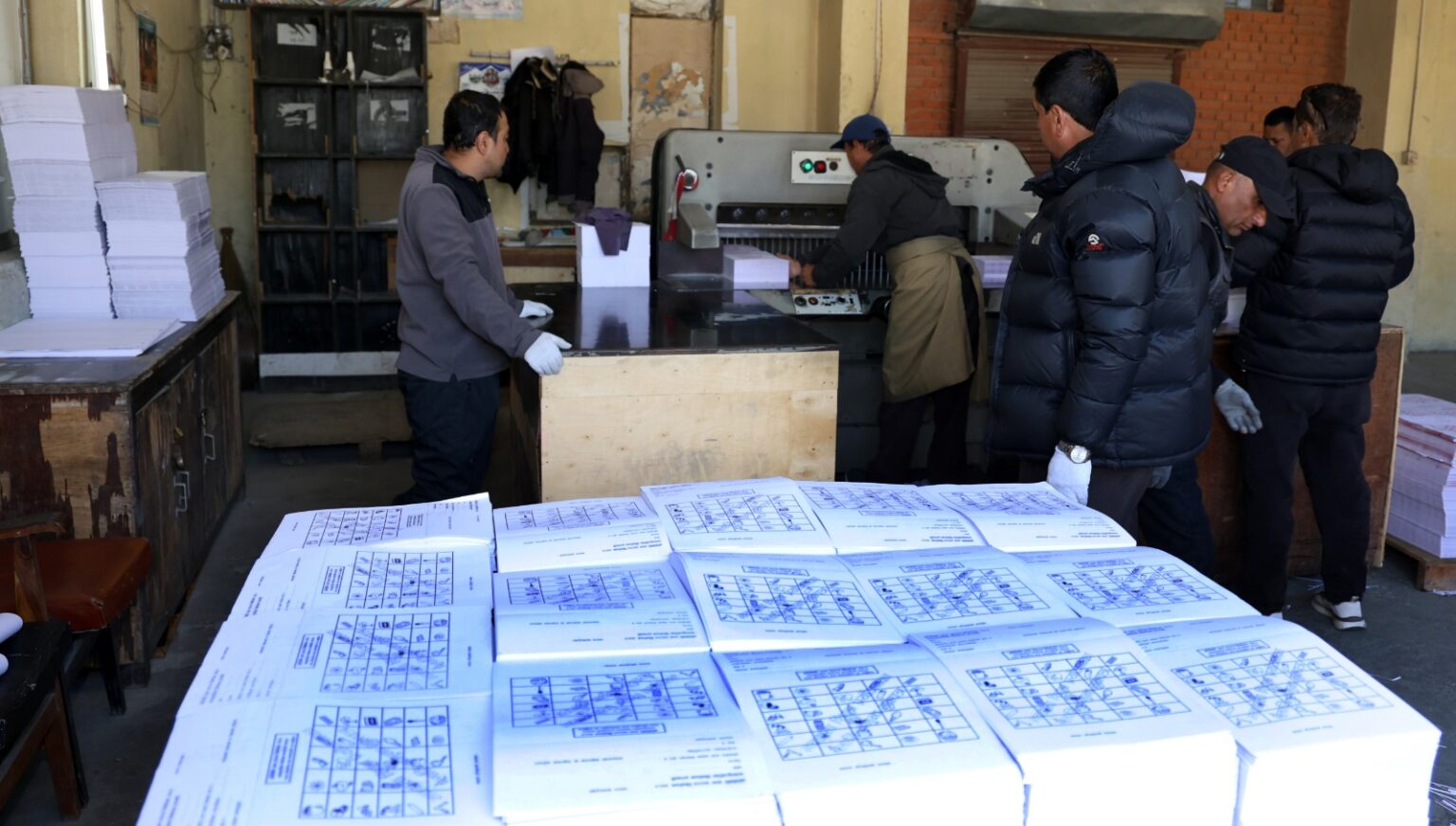
The government has announced an election to the House of Representatives on 5 March 2026, while the Election Commission is busy preparing for the elections. After the election announcement, many leaders participating in the Gen Z movement are readying themselves up to become candidates in the upcoming elections. New parties have even been opened for the elections at the behest of Gen Z leaders. This is another change brought about by the Gen Z movement.
Gen Z leader Raksha Bam, who has been interacting with youth and citizens in Kathmandu and various provinces since September 8, shares a similar experience to Binita. She says, “Every household knows why the young generation had to revolt. Many now ask us if there will be no nepotism and favoritism in government work. People are hopeful that things will get better in the country now. They should not be disappointed.”

A gathering of youth at New Baneshwor in the midst of the Gen Z protest. Bikram Rai/Nepal News
After the Gen Z protests, on the one hand, the old parties that have been in power for a long time are expressing dissatisfaction with the destruction of the country’s government structures and the increase in anarchy in society. On the other hand, the Gen Z movement has instilled hope to the new generation and the common people.
The movement launched by the new generation, who were thought to be ignorant of and uninterested in politics, against the misrule of the old parties suddenly changed the course of politics in the country. This rebellion, a rare event in the world, dealt an unimaginable blow to the parties that had been in power, including the Nepali Congress, UML, and Maoists. The security of the prime minister, president, and other key party leaders was at risk. Therefore, after the Gen Z revolt, a new challenge has emerged as to whether the leaders of the old parties will correct themselves or be lost in the oblivion. The question of internal democracy within the political parties is also being raised.
UML Chairman KP Sharma Oli, who became the unanimous chairman at the 10th General Convention of the party held in Chitwan four years ago and announced a central committee that suited him, is forced to face challenges within the party in the ongoing 11th General Convention. He could not suppress the discontent within the UML as he had in the past. Leaders once considered close to Oli are competing against him.
Even within the old parties, voices for representation of youth and Gen Z have been raised. Gen Z leader Bam says, “The UML was forced to hold a special general convention a year in advance due to the Gen Z movement. Still, the intervention of the new generation within the parties is yet to take a concrete shape, but it has begun. This is a hopeful situation.”
If there had been no Gen Z movement, Nepali Congress (NC) President Sher Bahadur Deuba would not have given the responsibility of acting president to Vice President Purna Bahadur Khadka. After the party and himself were physically attacked during the Gen Z protests, he was forced to give Khadka the role of acting president. Moreover, the younger generation within the NC, which is already busy preparing for the general convention, has started mounting pressure. There is pressure on the NC establishment to hold a special general convention if a regular general convention cannot be held. Due to this pressure, the NC has decided to hold the general convention by mid-January, 2026.

The two candidates for the post of chairman, Ishwor Pokharel and KP Sharma Oli, in the closed session of the 11th general convention of the CPN (UML). Photo: Nepal Photo Library
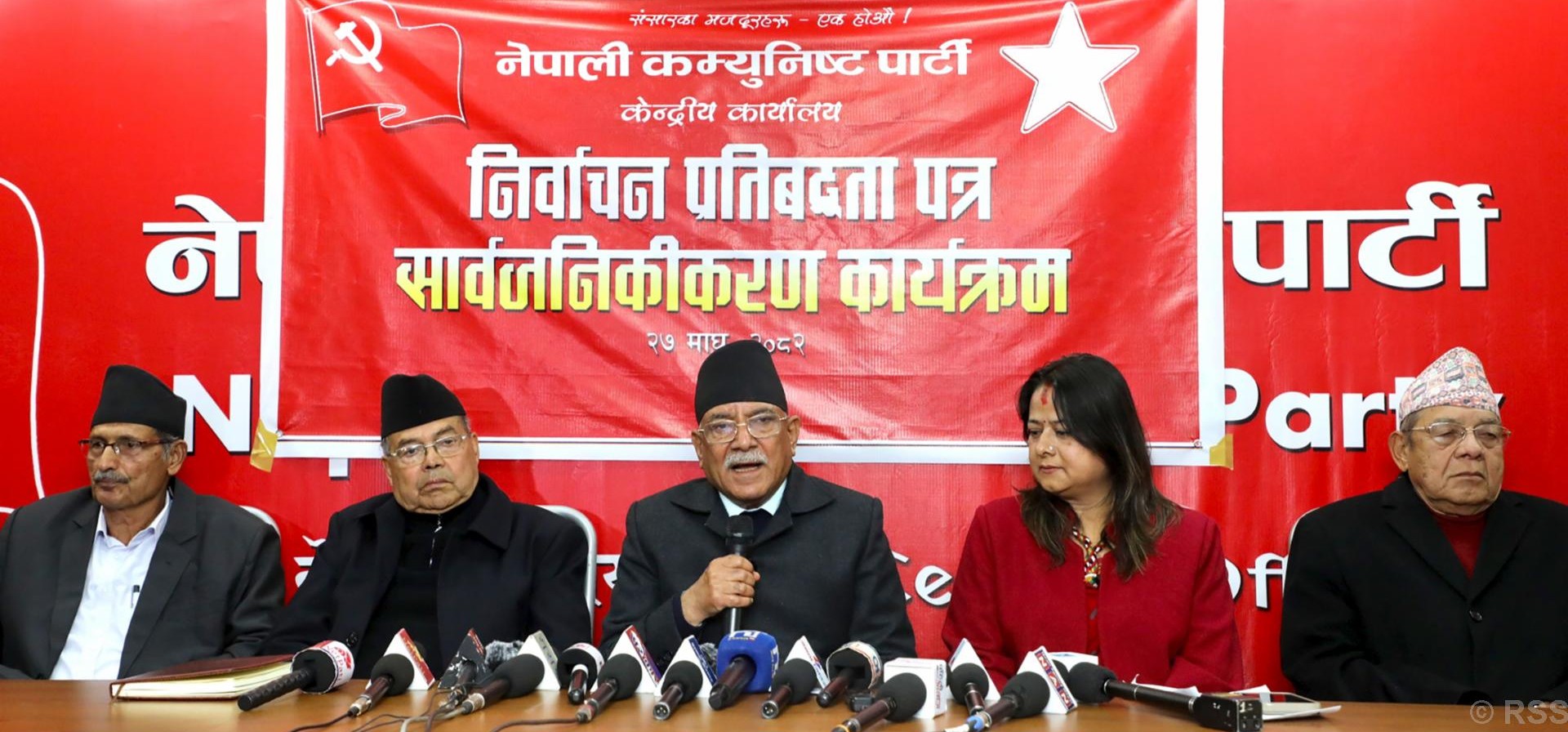
The chairman of the then CPN (Maoist Center), Pushpa Kamal Dahal ‘Prachanda’, resigned from the post of chairman immediately after the Gen Z movement and declared himself the coordinator of the party. After that, he changed the party’s ‘Maoist’ brand and ended the very existence of the Maoist party. He has now formed the Nepal Communist Party by merging his and 16 other parties, including the CPN (Unified Socialist) led by Madhav Kumar Nepal who broke away from the UML.
The Gen Z movement has forced some of the old parties, which have reached a defensive position, to correct themselves. However, people who were not seen in the political scene before are opening new parties in a big way after the Gen Z movement. New political parties have been launched under the leadership of Kulman Ghising, former managing director of the Nepal Electricity Authority; Hark Sampang, independent mayor of Dharan; Birendra Bahadur Basnet, chairman of Buddha Air; and medical entrepreneur Durga Prasain. The new parties launched in this way seem to be guided by the situation and public expectations after the Gen Z movement rather than a political ideology.
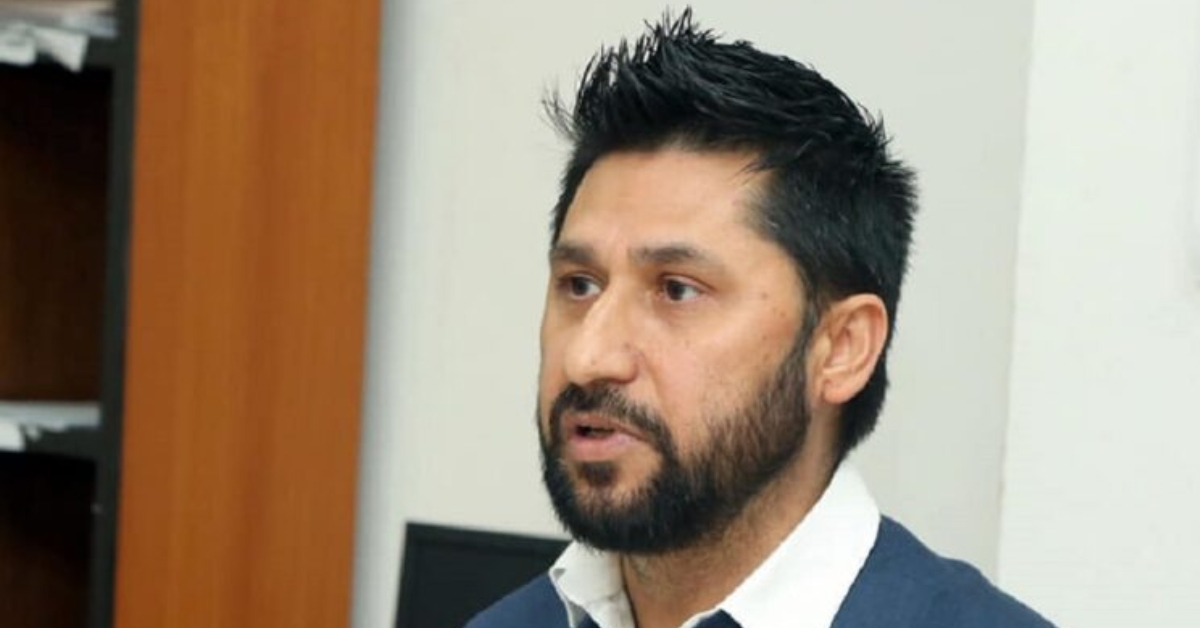
The unification between the Rastriya Swatantra Party and the Bibeksheel Party, which emerged as alternative forces in a short time, is also a product of the hope created by the Gen Z movement. Gen Z leader Rabi Kiran Hamal says that political party leaders who previously thought that the new generation knew nothing are now discussing with Gen Z how to move forward. He says, “If there had been no Gen Z movement, changes in the parties would not have been so quick.”
It is the result of the Gen Z movement that the country has its first female prime minister. It is difficult to estimate how long it would have taken for the country to have a female prime minister if that movement had not taken place. Along with the prime minister, people who can inspire hope have also been made ministers in the interim government. Many have considered it positive since some people who inspire hope such as Kulman Ghising, Mahabir Pun, and others, including Prime Minister Karki, are leading the government.
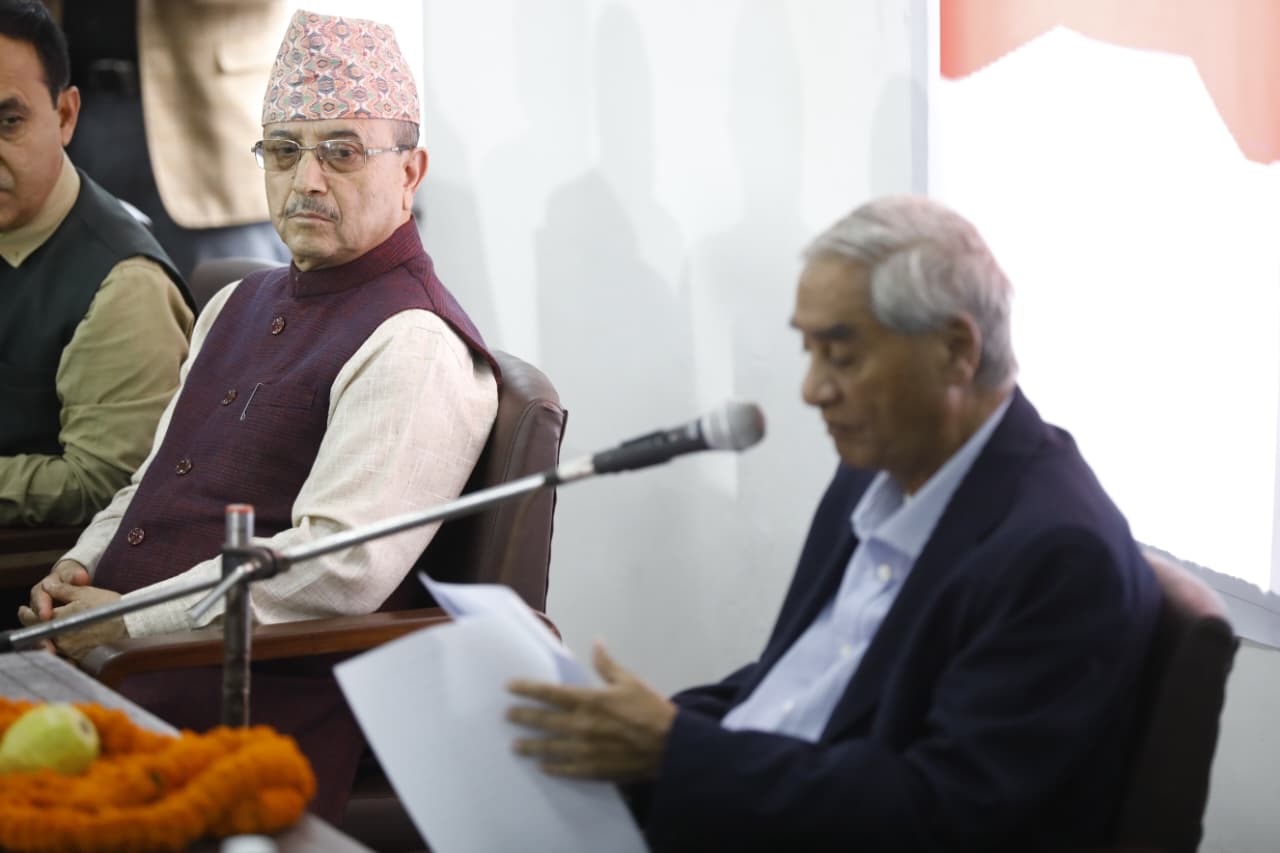
NC Party President Sher Bahadur Deuba and Vice President Purna Bahadur Khadka. Photo: Bikram Rai
Other countries have also started taking inspiration from Nepal’s Gen Z movement, which has shocked the world. However, of late, differences of opinion and divisions have also surfaced among the Gen Z leaders and activists. Gen Z leader Sudhan Gurung, whom Prime Minister Karki publicly called ‘my eldest son’, has expressed that parliament can be restored on the condition of amending the constitution.
Other Gen Z leaders, however, have a different opinion from that of Gurung. They argue that if parliament is restored and the old parties return to power, the relevance of the Gen Z revolt will be over. One of them, Binita Bogati, says, “The election must be held on 5 March by all means while preserving the constitution. Change can only be expected from the leadership that comes after the election.”
The new parties are taking the Gen Z rebellion as an opportunity to rise to power. Some of the old parties, however, seem to be interpreting the Gen Z movement as a crime, considering it as a case of taking power from their hands. Gen Z leader Rabi Kiran Hamal adds, “On the one hand, the legitimacy of the government has been questioned because government ministers are involved in various controversies. On the other hand, there is a danger of criminalizing the Gen Z revolt.”
Hamal argues that an all-party government should be formed as the elections announced on 5 March seem difficult. He says, “The very people who used to cheer us on saying that we had done well until recently have now started saying that we have turned the country into ashes. This shows that there is not only hope but also despair in the country.”
A new constitution was promulgated in 2015 after the second Constituent Assembly elections. The constitution brought the country to a federal system of governance. With the slogan of ‘Singha Durbar in every village’, 753 local levels were formed across the country, and 761 governments were formed, including seven provincial and the federal governments. The monarchy has been abolished in the country and a federal democratic republic has been established, and after the Ranas and the kings, the children of the people have taken over the reins of power. However, in the last decade, the citizens’ expectations of good governance, development, and effective service delivery have turned into disappointment.

The agreement signed between Gen Z and the government at the Office of the Prime Minister and Council of Ministers in Singha Durbar. Photo: Nepal Photo Library
The reason for this was the vicious cycle of forming and toppling governments in collusion with the leaders of political parties including the NC, UML, and Maoists, who had held the reins of power for a long time. Power-centered politics and the extreme partisanship in every state body had disappointed the people. It was being said that the major parties had sidelined independent and capable people and had trapped the country in the quagmire of party rule by recruiting their cadres wherever possible. The youth, who were fed up with this, launched the Gen Z rebellion. “Corruption, nepotism, and instability were rampant in the country because of the parties. That is why the Gen Z movement has brought great upheavals in the government and the old parties,” political analyst Indra Adhikari says, “The new generation has now entered politics out of concern for the country, and the common man has also started becoming active in politics. This is a positive change.”
10-point agreement: The achievement of the revolt
Even now, due to high unemployment in the country, the young generation is forced to migrate in search of work. The new generation, who see no future in the country, had been quietly opposing the parties for a few years. However, no government paid attention to addressing their voices and anger. Instead of addressing the voices of the young generation, they have tried to suppress them, which is why the Gen Z movement took place. The movement, which started with the demand for good governance, also showed that the new generation has the potential to change power equation. However, the Gen Z revolt could not bring about a change such that the expectations of the people from the state over the last decade would be met. Anthropologist Suresh Dhakal says, “The Gen Z movement neither succeeded in reforming the old parties, nor did it end them. That is why there does not seem to be much hope in society.”

Ministers and Gen Z representatives participating in the agreement between Gen Z and the government. Photo: Nepal Photo Library
The Gen Z movement also gave other groups dissatisfied with the government an opportunity to rise up against the party leaders and the government. The new environment created by this movement, which claimed 76 lives, has raised hopes that ‘there will be no more corruption in the country, the rule of law will be established, and the deserving will get opportunities.’ The responsibility to fulfill this lies with the leadership of the interim government.
A consensus among the Gen Z is needed on how to move forward to protect the achievements of the revolt. Three months after the Gen Z movement, a ten-point agreement was signed between the government and the Gen Z leaders on December 10. It includes agendas ranging from institutionalizing the Gen Z movement to investigating corruption.
That agreement addresses the sacrifices made by Gen Z. However, it has also been commented that one point of that agreement exempts criminal activities such as setting fire to private property in the name of the Gen Z revolt. In such a situation, a question has arisen as to how the agreement between Gen Z and the government will be implemented.
The interim government formed on the strength of the Gen Z movement should show readiness in implementing the agreement. There is also pressure on the government to work effectively in a short time, hold elections on time, and hand over power to elected representatives. Anthropologist Dhakal says, “This government should focus on holding elections on the scheduled date and handing over power to the people’s representatives. Otherwise, the current hope will turn into disappointment.”