Kathmandu
Wednesday, January 7, 2026





Nearly half of the 93 Koshi Province Assembly members have already served as ministers
BIRATNAGAR: Even as three years have passed since the start of the second term of the Koshi Province Assembly, changes in power equations, along with repeated cabinet expansions and reshuffles, have continued unabated. During this period, six different governments have been formed in the 93-member assembly, while the provincial Council of Ministers has been expanded or reshuffled 17 times.
Since the formation of the first government of the second term on 9 January 2023, up to the latest cabinet reshuffle carried out on Tuesday (6 January 2026), as many as 44 provincial assembly members have had the opportunity to serve as ministers, some of them several times.
The CPN (UML) has emerged as the party that has appointed the highest number of ministers in the province. UML leader Hikmat Kumar Karki, who has served as chief minister three times, appointed 38 individuals as ministers at various stages of his tenures. Likewise, Uddhav Thapa and Kedar Karki of the Nepali Congress, during their respective terms as chief minister, appointed 10 ministers each.
Karki-led cabinet expanded for the fifth time
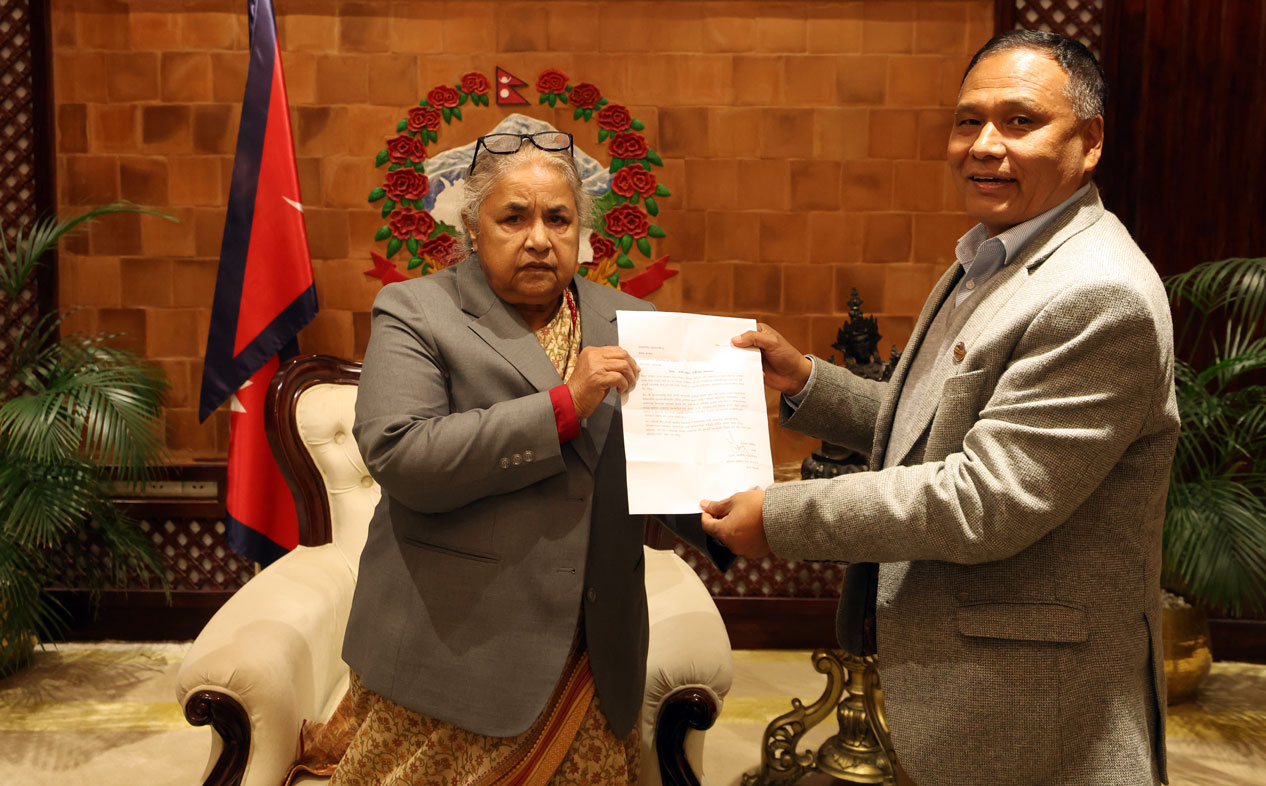
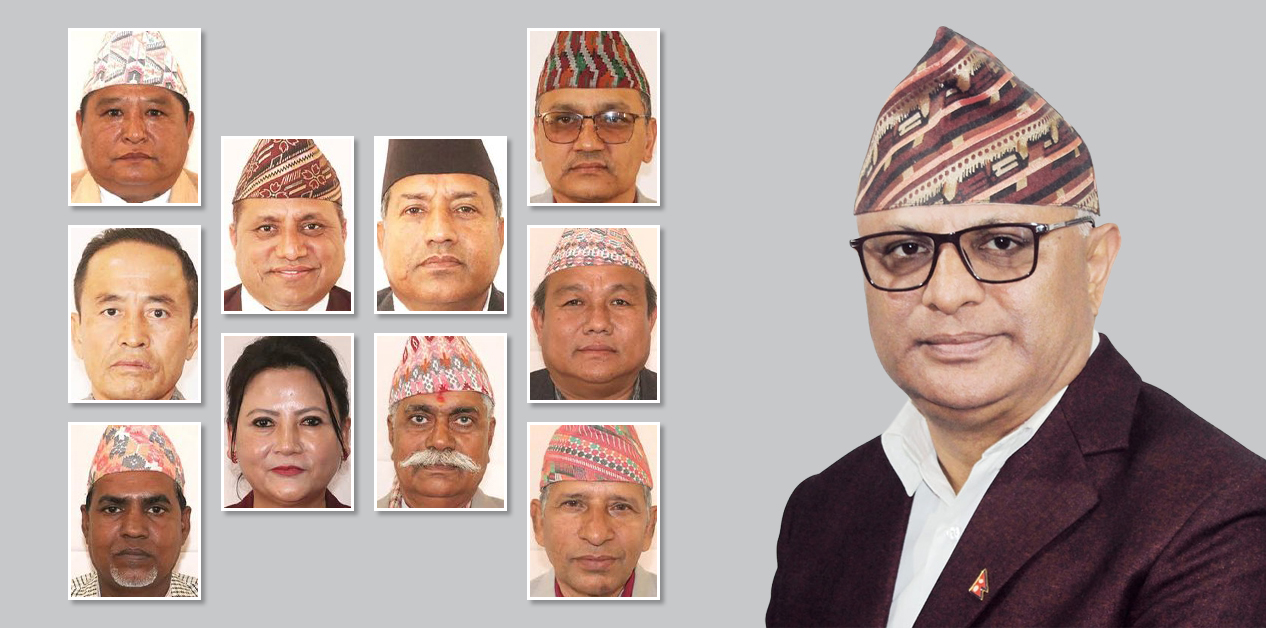
The Koshi Province government underwent another reshuffle on Tuesday. Chief Minister Hikmat Kumar Karki, while expanding the cabinet for the fifth time, inducted five new faces each from the UML and the Nepali Congress (NC).
The reshuffle was carried out in line with an understanding between the UML and the NC – coalition partners since 13 September 2024 – to rotate ministers after one year in office. Accordingly, incumbent ministers were recalled and replaced with new appointees. Chief Minister Karki appointed four ministers and one minister of state each from both parties.
From the NC, Pradip Kumar Sunuwar was appointed Minister for Physical Infrastructure, Man Bahadur Limbu as Minister for Health, Israil Mansuri as Minister for Industry, Agriculture and Urban Development, and Bhim Parajuli as Minister for Tourism, Forests and Environment. Shobha Chemjong was appointed Minister of State for Physical Infrastructure.
From the UML, Bidur Lingthep was appointed Minister for Economic Affairs and Planning, Chintan Pathak as Minister for Drinking Water, Irrigation and Energy, Indramani Parajuli as Minister for Internal Affairs and Law, and Ram Kumar Mahato as Minister for Social Development. Umakant Gautam was appointed Minister of State for Internal Affairs and Law.
All newly appointed ministers and state ministers took their oaths on Tuesday evening.
Who became minister and how many times?
Frequent changes in power equations have allowed several provincial lawmakers to serve as ministers multiple times. The current Chief Minister Karki himself has served in the position three times, while Uddhab Thapa has been chief minister twice and Kedar Karki once.
Among ministers, Pradip Kumar Sunuwar of the NC has served the most—four times. Kamal Prasad Jabegu of the then CPN (Unified Socialist) and Rajendra Rai of the then CPN (Maoist Center) have each served three times.
Eleven provincial lawmakers have served as ministers twice. From the UML, Til Kumar Menyangbo, Buddhi Kumar Rajbhandari, Panchakarn Rai, Ekaraj Karki, Leelaballabh Adhikari, and Ram Bahadur Magar have served twice. Others include Jeevan Acharya, Ganesh Prasad Upreti, Narayan Bahadur Magar of the CPN, Ram Kumar Khatri of the NC, and Nirmala Limbu of the Janata Samajwadi Party (JSP).
Shamsher Rai (NC), Baburam Gautam and Durga Prasad Chapagain (CPN), and Bhaktiprasad Sitaula (RPP) have served as ministers once.
Among state ministers, Srijana Rai of the UML served twice, while Indira Thapa, Sunita Kumari Gurung, Gyananand Mandal (NC), Ram Prasad Mahato and Niran Rai (UML), and Bandana Jhangar of the Nepali Communist Party served once each.
Timeline of 17 Cabinet expansions and reshuffles
During the second term of the provincial government, Hikmat Kumar Karki first became chief minister on 9 January 2023, appointing Til Kumar Menyangbo, Bhaktiprasad Sitaula, and Nirmala Limbu as ministers. Four days later, on 13 January, the cabinet was expanded with the inclusion of Durga Prasad Chapagain, Jeevan Acharya, and Buddhi Kumar Rajbhandari.
On 7 July 2023, Uddhav Thapa of the Nepali Congress became chief minister and appointed Kamal Prasad Jabegu and Pradip Kumar Sunuwar as ministers on the same day. Two days later, on 9 July, Jeevan Acharya, Rajendra Karki, and Ram Kumar Khatri were added to the cabinet. Following a Supreme Court order, a new government under Thapa was formed on 2 August 2023, appointing Baburam Gautam, Pradip Sunuwar, and Kamal Jabegu as ministers. Thapa expanded the cabinet again by appointing Nirmala Limbu on 11 August and Gyananand Mandal on 16 August, but the government later collapsed following a court order.
On 8 September 2023, Hikmat Kumar Karki returned as chief minister, appointing Til Kumar Menyangbo, Panchakarna Rai, Ekaraj Karki, and Srijana Rai as ministers. On 25 September 2023, *Leelaballabh Adhikari, Buddhi Kumar Rajbhandari, Ram Prasad Mahato, and Niran Rai were added.
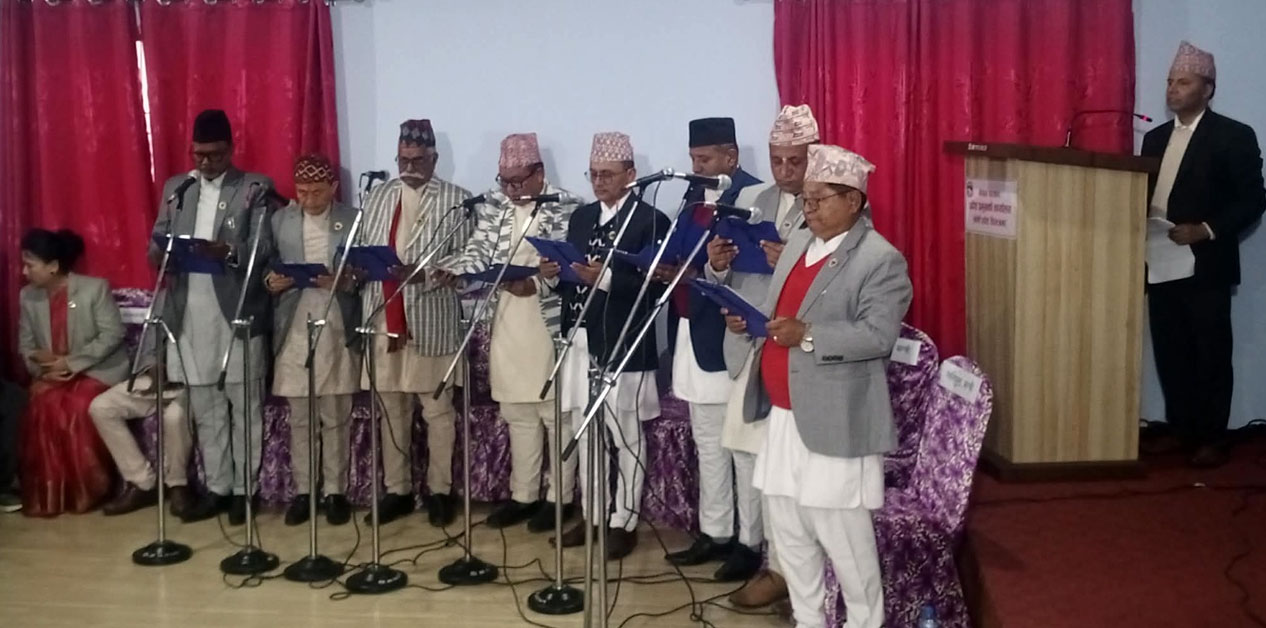
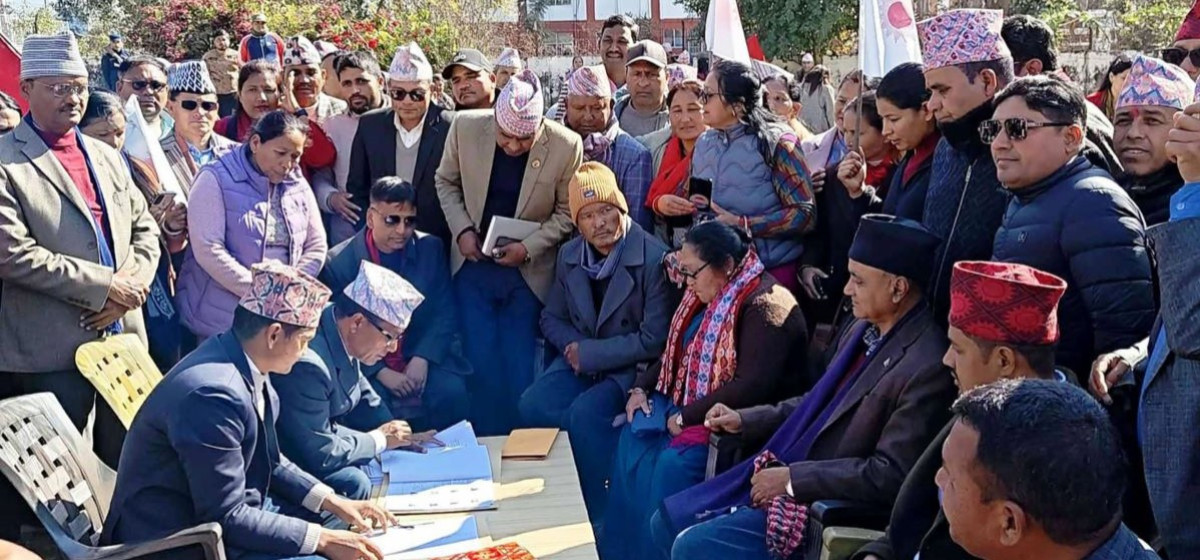
Newly appointed ministers of Koshi took oath on 06 Jan
Later that year, on October 15, Kedar Karki became chief minister and appointed Ram Bahadur Magar and Shamsher Rai as ministers. On 3 November 2023, Ganesh Prasad Upreti and Kamal Prasad Jabegu joined the cabinet. On 9 February 2024, Karki expanded the cabinet to 10 members by including Pradip Kumar Sunuwar, Rajendra Karki, Ram Kumar Khatri, Narayan Bahadur Magar, Indira Thapa, and Sunita Kumari Gurung.
On 9 May 2024, Hikmat Kumar Karki once again became chief minister, appointing Ganesh Prasad Upreti and Ram Bahadur Magar as ministers on the same day. A cabinet expansion on 17 May brought in Rajendra Karki, Panchakarna Rai, Ekaraj Karki, Narayan Bahadur Magar, Leelaballabh Adhikari, Srijana Rai, and andana Jhangar.
After the Nepali Congress joined the UML-led government on 13 September 2024, Bhupendra Rai, Khagen Singh Hangam, Sadanand Mandal, and Bhoomi Prasad Rajbanshi were appointed as ministers. Following Leelaballabh Adhikari’s resignation on 2 December 2024 over an illegal Japan visit, Rewati Raman Bhandari was appointed to fill the vacant ministerial position.