Kathmandu
Tuesday, February 3, 2026





Nepali Congress candidate Shekhar Koirala faces the challenge of protecting his political legacy
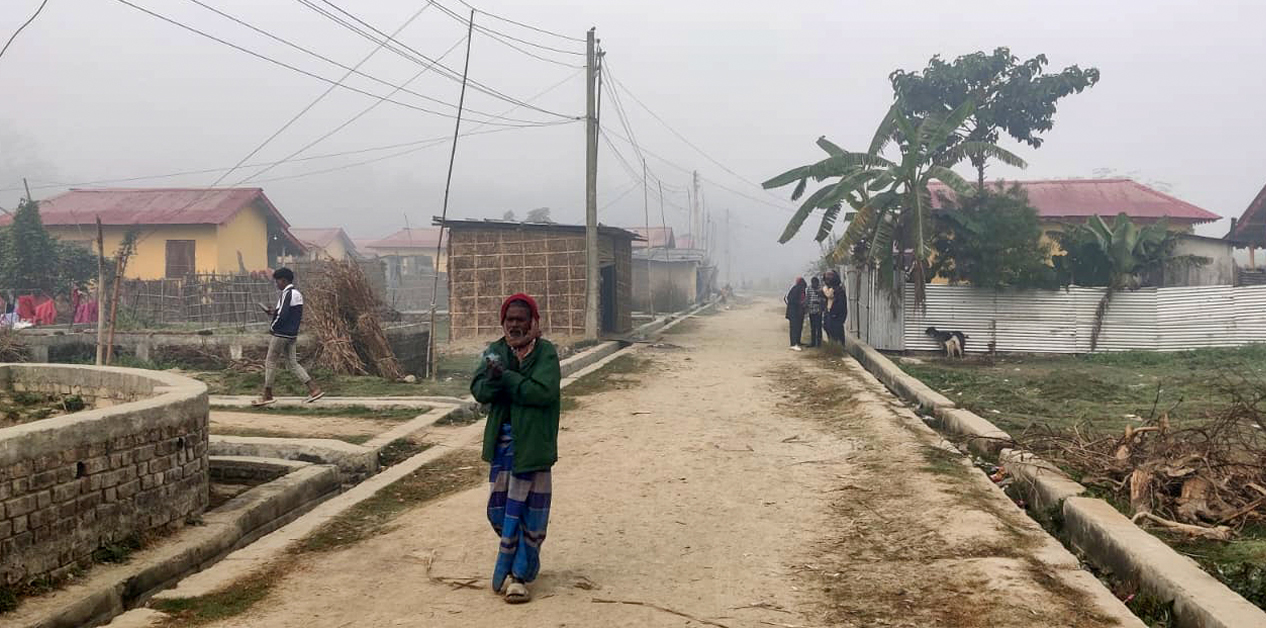
BIRATNAGAR: About four kilometers west–south of the Office of the Chief Minister and Council of Ministers near Roadshesh Chowk in Biratnagar, the capital of Koshi Province, lies a settlement called “Sampanna Basti” (prosperous settlement). But only after reaching the area does one realize that despite its name, the settlement is entirely marked by poverty.
Located in Biratnagar–12, residents of this settlement have so far remained untouched by the heat of electoral politics. Instead, they live in constant fear of when the Kesaliya River will force them to flee their homes during the coming monsoon.
That is why, for the House of Representatives election scheduled for March, voters from the 70-household settlement have just one condition: “Whoever stops the Kesaliya floods gets our vote.”
“We’ve been living here for years, but no one has seen our suffering,” says 60-year-old Rameshwar Rishidev, a resident of Sampanna Basti.
Roads in the area are still muddy. During every election, leaders from all political parties make sure to visit the settlement, promising to protect it by building embankments along the Kesaliya River. But the problem remains exactly the same.
Even today, during the monsoon, residents are forced to carry their belongings and take shelter at the nearby Bakhari School.
“This has become our fate. How long are we supposed to take refuge on the cold floors of a school?” Rishidev asks.
Despite its name, residents of Sampanna Basti have not been able to enjoy even basic human amenities. Not a single road inside the settlement has been graveled.
“There’s no place for children to play. Water collects in the pits dug in the name of roads,” complains Kaushima Devi Rishidev, another local resident.
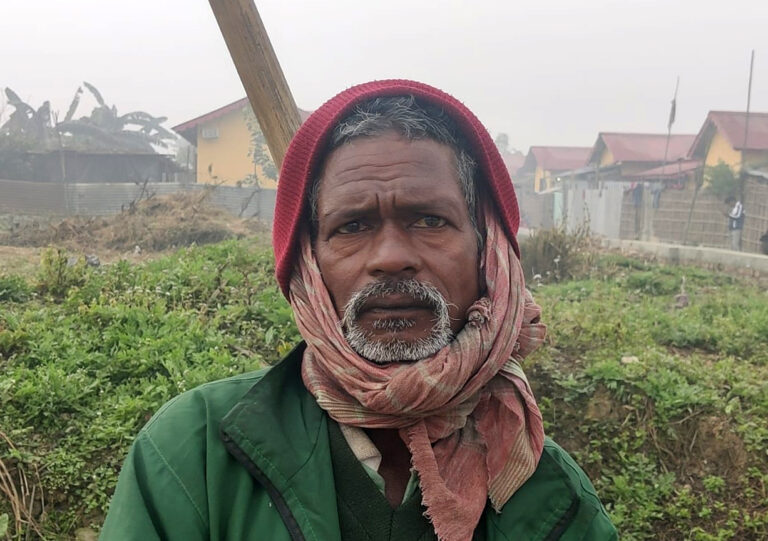
60-year-old Rameshwar Rishidev
Some time ago, drainage channels were built in the settlement, but no outlet for the drains is visible. Without covers, there is a constant risk of small children falling in. Locals say that at the very least, graveling the roads would have helped them escape the mud.
Homes in the settlement still do not have electricity meter boxes installed, nor is there a proper supply of clean drinking water. Residents accuse political leaders—who speak grandly of development—of using the settlement merely as a vote bank.
“If embankments were built by developing a corridor upstream from Ward No. 5 along the Kesaliya River, settlements in the southern areas could be protected from flooding,” says Kusheshwar Rajbanshi, a ward member of Biratnagar–12.
Local resident Lolai Rishidev says people are preparing to unite this time against leaders’ old habit of flooding them with promises during elections but abandoning them to real floods during the monsoon.
“This time, we won’t just sit and listen to leaders’ words. We want a guarantee that work will actually happen,” he says.
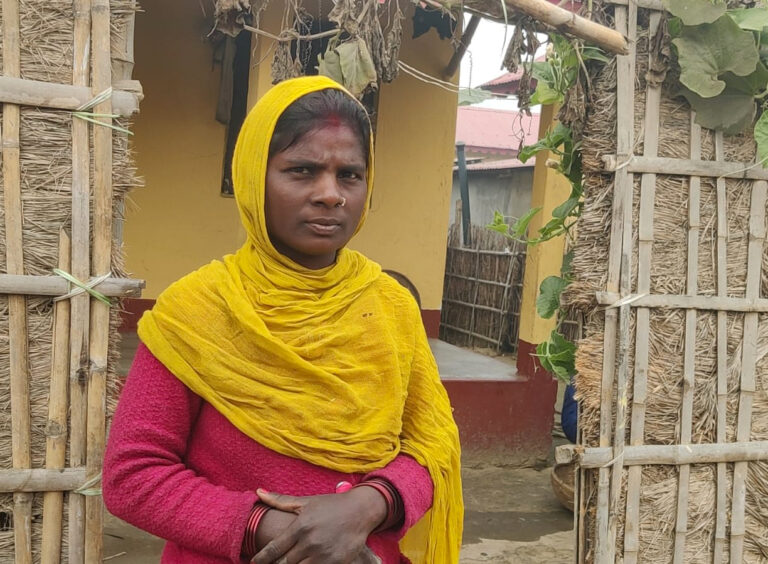
Kausami Devi Rishidev
So far, no candidates have visited the settlement to seek votes. But voters have already decided on their agenda. Their demands are clear: embankments along the Kesaliya River, gravel roads, electricity meter boxes, and proper drainage outlets.
“Whoever comes with a commitment to understand and fulfill our problems will get our vote,” Rameshwar repeats.
Giving new faces a chance
Sampanna Basti falls under Morang Constituency No. 6, where 20 candidates, including those from major parties, are in the electoral race. However, the main contest is expected to be among Dr Shekhar Koirala of the Nepali Congress, Binod Dhakal, a former central committee member of the UML, Opendra Raya of the Nepali Communist Party (NCP), and Rubina Acharya of the Rastriya Swatantra Party (RSP).
In what is considered a Nepali Congress stronghold, Koirala is fighting to preserve the party’s legacy, while Dhakal is strategizing to avenge his defeat at Koirala’s hands 17 years ago. Dhakal lost to Koirala in the 2008 by-election (2065 BS).
In the 2022 general election, Koirala defeated UML candidate Lal Babu Pandit by a wide margin. Koirala secured 35,224 votes, while Pandit received 22,946 votes. RSP candidate Yadav Kumar Pradhan finished third with 9,140 votes.
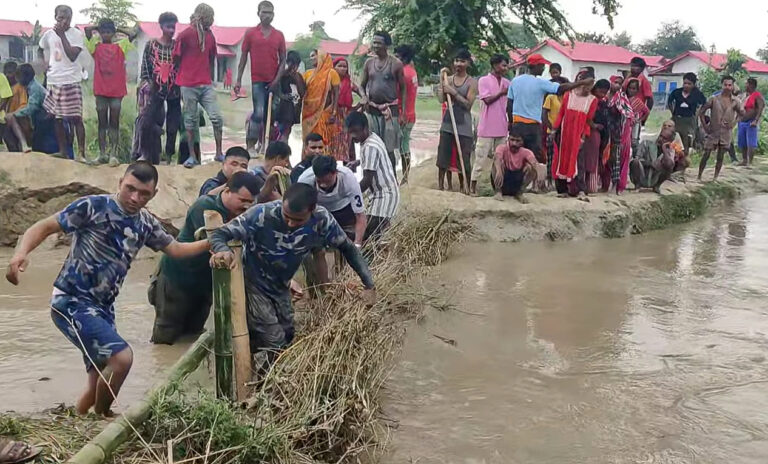
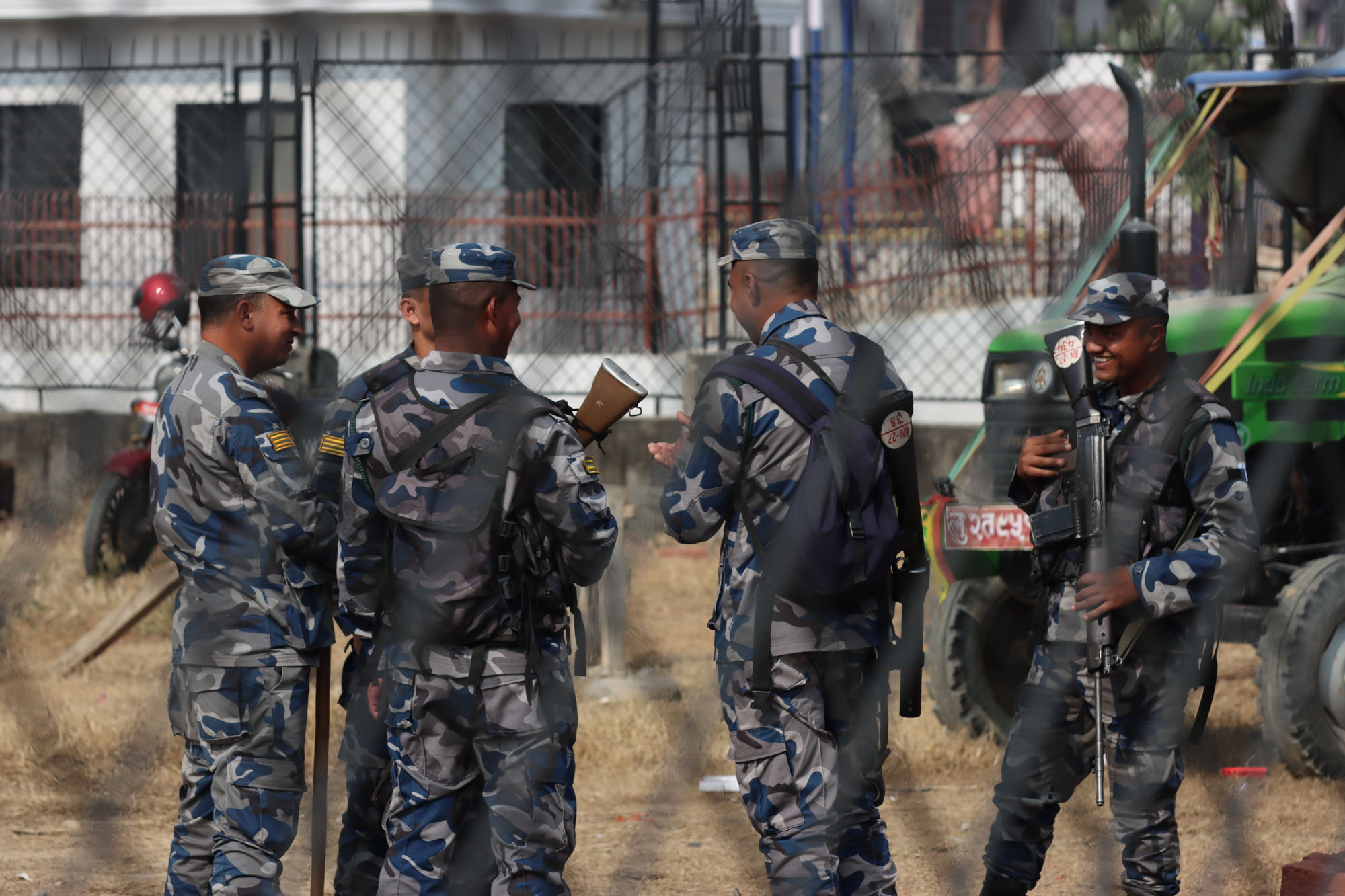
Security personnel constructing a temporary embankment after the floodwaters of the Kesaliya River entered a residential area in Biratnagar-12 on 31 May.
This time, the race has become more interesting with Acharya’s candidacy from RSP and labor leader Raya’s candidacy from the NCP. In particular, voting trends among urban and young voters in Biratnagar Wards 4, 5, 6, 7, 9, 11, and 12 are expected to determine the final outcome.
The political history of Morang–6 has been far from stable. Out of eight elections held since 1991 (2048 BS), voters have elected new faces seven times. In 2017, Pandit of the left alliance defeated Koirala by 675 votes.
This constituency—covering parts of Sundarharaicha Municipality, Budhiganga Rural Municipality, and seven wards of Biratnagar—has a total of 137,832 registered voters.