Kathmandu
Thursday, February 19, 2026





Madhesh Province provides former chief ministers with vehicle and fuel facilities, private secretariats, and bodyguards
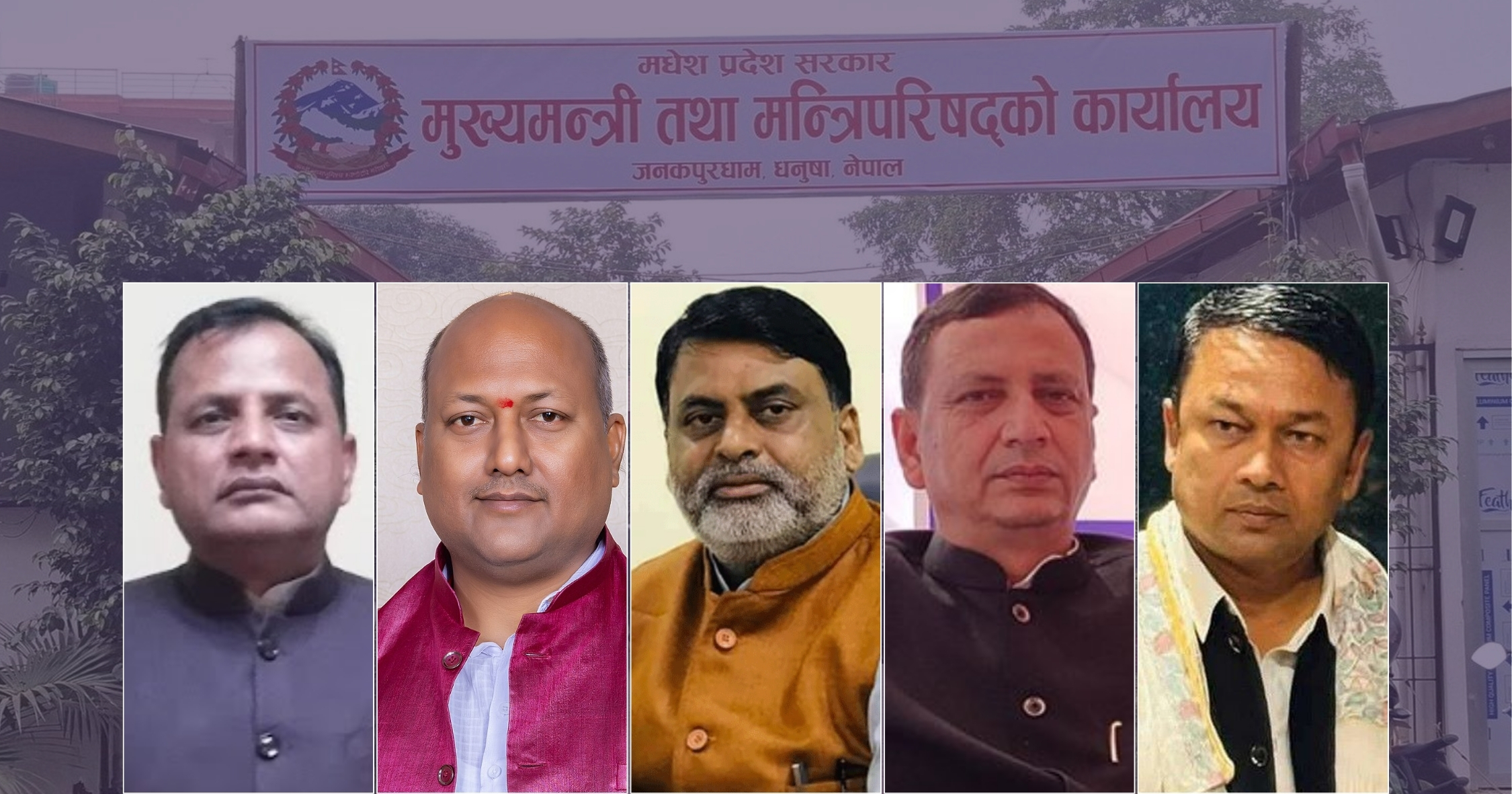
JANAKPUR: In Madhesh Province, a set of working procedures was formulated and implemented in the fiscal year 2023/24 to provide facilities to former chief ministers (CMs). The “Procedures Related to Facilities for Former Chief Ministers of Madhesh Province, 2023,” issued by the Ministry of Home, Communications, and Law, outlines provisions for vehicles, fuel, personal secretariats, and bodyguards for all former CMs.
Under these procedures, a former chief minister receives a vehicle with a driver, 250 liters of fuel per month, and 10 liters of lubricant every three months. Furthermore, the ministry is tasked with providing one fifth-level personal secretary and one office assistant to each former CM. The ministry also provides necessary bodyguards to the former heads of the provincial government.
The preamble of the working procedure states that these facilities have been provided until provisions are made in the Remuneration and Facilities of Chief Ministers and Ministers Act, 2018. This Act, created for providing facilities to sitting officials in Madhesh Province, came into implementation on July 1, 2018. During the five-year tenure of the first chief minister of Madhesh, LalbabuRaut, the Act was amended three times. However, during those amendments, matters regarding facilities for former CMs were not added.
After Saroj Kumar Yadav from Raut’s own party, JanataSamajbadi Party (JSP), Nepal, became the chief minister, legal arrangements were made to provide facilities to former chief ministers through a one-page working procedure.
The Madhesh Province Assembly enacted the “Remuneration and Facilities of Officials and Members of the Provincial Assembly Act, 2018,” which provides for the facilities of the Speaker and members of the assembly. Regarding the operation of the Provincial Assembly Secretariat, the”Provincial Assembly Secretariat Act, 2022″ was created. Section 9 (2) of this Act provides for facilities for the first Speaker and the outgoing Speaker. It states that the Provincial Assembly Secretariat will provide both retired officials with a vehicle each, including a driver, 200 liters of fuel monthly, one seventh-level officer, and one office assistant.
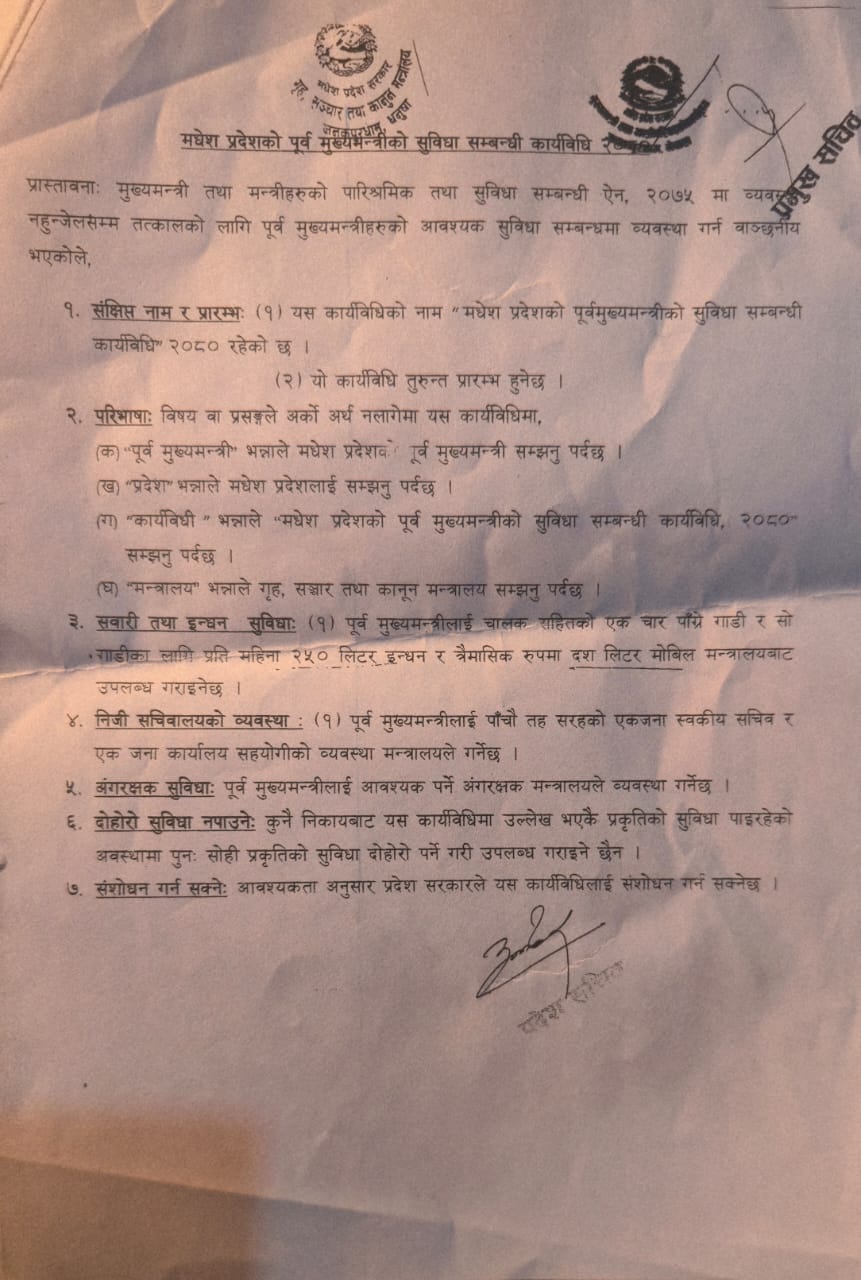
Working Procedure Regarding the Facilities of Former Chief Ministers of Madhesh
The Provincial Assembly has allocated Rs 500,000 in the budget for the current fiscal year 2025/26 to provide these facilities to Saroj Kumar Yadav, the first speaker of Madhesh, wholater also served as the chief minister. According to the Provincial Assembly Secretariat, the outgoing speaker, RamchandraMandal, has been using a vehicle kept in Kathmandu for the speaker’s use. He had returned the vehicle he was using in Janakpur after leaving the post of speaker.
The two examples given above illustrate how the province is turning federalism into a medium for former officials to draw immense facilities from the government treasury. In Madhesh, as well as other provinces, similar facilities were arranged in the past for individuals retired from public offices. Asection of society already asserts that federalism is an expensive and costly governance system for a small and poor country like Nepal. Those opposing federalism point to the provincial expenses and the luxury-seeking character of leaders to argue that the country cannot sustain this system.
Shailendra Prasad Sah, former Finance Minister of Madhesh Province, states that providing facilities for former officials without considering the capacity of the province and the country will be fatal for the system itself. “How capable our province and country are should determine the facilities for former officials. Providing facilities through a legal method by creating working procedures is not improper, but one must consider whether the province or the country can sustain such expenses,” he further added.
Raj Kumar Lekhi, who was the Minister for Home, Communication, and Law in Madhesh when the procedures were made in 2023, says the working procedure came to his ministry following a cabinet decision, and accordingly, facilities were provided to former chief ministerLalbabuRaut. “I and the then home secretary, BirendraYadav, had stopped the facilities, saying it would be better to provide such facilities by creating an Act rather than through a working procedure; I do not know if they were provided later,” he says.
Pressure on the government treasury
On December 8, 2011, the Supreme Court issued a directive order to provide facilities to retired public officials and former VIPs only by making laws, stating that facilities were being provided haphazardly.
Contrary to the court’s order, the malpractice of providing facilities without a law also exists at the federal level. Most recently, the government led by KP Sharma Oli took the initiative to create a law providing lifelong facilities to former VIPs. After the matter became public, it faced widespread criticism, with people arguing that another wrong move was being made while public anger was rising due to poor governance and weak public services.
While the Ministry of Home Affairs was drafting the bill, the Gen Z protest led to a change in government and the dissolution of parliament, and the bill-making process was aborted.
In the provinces, instead of following the path of amending or creating an Act, facilities for former chief ministers have been arranged via the backdoor, through working procedures in the name of legalizing them.
Creating an Act or amending an existing one requires completing the parliamentary process in the Provincial Assembly, whereas a working procedure does not have to go through that path. Through the provisions of the working procedure, three out of the five former chief ministers of Madhesh Province are receiving facilities.
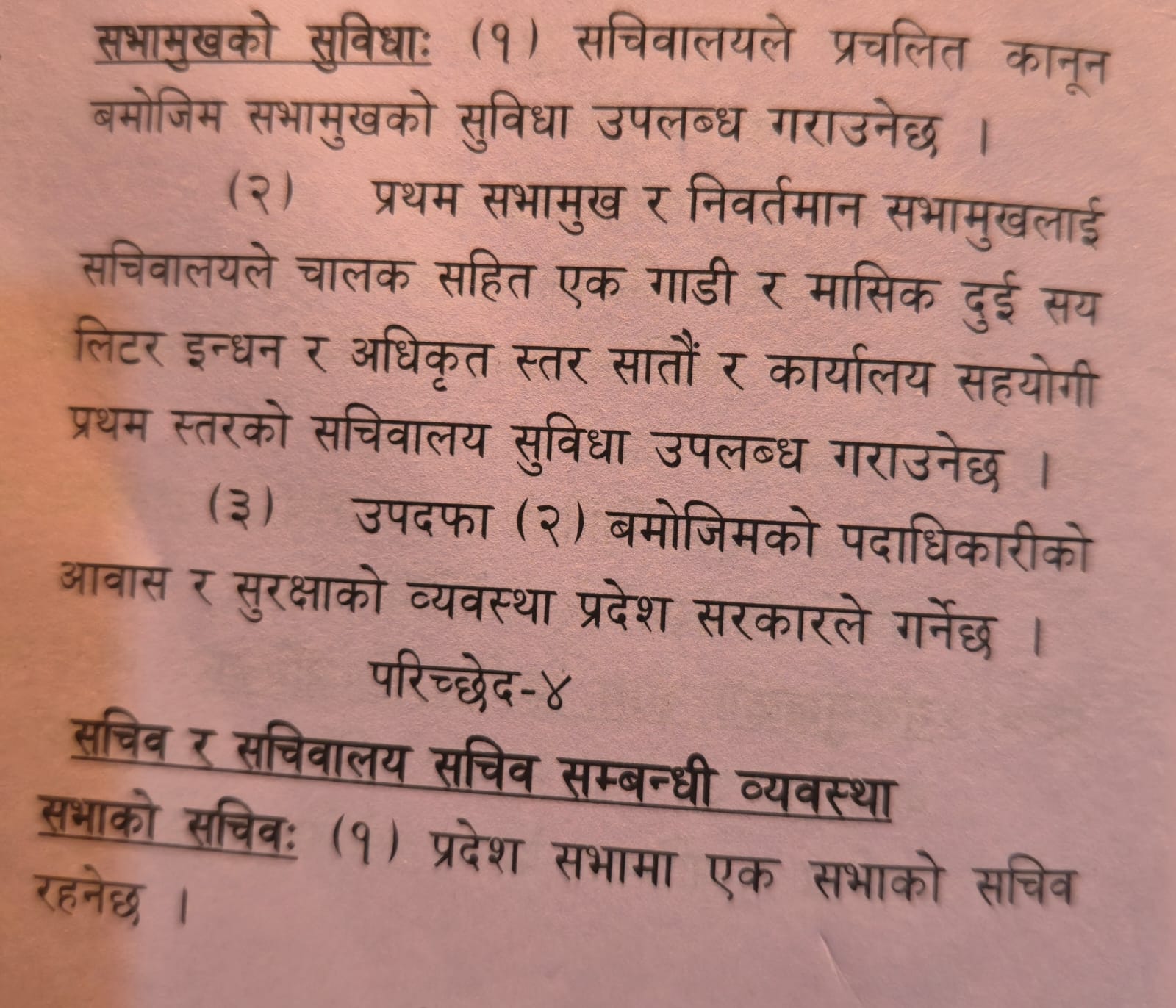
Arrangements regarding the facilities of the Speaker in Madhesh Province
LalbabuRaut and Satish Kumar Singh have been enjoying full facilities, while Jitendra Prasad Sonal has received only bodyguard services. Sonal has informed the Ministry of Home, Communications, and Law about taking the facilities as per the procedure. Raut had received a vehicle, a driver, and a bodyguard. During the Gen Z protest, protesters set fire to the government vehicle he was using. Since then, he has been riding a private vehicle provided by former chief minister Saroj Kumar Yadav.
While the second term of Madhesh Province is ongoing, there have been six chief ministers so far. Among the five former chief ministers, two are leaders of their respective parliamentary parties.
Saroj Kumar Yadav takes state facilities not as a former chief minister but as the parliamentary party leader of JanataSamajbadi Party-Nepal (JSP). He says, “According to existing laws, I am entitled to facilities as the first speaker, former chief minister, and parliamentary party leader. But I only take facilities in the capacity of the parliamentary party leader.”
Janamat Party leader and former chief minister Satish Kumar Singh, however, has been using a vehicle he received from the Chief Minister’s Office. This is despite the fact that, according to the working procedure, the arrangement of facilities should be handled by the Ministry of Home, Communications, and Law.
According to Ram Ashish Ray, an IT officer in the store unit of the Office of the Chief Minister and Council of Ministers, former Chief Minister Singh is using a government vehicle.
“We have already verbally informed him to return the vehicle, but he has not returned it yet. There is talk of corresponding within a day or two,” said Ray.
Singh, who was appointed the chief minister on June 7, 2024, had announced his resignation on September 9 following instructions from Janamat Party Chairman CK Raut after the Gen Z protest. Even after that, he did not leave the post and only resigned on October 15 after realizing he would not receive a vote of confidence.
Jitendra Prasad Sonal of the LoktantrikSamajbadi Party, however, has not received facilities in the capacity of a former chief minister. Although he asked for facilities through the Chief Minister’s Office, the staff at the office saySonal is yet to be provided those facilities. He had returned the government vehicle after stepping down as chief minister.
Similarly, CPN-UML Parliamentary Party leader and former chief minister Saroj Kumar Yadav is riding the same vehicle he used while serving as the Minister for Physical Infrastructure Development before becoming the chief minister. PrabinPratapAdhikari, spokesperson for the Ministry of Physical Infrastructure Development, confirmed that the vehicle Yadav is currently using belongs to the ministry. Currently, Krishna Prasad Yadav of the Nepali Congress is the chief minister.
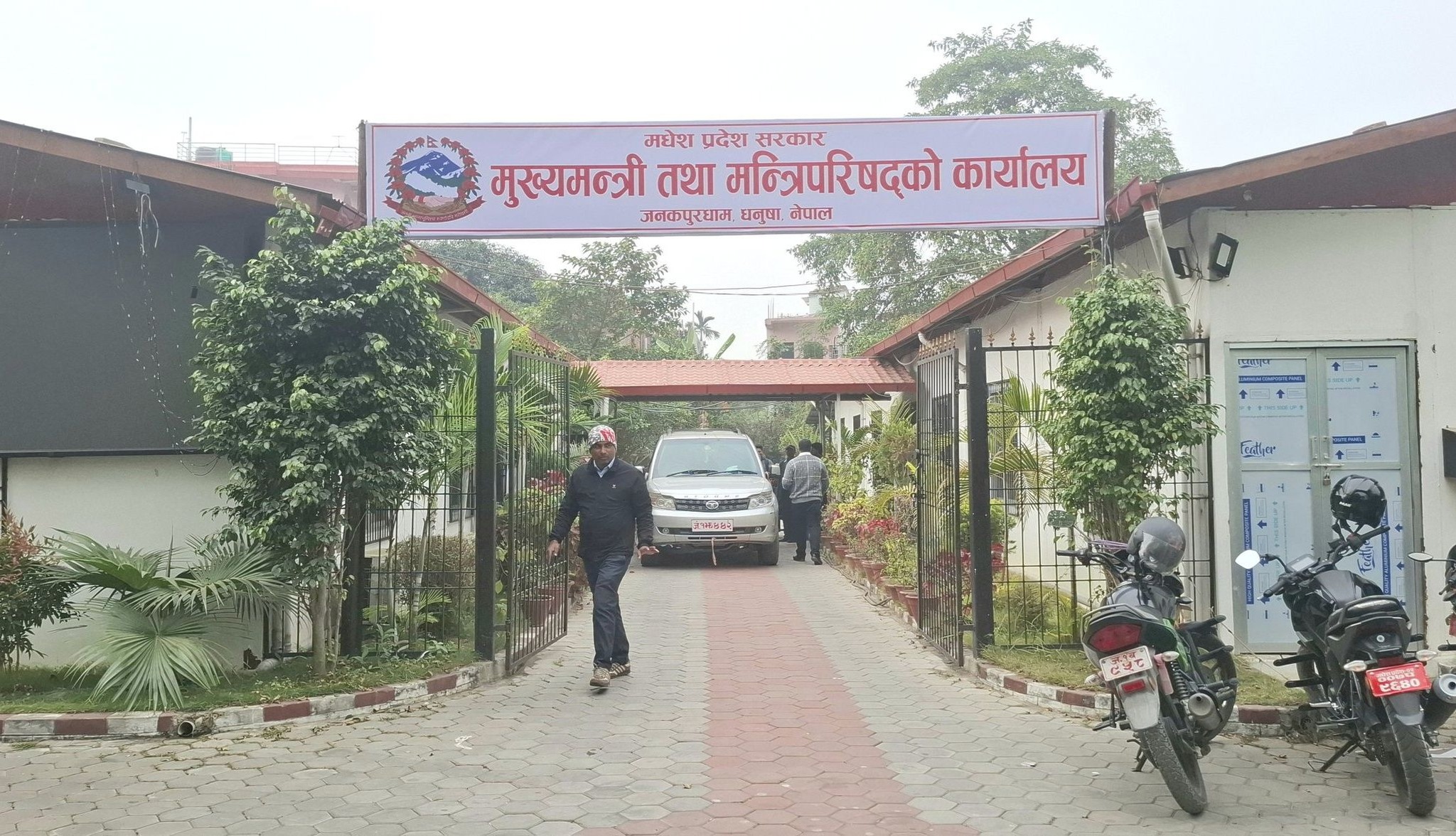
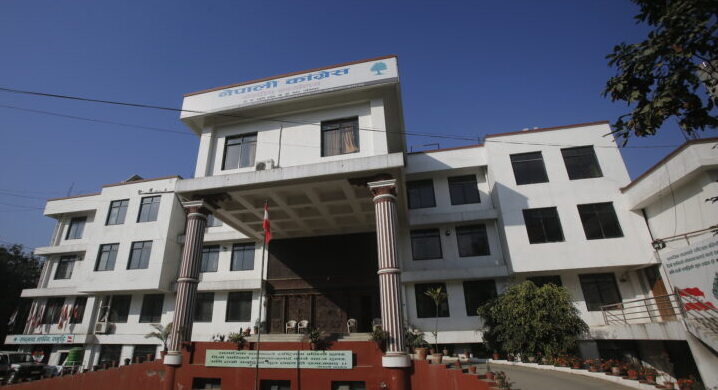
Office of the Chief Minister and Council of Ministers of Madhesh Province. Photo: Birendra Raman
YamendraUpadhyay, spokesperson for the Office of the Chief Minister and Council of Ministers, says the Ministry of Home, Communications, and Law has been asked to manage the facilities for the former chief ministers.
According to Upadhyay, details are being collected from ministries regarding where, by whom, and in what condition government vehicles are being used. He stated that although information was sought regarding the vehicles of ministries being used by various individuals during Sonal’s term as chief minister, the details have not arrived.
“Therefore, it is not possible to indicate exactly who is using which vehicle,” Upadhyay says. Party leaders have been using state services and facilities to display positional prestige and power. They often speak in favor of these services, citing that former officials in India and neighboring provinces also receive facilities from the state.
The government led by then chief minister KedarKarki of Koshi Province issued the “Ordinance to Amend Some Provincial Acts, 2024” on January 20, 2024, clearing the way to provide services and facilities to officials. The ordinance, which amended the definition of provincial assembly officials, mentioned that parliamentary party leaders of all parties and former chief ministers would receive vehicle facilities. At that time, the main opposition, CPN-UML, had protested, saying that providing vehicles to all party leaders would increase the annual expenditure by Rs 2 million.
According to the ordinance, former chief ministers Rajendra Kumar Rai, UddhabThapa, and others were receiving vehicle facilities. With the repeal of that ordinance on July 4, 2024, the facilities provided to former chief ministers have been withdrawn.
Similarly, former chief minister of Bagmati Province, DormaniPaudel, had received government vehicle facilities without any law. He later gave it up after facing criticism. In Bagmati Province, there is no legal provision to provide facilities to former chief ministers and ministers.
The employees at the Madhesh Province Ministry of Finance say that the provision of special facilities for former chief ministers puts pressure on the provincial budget. Because a new former chief minister is added every time there is a change inthe provincial government, the expenditure increases over time.
Furthermore, since it is not clearly written how long a former official will receive facilities, a situation remains where they receive lifelong facilities. This places a huge financial burden on the province and leads to a shrinking budget for development, construction, and social work.
What is the annual cost?
In the first term of Madhesh Province Assembly, LalbabuRaut of JSP Nepal ran the government for the full five years. In the second term, due to political infighting and the dynamics of alliances, there have already been five chief ministers. Due to such instability, the province has not been able to gain momentum in important areas ranging from development and construction to law-making. Instead, work has been done to increase the financial burden on the province in the name of facilities for officials.
Let’s do a rough calculation of how much liability is added to the state annually when adding up the facilities given to one former chief minister.
Assuming a former CM is provided with an existing vehicle from some agency, let’s only add the fuel cost. Based on the current prices, 250 liters of fuel at the rate of Rs 40,000 per month amounts to Rs 480,000 a year, and Rs 10,000 annually for lubricant. The monthly salary of a vehicle driver is Rs 27,612, which costs Rs 331,344 annually. Similarly, the salary for one fifth-level employee provided for the secretariat at the rate of Rs 34,730 amounts to Rs 416,760 per year, and for an office assistant at the rate of Rs 24,502 per month, the annual cost is Rs 294,024. A dearness allowance of Rs 5,000 per month for the three employees, including the driver, requires Rs 60,000 annually. Adding all these costs together, it appears that approximately Rs 1.5 million is spent annually for one former chief minister.
As the number of former chief ministers increases, such expenditures for facilities also increase in the same proportion. The facilities provided to the outgoing speaker and the first speaker further increase the burden of expenditure. For both these officials, it appears that approximately Rs 1.6 million is spent annually, including 200 liters of fuel each per month (Rs 32,000), a driver (monthly salary of Rs 27,612), one seventh-level officer (salary of Rs 50,502), one office assistant (Rs 24,702), and dearness allowance for employees (Rs 5,000 monthly).
If a speaker stays for the full five years, the outgoing speaker will also remain for five years, so millions of rupees are spent annually on official facilities. This leads to a situation where the province, which must operate on a limited budget, shrinks into paying salaries, allowances, and services for officials and former officials rather than working according to public expectations. This trend could further strengthen the narrative that federalism has become expensive, putting the governance system at risk.
Radhe Shankar Pal, spokesperson for the Ministry of Home, Communications, and Law, says that since the Office of the Chief Minister and Council of Ministers was moved to the building where the ministry was previously located, many files are yet to be organized, so it cannot be said who is receiving what kind of facilities.
Recently, voices have been raised from all sides to reduce the increasing expenditure caused by the provincial structure. Before even a decade has passed since the implementation of the federal governance system in the country, the province has started becoming notorious for being very expensive. In this situation, unnecessary expenditure in the name of former officials and current officials in Madhesh Province, often called the “Mother of Federalism,” has played a role in further emboldening that perception.
Garib Das Thakur, a leader of the Nepali Congress in Mahottari, says that instead of engaging in the responsibility of strengthening federalism, the governance system becomes weak when pursuing personal gain and greed.
Thakur says, “These kinds of acts are happening deliberately, which is not appropriate. Now is the time to tell and explain to the people the benefits of the federal system and how effective it can be, but we are focusing on adding facilities for ourselves.” He believes that although the exploitation of state resources through legal loopholes provides immediate benefits to individuals and limited groups, the system itself falls into trouble.