Kathmandu
Wednesday, January 21, 2026





High-profile and influential figures face off against established, seasoned politicians, setting the stage for intense and closely fought contests
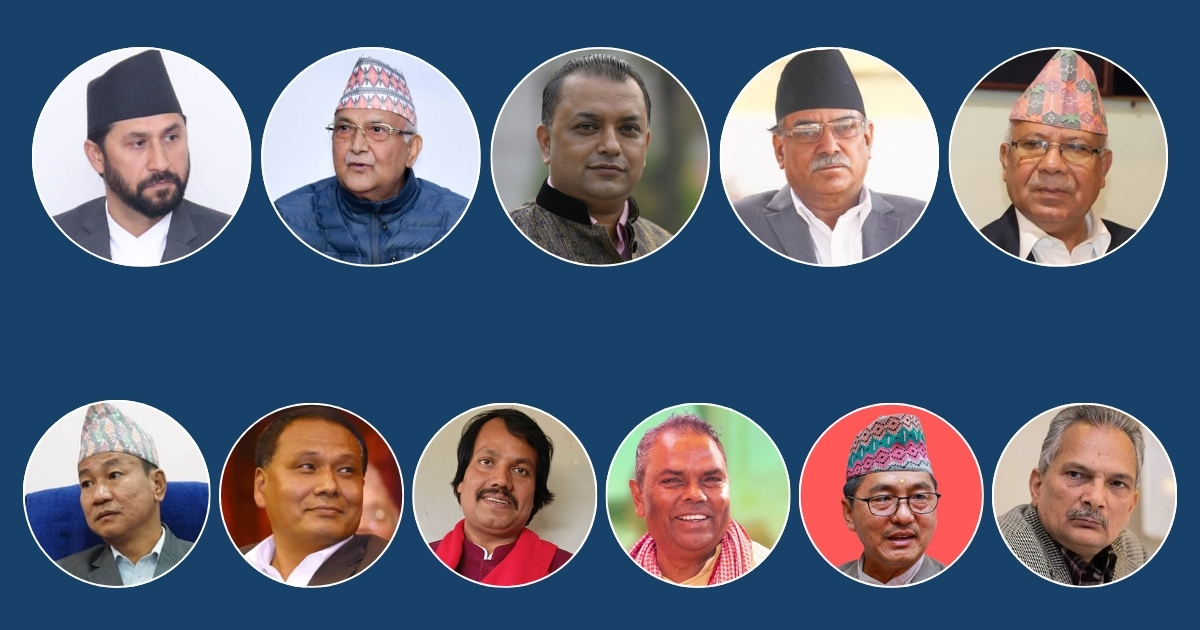
KATHMANDU: With candidate registration completed across all 165 constituencies nationwide, the race for Nepal’s House of Representatives has formally begun. For the election scheduled on March 5, a total of 3,484 candidates have filed nominations under the first-past-the-post system. Of them, 2,297 candidates represent 68 political parties, while 1,187 are independent contenders.
This election appears markedly different from previous ones. New political forces have mounted direct challenges to traditional parties that have alternated in power for decades. In several constituencies, the contest has become especially compelling as well-known and influential faces go head-to-head with established and experienced leaders, pointing to tough and fascinating electoral battles.
The political temperature has risen further as party presidents and top leaders themselves have entered the electoral arena. This strategy of subjecting leadership directly to the electoral test has created a situation where not only voter sentiment but also internal party power balances are being measured.
A large number of candidates alone does not define the competitiveness of an election. Widespread dissatisfaction, the search for alternatives, and a desire for political restructuring have made this election distinctive. As a result, the March 5 polls are shaping up not merely as a contest for parliamentary seats, but as a decisive confrontation between entrenched political practices and emerging public expectations.
Gagan Thapa vs Amresh Kumar Singh (Sarlahi–4)
Newly-elected Nepali Congress (NC) President Gagan Thapa, who rose to party leadership by heading a rebel faction through a special general convention, has descended into Madhesh for this parliamentary election. He has chosen Sarlahi Constituency No. 4 as his electoral battleground.
Thapa argues that instead of remaining entrenched in a single constituency, political leaders should test themselves in new areas. Guided by this belief, he opted to contest from Sarlahi.
However, Sarlahi–4 is far from an easy constituency for Thapa. Standing against him is Amresh Kumar Singh, a seasoned, influential leader with a strong local base, who is contesting this time under the banner of the Rastriya Swatantra Party (RSP). Singh has previously demonstrated his electoral strength in this constituency, defeating a NC candidate in the 2022 election, even when he ran independently after leaving the NC.
In that election, Singh secured 20,017 votes while NC candidate Nagendra Kumar Rai Yadav was limited to 18,252 votes. Independent candidate Madhumala Kumari Yadav also made a significant impact, garnering 14,622 votes. She has once again filed her candidacy as an independent contsender. In total, 26 independent candidates are contesting in Sarlahi–4 this time.
Historically, Sarlahi–4 has been considered an NC stronghold. Yet Singh has consistently challenged that dominance single-handedly. With Thapa’s first electoral test as party president unfolding in the Madhesh and Singh’s entrenched local influence standing firm, the contest in Sarlahi–4 is expected to be exceptionally fierce.
KP Sharma Oli vs Balen Shah (Jhapa–5)
Jhapa Constituency No. 5 has emerged as another focal point of intense electoral competition. UML Chairperson KP Sharma Oli who has been contesting elections from Jhapa–5 since 2048 BS, is regarded as a firmly established and powerful candidate in the area. Thanks to his long political career and strong organizational grip, the constituency has traditionally been seen as Oli’s safe seat.
In the 2022 parliamentary election, Oli defeated his closest rival by more than double the vote margin. He secured 52,319 votes, while NC candidate Khagendra Adhikari managed 23,743 votes. RSP candidate Suresh Pokharel obtained 11,749 votes, reflecting growing interest in alternative politics.
This time, however, the electoral equation in Jhapa–5 has shifted dramatically. The RSP has fielded Balendra Shah (Balen), former mayor of Kathmandu Metropolitan City, directly challenging Oli. The party has projected Shah as a future prime ministerial candidate, adding deeper political significance to the contest.
Shah enjoys considerable popularity among young voters, and his public influence has expanded further following the Gen-Z revolt. His resignation from the mayoralty of Kathmandu and formal entry into the RSP as an official candidate instantly heightened the political temperature in Jhapa–5.
While Oli brings unmatched electoral experience, organizational strength, and strategic acumen as a four-time prime minister, Shah counters with widespread popularity despite limited electoral experience. Consequently, Jhapa–5 is shaping up as a compelling contest between experience and charisma, organization and popular sentiment.
CK Raut vs Umesh Yadav (Saptari–2)
Saptari Constituency No. 2 has also found its place among the most intriguing electoral battlegrounds. Chandrakant Raut (CK Raut), chairperson of the Janamat Party, has filed his candidacy from this constituency.
After abandoning the separatist movement and entering mainstream politics, Raut began his parliamentary journey through the 2022 election, which marked his first-ever electoral contest. His debut proved highly encouraging. He defeated Upendra Yadav, chairperson of the Janata Samajbadi Party and a prominent figure of the Madhesh Movement since 2007, by a margin of 18,063 votes. Raut secured 35,042 votes, while Yadav was confined to 16,979.
That upset victory over a heavyweight leader established Raut as a figure capable of reshaping the political balance in the Madhesh.
Still reeling from that defeat, Upendra Yadav has opted to change constituencies this time. However, the contest in Saptari–2 remains competitive. Raut now faces Umesh Kumar Yadav of the Janata Samajbadi Party. Formerly active in Maoist politics, Umesh Yadav is seen as capable of drawing votes from both Madheshi and Maoist constituencies.
The clash between Raut, who transformed an identity-based movement into parliamentary power, and the older currents of Madheshi politics has made Saptari–2 one of the most compelling contests of the election.
Upendra Yadav vs Dinesh Yadav vs Tarakant Chaudhary (Saptari–3)
Carrying the weight of his 2022 electoral defeat, Janata Samajbadi Party Chairperson Upendra Yadav has shifted to Saptari Constituency No. 3 for this election. Regarded as a leader with the capacity to influence Madhesh’s political equilibrium, Yadav chose the constituency believing it to be comparatively safer.
Yet, Saptari–3 is far from an easy ride. Nepali Congress leader Dinesh Yadav is already well-established there. In the previous parliamentary election, Dinesh Yadav defeated UML candidate Tarakant Chaudhary, securing 26,166 votes against Chaudhary’s 22,300.
This time, the UML has once again fielded Tarakant Chaudhary, ensuring a three-way contest among the Janata Samajbadi Party, Nepali Congress, and UML.
Upendra Yadav’s attempt at political resurgence after defeat, NC’s effort to retain its winning ground, and UML’s strategy for a comeback have collectively turned Saptari–3 into a major arena of competition.
Harka Raj Rai vs Sujendra vs Goma Tamang ( Sunsari–1)
The electoral atmosphere has become equally charged in Sunsari Constituency No. 1. Former Dharan Sub-Metropolitan City Mayor Harka Raj Rai, who resigned from office to form the Shram Sanskriti Party, has entered the parliamentary race, significantly altering the local political equation.
During his tenure in local government, Rai faced both strong support and sharp criticism in Dharan. Nonetheless, his candidacy has undeniably intensified the race. His popularity among indigenous voters, outspoken presence on social media, and ambitious public persona have positioned him as a high-profile contender. He has even declared himself a future prime minister while campaigning.
In the 2022 parliamentary election, Sunsari–1 was won by the Janata Samajbadi Party Nepal. Its candidate Ashok Rai emerged victorious with 17,059 votes, while Rastriya Swatantra Party candidate Goma Tamang came remarkably close with 16,606 votes, making the contest extremely tight.
This time, Janata Samajbadi Party (JSP) Nepal has changed its candidate, fielding Sanjay Rai in place of Ashok Rai. The Rastriya Swatantra Party (RSP), meanwhile, has repeated Goma Tamang as its candidate. With the addition of Harka Raj Rai’s entry into parliamentary politics, a three-way contest has clearly taken shape in Sunsari–1.
The triangular contest among the organizational strength of established parties, the enthusiasm of new political experimentation, and local popularity is likely to keep Sunsari–1 in the national spotlight during the election.
Clash of two Rajendras (Jhapa–3)
Jhapa Constituency No. 3 has consistently remained a hub of political competition. The constituency is particularly known for the rivalry between Rastriya Prajatantra Party (RPP) Chairperson Rajendra Lingden and Nepali Congress heavyweight Krishna Prasad Sitaula.
Both leaders have contested elections from this constituency twice. Lingden emerged victorious in 2017 and 2022, while Sitaula had earlier won in 1999 and 2013.
In the 2022 election, Lingden secured 40,648 votes, while Sitaula obtained 37,372 votes. At the time, allegations surfaced that the UML had provided electoral backing to Lingden.
This time, however, the political landscape has changed. Sitaula did not receive a party ticket. Instead, the Nepali Congress has fielded Rajendra Kumar Ghimire, while the UML has nominated Hari Bahadur Rajbanshi as its candidate.
Given the relative weakness of rival parties and the limited influence of the UML candidate, Lingden’s electoral grip in Jhapa–3 appears secure this time too.
Madhav Kumar Nepal vs Ajay Kumar Gupta (Rautahat–1)
Rautahat Constituency No. 1 has always been at the center of political attention. It is widely regarded as a constituency defined by political experience and resistance, largely due to the presence of former Prime Minister Madhav Kumar Nepal.
The constituency has long been considered Nepal’s stronghold. Since 1999, he has contested five consecutive elections in Rautahat, suffering defeat only once, in 2008. In the 1999 election, Nepal contested from Rautahat–4, and since then, he has consistently run from Rautahat–1.
Even in the 2022 election, Nepal secured victory as the chairperson of the CPN (Unified Socialist), obtaining 33,522 votes. His main rival, UML candidate Ajay Kumar Gupta, was limited to 26,922 votes.
Once again, Nepal and Gupta face each other in Rautahat–1. This time, however, Nepal enters the race with enhanced organizational strength following his party’s unification with the Maoists. The Nepali Congress, historically weak in the constituency, has been unable to mount a strong challenge and has nominated Anil Kumar Jha as its candidate.
The organizational strength of the Maoist–Unified Socialist alliance, Nepal’s personal popularity, and a direct contest with the UML have turned Rautahat–1 into a compelling electoral battleground.
Baburam Bhattarai (Gorkha–2)
Gorkha Constituency No. 2 has long remained at the heart of political discourse. Former Prime Minister Baburam Bhattarai wields strong personal and political influence in this constituency.
Bhattarai won both the first and second Constituent Assembly elections from the Maoists. In the 2017 House of Representatives election, after leaving the Maoist party, he formed the Naya Shakti Party under his own leadership and won the seat.
In the 2022 election, when Maoist Center Chairperson (now Nepali Communist Party leader) Pushpa Kamal Dahal needed a constituency, Bhattarai withdrew his candidacy and supported Dahal. Dahal went on to win the election, largely due to Bhattarai’s active backing.
Bhattarai is currently the chairperson of the Progressive Democratic Party. He has now entered the race from his own constituency, which he had effectively loaned to Dahal. Considering Gorkha–2 a safe seat, Bhattarai appears confident.
However, the race has become more intriguing after the UML nominated Chakre Milan (Milan Gurung), widely known as a former gang leader, as its candidate. Additionally, the Nepali Communist Party has fielded student leader Lekhnath Neupane, who is known as Bhattarai’s protégé.
As a result, a three-way face-off involving a former prime minister, his disciple, and a notorious strongman has thrust Gorkha–2 into the national spotlight.
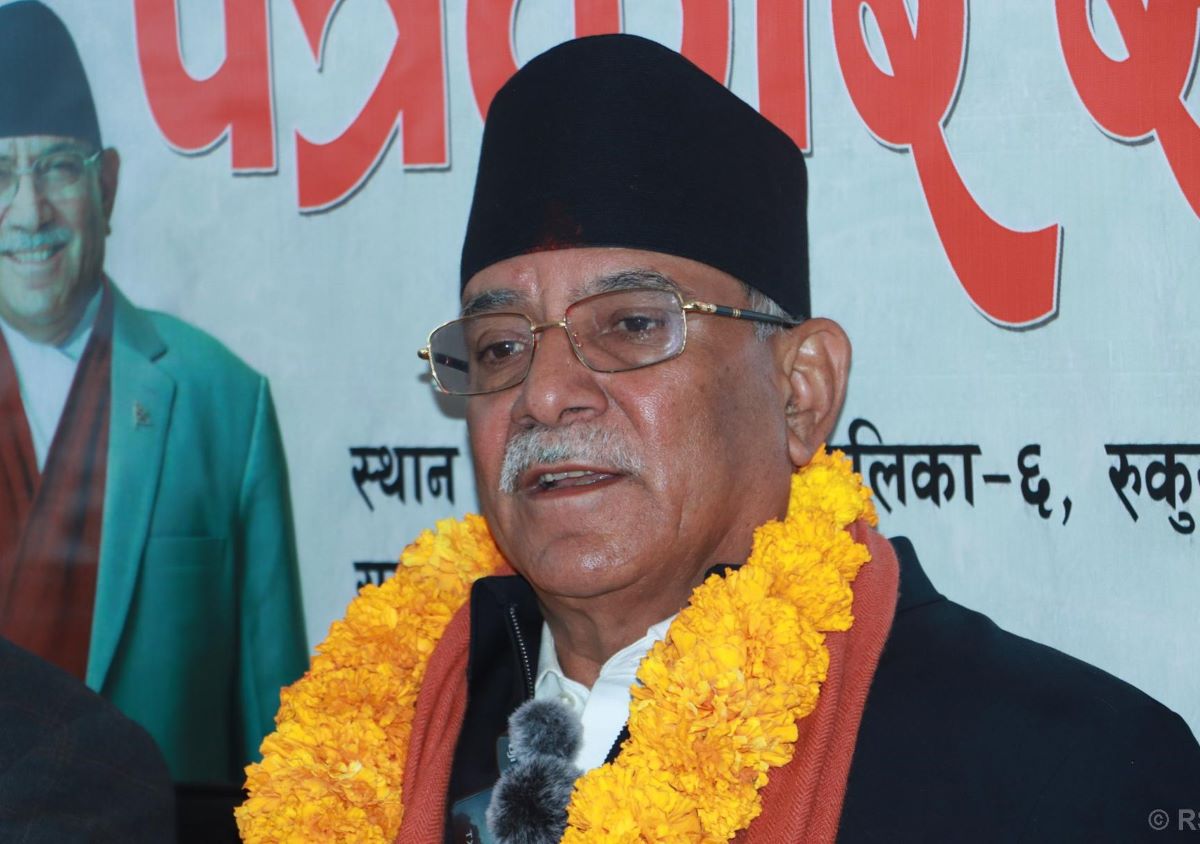
Pushpa Kamal Dahal (Rukum East)
Among all political leaders, Pushpa Kamal Dahalhas changed constituencies the most frequently. The coordinator of the Nepali Communist Party, Dahal is contesting this election from Rukum East.
In the 2022 election, Dahal had won from Gorkha–2. His decision to leave that constituency and contest from Rukum East has once again drawn national attention to the area.
Rukum is considered a traditional Maoist stronghold. Although the Maoists have since transformed into the Nepali Communist Party, the 2022 election delivered a surprise when independent candidate Surul Pun won the seat. Pun secured 4,465 votes, defeating Maoist Center candidate Tej Bahadur Oli, who received 3,932 votes Pun himself was originally a Maoist leader but contested as an independent after the party fielded a different candidate.
As a three-time prime minister and a powerful figure in national politics, Dahal’s decision to contest from the rugged terrain of Rukum East—the birthplace of the People’s War—has naturally made the constituency a focal point.
In Rukum East, the Nepali Congress has fielded Kusum Devi Thapa, while the UML has nominated Leelamani Gautam. Given the Maoist party’s organizational grip and Dahal’s political stature, he appears to hold a significant electoral advantage.
Kulman Ghising vs Raju Pandey (Kathmandu–3)
Kathmandu Constituency No. 3 was never going to escape election-season attention. Kulman Ghising, widely credited with ending load-shedding during his tenure at the Nepal Electricity Authority, later became a minister in the post–Gen Z movement government after being removed from the authority.
Ghising subsequently resigned from his ministerial post, joined the Rastriya Swatantra Party, and later left that party as well to form his own political outfit. He is now the chairperson of the Ujyalo Nepal Party.
After forming his own party, Ghising has become a candidate from Kathmandu–3. Whether in power or outside it, he has remained a prominent public figure. Candidates from the Nepali Congress, CPN-UML, and the Rastriya Swatantra Party are all set to challenge him.
Ghising is new to electoral politics.
In the 2022 election, Nepali Congress candidate Santosh Chalise won Kathmandu–3, defeating UML’s Krishna Bahadur Rai Chalise secured 15,158 votes, while Rai received 11,196. Rai had won the seat in the 2017 election. Traditionally, Kathmandu–3 has been a battleground between the NC and the UML—until Ghising’s entry disrupted the equation.
This time, the UML has changed its candidate, nominating Rameshwar Phuyal, while the NC has also replaced its candidate, giving the ticket to Ramesh Aryal The RSP has fielded Raju Nath Pandey, whose party candidate secured 5,865 votes in the 2022 election.
Ghising is believed to have the ability to attract middle-layer voters and new voters. If he succeeds in mobilizing votes that traditional parties have failed to capture, an upset could occur in Kathmandu–3. This would signal both a challenge to old parties in urban constituencies and the potential viability of new political forces.
Rabi Lamichhane (Chitwan–2)
Since the 2022 House of Representatives election, Chitwan Constituency No. 2 has remained under constant national attention. The constituency rose to prominence after RSP Chairperson Rabi Lamichhane delivered a sensational victory, placing it at the center of national politics.
Voters showed overwhelming support for Lamichhane as soon as he entered electoral politics following the formation of his party.
In the 2022 election, Lamichhane contested for the first time and won by a massive margin. Following his victory, he became Home Minister, but his parliamentary seat was later annulled due to a citizenship-related controversy.
In the subsequent by-election, Lamichhane acquired a new citizenship and contested again, this time winning by an even larger margin. He secured 54,176 votes, while his closest rivals—Nepali Congress candidate Jit Narayan Shrestha and UML candidate Ram Prasad Neupane—received only 11,214 and 10,936 votes, respectively.
In the first election itself, Lamichhane had secured 49,300 votes, winning by a margin nearly four times greater than his competitors, firmly establishing his dominance in Chitwan–2.
For the March 5 House of Representatives election, Lamichhane is once again contesting from Chitwan–2. The Nepali Congress has nominated Meena Kumari Kharel, while the UML has fielded Asmin Ghimire. As both are new faces, Lamichhane’s electoral path in Chitwan–2 appears smooth once again.