Kathmandu
Wednesday, February 25, 2026





Political parties are reluctant to make laws barring accused persons from contesting elections.
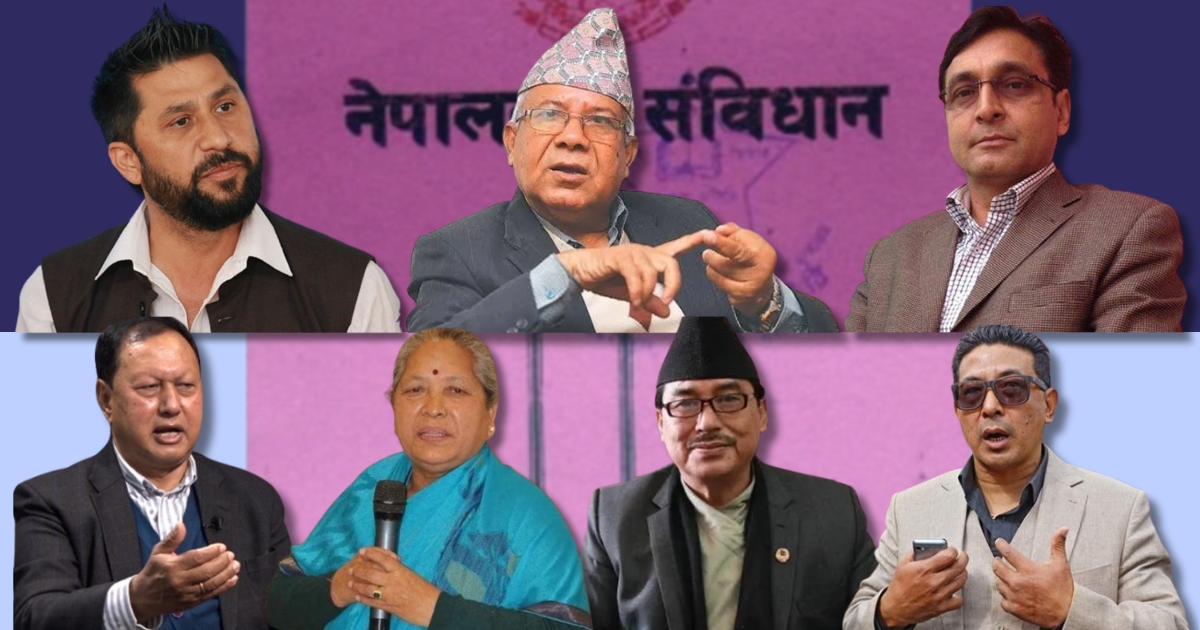
KATHMANDU: Had the “Integrated Bill” sent to parliament by the Election Commission (EC) two years ago been passed, many individuals currently facing court cases would not have been able to compete in elections. However, the bill has been shelved at the Ministry of Home Affairs.
The contradiction goes so far that the law itself allows a person to be a candidate in an election, but bars them after they win. In other words, a person whose case is under consideration in court can contest an election, but cannot become a Member of Parliament (MP).
The House of Representatives Member Election Act, 2017 allows even those with cases pending in court to participate in elections. The Money Laundering Prevention Act, 2007 and the Commission for the Investigation of Abuse of Authority Act, 1991 provide for suspension from the position of MP if cases are filed under those laws.
The provision allowing accused persons to contest elections is not new. Since elections are set to be held on March 5 this year under the same old House of Representatives Election Act, there is no legal barrier this time as well for persons facing criminal charges in court to become candidates.
When the EC sent the integrated bill, Pushpa Kamal Dahal, chair of the then CPN (Maoist Center), was prime minister, and Rabi Lamichhane, chairman of the Rastriya Swatantra Party (RSP), was home minister. During the Dahal government, Lamichhane again served as Home Minister from 6 March 2024 to 14 July 2024. However, because old parties as well as the RSP opposed it, the bill could not become law.
The Gen-Z government led by Sushila Karki had an opportunity to amend the law stuck at the home ministry through an ordinance. But the government could not take such a risk. Acting Chief Election Commissioner Ram Prasad Bhandari recalls that the proposed bill revised the old election laws by repealing seven acts, based on directive orders issued by the Supreme Court, international practices, past experiences, and feedback from stakeholders.
“The Commission is not a law-making body. Only after laws are given do we work by making directives and regulations,” he says. “The government conducts elections according to the law it provides and the procedures available to us.”
According to legal advisor to the Office of the President and senior advocate Baburam Kunwar, law and justice are not aligned. Because the laws are not properly managed and contradict each other, people are allowed to contest elections but not to take the oath. “It is like giving a right with one hand and taking it away with the other. Allowing someone to compete in an election but not letting them work as an MP after winning is extremely inconsistent,” he says. “There is no detailed study in the law. It is parliament’s responsibility to correct conflicting laws. Even when parliament was functioning, it does not seem to have paid attention to this.”
Kunwar also says the Election Commission failed to pay attention to this dilemma.
What is in the shelved bill?
To bring seven scattered election-related laws under one umbrella, the bill titled “Bill to Amend and Integrate Election-Related Laws” was sent to the Ministry of Home Affairs during the tenure of the then chief election commissioner (CEC) Dinesh Thapaliya, after consultations with political parties. One major reason for the bill being stuck at the ministry is the reluctance of the parties.
Although parties had agreed during discussions organized by the EC, the bill was stalled once it became clear that passing it through parliament would prevent leaders of their own parties from becoming candidates.
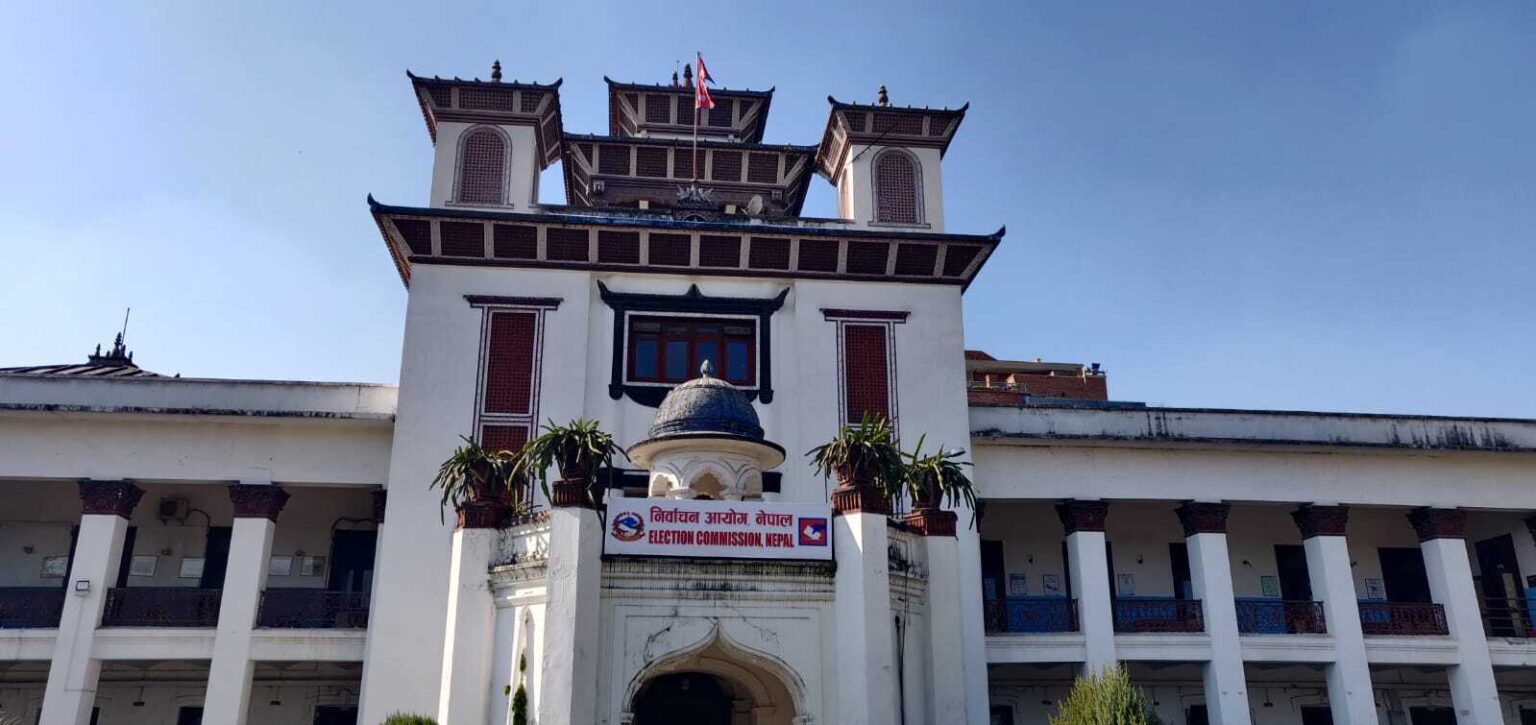
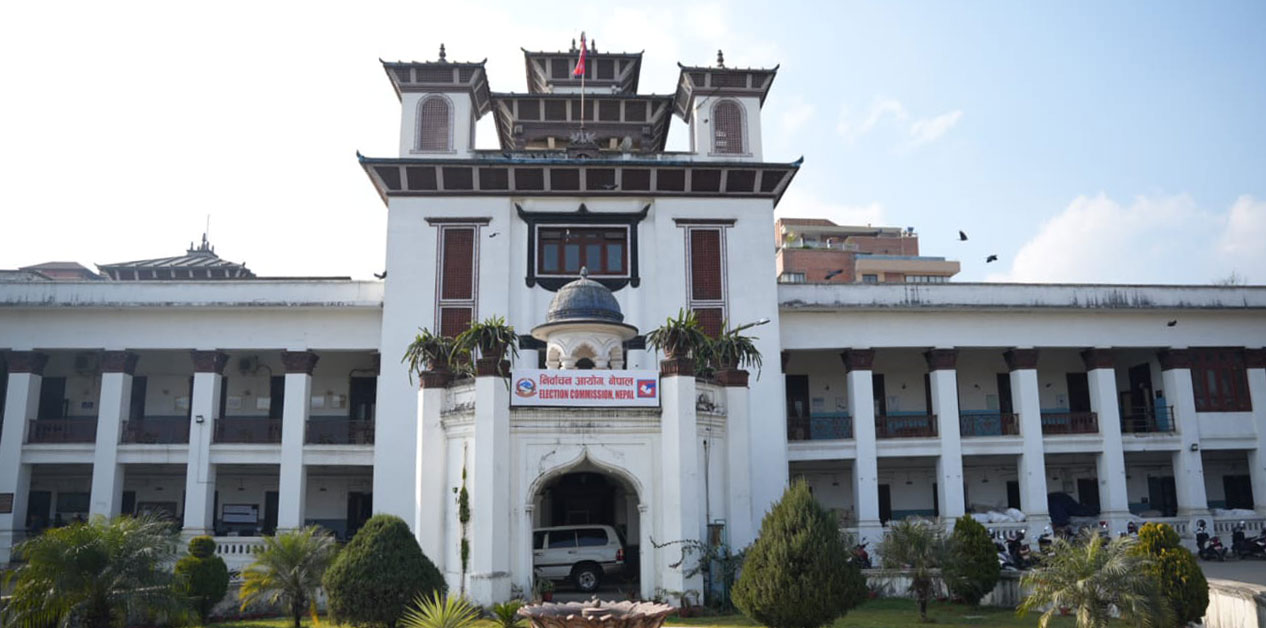
Election Commission. Photo: Bhasha Sharma
The bill proposed that anyone against whom a case had been registered, was under trial, or had been convicted of a criminal offense would be ineligible to become a candidate. Section 66 of the proposed bill dealt with candidate disqualification.
Under existing election laws, a person who had not completed two years since serving their sentence would be barred from candidacy. Those convicted of corruption and whose cases were under consideration in appeal, or those already convicted of corruption, were also to be barred.
Not only that, the bill barred those convicted of rape, human trafficking and transportation, drug sale and distribution or import/export, money laundering, passport misuse, fraud, forgery, abduction or hostage-taking, enforced disappearance, torture, cruel or inhuman killing while in custody, genocide, explosives-related crimes, or other criminal offenses involving moral turpitude.
Anyone sentenced to life imprisonment or imprisonment of 20 years or more would not be allowed to contest elections at all.
Persons sentenced for various criminal offenses such as caste-based discrimination, other social discrimination, untouchability, witchcraft accusations, polygamy, fraud, organized crime, or those sentenced to less than 20 years for homicide, would be deemed ineligible if six years had not passed since completion of their sentence.
The bill also barred persons who were directors, office bearers, or held senior positions in companies or institutions while they were blacklisted, and those who, as directors of cooperatives, had committed financial embezzlement. Those who had not paid court-ordered imprisonment terms or fines were also barred.
Similarly, the bill aimed to make not only party candidates but also independents accountable. It proposed that a person who was a member of one political party could not become a candidate from another party without first renouncing membership of the former. A person elected from one party would lose their MP position upon joining another party. Likewise, a person elected as an independent would lose their position upon joining a political party.
Candidates were required to submit, in a sealed format, details of property owned by themselves and their family members at the time of filing nomination papers.
A mandatory provision was included requiring 33 percent of candidates in direct elections to be women. It stated that at least one of the positions of chair or vice-chair, mayor or deputy mayor must be a woman, and that if only one candidacy was to be filed, it must be a woman candidate. Provisions were also included to collect details of persons living abroad.
Elections under the old law
Section 13 of the House of Representatives Election Act, 2017 contains provisions on candidate disqualification. A person who has been sentenced under prevailing election laws and has not completed two years since finishing that sentence is deemed ineligible.
The law provides that a person whose verdict has become final after being sentenced for corruption, rape, human trafficking and transportation, drug sale and distribution or import/export, money laundering, passport misuse, abduction-related crimes, or other criminal offenses involving moral turpitude, or who has been sentenced to life imprisonment or imprisonment of 20 years or more for any offense, is also ineligible.
This law bars only those who have already been convicted of criminal offenses from becoming candidates. It does not bar a person from contesting an election merely because a case has been registered or is pending without a final verdict.
A person sentenced for organized crime or sentenced to less than 20 years for homicide cannot contest if six years have not passed since completion of the sentence.
Likewise, a person sentenced for caste-based discrimination and untouchability, witchcraft accusations, or polygamy cannot contest unless three years have passed since completion of the sentence. After three years, they are eligible. For other offenses, a person must have completed six years since finishing a sentence of five years or more, and they are also barred throughout the period of imprisonment.
What do other laws say?
Article 87 of the Constitution mentions the qualifications of a member of the House of Representatives. It considers a person qualified if they “have not been punished for a criminal offense involving moral turpitude, are not disqualified by any federal law, and are not holding any office of profit.”
Clause (6) of Article 103 of the Constitution states that “nothing in this clause shall be deemed to prevent the arrest of any member in accordance with federal law on any criminal charge. If any member is so arrested, the arresting authority must immediately inform the presiding officer of the concerned House.”
It clearly provides that “nothing in this clause shall be deemed to prevent the arrest of any member under federal law on a criminal charge.”
Section 27 of the Money Laundering Prevention Act provides for automatic suspension once a case is registered. Based on this provision, MPs have been suspended from their positions. It states that “if any office-bearer or employee of an organized institution established under prevailing law, or any civil servant, is detained under this Act, they shall be deemed automatically suspended for the entire period of detention and until the case is finally disposed of.”
Similarly, Section 17 of the Commission for the Investigation of Abuse of Authority Act also provides for automatic suspension. It states, “Any person holding a public office shall be deemed automatically suspended from office for the entire period they are kept in detention and until the pending case is finally resolved. A person under suspension shall not, in any manner, be appointed to or allowed to work in any government office or public institution, or in any position that places a financial burden on government funds received as loans or grants.”
Likewise, the Corruption Prevention Act, 2002 also contains provisions for automatic suspension.
Rule 248 of the House of Representatives Regulations contains provisions regarding the arrest of members. Sub-rule (3) of the same rule states that “if an indictment is filed in a criminal case punishable by imprisonment of three years or more, or involving moral turpitude, and the member is in detention for trial, the member shall remain suspended for the entire period of detention, and remuneration, services, and facilities shall also be suspended.”
Sub-rule (4) states that “if a member is convicted by a verdict in a criminal case, they shall be deemed automatically suspended for the duration of imprisonment, or for the period they are serving the sentence, or until the remaining sentence is fully served.”
Resham who won election from jail
Resham Chaudhary, who was in Dillibazar Jail under trial in a homicide case, won the direct election from Kanchanpur-1 in 2017, representing the Rastriya Janata Party. Chaudhary, described as the main accused in the Tikapur incident of 23 August 2017, was allowed to take the oath of MP one year later while still in custody, with arrangements made through the prison administration.
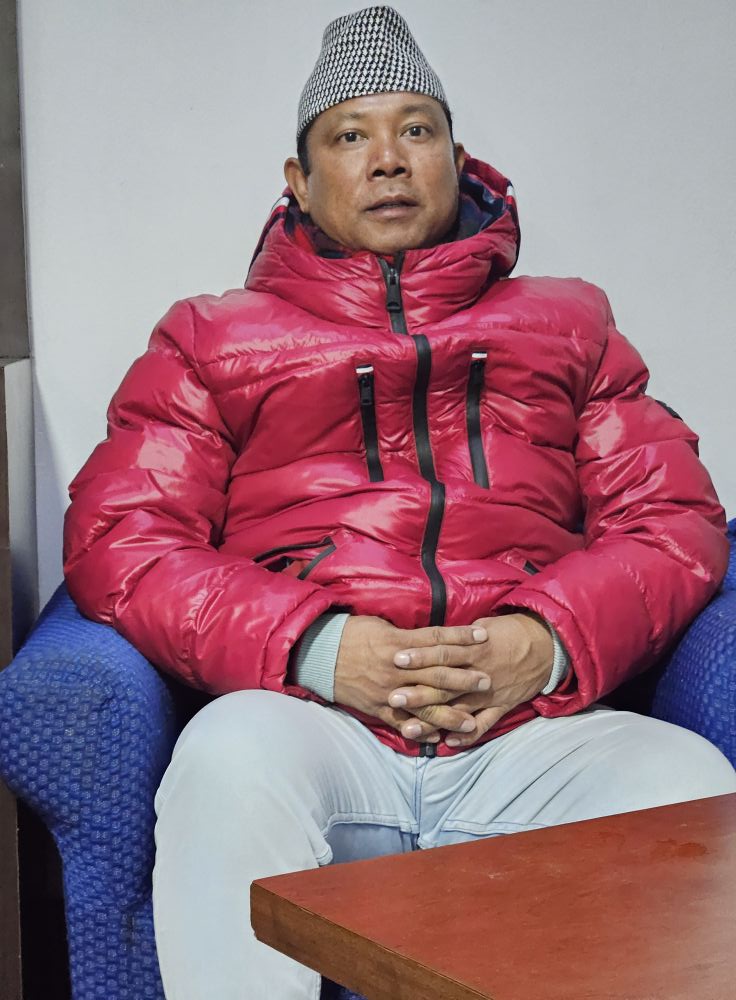
Resham Lal Chaudhary /Photo: Chaudhary’s Facebook
On 3 January 2019, the then Speaker Krishna Bahadur Mahara administered the oath of office and secrecy to Chaudhary at Singha Durbar, after which he was returned to jail. He was never able to enter parliament. Convicted to life imprisonment in a criminal case, he was released from jail after President Ramchandra Paudel granted him a pardon on Republic Day, 15 Jestha 2080 (29 May 2023).
Chaudhary, who spent five years and three months in jail, had 14 years of his sentence remitted. In the 2022 election as well, he had expressed a desire to become a candidate from jail, but the EC rejected his candidacy.
Those who won but could not become MPs
After forming the RSP and winning from Chitwan-2 in 2022, Rabi Lamichhane became Deputy Prime Minister and Home Minister. Allegations regarding his American citizenship reached the Supreme Court. On 6 February 2023, the Supreme Court ruled that Lamichhane had used his old Nepali citizenship without renouncing his foreign citizenship, causing him to lose both his MP and ministerial positions. After submitting proof of renunciation of American citizenship to the District Administration Office and reactivating his Nepali citizenship, he was re-elected from Chitwan-2 in the by-election.
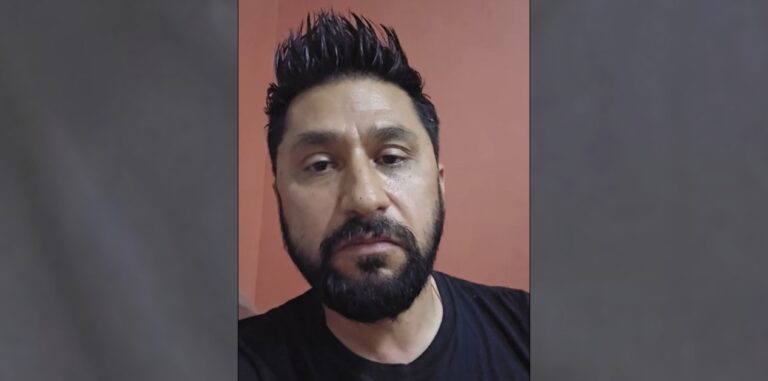
Rabi Lamichhane
Most recently, after cases were registered against him for cooperative fraud and money laundering, his MP position was again suspended.
The MP position of former prime minister Madhav Kumar Nepal, elected from Rautahat-1, is also under suspension. After the Commission for the Investigation of Abuse of Authority filed a corruption case at the Special Court alleging misappropriation of land that had received land-ceiling exemption granted by the government to Patanjali Yogpeeth and Ayurveda Company in Kavre, he was suspended on 5 June 2025.

Madhav Kumar Nepal. Photo: Nepal Photo Library
After a corruption case was registered in connection with the Teramax scandal, Nepali Congress MP Mohan Bahadur Basnet’s MP position was suspended. Not only Basnet, elected from Sindhupalchok-2, but also UML MP Top Bahadur Rayamajhi was suspended in the Bhutanese refugee case.
Rastriya Prajatantra Party (RPP) MP Gita Basnet, accused of irregularities in a cooperative, has been on the absconding list for a year. Since an arrest warrant was issued against her on 26 April 2024 for allegedly embezzling funds of the Chhipchhipe Consumers’ Cooperative in Kawasoti, Nawalpur, she has been absconding.
While a corruption case filed on 4 February 2019 for alleged irregularities in leasing land belonging to the Social Welfare Council at Bhrikutimandap was still under consideration, Tek Bahadur Gurung of the Nepali Congress won a parliamentary seat.
Immediately after his victory, the Parliament Secretariat issued a notice of suspension, preventing him from working. On28 February 2023, the Special Court convicted Gurung and others. He filed a writ petition at the Supreme Court seeking the right to serve as an MP.
The Supreme Court interpreted that “there is no need to suspend a person holding a public office after they assume the position.” Just as he got the opportunity to enter parliament, the House was dissolved.
From Manang, Rajiv Gurung, known as Deepak Manange, won the Provincial Assembly (B) election in 2017 but was unable to take the oath. He won the provincial election again in 2022 and even became a minister in Gandaki Province. On 18 June 2024, the Supreme Court ruled that his position as a provincial assembly member had automatically ended. Manange is currently in Dillibazar Prison after being convicted in a case of attempted murder.
Constitutional law expert and senior advocate Chandrakanta Gyawali says that not allowing a candidate who is eligible to contest an election to take the oath after winning shows a conflict between the Constitution and the law. To be deemed guilty, a conviction must be upheld by two levels of courts. According to him, even after a conviction, a person whose case is under appeal and under consideration is still considered innocent.
“In any pending case, a person is only an accused, not guilty,” he says. Gyawali says that because Nepal has accepted the International Covenant on Civil and Political Rights, this principle is reflected in Clause (5) of Article 20 of the Constitution.
“Those who win elections must be allowed to take the oath. This is a fundamental right. They cannot be declared guilty,” he says.
“Once citizens are allowed to become candidates and are legitimized by the people’s vote, it cannot be said that they cannot take the oath. Such matters are examined by the Constitutional Bench of the Supreme Court.”
After the promulgation of the Constitution in 2015, the first three-tier federal elections were held in 2017. At that time, five MPs who had won direct elections to the House of Representatives were suspended.
They were Nepali Congress leader Bijay Kumar Gachchhadar from Sunsari, Mohammad Aftab Alam from Rautahat-2, Harinarayan Rauniyar from Parsa-3, Krishna Bahadur Mahara from Dang-2, and Resham Chaudhary from Kailali-1.
Nepali Congress leader Gachchhadar was suspended after the CIAA filed a corruption case against him over irregularities in the Lalita Niwas land case. Then Speaker Mahara was suspended after a case was filed against him on charges of sexual misconduct.