Kathmandu
Tuesday, February 10, 2026





PM Sushila Karki faces scrutiny for her busy schedule of non-political meetings while urgent election-related dialogues take a backseat
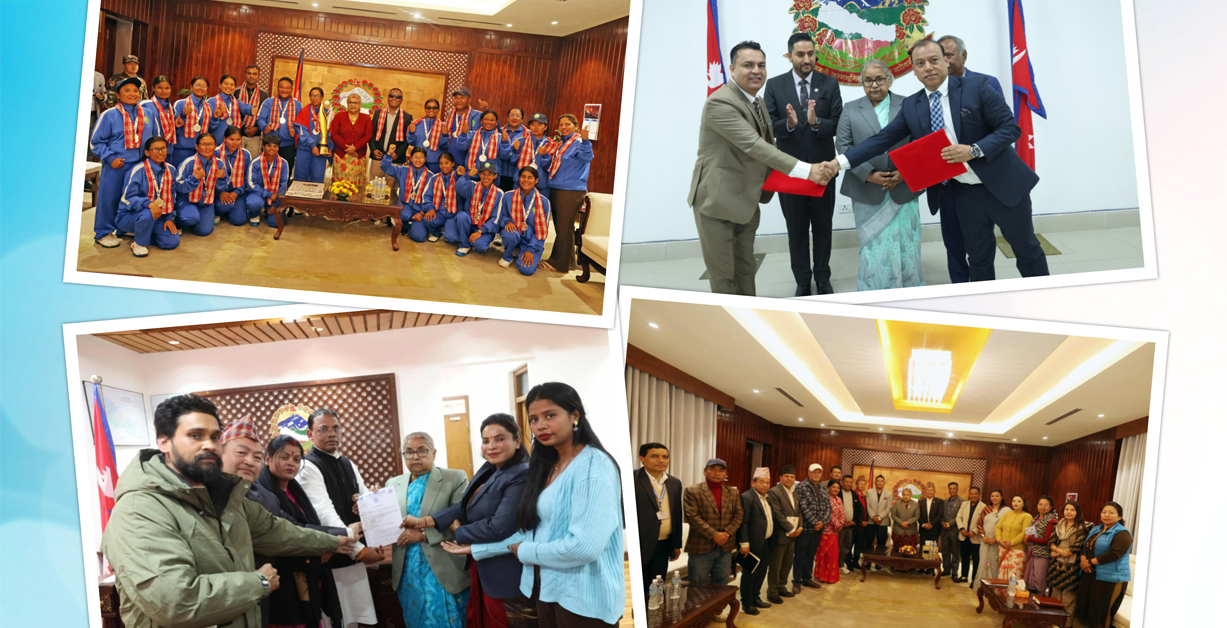
KATHMANDU: The main mandate given to the government, formed on the strength of the Gen Z protest, is to conduct the House of Representatives election on March 5, 2026. Immediately after she was appointed the Prime Minister on September 12, parliament was dissolved on her recommendation, and the election date was announced. Because elections must be held in a short period and the political parties which became disgruntled and suspicious after being pushed to the sidelines of power and authority following the youth movement must be taken into confidence, it is a challenge for the government to hold the elections on the scheduled date.
As the head of the election government, Karki should be focused on creating an environment for the election. However, looking at her activity and busyness, it appears her time is being spent more on formal programs and non-political meetings than on political ones. The head of the government, who received an election mandate, is busy with non-priority meetings rather than intensive dialogues targeted at the election. Information dispatched by Prime Minister Karki’s secretariat also shows that she meets with various individuals and groups on a daily basis.
According to the Prime Minister’s secretariat, Karki is active in programs and meetings from 6 AM until late into the night. In the WhatsApp group ‘PM Sushila Karki Media’ created by her secretariat on September 21, information and photos of programs she participates in and meetings she conducts arrive from early morning until late into the night. The 74-year-old Karki, who had been inactive on social media after retiring as Chief Justice, has become active on Facebook, X, and TikTok since becoming Prime Minister.
In the three-month period since becoming Prime Minister, Karki has held meetings and discussions with representatives of various sectors, organizations, and individuals. In the fifth month (November 17 to December 15) of the current fiscal year alone, she participated in 35 meetings, of which 15 were political and 20 were of non-political nature. During this period, two meetings conducted by the Prime Minister were of diplomatic importance.
There are only 74 days left until the election; since an environment must be created to hold peaceful elections with the participation of all parties , analysts suggest that the Prime Minister should conduct result-oriented meetings for that purpose and should not get entangled in minor meetings and formal programs.
Political analyst Geja Sharma Wagle says that the prime minister should move toward creating an election environment by communicating with political party leaders, the Election Commission, security agencies, and civil society. His understanding is that the government, which should be investigating the incidents of murder and destruction during the Gen Z protest on September 8 and 9, punishing the guilty, providing justice to the victims, guaranteeing good governance, and conducting elections on the designated date, is entangled in unnecessary meetings and cabinet expansion.
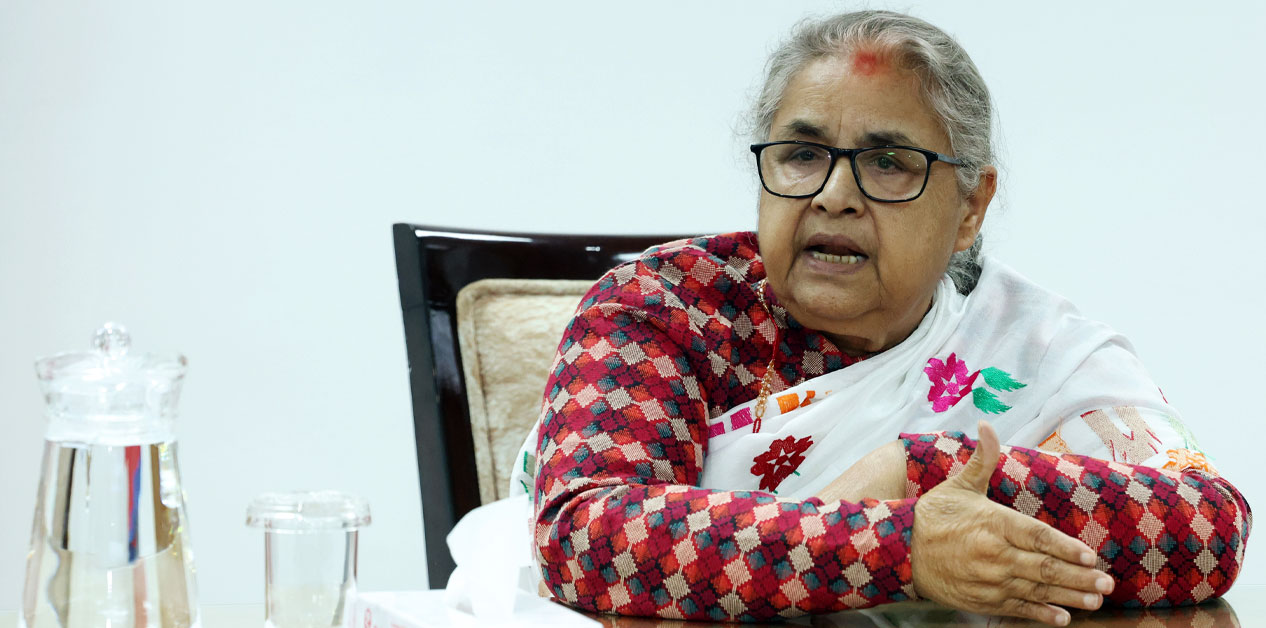
Prime Minister Sushila Karki. Photo: Nepal Photo Library
“The government seems to have deviated from its primary objective and responsibility. If the prime minister is serious and sensitive toward her objective, it would be appropriate to leave aside minor meetings and focus on creating an environment for the election,” said Wagle.
On December 12, Prime Minister Karki appointed four ministers while expanding the cabinet for the fourth time. Some have criticized this, saying that an interim government with an election mandate has started increasing the size of the cabinet as if in a regular situation, while others have taken it positively, saying it is necessary to give the cabinet a full shape for the election.
However, political parties themselves are expressing doubt if the election will be held on the designated date, saying the election government has not moved toward creating an election environment and has not guaranteed security. While some parties have already started recommending candidates and conducting election campaigns with a focus on the election, the CPN (UML), which lost power due to the Gen Z protest, is avoiding it, saying the government has not made the necessary preparations for the election. Instead of joining the preparations for the election set for March 5, 2026, it is walking with the agenda of restoring the dissolved House of Representatives.
CPN (UML) Chairman KP Sharma Oli has alleged that the government has not presented itself in a way that wins the trust of all parties, has not created an environment of fearlessness for the election, and has spread exclusion and anti-party conspiracies instead of election-targeted dialogue, choosing the path of threats. His statement, made while addressing the inauguration program of the party’s 11th General Convention, was targeted at the fact that the high-level inquiry commission formed to investigate the incidents during the Gen Z protest on September 8 and 9 had canceled his passport and set a boundary limit.
Additionally, parties are also piqued by the agreement reached between the government and Gen Z on December 10. Despite standing against the election, 143 parties, including the CPN (UML), have already registered at the Election Commission to participate in the House of Representatives election.
Activist Krishna Pahadi says the primary responsibility of the interim government is to take action against corrupt top leaders and conduct the election within the stipulated time. He doubts if the government formed on the strength of the September protests has strayed from its responsibility.
“There is a suspicion that an undeclared understanding to postpone the election might have been formed due to the indifference of the government and major political parties in taking action against corrupt leaders and the Prime Minister’s rapid meetings. This has raised questions about the government’s justification,” Pahadi says. He states that if action is not taken against corrupt leaders, it will be an undervaluation of the youth protest, so the government should not compromise with anyone on this.
Kundan Aryal, head of the Central Department of Journalism and Mass Communication at Tribhuvan University, suggests that in the current special situation, the Prime Minister should focus her attention on preparations and security assurance for conducting free, fair, and participatory elections. He says that although the government seems to be engaging in election preparations, there is general concern and anxiety about security, so the government should do its homework on this.
Despite standing against the election, 143 parties, including the CPN (UML), have already registered at the Election Commission to participate in the House of Representatives election.
“The Prime Minister should conduct meetings and discussions focusing on issues related to the election and security. Currently, there is concern about security in the election, and questions have been raised about how parties will go for election campaigning,” says Aryal. “It seems necessary for the Prime Minister’s attention to go toward how a free, fair, and participatory election can be conducted.”
Prime Minister Karki’s press advisor Ram Bahadur Rawal says that election preparation is the government’s high priority. “The government has formed a political dialogue committee with two ministers and two advisors and is making extensive preparations for the election,” Rawal says.
Rawal claims that creating an election environment and maintaining good governance are the government’s main priorities, and work is being done accordingly. He says that to focus on election preparation, the Prime Minister expanded the cabinet and reduced the responsibilities of the ministries she was handling.
“The Prime Minister has the main priority and interest in all kinds of preparations that need to be done on behalf of the government,” Rawal says. “With the intention of focusing on election preparation, the Prime Minister also reduced her workload by bringing it down from eight ministries to four, and there are preparations to reduce it further. She has said that she will now give her full time to the election.”
Gap between duty and action
Article 75 of the Constitution of Nepal mentions that the executive power of the government shall be vested in the Council of Ministers. As the head of the Council of Ministers, the Prime Minister conducts daily administration according to her authority. The Government of Nepal (Allocation of Business) Rules, 2018, has assigned 48 tasks, duties, and authorities to the Office of the Prime Minister and Council of Ministers.
These responsibilities include matters related to the Council of Ministers; formulation and enforcement of the Government of Nepal’s allocation of business and performance rules; overall direction, control, and operation of the governance system; implementation, monitoring, and supervision of Cabinet decisions; coordination, inspection, and oversight of ministries; formulation, approval, execution, monitoring, and evaluation of short-term and long-term policies, periodic plans, and strategies; and ensuring updated information, guidance, and coordination on the country’s political, economic, social, infrastructure, security, peace and order, diplomatic, administrative, governance, and good governance reform affairs.
Karki, who assumed the responsibility of prime minister during a crisis, needs to complete the performance by distinguishing the state’s priority from the executive head’s tasks, duties, and authorities.
The Government of Nepal (Allocation of Business) Rules, 2018, has assigned 48 tasks, duties, and authorities to the Office of the Prime Minister and Council of Ministers.
Political analyst Krishna Pokharel, however, sees that Prime Minister Karki has not worked in a way that invites criticism and is working to create an election-friendly environment. “Karki did not come with a pre-made vision of doing this and that; she took responsibility during a crisis,” Pokharel says. “She is preparing to create an administrative and secure environment for the election. She hasn’t done anything to be criticized like the previous government.”
How the PM’s meetings are determined
The meetings conducted by the prime minister are of two types: formal and informal. Formal meetings include representatives of organizations, foreign representatives, and meetings related to government work. For these, the party wishing to meet sends prior information to the secretariat. The secretariat determines the priority of which person or group the prime minister will meet and when and arranges the schedule accordingly. Even for informal meetings, one must go through the secretariat.
However, critics argue that the meetings various people and groups conduct with the Prime Minister in Nepal are not guided by the need of the hour, the gravity of the situation, and the priority of the subject matter. They comment that there is a practice where the Prime Minister’s meetings are determined based on the thoughts and interests of the people in the secretariat.
Govinda Pariyar, who worked in the secretariat of Sher Bahadur Deuba when he was prime minister from July 2021, until December 2022, says the secretariat arranges the meeting with the prime minister after determining whether it is a formal or informal meeting. In his experience, those meetings are arranged during the Prime Minister’s free time. He says the priority of the meeting is based on the gravity and necessity of the subject.
“From such meetings, the Prime Minister helps in obtaining primary information and establishing access to the people,” Pariyar says. “The task of reaching a conclusion from the discussions held in meetings with various groups and individuals and whether to bring it into the decision-making process is done by the Prime Minister.”
Series of PM’s meetings throughout the fifth month (November 17 to December 15) of the current FY:
November 17
Meeting with civil society leaders
Prime Minister Karki held discussions with leaders of civil society. The discussion held at the Office of the Prime Minister and Council of Ministers in Singha Durbar focused on election preparations and other issues. During the discussion, Prime Minister Karki stated that she has to keep struggling on the fronts of constitutional stance, administrative preparation, and increasing youth dissatisfaction. Civil society leaders Indra Adhikari, Subodh Raj Pyakurel, JB Bishwakarma, Kedar Bhakta Mathema, Stella Tamang, Bidyadhar Mallik, Bijay Kant Karna, Geja Sharma Wagle, Dobhan Rai, Nayantara Gurung, Nirgha Nabin, Bijay Timilsina, Khagendra Sangroula, Tula Narayan Shah, Rewati Karki, Shishir Upreti, Dipesh Ghimire, and Raju Prasad Chapagain participated in the discussion.
Participation in NPL inauguration
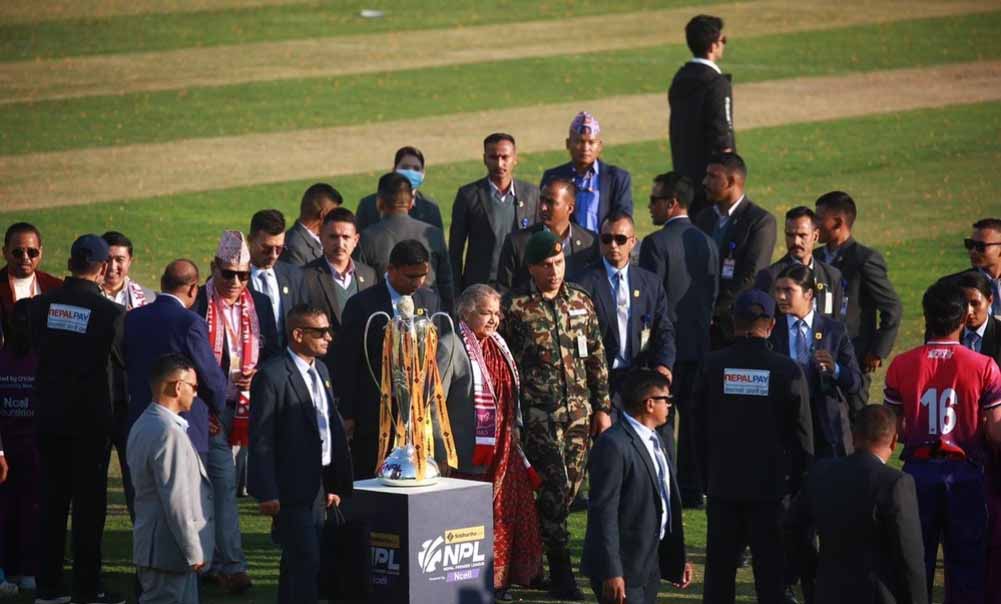
Prime Minister Karki at the inauguration of the Nepal Premier League on December 17. Photo: NPL
On the same day, Prime Minister Karki reached the TU Cricket Stadium in Kirtipur and inaugurated the second edition of the Nepal Premier League (NPL).
Meeting with valley mayors
On the evening of November 17, Prime Minister Karki held discussions with the mayors of the local units within the Kathmandu Valley at the government residence in Baluwatar. Kathmandu Metropolitan City Mayor Balen Shah, however, was not present in the discussion with the delegation of the Valley Mayors Forum.
November 19
Participation in all-party meeting
Prime Minister Karki called an all-party meeting. In the meeting, she said that political parties are the carriers of democracy and the imagination of an election without the support, cooperation, and participation of parties would be impossible. On that occasion, she also warned that if the parties take a stance on House restoration, the country will head toward an accident.
November 20
Participation in security council meeting
A Security Council meeting was held in Singha Durbar under the leadership of Prime Minister Karki. In the meeting, discussions were held on the House of Representatives election, security issues, and more. The meeting decided to recommend to the president the mobilization of the army in the election.
Meeting with Netra Bikram Chand
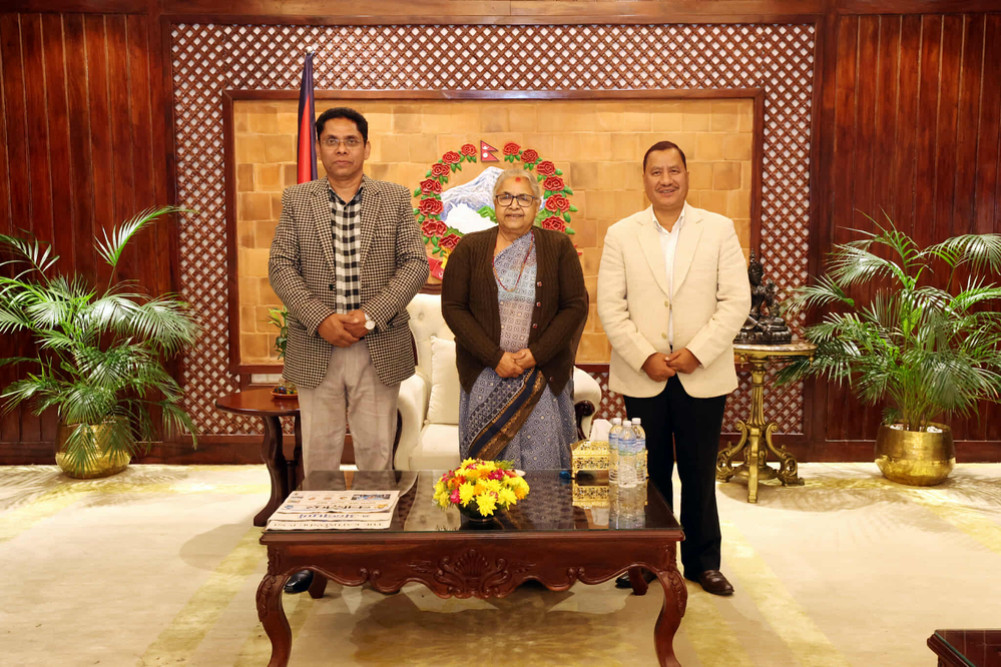
PM Karki with Netra Bikram Chand. Photo Courtesy: PM’s Secretariat
Prime Minister Karki held a meeting with Nepal Communist Party (Maoist) General Secretary Netra Bikram Chand and spokesperson Khadga Bahadur Bishwakarma in Baluwatar. During the meeting, Chand said that he stands with the current government.
November 24
Meeting with the cricket team

PM with national visually impaired Women’s T-20 World Cup team. Photo: PM’s Secretariat
Prime Minister Karki called the national cricket team, which returned as the runner-up in the Visually Impaired Women’s T-20 World Cup, to Baluwatar and congratulated them.
Meeting with Janamat Party leaders
The Janamat Party, led by CK Raut, submitted a 12-point memorandum to Prime Minister Karki demanding the declaration of full autonomy for the province.
November 26
Participation in TU Senate
Prime Minister Karki participated in the TU Assembly (Senate) in the capacity of Chancellor. The Senate passed the policy and program for the fiscal year 2025/26. In that meeting, Karki expressed the view that it is not possible for the Prime Minister to remain Chancellor in every university.
November 27
Participation in Social Security Day
On the occasion of the 8th Social Security Day, Karki participated in a program organized in Singha Durbar. She said that social justice is not possible without complete social security.
Discussion with CPN (UML) leaders
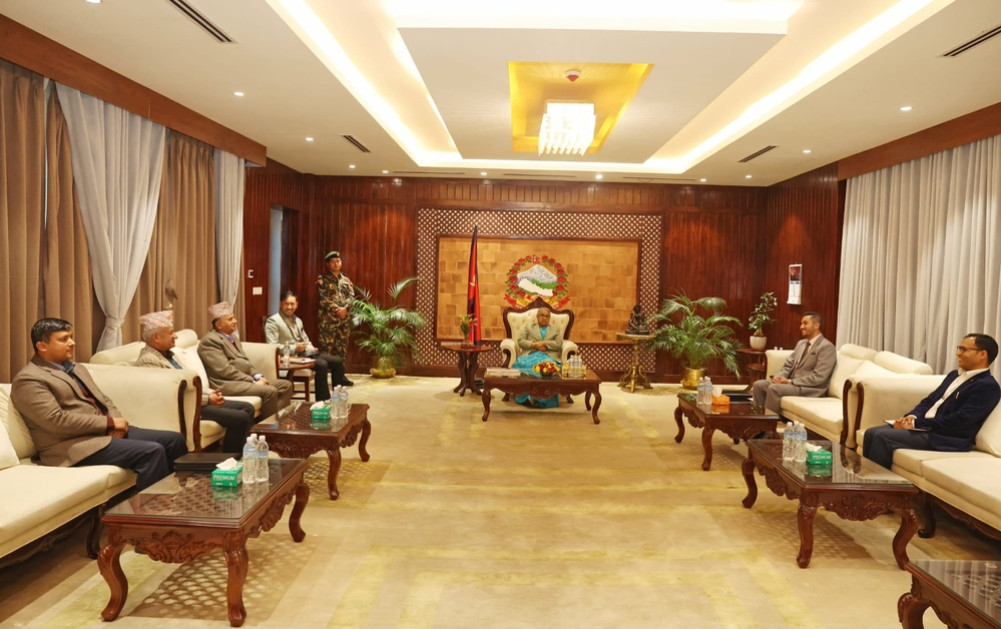
PM Karki in a meeting with CPN (UML) leaders. Photo Courtesy: PM’s Secretariat
Prime Minister Karki held discussions with Shankar Pokharel and other CPN (UML) leaders in Baluwatar. During that meeting, Karki urged for help in the election, while CPN (UML) leaders said the government should create an election environment.
Meeting with representatives of Sarbhaum Nagrik Party
The Prime Minister met with a delegation led by Ganesh Kumar Mandal, chairman of the Sarbhaum Nagrik Party.
Meeting with Mahantha Thakur
On the same day, Prime Minister Karki met with Mahantha Thakur, chairman of the Loktantrik Samajbadi Party Nepal, at her office in Singha Durbar. In the meeting, she urged Thakur to play a role in creating an environment for the House of Representatives election to be held on March 5, 2026.
November 28
PM at Jangi Adda
Prime Minister Karki reached the Nepal Army headquarters, Jangi Adda, and directed the army, saying that not even a single drop of blood should be shed in the upcoming election. She inquired about security preparations for the election.
Meeting with Gen Z leaders
Prime Minister Karki called and met Gen Z leaders at her office in Singha Durbar. In the meeting, she directed them to finalize the draft of the agreement between the government and Gen Z by December 1.
Farewell meeting of NSC member secretary
Tankalal Ghising, the member secretary of the National Sports Council (NSC), who completed his four-year term, reached Singha Durbar and held a farewell meeting with Prime Minister Karki.
November 29
Meeting with RPP leaders
On the evening of November 29, Prime Minister Karki met with RPP leaders in Baluwatar. In the meeting, RPP leaders demanded an all-party dialogue including former King Gyanendra Shah. Karki, however, suggested they implement their agenda after being endorsed by the people.
November 30
Meeting with NRNA reps
Prime Minister Karki met with the teams of Badri KC and Mahesh Kumar Shrestha, the presidents who led the Non-Resident Nepali Association (NRNA) separately. During that time, both parties signed a 10-point original unity agreement in the presence of the prime minister.
Meeting with families of martyrs of Gen Z protest
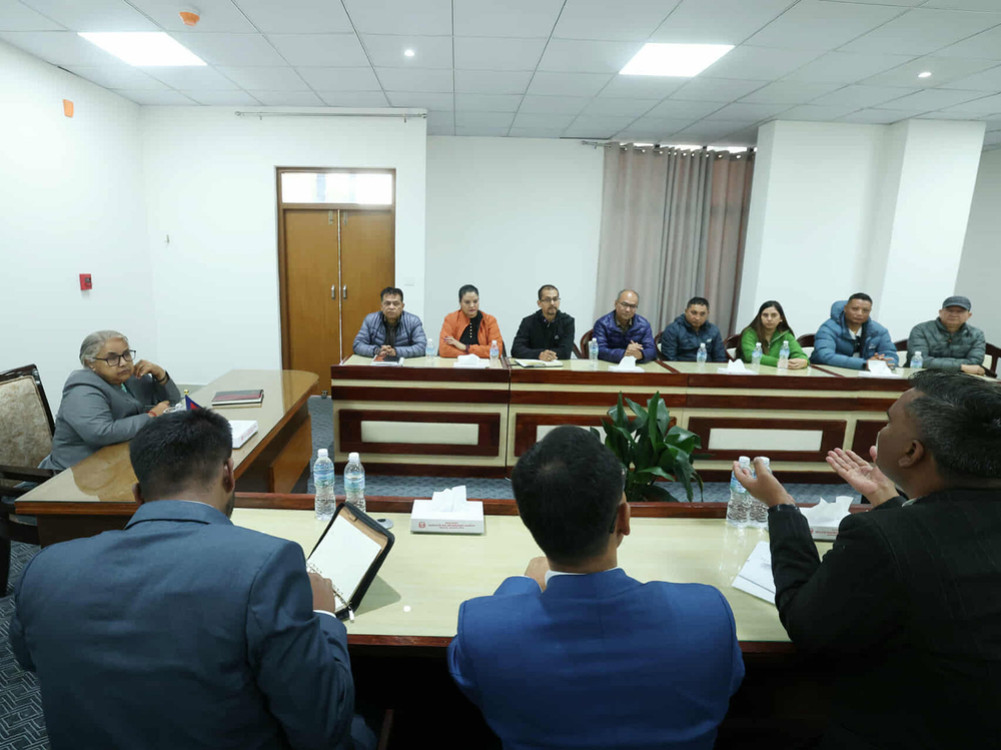
PM meets Gen Z martyrs’ (deceased) families. Photo Courtesy: PM’s Secretariat
The Prime Minister called and met the families of the martyrs of the Gen Z protest in Singha Durbar. In the meeting, Karki said the government is serious and honest toward the demands of the martyrs’ (deceased) families.
December 2
Meeting with the member secretary of the Lumbini Development Trust
In a meeting with Deepak Shrestha of Gorkha, the newly appointed member secretary of the Lumbini Development Trust, Prime Minister Karki directed him to work by keeping the sense of religion in mind in religious institutions.
December 3
Meeting with former PM Baburam Bhattarai

PM meets former Prime Minister Baburam Bhattarai. Photo Courtesy: PM’s Secretariat
Prime Minister Karki met with former PM Baburam Bhattarai and former people’s representatives of Gorkha and Dhading. In the meeting, Karki gave them the assurance that the government is engaged in moving the work of the Budhigandaki Hydropower Project forward quickly.
Meeting with officials of the Dalit Commission
The Prime Minister met with officials of the National Dalit Commission. The officials suggested the Prime Minister move forward with the work to be done according to the constitution to ensure the rights of the Dalit community.
December 4
Participation in the Jyapu Festival
Prime Minister Karki addressed the 22nd National Jyapu Day ceremony.
December 5
Meeting with Japanese ambassador
Prime Minister Karki held a meeting with the Ambassador of Japan to Nepal, MAEDA Toru, at her office in Singha Durbar. In the meeting, discussions were held about celebrating the 70th anniversary of Nepal-Japan relations.
Political gathering at Baluwatar
Prime Minister Karki participated in an all-party discussion she had called in Baluwatar. Leaders of political parties were also present in the gathering called to discuss the preparations, security arrangements, and environment for the election to be held on March 5, 2026.
December 7
Meeting with former President Bhandari
Prime Minister Karki met with former President Bidya Devi Bhandari at her office in Singha Durbar. During that time, discussions were held about the upcoming election and contemporary politics.
Going to Gairigaun to meet Balen
Prime Minister Karki reached Balen’s residence in Gairigaun, Kathmandu, to offer condolences to Kathmandu Metropolitan City Mayor Balen Shah, who was in mourning for his father.
December 8
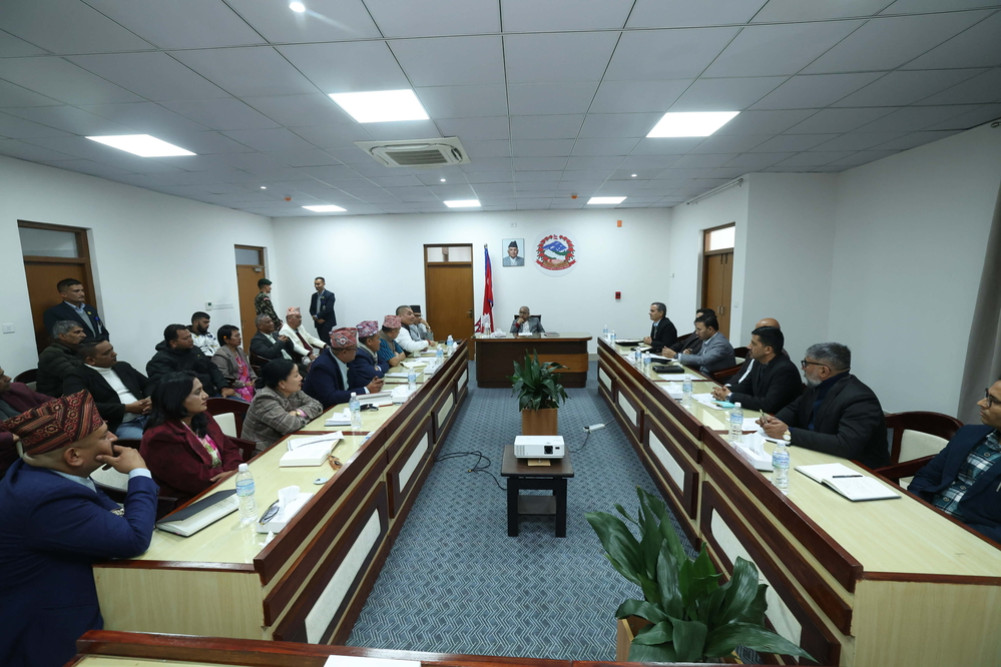
PM with Durga Prasai. Photo Courtesy: PM’s Secretariat
Prime Minister Karki met Durga Prasai, the coordinator of the ‘Nation, Nationality, Religion, Culture, and Citizen Rescue Campaign.’
Discussion in Singha Durbar
At the Office of the Prime Minister and Council of Ministers, Karki held discussions with officials of the Ministry of Labor, Ministry of Foreign Affairs, Ministry of Law, and Department of Foreign Employment about labor problems and controlling the malpractices in foreign employment.
December 9
Meeting with Additional Secretary of the Indian Ministry of External Affairs
Prime Minister Karki met Munu Mahawar, Additional Secretary of the Indian Ministry of External Affairs, in Singha Durbar. During that time, discussions were held on issues of bilateral interest.
Meeting with former Chief Justice Shrestha
Prime Minister Karki reached the residence of former Chief Justice Kalyan Shrestha in Kupandole, who was in mourning for his father, and met him.
December 10
Participation in Human Rights Day event
Prime Minister Karki participated a program organized to mark the 77th International Human Rights Day. Addressing the program, she said that the soul of democracy is clean and fair elections.
Agreement between government and Gen Z representatives
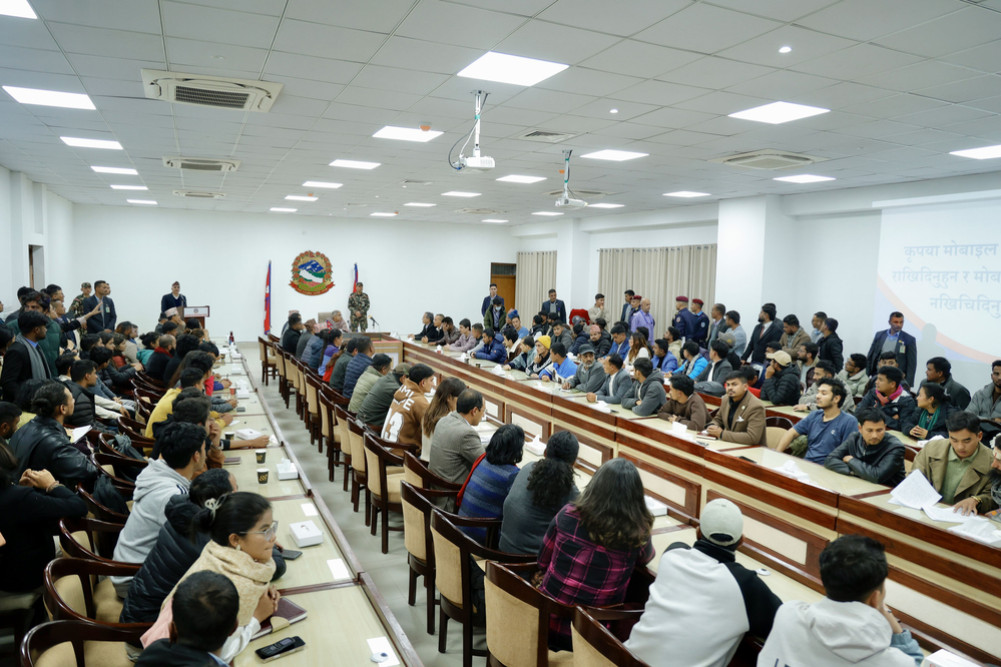
Prime Minister’s meeting with Gen Z representatives. Photo Courtesy: PM’s Secretariat
Prime Minister Karki signed a 10-point agreement with Gen Z representatives in the presence of government ministers and high-ranking officials. The agreement recognizing the Gen Z protest has already been published in the Gazette.
December 11
Meeting with the Committee
Prime Minister Karki met with the officials of the committee formed to evaluate the damage and prepare a reconstruction plan for public structures damaged during the Gen Z protest on September 8 and 9. During that time, the committee submitted a study report with an evaluation that physical damage worth Rs 84.457 billion occurred during the protest.
December 14
Meeting with the President
Prime Minister Karki reached Shital Niwas and met President Ram Chandra Paudel. Prime Minister Karki, who is also the Chairperson of the National Security Council, submitted the report of the National Security Council for the fiscal year 2024/25 during the meeting. President Paudel suggested the government focus all its attention on conducting the election on the designated date.