Kathmandu
Thursday, January 22, 2026





Political Parties Make Dalits Even More Marginalized

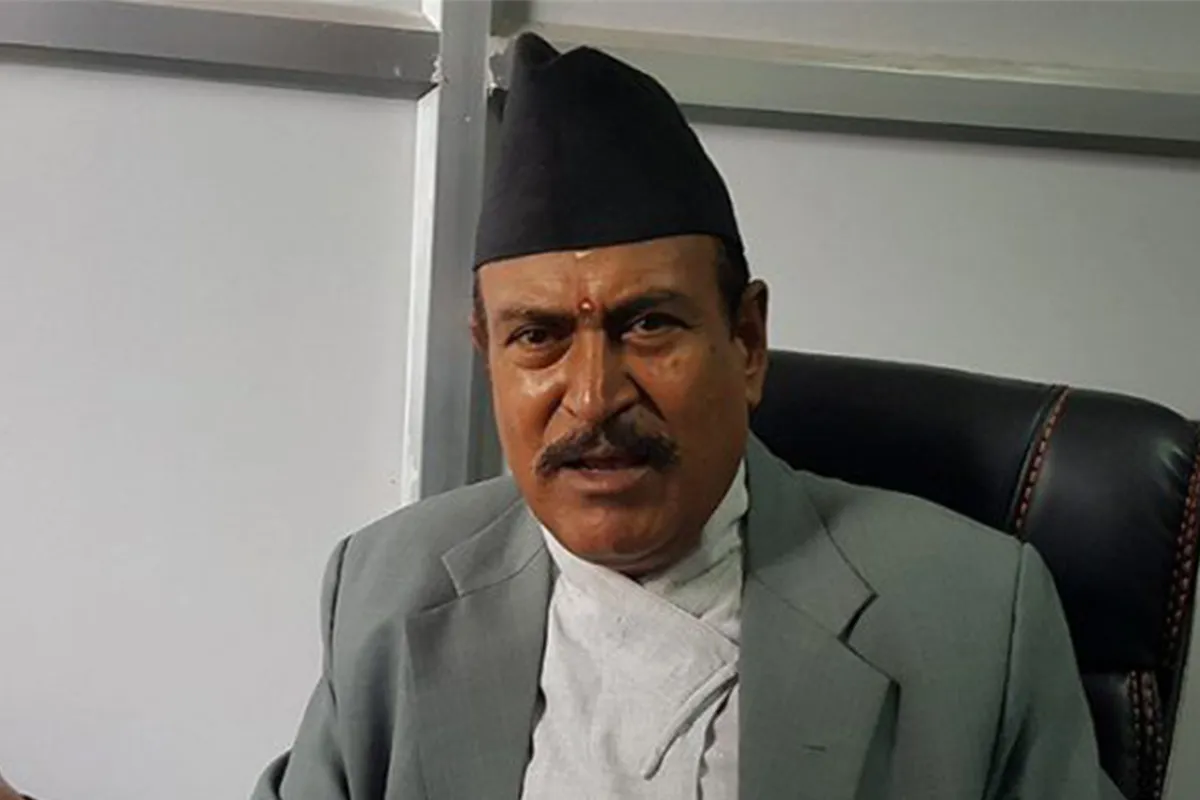
KATHMANDU: Chhabilal Bishwakarma, who was directly elected from Rupandehi–1 in the House of Representatives elections of 2017 and 2022 from the CPN (UML), has withdrawn his candidacy for the upcoming election. A UML secretary, he is not only one of the party’s most senior Dalit leaders but also a former minister.
If we look at the list of direct candidates fielded by major political parties for the House of Representatives election to be held on March 5, the number of Dalit candidates is negligible. The country’s oldest democratic party, the Nepali Congress (NC), has fielded candidates in all constituencies nationwide for the upcoming election. However, it has given Dalits a ticket in only one out of 165 constituencies. The NC has nominated Prakash Snehi Rasaili from Bajhang–2. He was elected co–general secretary through the party’s special general convention. In the 2022 election, the NC did not give a direct election ticket to even a single Dalit candidate nationwide.
The CPN (UML) has fielded a total of three Dalit candidates directly: Chakraprasad Rasaili Snehi in Dadeldhura, Dal Bahadur Sunar in Banke–3, and Bimala BK in Bardiya–2. Bimala BK is a former Maoist. In Bajhang, the UML had initially proposed Ophilal Okheda as a candidate but later dropped his name and gave the ticket to Ainsingh Mahara, who is close to party chair KP Sharma Oli.
The Nepali Communist Party, formed by various small leftist parties across the country, has fielded a total of three Dalit candidates directly: Manoj Paswan from Siraha–2, Padam Bishwakarma from Syangja–2, and Man Bahadur Sunar from Kanchanpur–3.
Even the Rastriya Swatantra Party (RSP), considered a new and alternative political force, has neglected Dalits in direct elections. Although the RSP has fielded candidates in all 165 constituencies, it has nominated only two Dalit candidates: Khagendra Sunar from Banke–3 and Bimal Gadal from Ilam–1. Coincidentally, in Banke, the RSP’s Dalit candidate Khagendra Sunar will directly compete against UML’s Dalit candidate Dal Bahadur Sunar.
According to the 2021 National Census, Nepal’s Dalit population stands at 13.4 percent (3,898,990 people). Based on this population ratio, the number of Dalit candidates fielded directly by major parties in 165 constituencies is extremely low. Writer and researcher JB Bishwakarma says that the number of Dalit candidates nominated by major parties for direct elections this time is extremely disappointing. He states, “The old parties behaved like this before as well. But even after the Gen-Z movement for good governance and change, the negligible number of Dalit candidates is a public disgrace.”
Indeed, Dalit representation in parliament has historically been weak. Even after the 1990 People’s Movement and the 2006 Second People’s Movement, which brought political, economic, and social changes to the country, parliamentary participation has not increased in proportion to the Dalit population. During the Panchayat system, it was customary to nominate a handful of Dalit leaders to the National Panchayat. In the 1991 election, Krishna Singh Pariyar was elected from Banke–3 on behalf of the Nepali Congress. He was the first elected Member of Parliament from the Dalit community.
After that, in the 1994 and 1999 parliamentary elections, no Dalit was given the opportunity to become a House of Representatives candidate by major parties. During this decade, the House of Representatives remained completely Dalit-less.
A significant number of Dalits participated in the armed insurgency launched by the Maoists in 1996. As a result, Dalit representation increased sharply in the interim parliament formed after the 2006 political change. Similarly, in the 2008 first Constituent Assembly election, seven Dalits won direct elections, all from the then CPN (Maoist). Those elected were Khadga Bahadur Bishwakarma from Kalikot, Tilak Pariyar from Banke, Mahendra Paswan from Siraha, Tej Mijhar from Kavre, Gopi Achhami (Sarki) from Morang, Sita Baudel from Nawalparasi, and Durga Bishwakarma from Kaski. At that time, no Dalit from parties other than the Maoists won direct elections.
In the first Constituent Assembly election, a total of 50 Dalit representatives were elected through both direct and proportional systems. This constituted 8.32 percent of the 601-member Constituent Assembly.
However, before a new constitution could be promulgated, the first Constituent Assembly was dissolved midway. Since then, the number of Dalit representatives has continuously declined. In the 2013 second Constituent Assembly election, only two Dalits were elected directly: Ramdayal Mandal of UML from Mahottari and Dal Bahadur Sunar from Banke. At that time, including both direct and proportional representation, 40 Dalit members (6.66 percent) were elected.
Even after the promulgation of the new constitution, Dalit representation in parliament did not increase significantly. In the 2017 House of Representatives election, three Dalits won direct elections: Jagat Bahadur Sunar of UML from Kaski, Chhabilal Bishwakarma from Rupandehi, and Maheshwar Jung Gahataraj of Maoist Center from Banke. Including both proportional and direct representation, 19 Dalits entered parliament at that time. This amounted to just 6.91 percent of the 275-member House of Representatives.
In the 2022 House of Representatives, only Chhabilal Bishwakarma of the CPN (UML) from Rupandehi entered parliament through direct election. In that election, including 15 members elected through the proportional representation system, a total of 16 Dalits became members of the House of Representatives—5.82 percent of the total lawmakers. As major political parties have fielded even fewer Dalit candidates this time, Dalit representation in the House of Representatives is expected to decline further.
Researcher Shivahari Gyawali says that after the promulgation of the new constitution, the dispersal of Dalits in both the hills and the Madhesh has weakened the Dalit movement, making it even harder for Dalits to reach policy-making levels. He states, “Right-wing forces hostile to marginalized communities now dominate every political party.”
Because the constitution itself makes Dalit participation in parliament mandatory through the proportional representation system, political parties have been appointing Dalit lawmakers roughly in proportion to their population through that system. Of the 16 Dalits who entered the House of Representatives in 2022, 15 were elected through proportional representation. This constituted 13.64 percent of the 110 proportional representation seats.
Due to constitutional provisions, Dalit representation through proportional elections generally reflects population proportions. However, political parties are under no obligation to field Dalit candidates in direct elections in proportion to their population. Because there is no legal compulsion, parties do not prioritize Dalits at all. Dalit rights activist and writer Hira Bishwakarma says that the caste-discriminatory mindset toward Dalits within political parties remains unchanged.
He states, “The behavior of political parties toward Dalits has not changed. They are still continuing discrimination against Dalits. Times have changed, but the parties have not. Because of extreme neglect by the parties, the number of Dalit candidates this time is negligible. It feels as if the House of Representatives may become Dalit-less after this election.”
Based on the experiences of Dalit scholars and rights activists, political parties that claim responsibility for social transformation have themselves continuously discriminated against Dalits. This discrimination is visible not only in parliament but also in government. Several past cabinets did not include a single Dalit minister. Dalit rights activists recount bitter experiences in which non-Dalits affiliated with parties openly say, “How can we even greet a Dalit who wins an election?” Hira says, “Party leaders and cadres commit caste-based violence against Dalits. Then how can voters be expected to accept Dalit candidates?”
Former minister and UML secretary Chhabilal Bishwakarma argues that the claim that non-Dalits do not vote for Dalit candidates is not entirely true. He says, “The fact that I myself won direct elections twice proves that this narrative is wrong. Non-Dalits do vote for Dalits—but parties must nominate them and give them opportunities.”
However, Bishwakarma notes that the extremely high cost of parliamentary elections has created a situation where the economically poor Dalit community cannot afford to contest. He adds, “Dalits simply cannot bear election expenses anymore. Elections have become extremely expensive, something ordinary Dalits cannot sustain.”
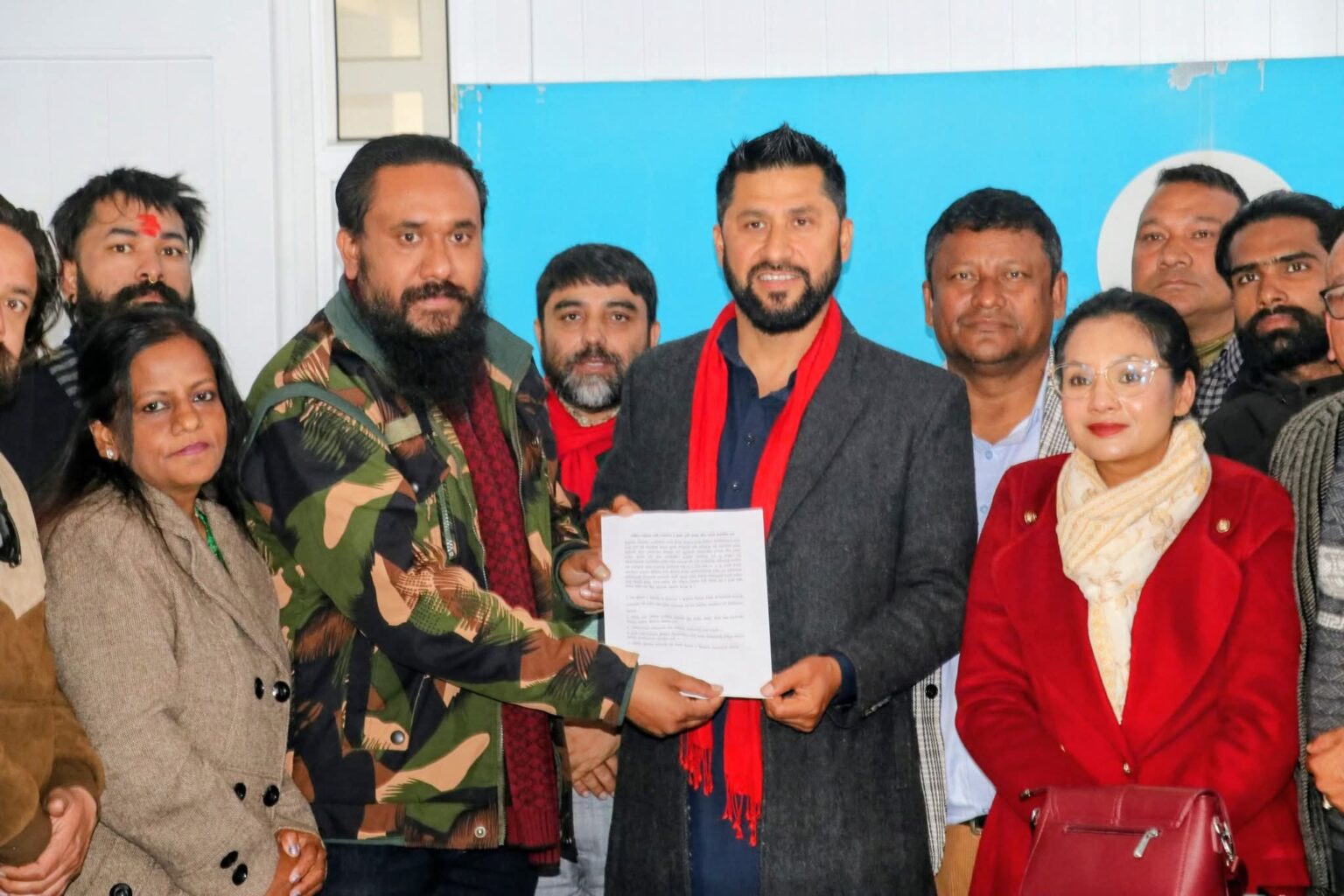
Ravi Lamichhane, chairperson of the Rastriya Swatantra Party, and Khagendra Sunar, founder of Hamro Party Nepal, after a five-point agreement between the two parties. Sunar is currently a candidate from RSP in Banke-3. Photo: Sunar’s Facebook
Dalit rights activist Hira Bishwakarma also says that the Dalit community finds it difficult to mobilize money, power, and party workers during elections, which limits their opportunities to contest direct elections through political parties. He says, “These are contributing factors, but the fundamental reason is the caste-based mindset within political parties.”
The situation is so grave that the organizational structures of political parties themselves are not inclusive. Recently, the Nepali Congress introduced a provision mandating one Dalit co-general secretary. The then CPN (Unified Socialist) led by Madhav Kumar Nepal had also made a provision for one Dalit secretary.
The Progressive Democratic Party, formed after the Gen-Z movement, has included Durga Sob and Santosh Pariyar in its chairperson council. Apart from one secretary in the UML and one co-general secretary in the Nepali Congress, Dalit presence among office bearers in other parties is zero. Parties described as “new” have not included Dalits among their office bearers at all. According to activist Hira Bishwakarma, if party structures were made inclusive from the ward level upward, Dalit leadership could develop, increasing the number of Dalits who reach parliament.
Neither old nor new parties seriously debate inclusion, caste, ethnicity, or community-based agendas. Such discussions have not been possible due to weak Dalit representation within parties and in parliament. Researcher JB Bishwakarma says, “Parties have not paid any attention to leadership development. Now parties must play a central role in developing Dalit leadership.”
Dalit women face even greater marginalization
Among Dalits who have reached the House of Representatives, the number of Madheshi Dalits and women is even more alarming. In the list of Dalit candidates fielded by the four major parties this time, there is only one woman and one Madheshi Dalit. Researcher JB Bishwakarma says, “Parties try not to give Dalits tickets at all, and even when they do, they give them only in constituencies where winning is unlikely. Even those who receive tickets do not get support from the parties to help them win.”
After the promulgation of the new constitution in 2015, representation of one Dalit woman in every ward of local governments was made mandatory. As a result, Dalit women’s representation has been ensured in every ward of all 753 local governments nationwide.
It was expected that this constitutional provision—designed to bring Dalit communities into policy-making spaces starting from the ward level—would help develop leadership and support their rise to higher levels. However, although local elections have been held twice since the constitution was promulgated, Dalit representation in the House of Representatives has not increased. Instead, it has continued to decline.