Kathmandu
Wednesday, December 31, 2025





Despite being a safety net for the voiceless, the proportional system is now being monopolized by celebrities and the politically influential
KATHMANDU: During the Gen Z protest on September 8 and 9, many artists gave public statements in favor of the protest. Among them, some artists even took to the streets.
Currently, some artists who supported that protest have been included in the closed list for the proportional representation category from the Rastriya Swatantra Party (RSP) under the upcoming House of Representatives election. Evaluations and commentaries are also being made regarding the names of these influential celebrities.
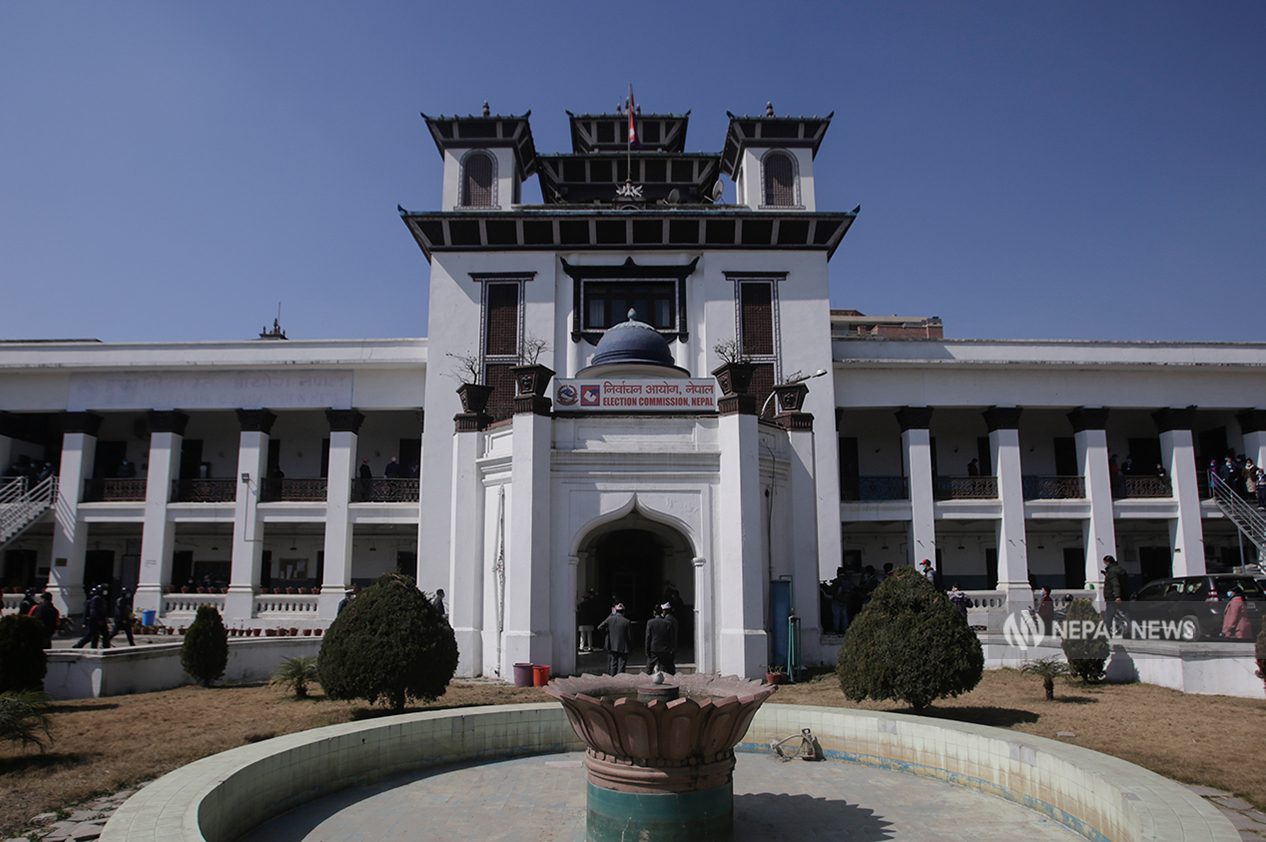
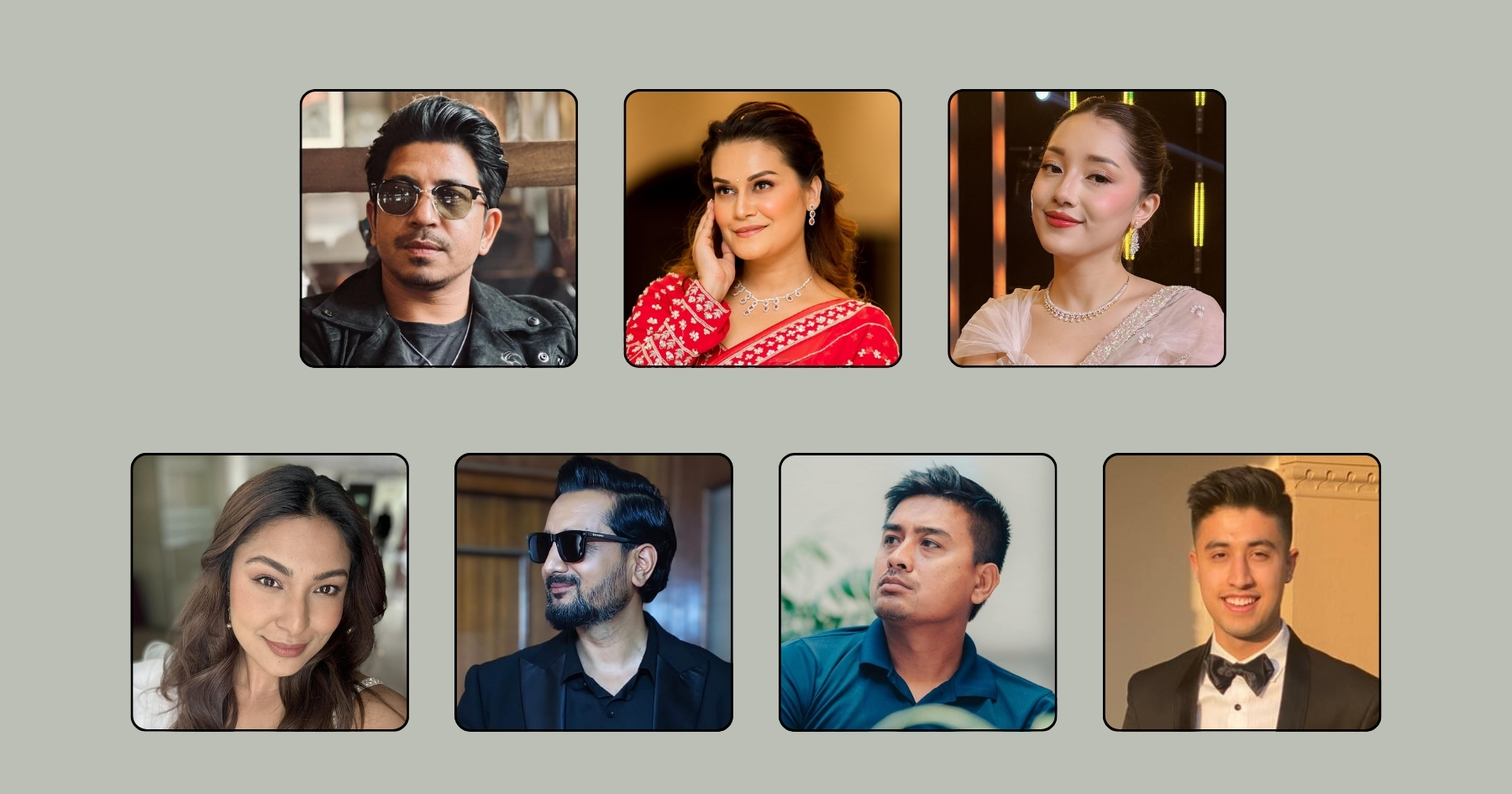
Monday marked the deadline for submitting closed lists under the proportional representation category to the Election Commission. The RSP’s list features a wide range of public figures, including singers, artists, models, and cricketers. Among the prominent names are Prakash Saput, TrishalaGurung, AnushkaShrestha, Rima Bishwokarma, and Asif Shah. Former national cricket captain Gyanendra Malla and Nepal Super League club FC Chitwan owner Sachin Dhakal are also included.
Demonstrating his support during the Gen Z protests, Saput contributed Rs 25,000 each to a couple of friends to fund volunteer efforts, including water distribution and logistical aid for the demonstrators. Similarly, singer Gurung, despite being outside the country, expressed solidarity with the youth protest through social media.
However, Ashika Tamang, who cared for and provided support for injured youths after the protest, wrote on Facebook that the recently published proportional representation list has mocked the very spirit of the system. Questioning its intent, she wrote that proportional representation was meant to uplift marginalized communities and regions excluded from state power. “If the sons of corrupt contractors and the children of middlemen are to become lawmakers and ministers,” she asked, “were the sacrifices and martyrdom of 73 Gen Z youths against ‘Nepokids’ made only to witness this?”
As Tamang mentioned, singer and actor Saput is in the second position of the proportional closed list from the Dalit quota. The name of physician and artist Rupak Bishwokarma Ghimire is also on the same list. Television presenter and actress Rima Bishwokarma is in the first position from the Dalit women’s quota. Artist Asif Shah has fallen into the first position from the Muslim quota, while the name of Miss Nepal 2019, Anushka Shrestha, is in the fourth position of the list under the indigenous women’s quota. The name of singer SatyakalaRai is also included in the proportional list.
Like RSP, the names of KomalOli from the CPN-UML and KhushbuOli from the RastriyaPrajatantraParty have fallen under the proportional category. From thee CPN-UML, the president of the Federation of National Folk Culture, singer BhumikaSubba, has founfthe number one spot of the Janajati women’s quota.
Article 84(2) of the Constitution provides for proportional representation in elections to the House of Representatives. It requires political parties to nominate candidates through closed lists in a way that reflects population-based inclusion of women, Dalits, Indigenous communities, Khas Aryas, Madhesis, Muslims, and people from backward regions. The provision also mandates that candidate selection maintain geographic and provincial balance, ensuring inclusive and equitable representation.
This means the Constitution itself specifies that those deprived of opportunities should be given space in the proportional closed list in an inclusive manner. Contrary to this, many have commented that the inclusion of famous and economically strong celebrities in the closed lists of various political parties has ridiculed the notion of proportional inclusion.
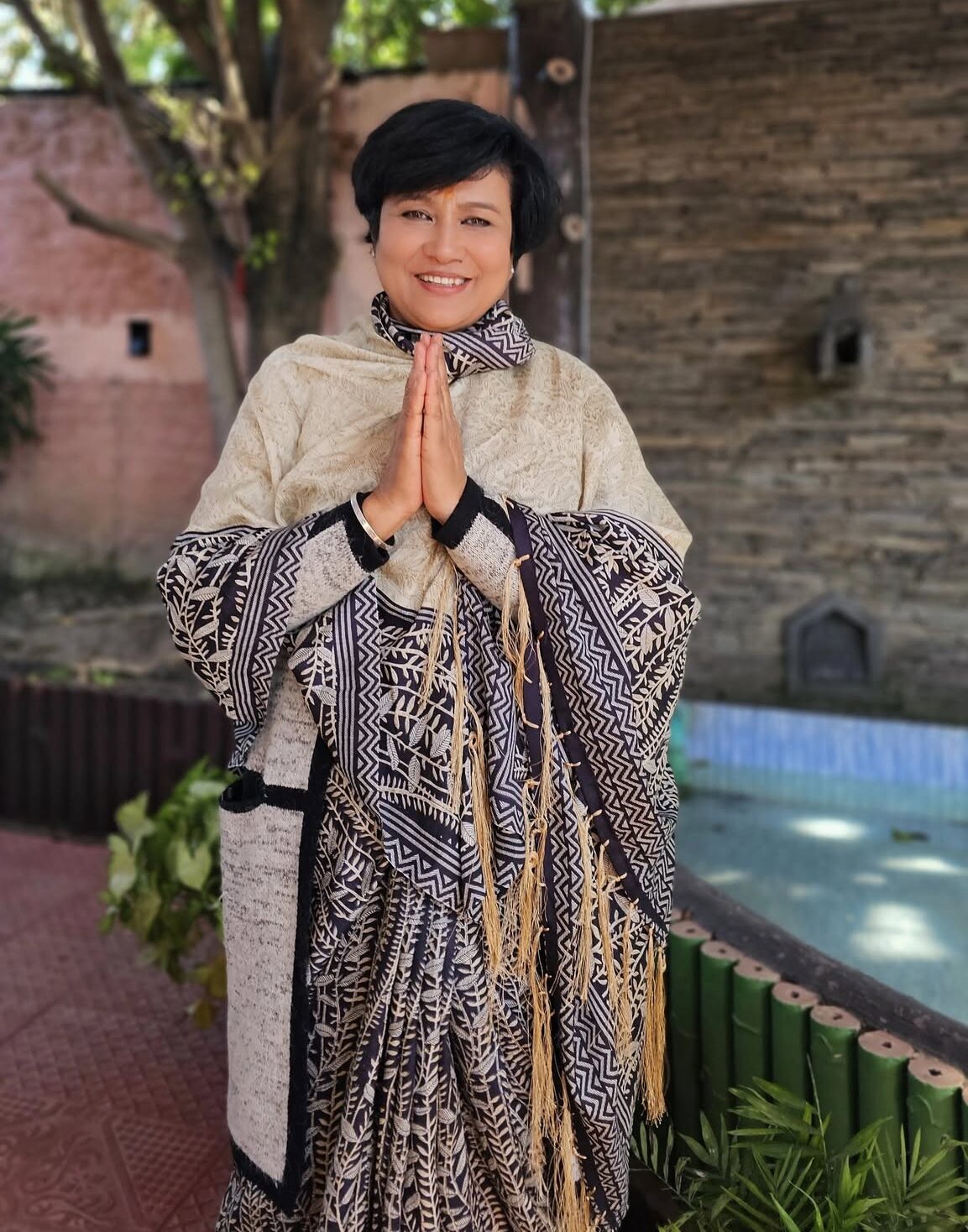
Komal Oli. Photo Courtesy: Komal/Facebook
However, singer and actor Saput claims that his name appearing in the proportional list is natural. “I represent the same community in which I have been selected. I understand that my name was recommended with the calculation that I can do more work by keeping my name in that list. It appeared as if I and other artists or established names in our fields have come as privileged, but this is a chance to build the country by utilizing our popularity,” he said.
Saput claimed that he joined the campaign to build the country formally, not with the objective of making a career in politics. “I joined in the scenario following the working style of RSP lately, the rise of Balendra Shah, and the Gen Z protest. My thought from before was that one should either ignore politics or join formally. The objective is to work for the country as much as possible, whether a little or a lot, while establishing a new power from my side,” said Saput.
Saput believes that, like him, other artists have also joined, thinking this is the right chance to do something good for the country.
Director Dipendra Lama, however, does not consider the political activism of celebrity artists as a campaign to build the country. Instead, he considers this a practice where parties utilize the fame of artists and artists make their popularity a medium to acquire political power. He said, “This practice is not new. Since the Panchayat era, there has been a tendency for artists to lean toward the regime and power. Even after the multiparty system, this tendency still continues.”
As director Lama said, the political character of celebrities is like a chameleon tendency that keeps changing colors. Actresses Rekha Thapa and Karishma Manandhar, among others, are representative examples of this. Thapa, who entered the CPN (Maoist Center) more than a decade ago, had danced vigorously with Pushpa Kamal Dahal. That same Thapa entered the RastriyaPrajatantra Party in 2016 after receiving a warm welcome from the hand of Chairman Kamal Thapa.
Manandhar, who plunged into politics from the then Naya Shakti Nepal, had entered the CPN-UML in 2022. At that time, she even brought up the context that her naming-ceremony name was ‘Suryakumari,’ which matched the CPN-UML election symbol. Like the art sector, the name of the former captain of the Nepali cricket team, Gyanendra Malla, was unexpected for many in the proportional list. Moving out from the ‘boundary line’ of the cricket field, Malla says he is now thinking of raising issues of sports and youth from the policy-making level. “Because of my sports background, the proposal came to me from RSP. If I get the opportunity, I will take the initiative for policy reforms in sports,” he said.
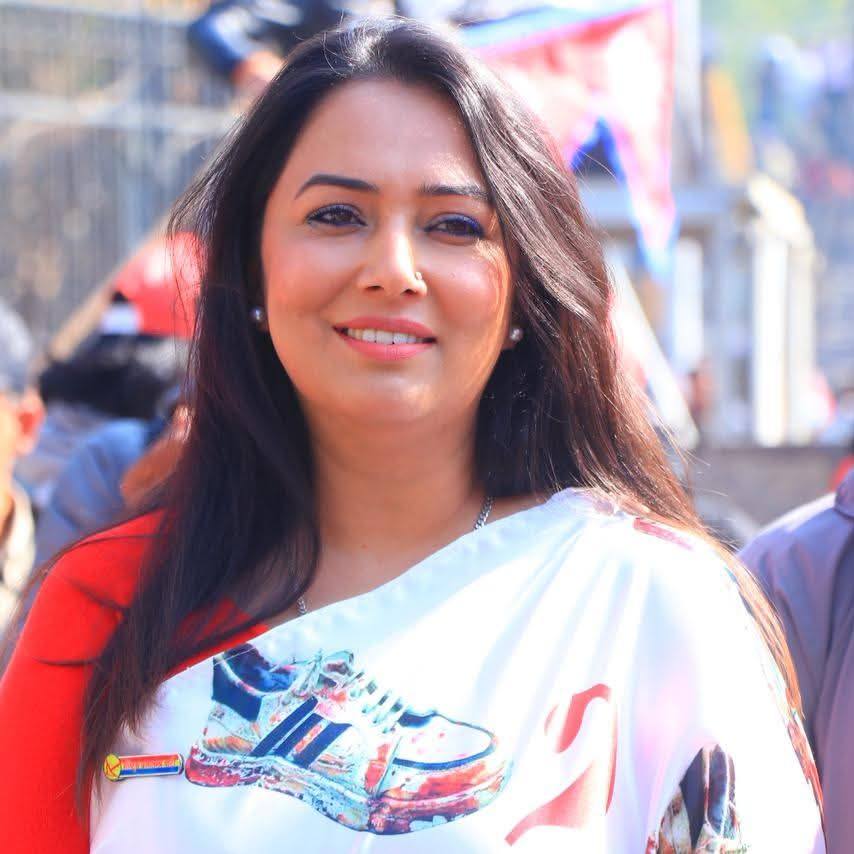
Khusbu Oli. Photo Courtesy: Khusbu/Facebook
Similarly, the name of Sachin Dhakal, son of the president of the Federation of Nepalese Chambers of Commerce and Industry and IME Group, Chandra Dhakal, has also surprised many. Dhakal, who was previously active in the tourism business, appeared with a new identity in Nepali football after becoming the owner of FC Chitwan.
RSP has proposed Dhakal’s name at number two in the proportional list under the Khas Arya community. Clarifying his background, Dhakal says, “Lately, I have been active in sports. I am also a youth. Due to this background, I have found a spot in the proportional list.”
Both Malla and Dhakal are considered close to Kathmandu Metropolitan City Mayor Balendra Shah.
Journalist Sama Thapa wrote on social media that while traditional parties reduced the proportional system to money and family ties, newer parties have turned it into a contest of virality. Questioning the intent of proportional representation, she noted that it was meant for those without networks, platforms, or access to the mainstream. “Is it now designed only for those who already have a voice?” she asked, adding that while old parties traded the system for money and relatives, new ones have traded it for popularity. “In a society where ideas do not sell,” she wrote, “selling faces may seem easier.”
As journalist Thapa said, if these celebrities, who are included in the closed list contrary to the spirit of the proportional system arranged for excluded groups, reach the policy-making level despite the criticism and work for sectoral interests, it will be praiseworthy; otherwise, they will be no different from those whom old parties had made proportional members of parliament by misusing the system.