Kathmandu
Sunday, January 25, 2026





KATHMANDU: On 8 September 2025, Nepal witnessed widespread anti-corruption protests led largely by Generation Z students and young citizens, reflecting deep public frustration with governance and accountability. After nineteen protesters, most of them under the age of thirty, were killed by state forces on the same day, unrest escalated rapidly. The following day, violent mobs set fire to government buildings, party offices, and official residences. Prime Minister K. P. Sharma Oli resigned and was evacuated by military helicopter, as ministers and their families were also airlifted to safety after their quarters were torched.
Offices of the three major political parties—the Communist Party of Nepal (Unified Marxist–Leninist), the Nepali Congress, and the Maoists—were burned, along with key state institutions including the Parliament, government headquarters, the presidential complex, the Supreme Court, and numerous other public buildings. Prisons were broken open, and unrest spread nationwide. Within forty-eight hours, Nepal’s state machinery effectively collapsed, severely undermining the legitimacy of the ruling establishment.
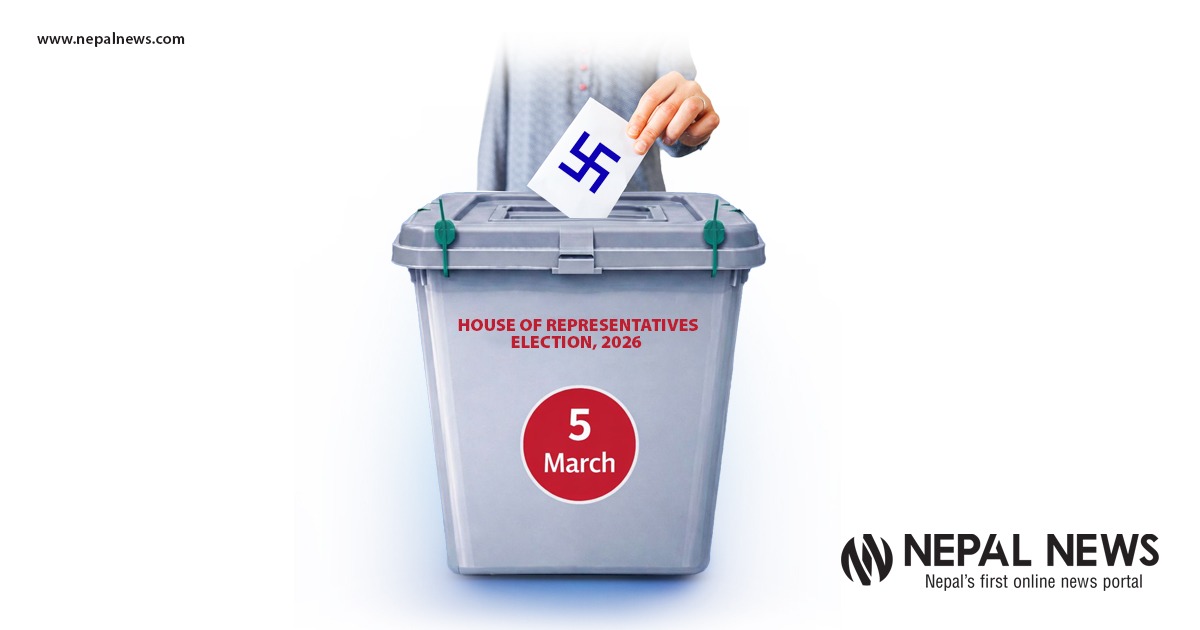
The scale and intensity of the unrest fundamentally altered the country’s political trajectory. On 12 September 2025, the Federal Parliament was dissolved, and Former Chief Justice Sushila Karki was sworn in as interim Prime Minister. On the same day, President Ram Chandra Paudel, acting on the recommendation of the interim government, announced early general elections to elect the 275 members of the House of Representatives. Election Day was set for 5 March 2026, well ahead of the constitutional deadline of November 2027. Here’s a guide to the key Frequently Asked Questions (FAQs) for Nepal’s March 5, 2026 elections:
How many voters and polling stations are there in the March 5 elections?
The March 5 general election will be Nepal’s third national election since the promulgation of the 2015 Constitution, which introduced federalism and a decentralized system of governance. According to the final voter list published by the Election Commission of Nepal, a total of 18,903,689 voters is eligible to participate in the election to choose new members of the House of Representatives. Of these, 9,663,358 are men, 9,240,131 are women, and 200 voters are registered under other categories.
In comparison, the combined House of Representatives and Provincial Assembly elections held in 2022 had approximately 17.9 million registered voters. This indicates an increase of about 915,000 voters in the current electoral roll. To ensure voter access nationwide, the Election Commission has designated 10,967 polling stations with a total of 23,112 polling booths across the country. Polling will be conducted from 7:00 a.m. to 5:00 p.m. on election day. The number of polling stations has increased by 75 compared to the 2022 elections.
Nepal’s House of Representatives consists of 275 members elected under a mixed electoral system, in which 165 members are chosen through the first-past-the-post system while the remaining 110 seats are filled through proportional representation.
How many candidates and parties are contesting the March 5 polls?
The upcoming snap election for Nepal’s House of Representatives has gained momentum following the completion of candidate nominations for the first-past-the-post (FPTP) seats across the country. A total of 3,484 candidates—representing 68 political parties as well as independent contenders—have registered to contest the March 5 elections.
Of these, 2,297 candidates are affiliated with political parties, while 1,187 are running as independents, according to the Election Commission. Officials noted that the figures may change slightly following final verification. Although 120 political parties, including those seeking to contest under a common election symbol, were registered for the snap polls, nearly half did not field any candidates. In addition, only 63 parties submitted their closed lists of candidates under the proportional representation (PR) system.
The candidate pool remains heavily male-dominated. Of the total candidates, 3,088 are men, while 395 are women, accounting for about 11 percent. One candidate belongs to the sexual and gender minority group. Despite the elections being called in the aftermath of the youth-led Gen Z uprising that toppled the K. P. Sharma Oli government, candidates under the age of 35 constitute only 15 percent of the total.
In terms of age distribution, 583 candidates are under 35, 1,610 are between 36 and 50, 1,090 fall within the 51–65 age bracket, and 201 candidates are over 65.
Among the contesting parties, only the CPN-UML and the Nepali Congress have fielded candidates in all 165 FPTP constituencies. The Nepali Communist Party, formed through the merger of several leftist groups including the CPN (Maoist Centre), is contesting in 164 constituencies, while the Rastriya Swatantra Party and the Rastriya Prajatantra Party are each not contesting in two seats.
Election symbols are scheduled to be allotted to candidates on the evening of January 23, 2026. Although nominations will be finalized on Friday, official campaigning will begin later, with the Election Commission permitting electioneering for 15 days from February 16 to March 3.
What is the Election Code of Conduct in Nepal?
The Election Commission of Nepal has enforced the Election Code of Conduct, 2026 with effect from January 19, 2026, in preparation for the House of Representatives elections scheduled for March 5. The code was approved and published in the Nepal Gazette to ensure that the elections are conducted in a free, fair, transparent, and fear-free environment.
The code applies broadly to federal and provincial governments and their ministers, constitutional bodies and office-bearers, local governments and elected representatives, as well as employees of government, semi-government, and public institutions, including security personnel. It also governs the conduct of political parties and their affiliated organizations, election candidates and their associates, polling and counting agents, election observers, monitoring committee officials, and media institutions and personnel.
In addition, the code extends to private and non-governmental organizations, educational institutions and their employees, banks and financial institutions, cooperatives, business and industrial entities, development partners, voter education organizations, and voters themselves. Any other individuals or institutions designated by the Election Commission are also subject to the code.
The Election Commission has implemented the code under the authority granted by Section 22 of the Election Commission Act, 2073, which empowers it to regulate conduct in order to safeguard a fair electoral environment. In cases of violation, the commission may impose fines of up to Rs 100,000 and, in serious cases, cancel a candidate’s nomination.
The commission has also clarified that by-elections will be held to fill vacant local and provincial assembly seats after the completion of the March 5 polls, following the resignation of several representatives who are contesting the parliamentary elections.
How many Houses of Representatives seats are there in each province?
First-Past-The-Post (FPTP) seats in Nepal’s House of Representatives are allocated to provinces in proportion to their population. In Koshi Province, there are 28 FPTP seats and 19 PR seats; Madhes Province has 32 FPTP and 21 PR seats; Bagmati Province has 33 FPTP and 22 PR seats; Gandaki Province has 18 FPTP and 12 PR seats; Lumbini Province has 26 FPTP and 17 PR seats; Karnali Province has 12 FPTP and 8 PR seats; and Sudurpashchim Province has 16 FPTP and 11 PR seats. This distribution ensures a balance between direct constituency representation and proportional inclusion of political parties in the federal legislature.
What is the electoral system in Nepal?
Nepal’s House of Representatives (HoR) consists of 275 elected members who are chosen through a mixed electoral system. Under this system, 60 percent of the members (165 seats) are elected through the first-past-the-post (FPTP) system, while the remaining 40 percent (110 seats) are elected through proportional representation (PR) using closed lists of candidates submitted by political parties.
On Election Day, voters cast four ballots: one to elect a House of Representatives FPTP candidate, one for a House of Representatives PR party list, one to elect a Provincial Assembly FPTP candidate, and one for a Provincial Assembly PR party list. This system is designed to combine direct constituency representation with proportional inclusion of political parties in the legislature.
How are security arrangements being managed for the HoR election?
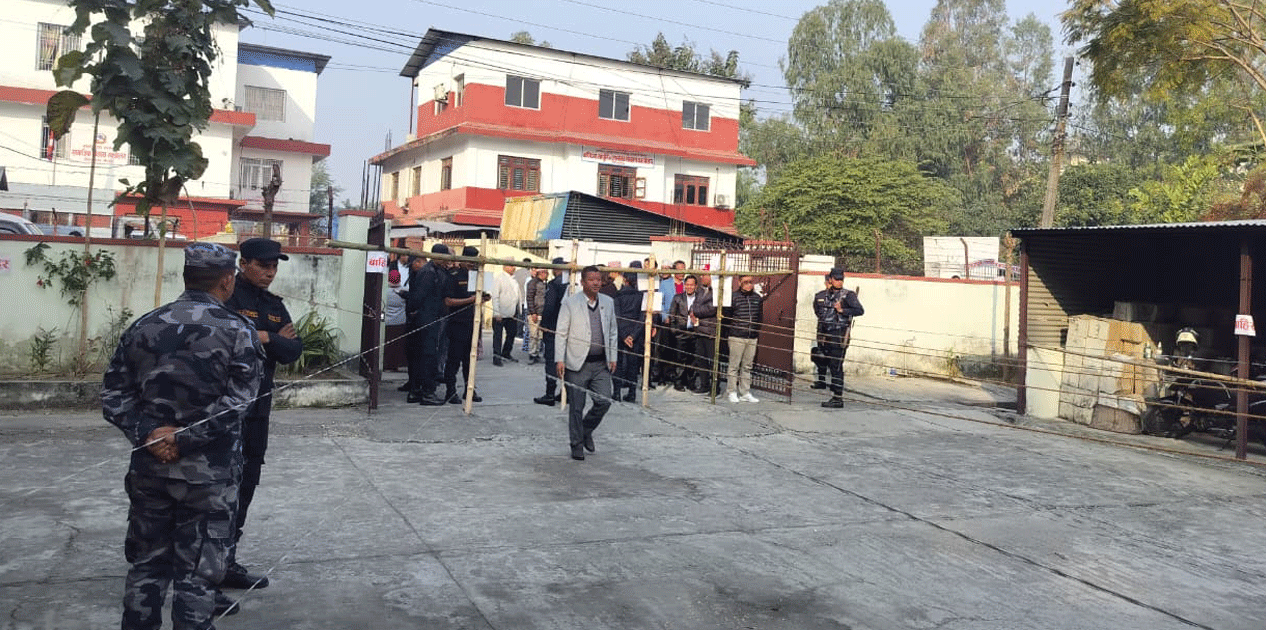
Security for the March 5 House of Representatives elections is being managed through a comprehensive Integrated Election Security Plan, coordinated by the Central Security Committee and implemented by the Nepali Army, Nepal Police, Armed Police Force, National Intelligence Department, and election police recruited specifically for this purpose. A total of approximately 338,000 security personnel will be deployed, including 133,980 Nepal Police election constables, 15,110 Armed Police election constables, and 79,727 soldiers. This represents an increase of around 35,000 temporary election police compared with the previous elections.
The security strategy identifies key challenges, including communal tensions, cyber threats, ballot box security, escaped prisoners, and conflicts between new and former political actors. Polling stations are being assessed for security sensitivity, with personnel numbers and deployment plans determined accordingly. Election police are undergoing selection and training, and joint exercises among the three main security agencies have been conducted to ensure preparedness.
The government has allocated Rs 19.11 billion for election security, with funds distributed to the Ministry of Home Affairs, Election Commission, and Ministry of Defense. The army has placed aircraft on standby in Kathmandu, the eastern, and western regions to respond to potential threats. District Security Committees have been directed to further strengthen local arrangements.
The Integrated Election Security Plan also includes measures to systematize political campaigns, monitor social media, and prevent illegal activities, ensuring a safe and orderly electoral process. The security situation remains sensitive, particularly following the Gen Z protests in September 2025, which led to weapons appearing in various locations, prison escapes, and attacks on police posts. Despite these challenges, the government and security agencies are taking extensive measures to maintain law and order and ensure a safe election environment.
Who is eligible to run as a candidate?
Any Nepali citizen who is at least 25 years old on the date of candidate registration, is a registered voter, and is not disqualified by law may contest the elections after registering with the Election Commission of Nepal. Candidates for First-Past-The-Post (FPTP) seats can run either as independents or be nominated by a registered political party for the relevant federal or provincial constituency. Candidates for Proportional Representation (PR) seats must be nominated by a political party and may appear on only one party’s list. No candidate may contest more than one FPTP constituency, nor can they run simultaneously for both FPTP and PR seats or for seats in both the House of Representatives and a Provincial Assembly.
Who can vote in these elections?
All Nepali citizens who are at least 18 years old on Election Day and are registered voters are eligible to vote. Citizens under 18 may pre-register, allowing them to cast a ballot once they reach voting age on Election Day. Voters can use a voter identification card issued by the Election Commission of Nepal or any other government-issued ID to cast their vote.
Where are vote counting and tabulation held?
After polling ends, ballot boxes are sealed and transported by each polling station’s officer to the relevant returning office, accompanied by a security officer and, if desired, candidate agents. Once all ballot boxes from a constituency are received, the returning officer publishes a notice specifying the date, time, and location for counting. Although the law does not fix a start time, counting typically begins within hours of polling closure.
Votes are counted under the direct supervision of the returning officer, and candidates or their agents may be present. The total number of ballots is first verified, followed by recording the valid and invalid votes on tally sheets. Counting begins with FPTP ballots for the House of Representatives, followed by FPTP ballots for the Provincial Assemblies, and finally the combined PR ballots for both elections. Winners of the FPTP contests are immediately announced to all present.
Once PR ballots are counted, the results are entered into the Election Results Information Software, which transmits the data to the Election Commission of Nepal (ECN). The ECN’s tabulation system aggregates the PR results, after which the chief returning officer announces the vote count and seats won by each party. Parties then officially nominate the winning candidates from their closed lists according to ECN-established criteria.
When will official results be announced?
In past elections, vote counting in Nepal has taken from one day to up to one week, depending on the efficiency of the process and coordination at counting stations. Similarly, for the March 5 elections, the official results will be announced once all ballots are counted, verified, and tabulated by the Election Commission of Nepal, and once consensus is reached at the respective counting centers.
What is the election management body and what are its powers?
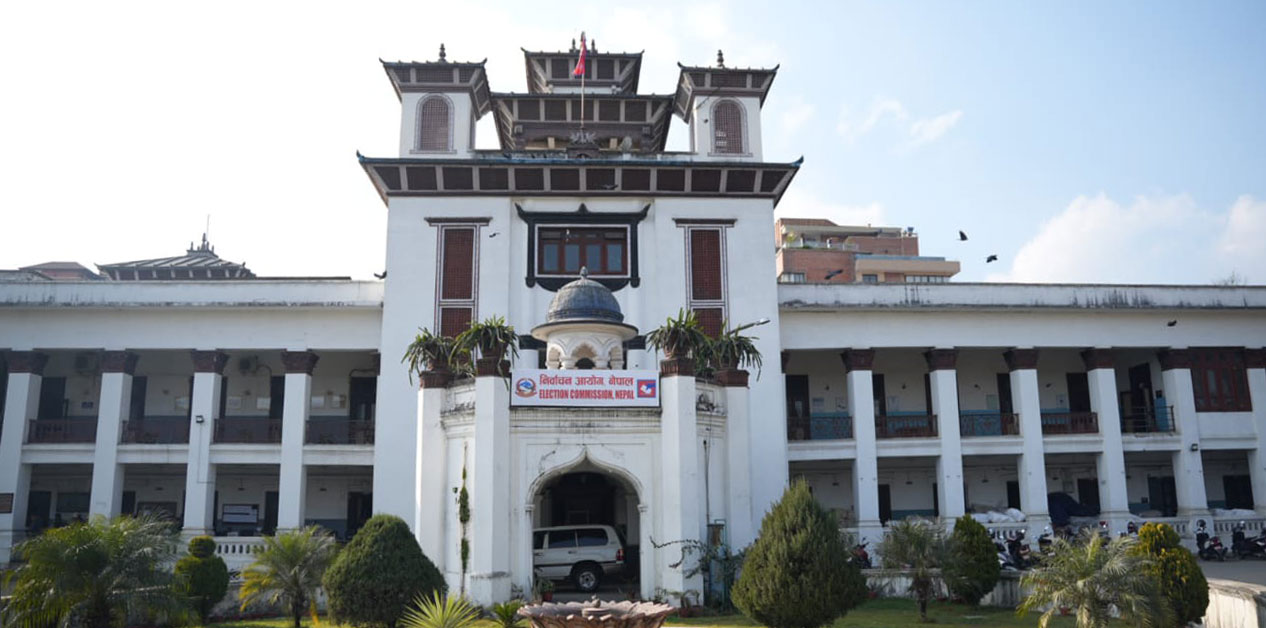
Elections in Nepal are administered by the Election Commission of Nepal (ECN), a constitutionally mandated independent body currently headed by Acting Chief Election Commissioner Ram Prasad Bhandari. The ECN is supported by a secretariat at its headquarters in Kathmandu, as well as field staff across district election offices and regional offices.
The ECN is empowered to conduct, supervise, direct, and control elections for the President, Vice-President, members of the Federal Parliament, Provincial Assemblies, and local bodies. It is responsible for preparing electoral rolls and may also conduct referenda on matters of national importance.
Among its powers, the ECN can advise the government on election dates, request security arrangements, monitor election campaigns, polling, and counting, and impose sanctions against candidates or parties for violating the Election Code of Conduct. It can authorize election observation, delegate duties to government employees, secure public or private facilities for elections, register or disqualify candidates, and cancel elections in cases of violence, threats, or intimidation.
Is out-of-country voting allowed?
Although over 3 million Nepali citizens work abroad, the legal framework does not allow out-of-country voting in these elections. The House of Representatives Election Act does permit the Election Commission of Nepal to establish separate polling stations for provisional voters. This enables those temporarily assigned to a district other than their registered constituency—for example, government employees, security personnel, or staff performing election duties—to vote early for proportional representation (PR) candidates.
However, provisional voting is not permitted for First-Past-The-Post (FPTP) candidates. Eligible provisional voters include government employees, members of the Nepal Army, Nepal Police, or Armed Police Force residing in barracks, prisoners and detainees, election staff and security personnel assigned to election duties, and residents of senior citizen homes managed by the government.
Are there reserved seats for women? What is the gender balance within the candidate list?
The Constitution of Nepal mandates that women make up one-third of the total representatives from each party in both the House of Representatives (HoR) and Provincial Assemblies (PA). To meet this quota, political parties must ensure that at least 50 percent of their proportional representation (PR) candidate lists are women, compensating for any shortfall from First-Past-The-Post (FPTP) seats.
There are no reserved seats for women within the FPTP system. For the March 5 elections, the Election Commission of Nepal has encouraged parties to nominate women for one-third of the FPTP candidates they field, though this recommendation is not legally binding.
How will election disputes be adjudicated?
The Election Commission of Nepal (ECN) establishes an Election Dispute Resolution (EDR) Committee before each election, composed of eight members: five ECN members, the secretaries of the Ministry of Law, Justice and Parliamentary Affairs and the Ministry of Home Affairs, and the Attorney General. Complaints regarding election disputes, violations, or irregularities can be submitted in writing or electronically to district or regional election officers, polling officers, returning officers, monitoring officers, or directly to the EDR Committee as soon as the alleged violation is known.
Any member of the EDR Committee has the authority to determine the validity of complaints and impose remedies or sanctions. Candidates may file election result petitions within 15 days of the announcement of results. Appeals to decisions by the adjudicating authority must be filed within 35 days to the provincial high court. Certain serious offenses—such as forging ballots, vote buying, requests for recounts, or acts of violence—must be referred directly to the relevant high court for rulings and sanctions.
Who can observe during Election Day, and how can they get accreditation?
Both international and national organizations and individuals may register with the Election Commission of Nepal (ECN) to observe the elections. Applicants are required to provide proof of expertise and records of previous election observation or monitoring experience.
The ECN announces the application period publicly. After collecting and reviewing applications, the ECN approves eligible observers. In the current election cycle, for example, four international organizations were approved following a two-round application process. Approved observers are then formally accredited to monitor polling, counting, and other electoral processes on Election Day.