Kathmandu
Tuesday, February 10, 2026





Despite the government's claims of holding elections on time, confusion remains
KATHMANDU: The Bahadur Bhawan premises, where the Election Commission (EC) office is located, wore a deserted look on December 17. Inside, however, employees were meeting and talking to the new EC Secretary who was transferred to the commission last week. Employees assigned to election work said that they were confident that the elections would be held on time and were busy with internal preparations. The EC’s Assistant Spokesperson Sita Pun Shrees says, “Work is underway on electoral directives, code of conduct, et cetera.”
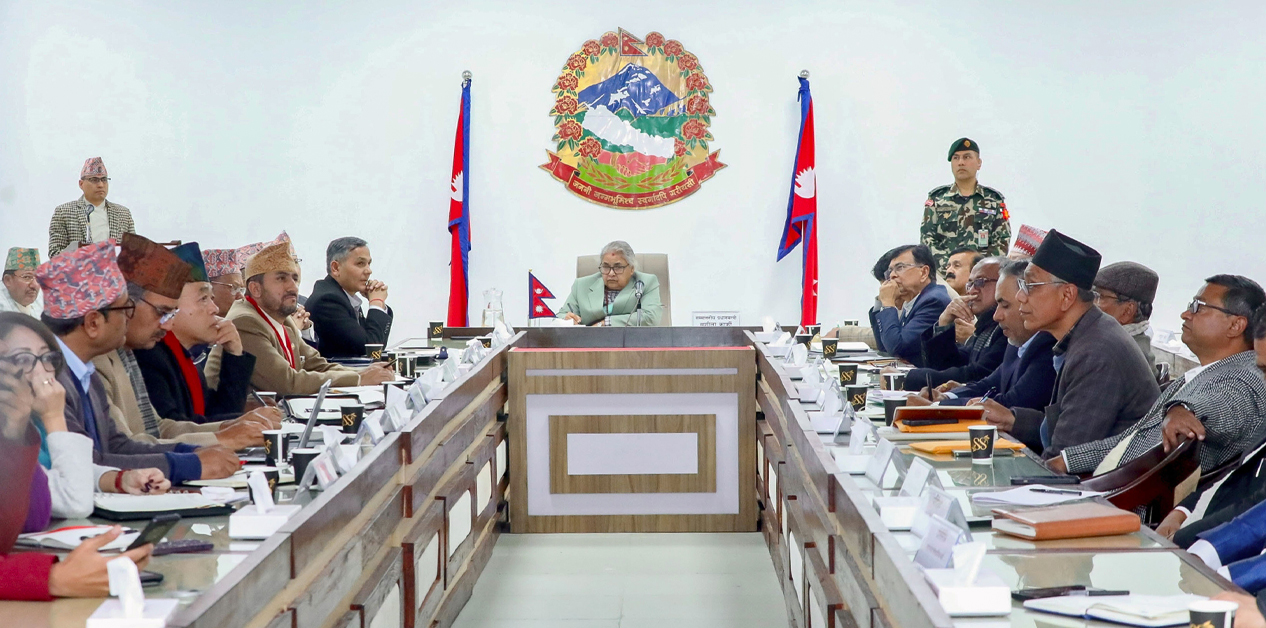
After the House of Representatives (HoR) was dissolved as demanded by the Gen Z revolt and an interim government was formed under the leadership of Sushila Karki, HoR elections were announced for March 5, 2026. Addressing the countrymen on the occasion of 100 days of her government, Prime Minister Karki reiterated the government’s commitment to the elections, saying, “Rumors such as postponing or stopping the elections are completely baseless and misleading. This government is as firm as a rock to hold the elections on time, in a fair and fearless environment.”
As confident as the government is about the elections, there is as much doubt and confusion among stakeholders about the elections scheduled for March 5. The EC has taken the preparations for the elections forward in a phased manner to implement the government’s commitment. The commission has also made the election schedule public. The two main stakeholders of the elections, the Nepali Congress (NC) and the CPN (UML), have filed writ petitions at the Supreme Court, demanding the restoration of the HoR. The NC has not ruled out the elections, but the UML appears negative about the elections. The UML is saying that the government has not gained the trust of the parties for the elections and has not created a secure environment, concluding that thew party doesn’t see a credible basis for the elections. However, Prime Minister Karki has claimed that the government has made all preparations for the elections that will bring stability to the country. According to her, security arrangements have also been made for the elections. Karki said in her address to the nation, “The mobilization of the Nepali Army has been ensured. Most of the weapons seized from the police have been recovered.”
According to Prime Minister Karki, the government has also ensured Rs 6.73 billion for the upcoming elections.
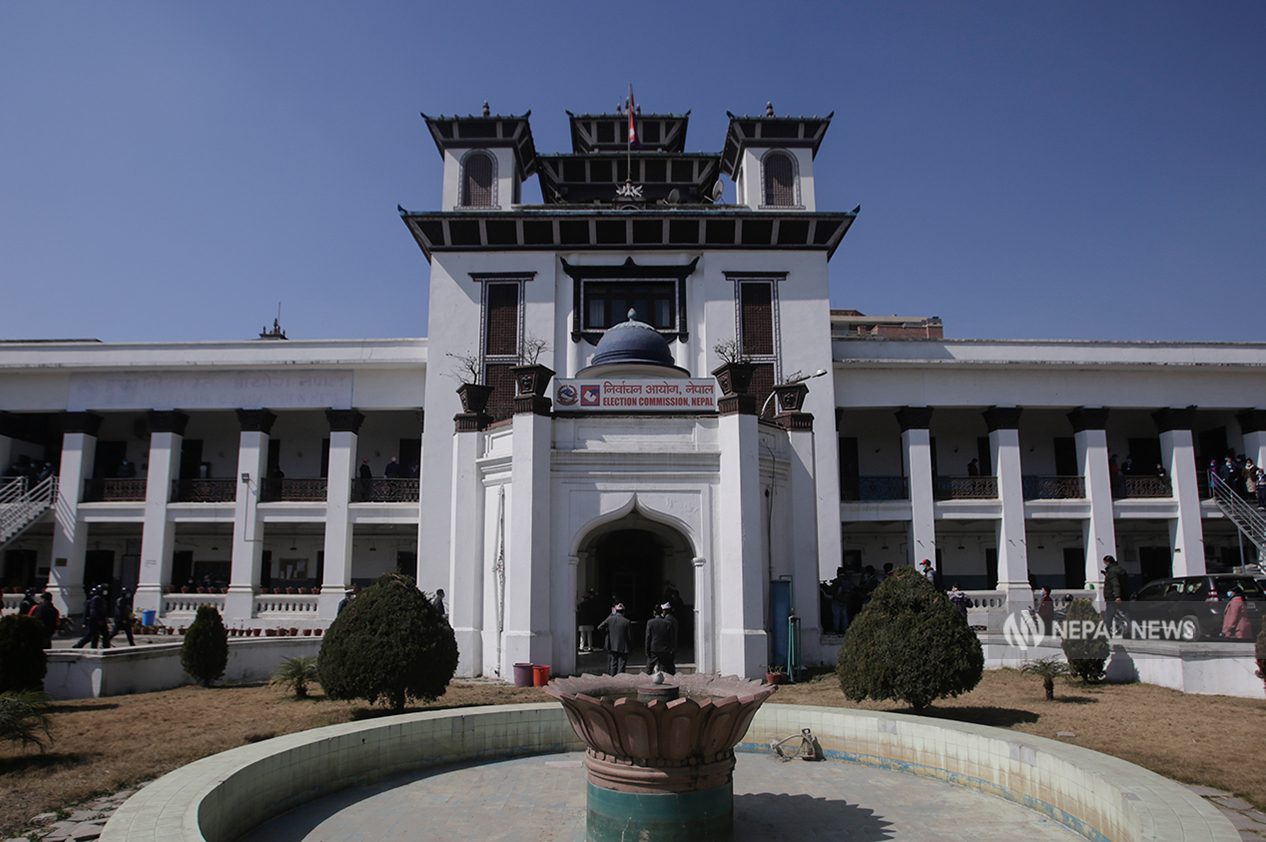
Election Commission. Photo: Bikram Rai/Nepal News
Despite this, former Chief Election Commissioner (CEC) Neelkanth Upreti is not sure that the elections will be held on March 5. He believes that the elections will not be held on the scheduled date as the demand of the Gen Z revolt was not a parliamentary election, especially given that the minimum reforms as per the demands of the Gen Z protesters have not been made. However, Upreti says that since the job of the EC is to conduct elections, and if the political parties are ready, the elections should be held on the scheduled date anyhow.
Upreti does not see any difference between the elections announced after the Gen Z revolt and the previous elections. “Aren’t we going to hold elections without any reforms even after such a big movement?” He says, “If the minimum demands of the Gen Z had been addressed, there would have been a provision for voting for Nepalis living abroad and a provision for ‘no vote’. If arrangements were made to allow Nepali voters to vote from wherever they are, it could have been considered some improvement.” If not in March, he suggests that the appropriate time for the elections could be the first week of May.
Even as the government prepares for the elections, 18 separate petitions have been filed at the Supreme Court against the dissolution of parliament. The coalition government of the two largest parties in parliament, the NC and the UML, was toppled by the Gen Z revolt. The two parties have separately filed writ petitions at the Supreme Court against the dissolution of the House. The UML approached the Supreme Court demanding the restoration of parliament two months after the dissolution of parliament and the NC three months after the upheaval. The Constitutional Bench of the Supreme Court has issued a show-cause order after conducting a preliminary hearing on the writ petitions demanding the restoration of parliament.
Another former CEC, Ayodhee Prasad Yadav, says that the cases pending at apex court will also affect the elections. According to him, the three main pillars of the elections are the EC, the government and the political parties. He says that the EC has been preparing after the election announcement and the government has also paid attention to the preparations. “What happens to the elections depends on the role of the parties including the NC and the UML. Since the two main stakeholders of the elections have reached the court, there is uncertainty about the March 2026 elections.”
The period of mid-February to mid-March is not considered very suitable for elections in terms of the weather. Former CEC Upreti says that in 2013, they had set the date for the Constituent Assembly elections based on the estimated weather data for many years to come. “This time, was the election date set in a hurry without considering nature and weather?” he asks.
The then CEC Yadav recalls that the first general election held in 2017 after the promulgation of the constitution in 2015 was also held based on weather forecast data and suggestions. He says, “We had consulted the Department of Hydrology and Meteorology. In our experience, things would be difficult in the mountainous region during mid-February to mid-March because it snows and the temperature is freezing. Mid-April to mid-May is the appropriate time for elections.”
The Nepal Bar Association (NBA), an umbrella organization of legal practitioners, has demanded that elections be held with the participation of all parties. In a declaration issued after the national conference on human rights held in Janakpur on 10 December 2025, the Bar has demanded that ‘the government formed after the youth protests ensure the participation of all political parties in the election of members of the House of Representatives on March 5 and ensure an environment for a clean, fair, free and fearless election.’ Nepal Bar Association President Bijay Prasad Mishra says that if the election cannot be held on time, the dissolved parliament should be restored.
‘No vote’ and voting from abroad limited to talk
The ‘no vote’ system is to express your support for none of the candidates standing in the election. The Gen Z revolt demanded that Nepalis living abroad also be allowed to vote in the upcoming elections. The government had prepared to issue an ordinance to ensure the provision of ‘no vote’ and voting rights for Nepalis living abroad. However, no legal provision has been made toward this end so far.
On 5 January 2014, the Supreme Court had issued a directive order in the name of the then government and the EC to provide the option of ‘no vote’ on the ballot paper. A joint bench of the then justices Kalyan Shrestha and Prakash Chandra Wasti had ordered the government and the EC to make these arrangements provision from the upcoming elections. This order was not implemented in the two subsequent elections (2017 and 2021). “In the upcoming parliamentary or local elections, the provision for expressing support for none of the candidates standing (None of the above) should be made on the ballot papers, ensuring other appropriate legal matters,” the order said.
Home minister of the interim government, Om Prakash Aryal, had assured that necessary preparations were being made to provide voting rights to Nepalis living abroad. However, the EC has not yet received a law on this matter.
On 21 March 2018, the Supreme Court had issued another directive order to provide voting rights to Nepali citizens living abroad. A joint bench of Justices Sapana Pradhan Malla and Purushottam Bhandari had also given options for discussion on the legal issues to provide voting rights to Nepali citizens living abroad. The Supreme Court had ordered, “Identifying the challenges that may be faced during the election, including ways to resolve the problems, considering the cost, technology, time frame, citizens’ access, and necessary preparations of political parties,” the apex court order said, “Which option – whether directly through diplomatic missions abroad, through representatives, through postal voting, or electronic voting – can provide the opportunity to vote to more citizens in a clean, impartial, unbiased, and confidential manner, so that they can bear the financial burden.” In this regard, the Supreme Court had asked for a sample test to be conducted in consultation with various political parties, civil society, and petitioner organizations, and if necessary, appropriate arrangements to be made. The government formed on the strength of the Gen Z movement, too, does not seem to be able to implement this order of the Supreme Court.
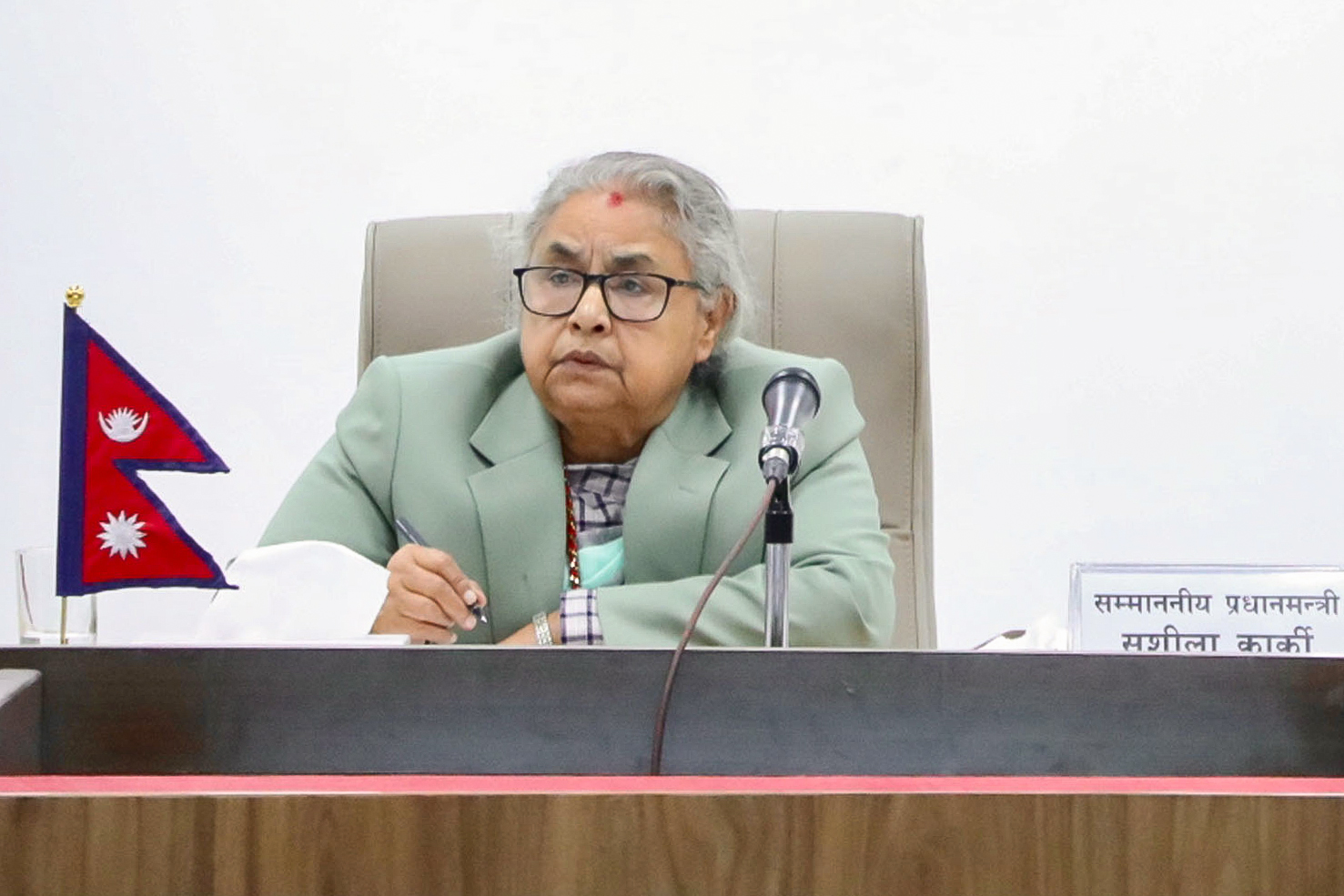
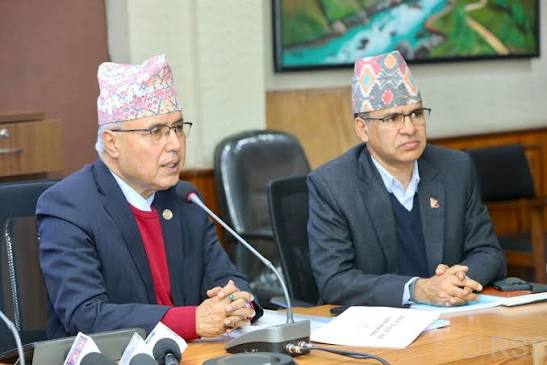
Prime Minister Karki expressing views during a discussion with political parties and public representatives. Photo: Ratna Shrestha/RSS
New parties in the election
According to EC Spokesperson Narayan Prasad Bhattarai, 143 parties have been registered with the EC for the House of Representatives elections. He says that preparations for the elections are underway and the government has been urged to expedite the necessary legal arrangements. He claims that the Commission has made complete preparations for the upcoming elections. According to him, the commission has also prepared a ‘concept paper’ to ban the dissemination of false information during the election. The concept paper stipulates that misusing information technology to disseminate false information will not be allowed and legal action will be taken if anyone does so.
On 19 December, President Ram Chandra Poudel approved the ‘Election of Members of the House of Representatives (First Amendment) Ordinance, 2025’. The ordinance has amended the law to include representation as per the 2021 Census in the proportional election system. The law has been amended to ensure representation at the federal, provincial and local levels in proportion to the population of all classes, castes, genders and communities. Earlier, there was a law that ensured representation on the basis of population as per the 2011 Census.
Out of the total 275 members elected to the House of Representatives, 110 members are elected through the proportional system. Seats in parliament are distributed based on the total votes cast by voters for any party. Parties must submit closed lists based on the inclusive population of their candidates. The law has distinguished six inclusive groups – Dalits, indigenous peoples, Khas Aryas, Madhesi, Tharu and Muslims.
Party registration for the proportional election began on 6 December. As many as 93 parties have already received election symbols to participate in the proportional election. Parties have been required to submit their closed lists for the proportional election on 28 and 29 December. The EC has already made public the schedule for the direct nomination papers to be registered on 20 January 2026. The final list of candidates will be published on 23 January. According to the Commission’s preparations, the date of the election is not likely to change from March 5 so far. Despite the preparations by the government and the EC, other stakeholders remain skeptical about the election being held on time.