Kathmandu
Tuesday, July 14, 2026





In just three and a half years of the provincial assembly's second term, Madhesh Province has seen five chief ministers, with 50 ministers out of the 107-member assembly.

JANAKPURDHAM — As the formation of the province approaches its ninth year, a government without Madhesh-centric parties has been formed in Madhesh Province for the first time. Following the withdrawal of support by the Janamat Party on May 4, the minority government led by the Nepali Congress recently removed another coalition partner, Janata Samajwadi Party (JSP) Nepal, and inducted the CPN (UML). The Nepali Communist Party (NCP) is also included in this alliance.
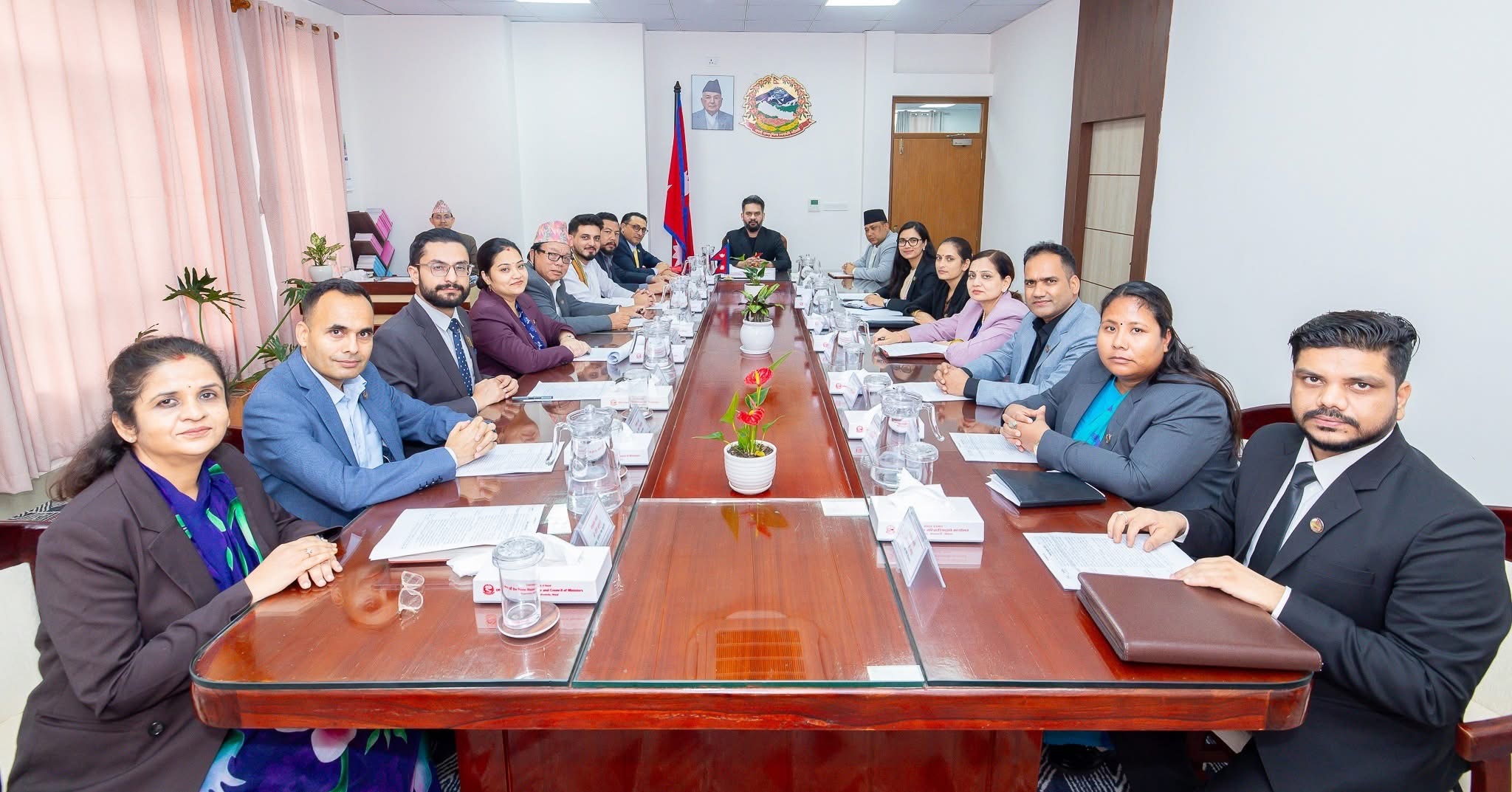
On May 26, the Congress, UML, and NCP signed a 15-point agreement to take the ruling coalition through to the elections and to reduce the size of the cabinet, among other matters. Following the agreement, five ministers—three from UML and one each from Congress and NCP—took the oath of office. The current cabinet includes three ministers from Congress (including the Chief Minister), four from UML, and four from NCP.
However, doubts remain over the implementation of the agreement between the parties. In the past, political instability has caused frequent changes in the government and reshuffling of ministers in Madhesh Province.
Indeed, the Madhesh government has remained highly unstable during the second term of the provincial assembly. In contrast, during the first five-year term of the provincial assembly following the implementation of federalism, a single government endured. During that first term, Chief Minister Lalbabu Raut ran the government for the full five years.
However, the second term has seen a continuous cycle of collapsing and forming governments. As political parties focus on power-oriented calculations, the development aspirations of the people of Madhesh Province have not been met, and the Madhesh government has virtually turned into a “factory for producing chief ministers and ministers.”
Since the second provincial assembly elections held in 2022, five chief ministers have been changed in the Madhesh government, and 51 ministers have held office.
Due to the power-centered maneuvering and seat-sharing agreements of the political parties, the pace of good governance and development in Madhesh Province has come to a near standstill. In the 107-member provincial assembly of Madhesh Province, 50 members have already served as ministers and state ministers, excluding the counts of chief ministers who served as ministers.
Five chief ministers in three and a half years
At the beginning of the second term of the Madhesh Provincial Assembly, UML and the Janamat Party participated in the government led by the parliamentary party leader of JSP Nepal, Saroj Kumar Yadav. Yadav took the oath of chief minister on January 11, 2023. During his tenure, the cabinet underwent numerous reshuffles. Ministers were shifted around as he secured support at times from UML and at others from Congress.
During Yadav’s tenure, Saroj Kumar Yadav of UML, Sanjay Kumar Yadav of JSP, Basant Kushwaha, Mahesh Prasad Yadav, Sarita Kumari Sah, Shatrughan Prasad Singh, Singasan Sah Kalwar, Rajkumar Lekhi, Mohammad Zaid Alam, Sheikh Abul Kalam Azad, Keshav Rai, and Sanjay Kumar Yadav of the Janamat Party served as ministers.
Similarly, Krishna Prasad Yadav and Birendra Prasad Singh from Congress; Govinda Bahadur Neupane and Bechi Lungeli from CPN (Unified Socialist); Sunita Yadav, Rahbar Ansari, Yuvraj Bhattarai, and Bharat Prasad Sah from CPN (Maoist Centre); Chandan Kumar Singh from Janamat Party; Ramesh Prasad Kurmi from Loktantrik Samajwadi Party (LSP); and Pramod Kumar Jaiswal and Sharada Thapa from UML became new faces—serving as ministers for the first time.
After Yadav failed to secure a vote of confidence from the provincial assembly, Satish Kumar Singh of the Janamat Party became the chief minister. He assumed office on June 7, 2024 through a coalition of UML, Maoist Centre, Unified Socialist, Nagarik Unmukti, and Nepal Sanghiya Samajbadi Party.
Excluding those who had previously served as ministers, the new faces in his cabinet included Bimala Ansari, Urmila Chaudhary, Ranju Devi Mandal, Tribhuvan Sah, Sakil Miya, Shesh Narayan Yadav, Kaushal Kishor Ray, Rani Sharma Tiwari, Janardan Singh Chhetri, and Sunil Kumar Yadav.
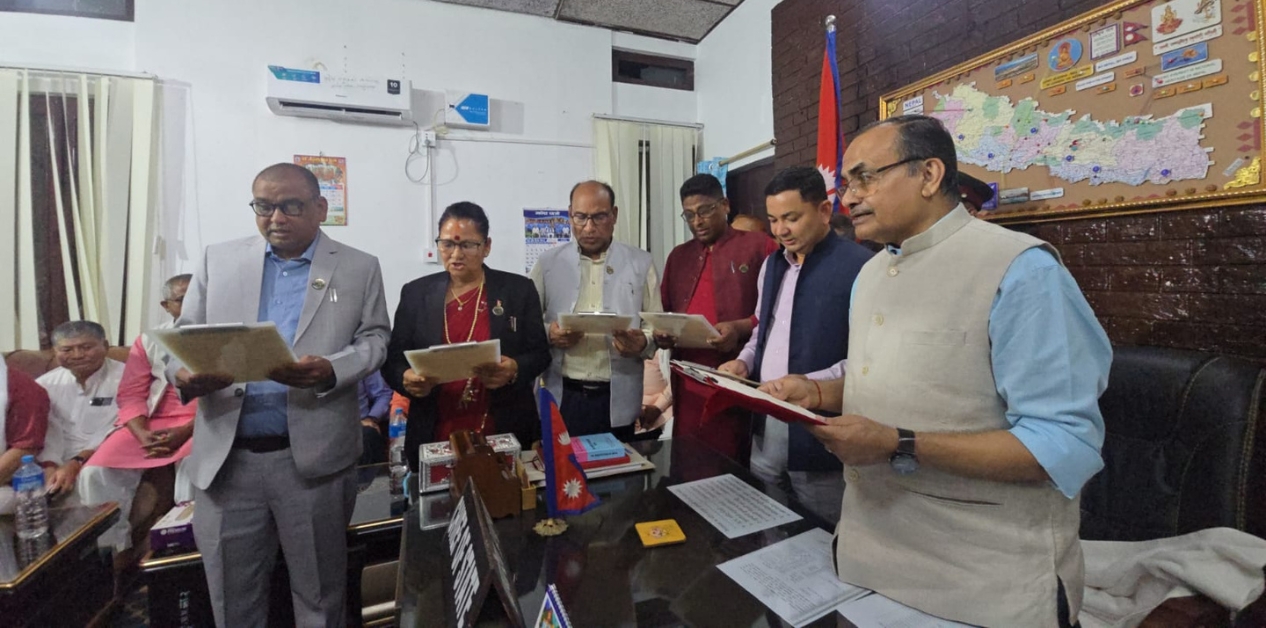
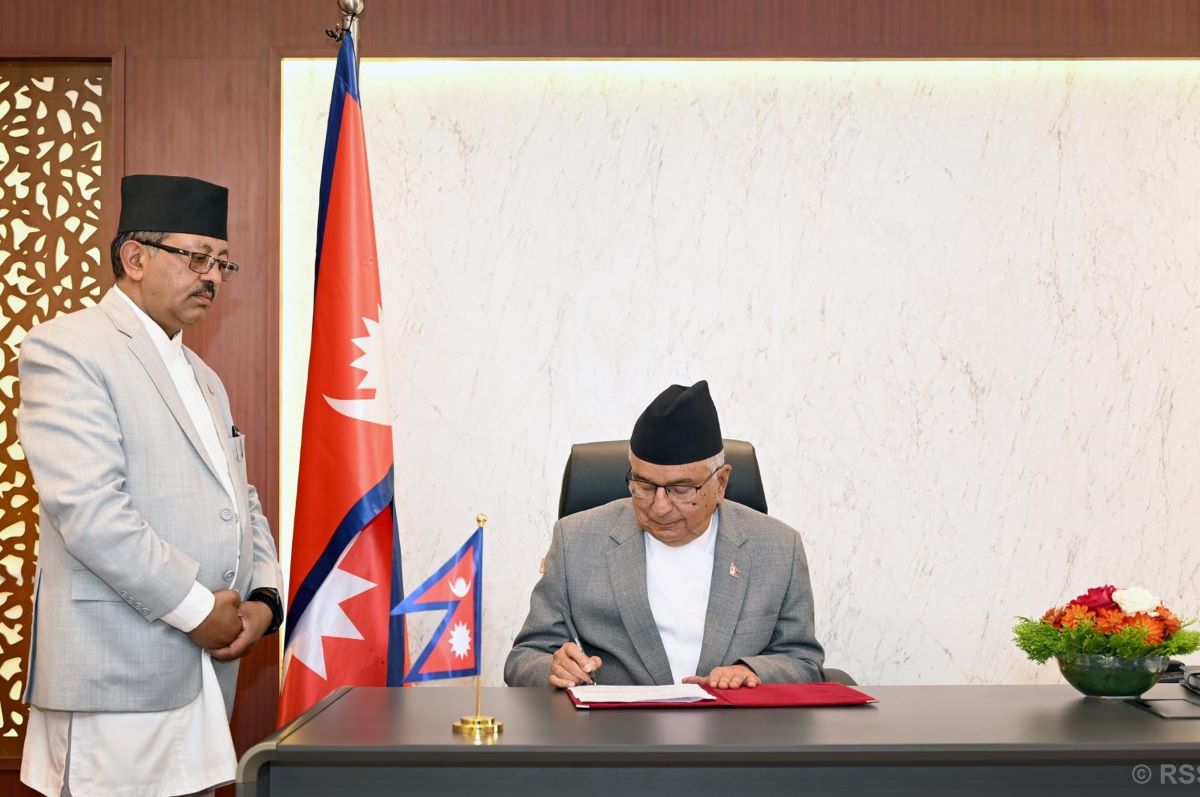
Ministers from CPN (UML), Nepali Congress, and NCP taking the oath of office.
Chief Minister Singh expanded the cabinet to 20 members on August 6, 2024. Several new faces were added as state ministers from all parties. Following fierce opposition, the state ministers were removed a week later on August 13. Among those who became ministers later, Rambabu Yadav, Shambhu Sah, Rekha Thakur, and Neelam Rajak were new faces.
Amid the uneasy circumstances of the Gen Z protest, Chief Minister Singh announced his resignation via Facebook on September 9, 2025, under party pressure. However, since the provincial assembly was not dissolved, he later maintained his stance to remain in office. Finally, realizing he would not secure a vote of confidence from the provincial assembly, he resigned from the post of chief minister on October 14, 2025.
On October 15, 2025, LSP leader Jitendra Prasad Sonal became chief minister with the support of JSP, Janamat, Maoist Centre, and Unified Socialist. During his tenure, Kanish Patel was the only new face in the three-member cabinet. Sensing that he would not win a vote of confidence from the provincial assembly, Sonal resigned from the post on November 8.
Following his resignation, Province Chief Sumitra Subedi Bhandari appointed Saroj Kumar Yadav, the parliamentary party leader of UML, as chief minister on November 9 in his capacity as the leader of the largest party under Article 168, Clause 3 of the Constitution. Bhandari administered the oath to Yadav at midnight in a hotel in Bardibas. Excluding those who had previously held ministerial positions, Lakhan Das Tatma from UML and Kanchan Bichchha from RPP became ministers for the first time during his tenure.
Yadav’s appointment as chief minister ended up in court. Once it became certain that he would not secure confidence during the provincial assembly meeting called for the vote, he resigned from the post on December 3.
Following Yadav’s resignation, Krishna Prasad Yadav, the parliamentary party leader of Congress, became chief minister on December 4 with the signatures of 77 provincial assembly members from Congress, JSP, Janamat Party, Maoist Centre, LSP, and Unified Socialist. Aside from past ministers, his cabinet saw Jangilal Ray, Jawahar Kushwaha, Manish Kumar Suman, Rajkumar Gupta, Shankar Prasad Chaudhary, Shyam Patel, Fakira Mahato, Mohammad Samir, and Nagendra Sah serving as ministers for the first time.
Why the instability?
Compared to other provinces, Madhesh Province has earned a bad reputation for political instability. Changes in coalitions at the center frequently trigger changes of government in the province. The previous government led by Yadav included JSP, Congress, and NCP. However, in line with an agreement reached at the center, JSP was removed from the coalition to include UML. This demonstrates that the provincial parties have been unable to remain autonomous and continue to operate at the whim of the center.
Saroj Kumar Mishra, a youth activist from Madhesh, states that the instability is visible because Madhesh-centric parties have focused on power games while forgetting the spirit of the Madhesh movement and the mandate of the people. He states, “If political parties do not engage in self-reflection and stop the struggle for power, public dissatisfaction with federalism will continue to grow, which is harmful to both the political system and the parties themselves.”
Yuvraj Bhattarai, the parliamentary party leader of NCP and Minister for Finance, claims that the three parties reached an agreement precisely to stop the government-changing game and to instill a sense of trust in the public. “We will show it through actions, not just words. The government’s policies, programs, and budget will be presented soon, which will make our intentions clear to everyone.”
Chief Minister Yadav also states that the agreement was reached to put a halt to the government-changing game in Madhesh, in accordance with current needs and situational demands. He states, “Instead of playing the government-changing game, we will now work to ensure that the public experiences real development.”