Kathmandu
Thursday, January 29, 2026





Despite making up over half the population, women remain severely underrepresented in Nepal’s direct elections, highlighting persistent gender gaps and the need for legal reforms and supportive political environments
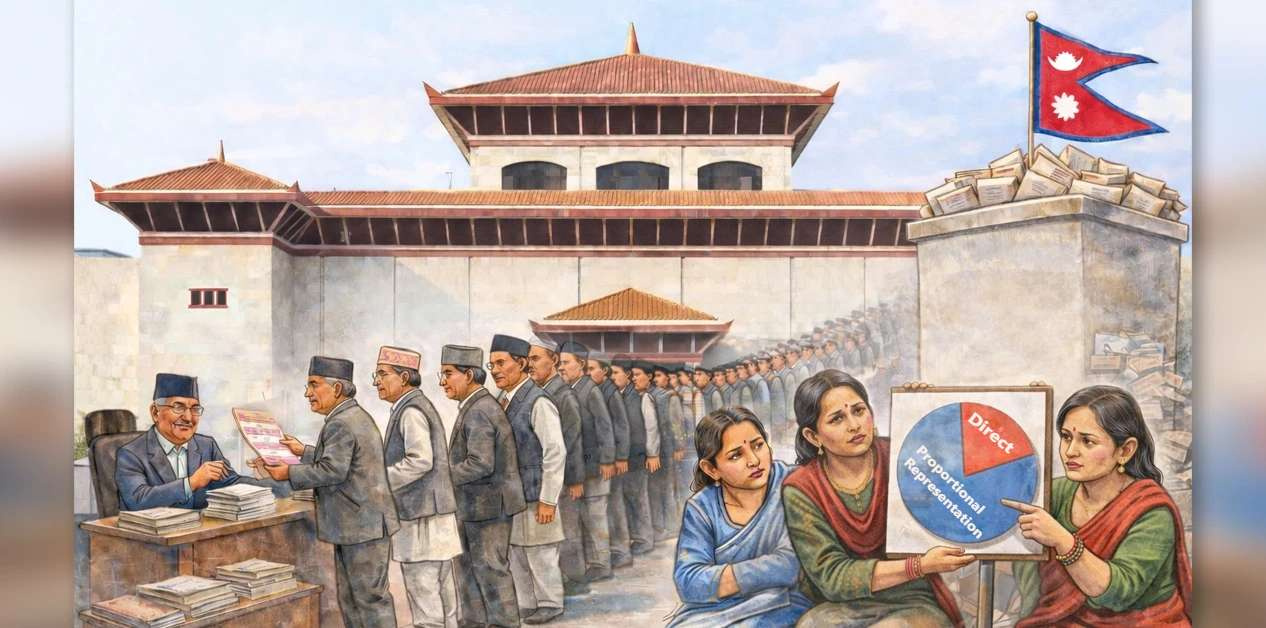
KATHMANDU: The Constitution mandates a minimum of one-third female representation across all government organs.
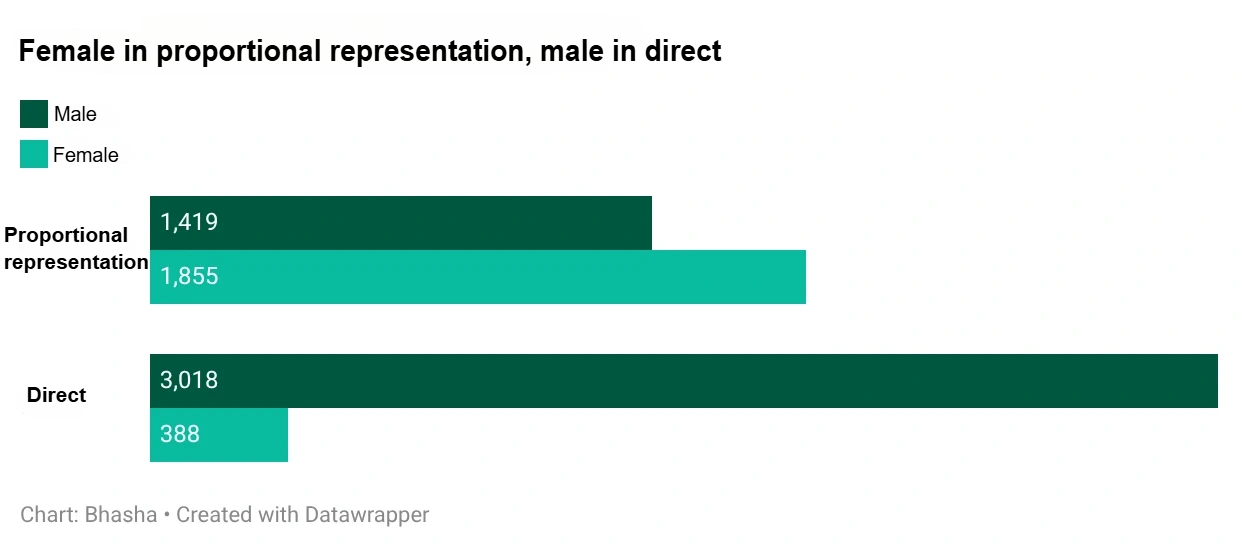
According to the National Census 2021, females account for 14,911,027 people, or 51.02 percent of Nepal’s total population. However, the final candidate list published by the Election Commission for the March 5 elections shows a stark disparity. Of the 3,406 candidates who filed nominations across 165 constituencies under the first-past-the-post (FPTP) system, also known as direct election, only 388, or about 11 percent, are women.
Among political parties represented in the dissolved parliament, female candidacy remains limited across the board. Party-wise data show that 11 women are contesting from the Nepali Congress, 10 from the CPN (UML), 16 from the Rastriya Swatantra Party (RSP), and 12 from the Nepali Communist Party. The Rastriya Prajatantra Party has fielded eight female candidates, while nine are from Rastriya Janamorcha. The Nepal Majdoor Kisan Party has the highest number with 54 women candidates, followed by three from the Nagarik Unmukti Party.
Among Madhesh-based parties, the Aam Janata Party led by Prabhu Sah has fielded the highest number of women, nominating 25 female candidates under the FPTP system. The Janata Samajbadi Party Nepal, led by Upendra Yadav, has put forward eight women, while the Janamat Party, led by CK Raut, has nominated four. The Janata Samajbadi Party, led by Ashok Rai, has fielded just one woman candidate for the direct elections.
Of the total FPTP candidates, 157 are independents. Among them, three belong to the Gen Z age group: 25-year-old Ramkumari Khang from Saptari-1, 28-year-old Sharmila Phuyal Chaulagain from Dolakha-1, and 28-year-old Kiran Kumari Kapar from Dhanusha-1.
Researcher Kailash Rai states that it will be difficult to make women candidates in direct elections until it is made mandatory, similar to proportional representation.
“It is essential to mandate a specific percentage for the direct election system in law. Fewer female candidates under the direct system means fewer women will win. Women must assert themselves and raise concerns within their parties, and institutional mechanisms should also ensure their voices are heard,” said Rai.
Rai further suggests that an environment must be created for women to file candidatures. Resources needed for the election, the household atmosphere, and supportive people are equally necessary.
“Traditionally, political strategies based on influence, money, coercion, and manipulation have often marginalized women. A safe and equal electoral environment for both women and men must be ensured. Hostility toward women is also evident on digital platforms, making it necessary to establish gender-friendly groups,” Rai added.
Limited to proportional representation
Article 84, Sub-clause 8 of the Constitution mandates that at least one-third of the total members elected from each political party to the Federal Parliament must be women.
Due to this legal obligation, parties have fielded 1,855 women out of a total of 3,274 candidates for the 110 seats under the proportional representation (PR) system. To win a proportional seat, a party must first become a national party. Only a party that secures three percent of the total valid votes received under the proportional system in the election can send its candidates. Even then, it is difficult for women to be selected through various inclusive methods and systems.
Under the proportional system, 70 political parties have submitted names of candidates, including 50 percent women. The Nepali Congress has made 63 women candidates, while the CPN (UML) has made 57, the Nepali Communist Party has made 57, the RPP has made 57, and the RSP has made 63 women candidates under the proportional system.
Due to this legal obligation, parties have fielded 1,855 women out of a total of 3,274 candidates for the 110 seats under the proportional representation (PR) system.
Not only in the upcoming elections after the Gen Z protest, but also in the 2022 elections, female candidacies in the direct system were low.
For the 2022 House of Representatives election, among the total 2,412 candidates fielded by parties under the direct system, only 225 were women, of whom only eight women were successful in winning the election.
In the 2022 elections, the CPN (UML) fielded the most women candidates among major parties, nominating 11, of whom four won. The Rastriya Swatantra Party (RSP) gave direct tickets to 12 women, with two elected. The Nepali Congress nominated five women and the CPN (Maoist Center) eight, with one candidate from each party securing a victory.
Following the implementation of the 2015 Constitution, the first federal election in 2017 saw limited women representation. The Nepali Congress fielded 145 men and nine women as direct candidates, but no woman won. The CPN (UML) nominated 98 men and five women, with two women elected.
The Maoist Center gave direct tickets to four women alongside 55 men, winning three seats, while the Rastriya Janamorcha fielded 79 men and 10 women, with one woman securing victory.