Kathmandu
Friday, February 27, 2026





What will Deuba do now?
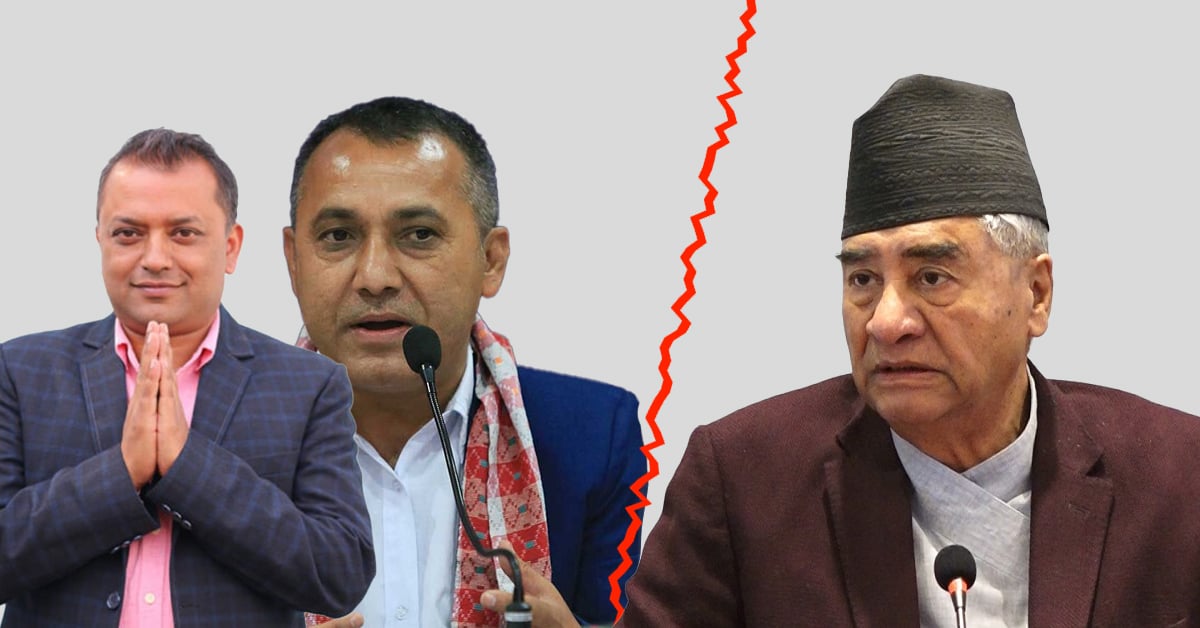
KATHMANDU: After the Gen Z movement caused the collapse of the CPN (UML)–Nepali Congress coalition government within 24 hours, voices demanding leadership change began to rise within both the Nepali Congress and the CPN-UML. Soon after, the UML held an early general convention and re-elected KP Sharma Oli as party chair for a third term.
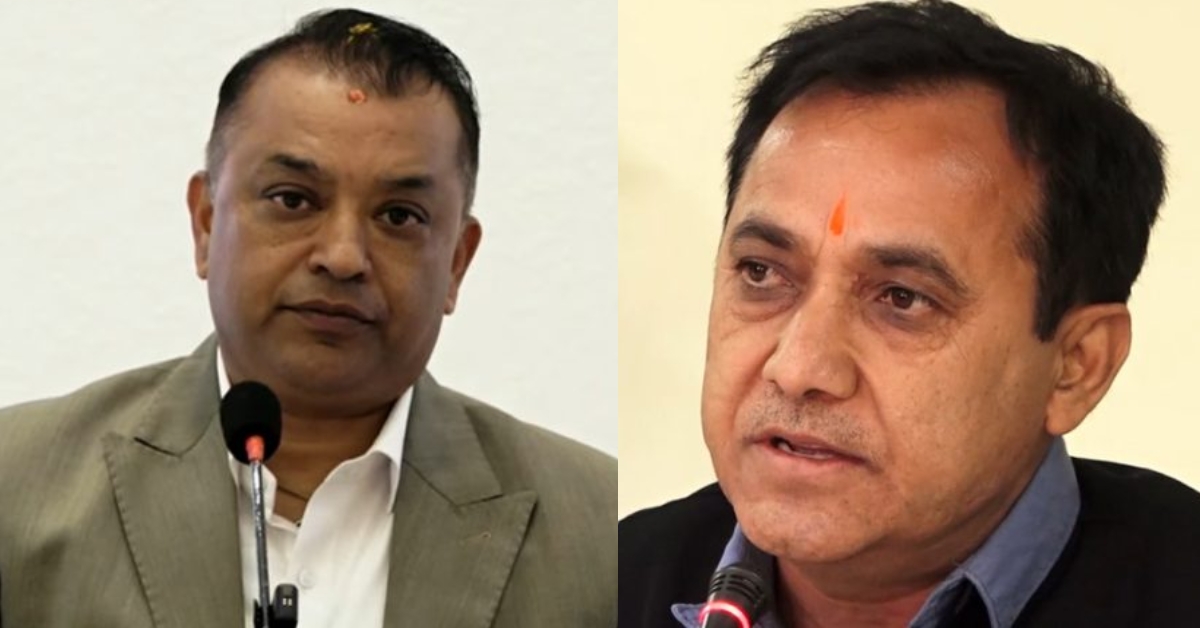
In contrast, Nepali Congress President Sher Bahadur Deuba, who announced after the Gen Z revolt that he was stepping aside from active party leadership, was not ready even to convene a special general convention of the party. Despite Deuba’s reluctance, a special convention of the Nepali Congress has been organized under the leadership of the two general secretaries, Gagan Kumar Thapa and Bishwa Prakash Sharma. The convention has been scheduled for 27 and 28 Poush (January 11-12), and the organizers claim that more than 64 percent of convention delegates have already confirmed their participation.
Out of a total of 4,743 convention delegates in the Nepali Congress, the presence of 2,419 delegates constitutes 51 percent. If 51 percent attendance is achieved, the special convention can legally change the party leadership.
Provisions of the party statute
According to the Nepali Congress statute, a central general convention must be held every four years. However, if the convention cannot be held on time, there is a provision to extend the term by one additional year.
Similarly, Clause 17 of the statute provides for convening a special central general convention. It states that “if the Central Working Committee deems it necessary, or if 40 percent of the central convention delegates submit a written request to the Center stating special reasons for convening a central general convention, a special central general convention must be convened within three months of the submission of such a request.”
It is under this very provision that the current special convention of the Nepali Congress has been convened. This convention has the legal authority to elect a new Central Working Committee. Constitutional law expert and senior advocate Chandrakant Gyawali says that if 51 percent of delegates are present at the ongoing special convention, a leadership change will be legitimate.
He explains, “After the term expired, a regular general convention should have been held. In a special convention, if a majority of delegates are present, leadership can be elected. If a new leadership is chosen by a majority, the old committee has no right to reject it.”
Once the special convention elects a new leadership, the new committee must update its details with the Election Commission. However, if Sher Bahadur Deuba’s faction is dissatisfied after the leadership elected by the special convention is updated, it may file a complaint with the Election Commission.
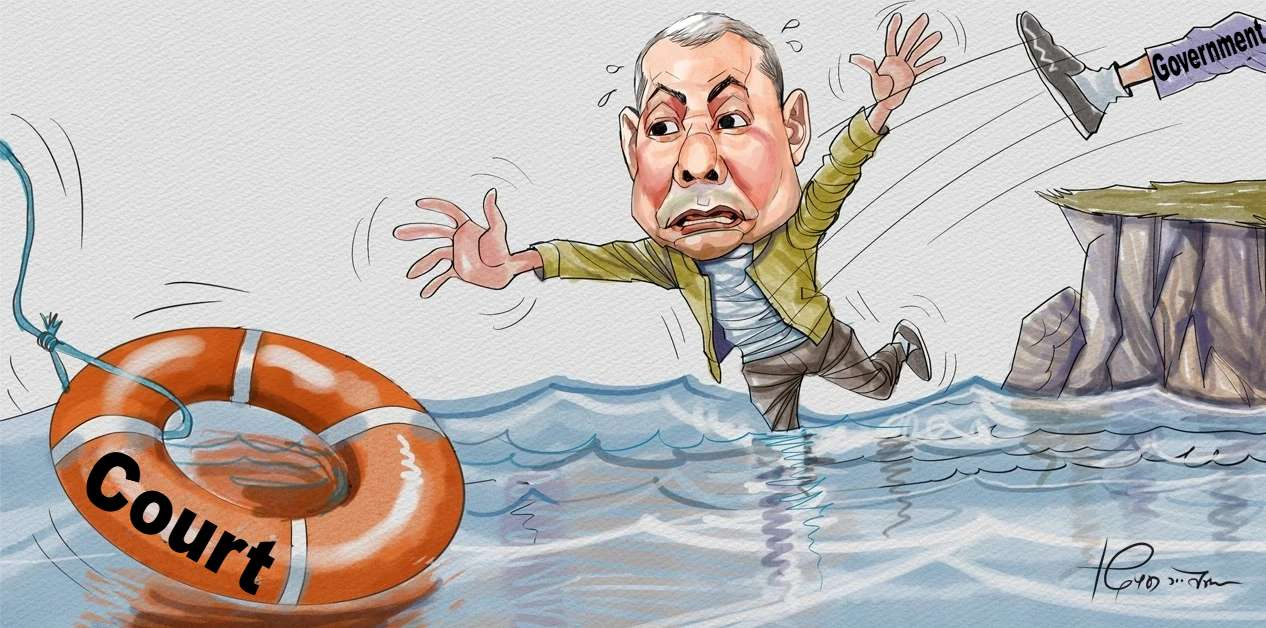
Senior advocate Gyawali notes that the Election Commission has the authority to evaluate all details and grant official recognition to the side emerging from the special convention. He adds, “This is not a case of a political party split; it is a new leadership chosen through a special convention. After the Commission updates the records, the Deuba faction may approach the Supreme Court.”
However, if President Deuba and other office-bearers and members choose to participate in the special convention, the internal conflict within the Congress could subside. The Nepali Congress has already submitted its proportional representation list for the election scheduled for March 5. Once the Election Commission updates the party records, the new leadership will have the authority to decide candidates for the first-past-the-post seats.
Another constitutional law expert and senior advocate, Bipin Adhikari, also says that a new leadership elected with the participation of a majority of delegates at a special convention would be both valid and lawful. “A special convention can fulfill the purpose for which it is convened if the majority supports it,” he says. “Even if the party president and senior leaders do not participate with dignity, it remains legitimate as long as there is a majority.”
Adhikari argues that leaders of a democratic party cannot label a democratic exercise as illegal. Holding a special convention of a major democratic party without the participation of its president and senior leaders, especially on the eve of elections, is, in his words, “unfortunate.”
According to the Election Commission, whenever a political party changes its office-bearers in accordance with the Act, laws, and its statute, it must submit the updated details of its executive committee to the Commission. There is a provision allowing parties to apply for such updates within 30 days of the formation of a new committee.
Section 51 of the Political Parties Act, 2017 (2073 BS) states: “If a party makes any change or amendment to its name, statute, rules, seal, flag or symbol, or changes its office-bearers, or makes any other changes as prescribed by the Commission, it must inform the Commission within 30 days.” Based on this provision, the Commission conducts the necessary verification and grants official recognition accordingly.