Kathmandu
Thursday, February 12, 2026





After years of setting the agenda in previous elections from the stage and delivering one-way speeches at rallies, Oli is now engaging voters in two-way interactions through door-to-door visits
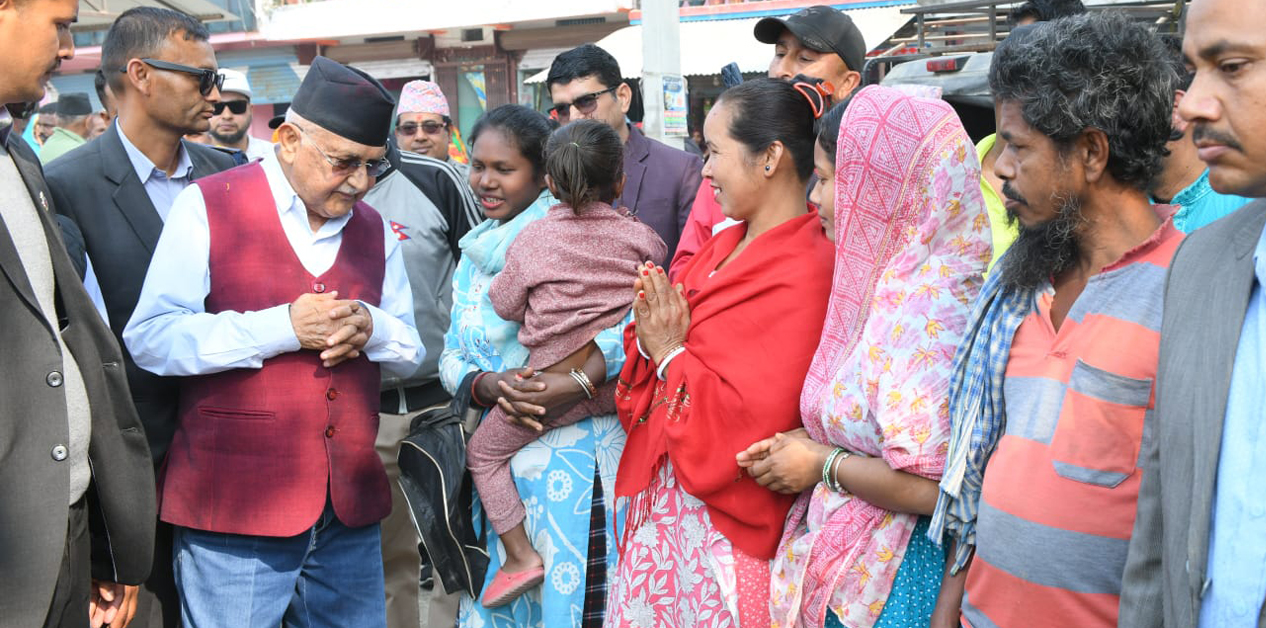
In the past two elections, much remained the same in Jhapa Constituency No. 5 – the winning candidate, his closest rival, the margin of victory, and the electoral alliance. In the 2017 and 2022 House of Representatives elections, CPN (UML) Chair KP Sharma Oli won the seat with more than 50,000 votes. On both occasions, his nearest competitor was Nepali Congress candidate Khagendra Adhikari. The victory margin exceeded 28,000 votes each time. In both elections, Oli’s UML had an electoral alliance with the Rastriya Prajatantra Party (RPP) in Jhapa. While UML supported RPP Chair Rajendra Lingden in Jhapa-3, it received RPP’s backing in the remaining constituencies.
During those elections, Oli would deliver one-way speeches at UML rallies and gatherings. That was his mode of addressing voters. He neither directly interacted with them nor gave them the opportunity to raise grievances and concerns.
However, the scenario in Jhapa-5 – a focal point of electoral interest – has changed in the upcoming House of Representatives election being held after the September Gen-Z movement. With UML on the defensive and Oli contesting without any electoral alliance in what was once considered a safe constituency, the altered circumstances are evident in his campaign strategy. He is now going door-to-door, engaging in two-way conversations with voters. With folded hands, he is listening to complaints, dissatisfaction, and even sharp criticism. The former prime minister, who has been contesting elections continuously since 1991, has prioritized door-to-door outreach, giving voters the chance to question him directly.
The Rastriya Swatantra Party (RSP) has fielded former Kathmandu Metropolitan City mayor Balendra Shah in Jhapa-5. With the rising popularity of RSP as a party challenging traditional forces and the candidacy of a figure popular among youth voters, Oli no longer appears confident in his once-secure constituency. As a result, he has been reaching out to settlements, neighborhoods, and households to narrow the distance with voters.
According to Chetan Adhikari, vice chair of Press Chautari Nepal, which is involved in Oli’s campaign, the focus has shifted from large rallies and mass gatherings to smaller neighborhood meetings. “Previously, Chair Oli would mainly present his agenda. Now, he has prioritized listening to voters,” he said.
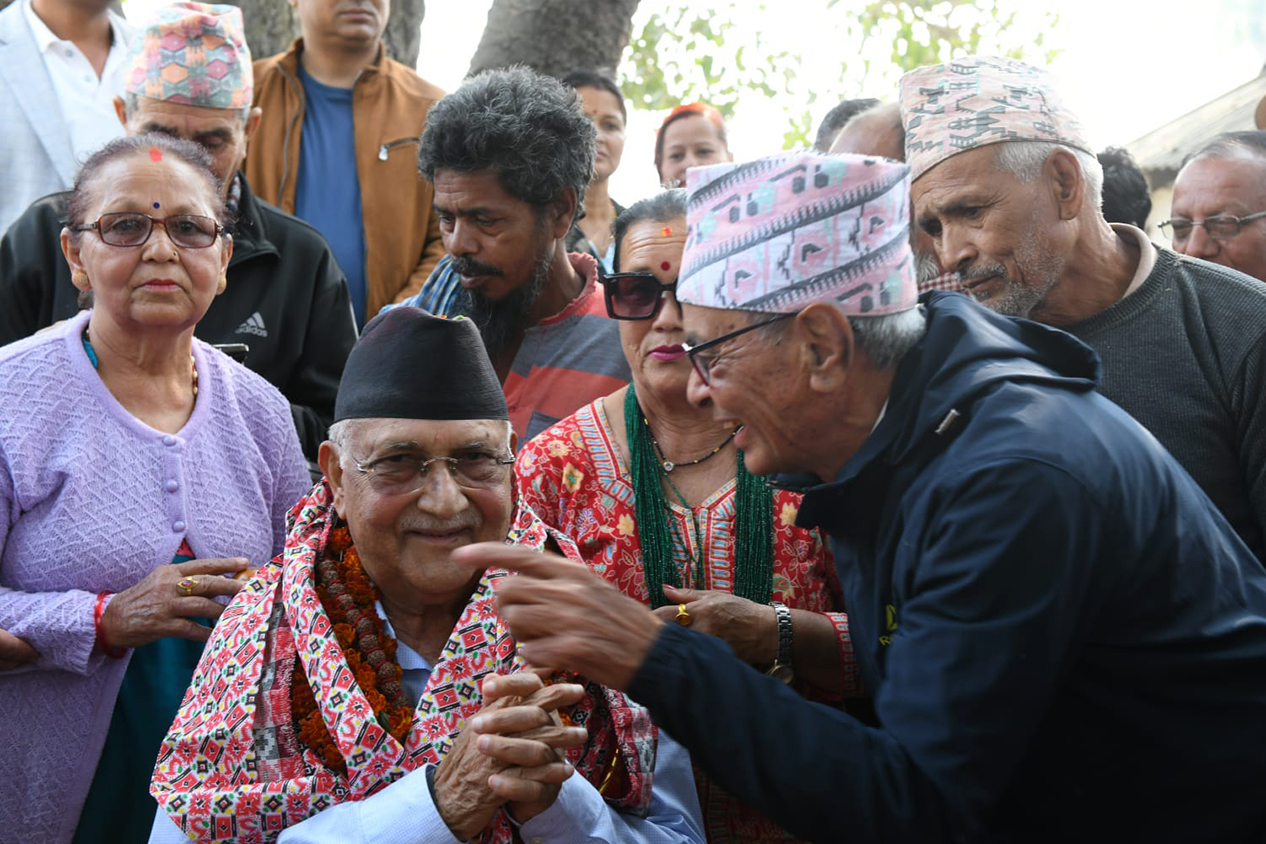
Oli amid the people of Chapramari, Ward No. 5, Gauradaha Municipality, Jhapa, on February 10
Adhikari said Oli has so far participated in 40 neighborhood meetings in his constituency. UML has organized such gatherings in Kachankawal Rural Municipality, Gaurigunj Rural Municipality, and Gauradaha Municipality.
At these meetings, Oli has been reconnecting with voters by invoking longstanding ties and relationships.
Political sociologist Ram Gurung believes Oli may have altered his strategy due to unfavorable national political circumstances.
“The way Oli has been conducting his door-to-door campaign in the past week is an effective election method,” Gurung said. “Most major leaders merely walk along streets offering greetings, which is more of a formal gesture.”
In the 2017 and 2022 elections, Oli used to set the agenda, and other parties would respond or counter his narratives. After being ousted from power following the protests of September 8 and 9, Oli has found himself on the defensive in national politics. Local voters have confronted him with pointed questions about development works and casualties during the protests.
In Gaurigunj, residents expressed dissatisfaction that embankments along the Ratuwa River have yet to be constructed. Back in the 1991 election, Oli had pledged to “turn the course” of the Ratuwa. But as promised works remain incomplete, the river continues to erode surrounding areas every year.
Similarly, voters in the India-bordering Gaurigunj area complained about the lack of security arrangements and the absence of a telephone tower. They also questioned why issues such as quality education, unemployment, and irrigation have not been addressed.
In Ward No. 5 of Gauradaha Municipality, residents said they have not received land ownership certificates despite owning land. Videos circulating on social media show heated exchanges between local residents and the people’s representatives elected from the UML over the issue.
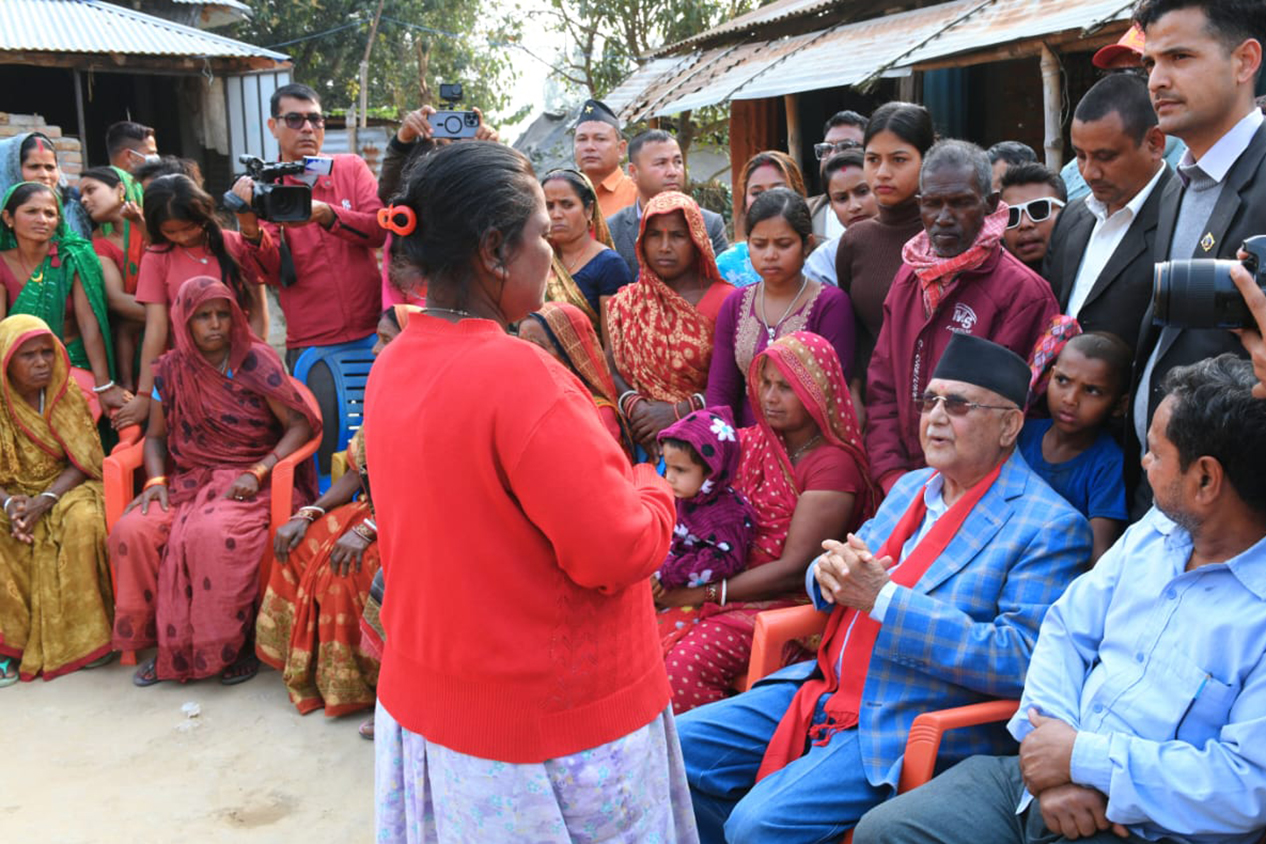
Oli with the locals of Gauriganj Rural Municipality, Jhapa, on February 9.
In previous elections, Oli would spend more time attending rallies in other constituencies and seeking votes for party candidates. This time, however, he has largely focused on his own constituency and is busy persuading voters for himself.
While courting voters, Oli has also continued to present ambitious promises reminiscent of past campaigns. During a door-to-door campaign on February 9, he claimed that if UML wins the election, gas would be supplied to every household within six months. “Not the gas brought from abroad,” he said, “but gas that has not been extracted and locked away. We need to bring that gas out. It can be stored in tanks like water and delivered to households through pipelines. There will be no need for cylinders.”
Likewise, residents of School Chowk in Gauradaha-5 expressed frustration that they had not received land ownership certificates even when Oli was in government.
In response, he said preparations had been made during his tenure, but the government collapsed before the distribution could take place. In Jhapa-5, around 25,000 voters are landless squatters.
After spending five days in his constituency during candidate registration, Oli stayed in Jhapa-5 for a week starting from February 6, focusing on door-to-door outreach. He returned to Kathmandu on Thursday and is scheduled to revisit Jhapa in the coming days.
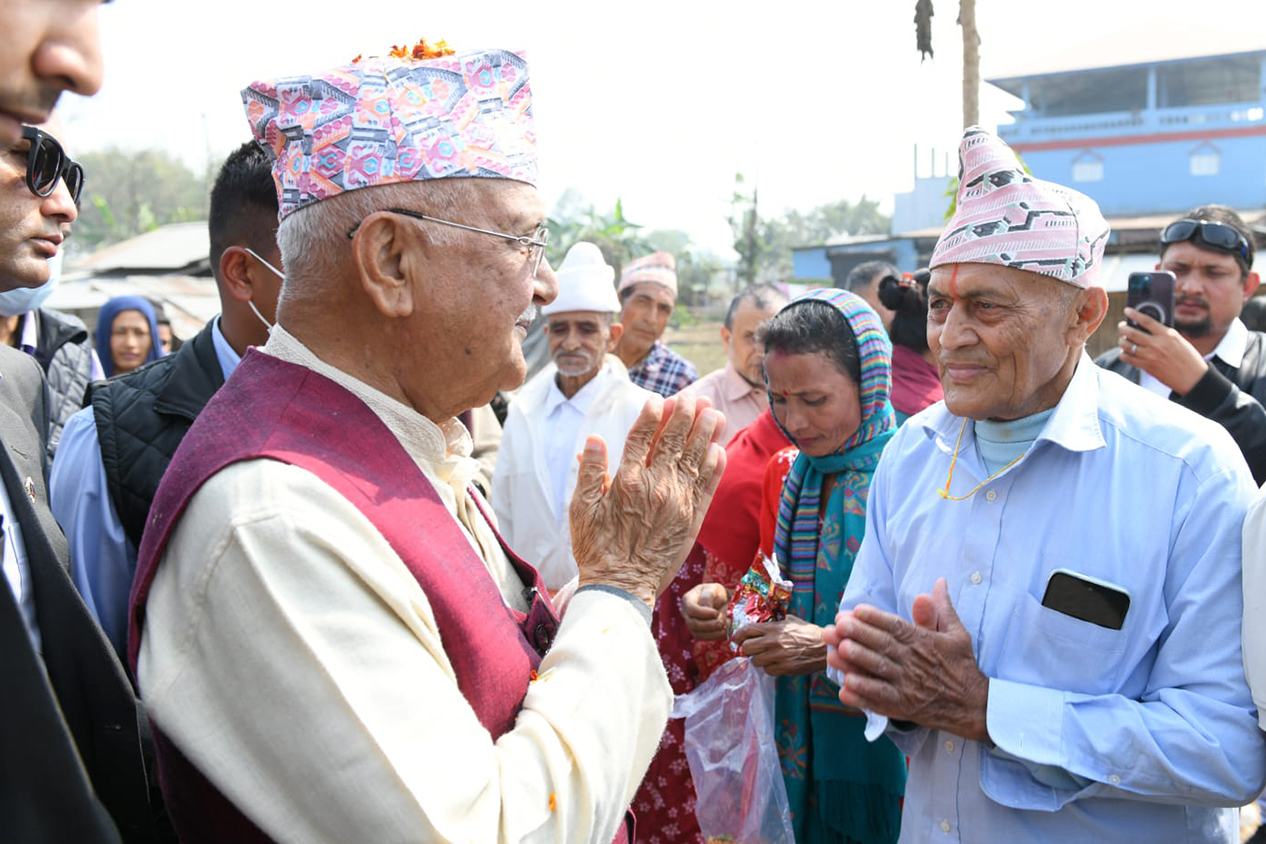
Oli listens to the grievances of the voters of Jhapa Constituency No. 5 on February 11
Since the 1991 parliamentary election when Damak was the electoral center, one constant has been Oli’s candidacy from the constituency that now falls under Jhapa-5. Except for the first Constituent Assembly election in 2008, he has won all seven elections held so far from the area.
Apart from Oli and Balendra Shah, 22 other candidates are contesting in Jhapa-5. They include former ANNFSU president Ranjit Tamang from the Nepal Communist Party, Mandhara Chimoriya from the Nepali Congress, Laxmi Prasad Sitaula from the RPP, Dhirendra Subba from the Janata Samajbadi Party Nepal, and Samir Tamang from the Shram Sanskriti Party. The constituency has 163,379 registered voters.