Kathmandu
Friday, January 23, 2026





Although the Gen-Z movement pushed old leaders to the brink of displacement and challenge, Pushpa Kamal Dahal, aka Prachanda, finds ease on the electoral front
KATHMANDU: The Gen-Z uprising of September 8 and 9 last year placed the top leaders of Nepal’s three traditional parties – the Nepali Congress, the CPN-UML, and the CPN (Maoist Center) – inside the same circle of questioning: when will leadership transfer and generational change happen?
They were accused collectively of entrenching single-person dominance for decades, blocking leadership mobility, centralizing state power, and fostering corruption under its protection. They became symbols of bad governance, incompetence, and political instability, leading to growing pressure, from both inside and outside their parties, for them to exit politics altogether.
The most direct impact was seen in the Nepali Congress, centered on then party president Sher Bahadur Deuba, who faced even violent public anger during the Gen-Z revolt. When he returned from medical treatment in Singapore, the political landscape within his party had already shifted. Pressure to relinquish executive authority began coming not from the streets, but from within the party structure itself. When Deuba attempted to return to executive leadership symbolically, a special general convention was convened, and Nepali Congress delegates removed him from leadership. This change was less the result of Deuba’s own will and more the consequence of movement pressure and long-accumulated internal resentment.
Deuba’s political decline did not stop there. Under the leadership of Gagan Kumar Thapa, who was elected party president through the special general convention, the party executive committee even stripped Deuba, who had contested elections continuously since 1991, of his candidacy. For the first time, Deuba, once the most powerful figure in the party, was pushed out of electoral politics altogether.
These developments signal an almost complete halt to Deuba’s active political career.
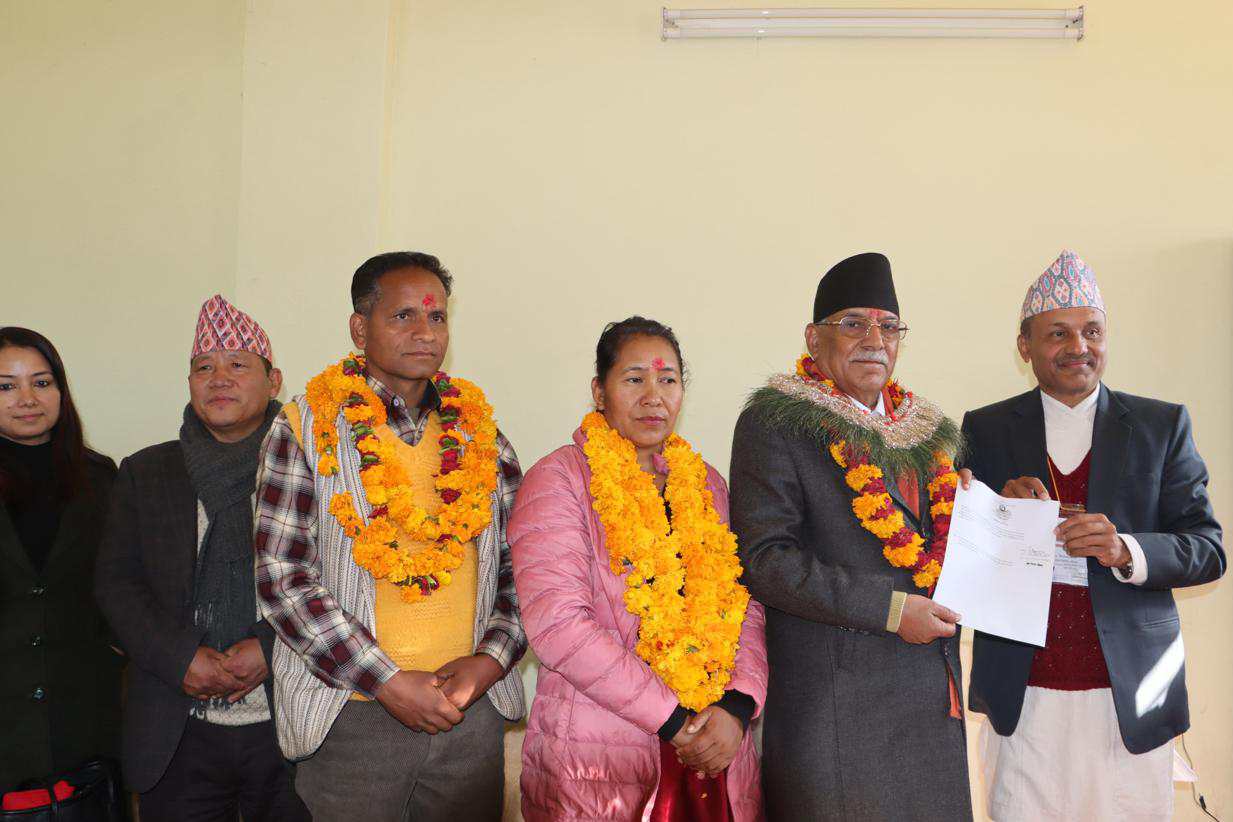
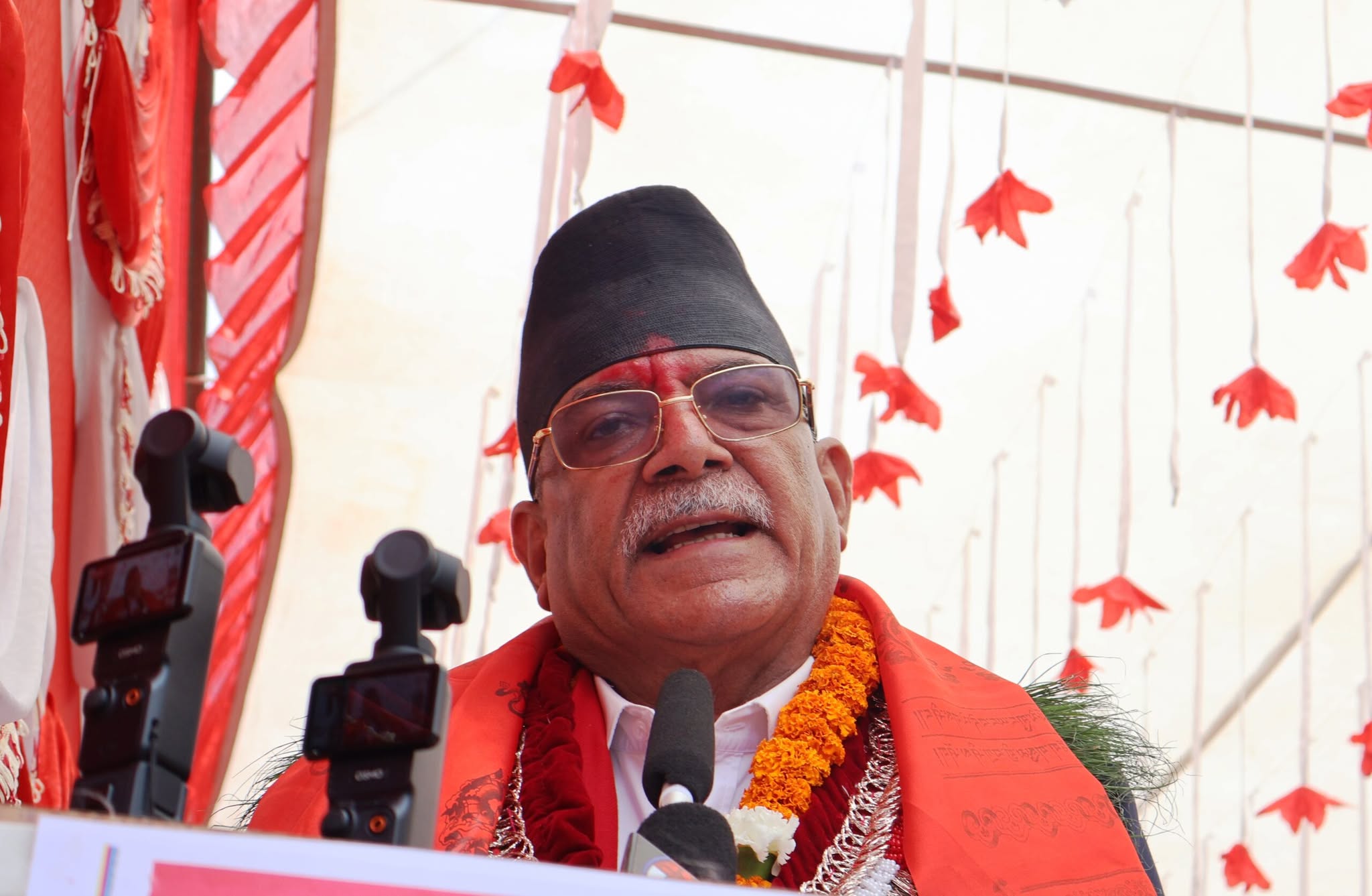
Pushpa Kamal Dahal filing his candidacy in Rukum East on 20 Jan. Photo source: Dahal’s Secretariat.
Watching Deuba’s downfall, CPN (UML) Chairman KP Sharma Oli adopted a different strategy. He timely convened a party convention and formally subjected his leadership to a test. However, this test did not revolve around ideological debate or alternative leadership. Instead, a loyalist crowd functioned like a ritual cleansing, reinstalling him as the uncontested leader.
Although Oli succeeded in securing party leadership, the electoral battlefield is not easy for him. The parliamentary election is scheduled for March 5. With former Kathmandu mayor and senior Rastriya Swatantra Party (RSP) leader Balendra Shah (Balen) entering the race, Oli’s electoral arithmetic has become complicated. Since Balen has the capacity to convert public street-level discontent into votes, Oli finds himself politically cornered. While he has held on to party leadership for now, future power dynamics do not appear favorable for him.
Another contemporary of Oli—who, despite not being in direct power during the Gen-Z movement, has exercised single-person dominance for 35 years and wielded power through shifting alliances—is Pushpa Kamal Dahal aka Prachanda. Compared to others, Dahal currently appears relatively secure. He managed to contain calls for leadership change by quickly unifying his party with CPN (Unified Socialist). By exploiting the legal provision that allows one year without holding a convention after party unification, he delayed internal restructuring.
“He avoided party reorganization and kept postponing it. That will generate backlash soon,” says former Maoist leader Ram Karki.
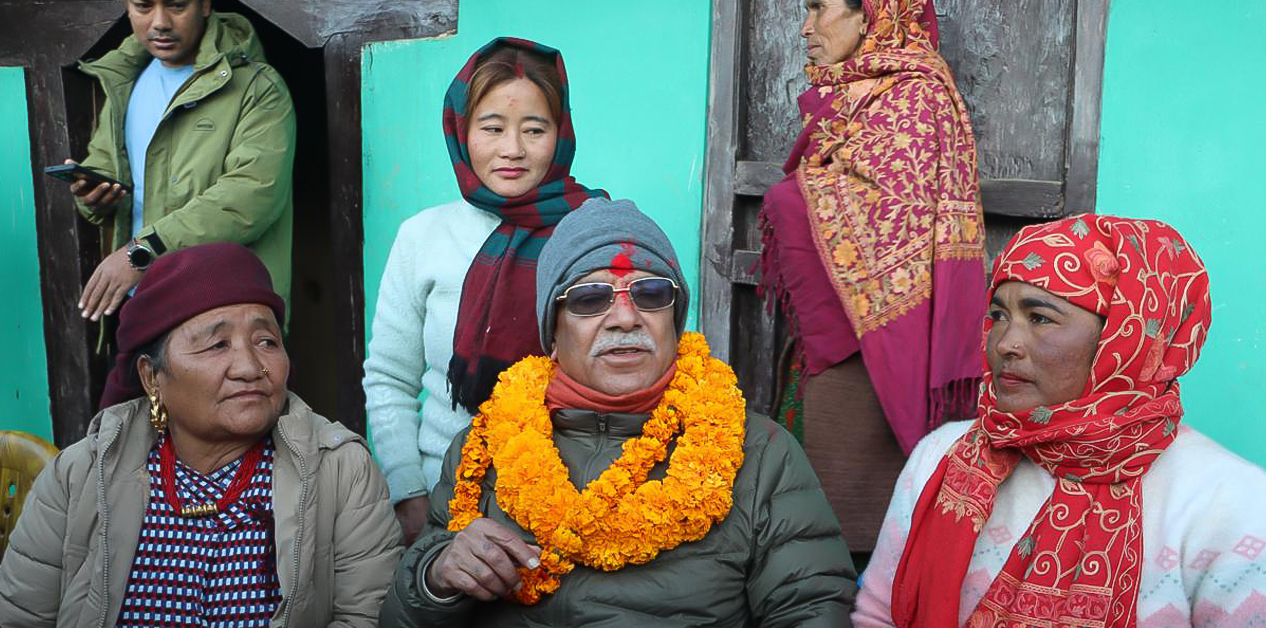
Abandoning party restructuring, Dahal instead focused on finding a politically safe constituency and moved to Rukum East. There, neither the Rastriya Swatantra Party nor the UML nor the Nepeali Congress has fielded strong challengers. As a result, this election for Dahal appears less like a competition and more like a formality.
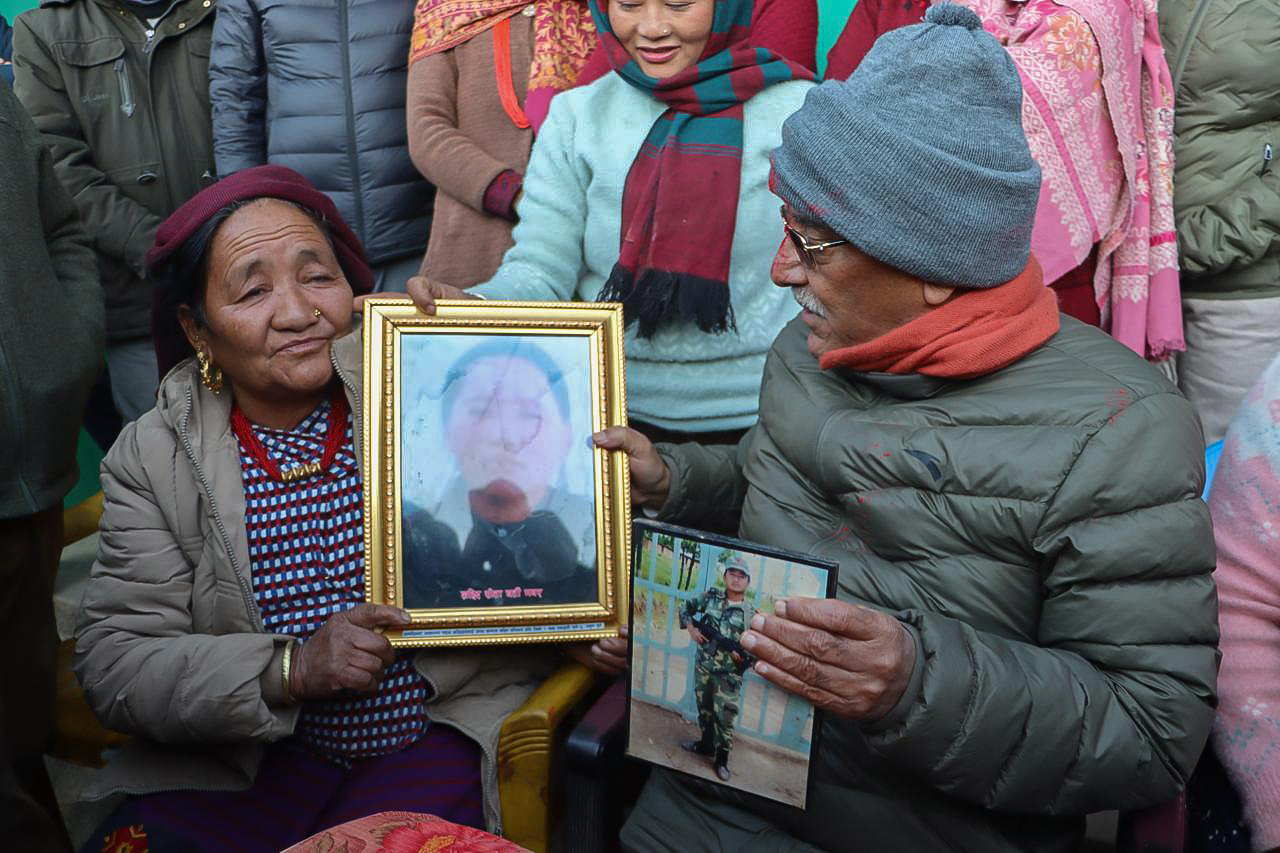
Pushpa Kamal Dahal with the families of martyrs of the armed insurgency in Rukum East. Photo source: Dahal’s Secretariat.
Political analyst Mumaram Khanal argues that Dahal cannot relinquish power. He performs change theatrically but returns to power through cycles of formation and reformation.
“Such leadership becomes corrupt. The moment they step down from power, they fear corruption cases. That’s why they want to remain in power for life,” Khanal says.
Thus, although the Gen-Z movement placed old leaders at the threshold of displacement, Dahal appears electorally comfortable. He escaped pressure through the tactic of party unification. However, former Maoist leader Karki insists Dahal’s path is not actually easy. “He may look comfortable, but he has betrayed ideology and the dreams of the martyrs. Rukum-Rolpa has suffered the consequences of that betrayal, and this time Rukum will respond,” notes Karki.
According to Karki, Rukum-Rolpa were the districts that led the decade-long armed conflict. The seed planted there spread the war across the country.
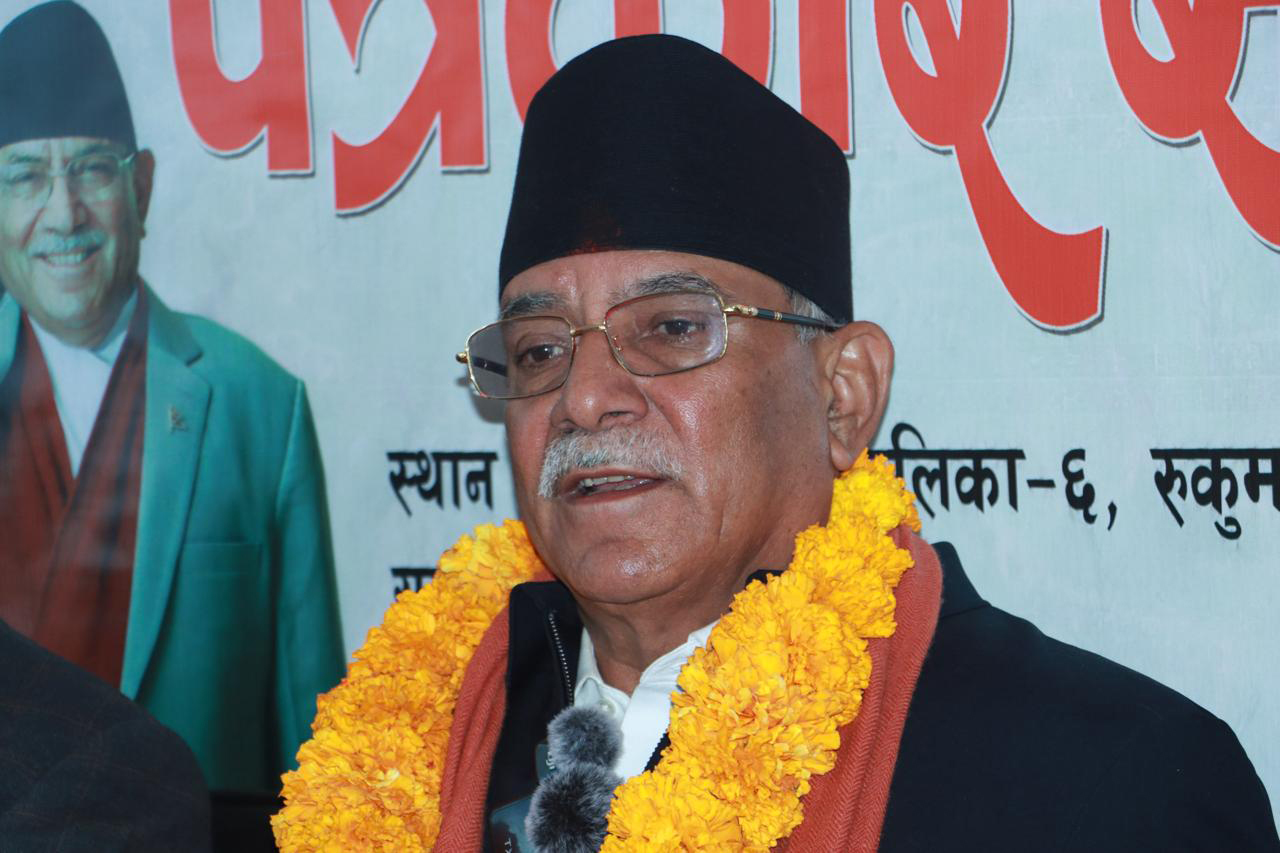
Pushpa Kamal Dahal at a press conference in Rukum East. Photo source: Dahal’s Secretariat.
“There may not be famous candidates, but the children of martyred guerrilla couples are contesting. It’s a battle between the martyrs’ dreams and Prachanda,” Karki says.
In Rukum, Janardan Sharma, who split from Dahal and formed the Pragatisheel Loktantrik Party, has nominated Sandip Pun, son of slain Maoist fighters Suryaprakash Pun and Parampara Gautam. This is what Karki is referring to.
Maoists at the center of power, Dahal in constant anxiety
Dahal’s parliamentary journey began with the first Constituent Assembly election in 2008 He contested from Kathmandu-10 and Rolpa-2, winning both with large margins.
In the second Constituent Assembly election, under the strategy of becoming a “hill-Madhes linking party,” Maoist leadership fielded Dahal and Baburam Bhattarai in different geographies. Dahal contested from Kathmandu-10 and Siraha-5; Bhattarai from Gorkha-2 and Rupandehi-4. The results were unexpected: Dahal placed third in Kathmandu-10 and narrowly won Siraha-5, while Bhattarai lost in Rupandehi.
In the first parliamentary election after the constitution (2022 elections), Maoists and UML formed a left alliance. With slogans of stability and economic prosperity—and the promise of party unification—the alliance created a strong wave. In this context, Dahal contested from Chitwan-3 and won by about 10,000 votes, receiving 48,276 votes against RPP candidate Bikram Pandey’s 38,935.
It was widely expected that Dahal would again contest from Chitwan-3 in 2022. His daughter Renu Dahal was mayor of Bharatpur Metropolitan City, and Dahal had even built a new house in Shivnagar, Bharatpur. But during nomination, he abandoned Chitwan and moved to Gorkha-2.
This decision was linked to the electoral alliance with Baburam Bhattarai, who had split from the Maoists in 2015. Maoist Center and Nepal Samajwadi Party agreed to contest under a single election symbol. With the Nepali Congress-led five-party alliance backing him, Gorkha-2 became Dahal’s safest constituency, based on the 2017 result where Bhattarai had defeated Narayankaji Shrestha despite the UML-Maoist alliance.
Thus, in 2022, Dahal secured Gorkha-2 while Bhattarai’s daughter Manushi was given Kathmandu-7 under Maoist symbol. Dahal’s pattern shows how alliances, geography, and ticket management are used as tools for personal political security.
Rukum is considered a traditional Maoist stronghold. Though Maoists now operate under the unified “Nepali Communist Party” identity, the region’s political psychology still favors the former Maoist structure.
In the 2022 parliamentary election, Maoist candidate Purna Bahadur Gharti Magar won Rukum East by a wide margin, receiving 12,262 votes against UML’s 5,211. The Nepali Congress and Maoists had electoral coordination then, which does not exist now.
This time in Rukum East, the Nepali Congress has fielded Kusum Devi Thapa, UML Leelamani Gautam, and RSP Lakhan Kumar Thapa. Despite the absence of Maoist-Nepali Congress coordination, the combination of Maoist organizational strength and Dahal’s national political influence makes the election easy for him.
Analyst Mumar Khanal describes Dahal as utilitarian: “He uses constituencies and discards them. He went to a low-voter area because it’s safer. He was outside state power during the Gen-Z movement, and his party was already weakened, so he escaped leadership-change pressure easily. That’s why he isn’t the main public target like UML and the Nepali Congress. Someone in power for 35–40 years accumulates enormous power, even the capacity to buy a small electorate.”
Since the peace process, Nepal has formed 15 governments, held two Constituent Assembly elections and two parliamentary elections. The Maoists have directly led four governments and participated decisively in 10 others. Dahal has been Prime Minister three times. Maoists have sat in opposition only four times since the peace process until the Gen-Z movement.
This reality exposes a contradiction: while Maoist public support has steadily declined, their grip on the power structure has not weakened. Instead, through coalitions, power deals, and transitions, Maoists have remained central to state power.
And Pushpa Kamal Dahal has been the most permanent face of Nepal’s power center over the past two decades.