Kathmandu
Tuesday, July 14, 2026





In Nepal’s shifting political landscape, the growing power of algorithms - amplifying narratives, shaping voter behavior, and blurring truth with manipulation - raises urgent questions about transparency, accountability, and the future of democracy.
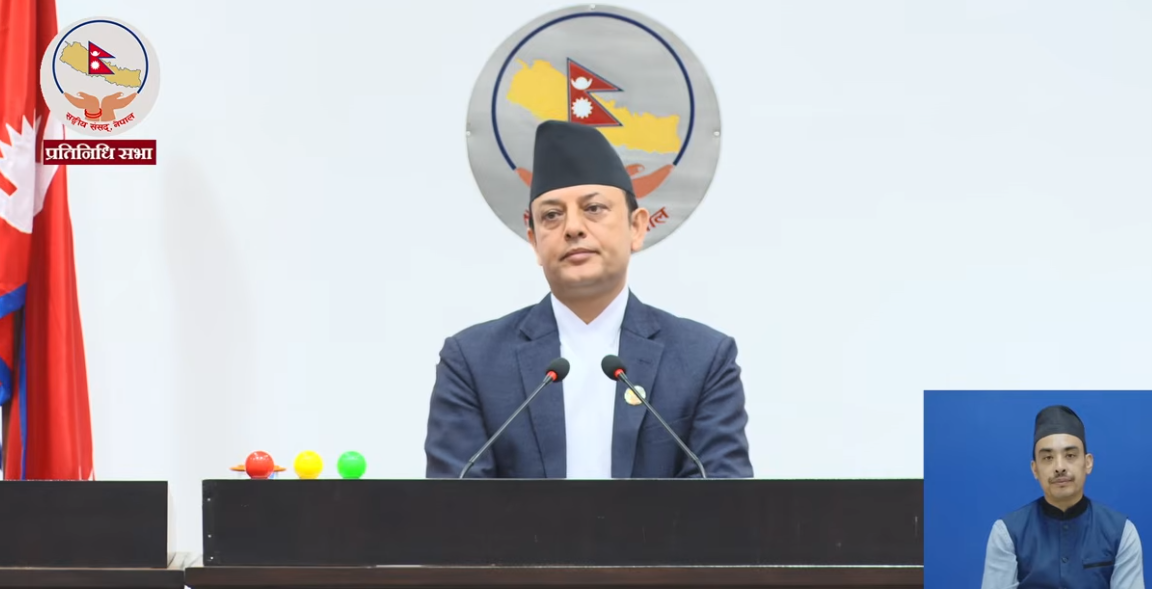
KATHMANDU: At the House of Representatives session of April 2, CPN (UML) acting chairman Ram Bahadur Thapa (Badal) stated that Nepal’s army, the bureaucracy, AI, and algorithms all played a role in delivering a near-magical victory to the Rastriya Swatantra Party (RSP) in the March 5 election.
Raising and then answering his own question about who played a decisive external role in the RSP’s victory, Thapa said, “Countless facts make clear that invisible forces – TOB, AI, algorithms, Goebbels-types – established the champions of nationalism, democracy, republicanism, federalism, peace, and prosperity as dangerous villains and murderers.”
His remarks proved controversial. Even leaders within the UML objected, saying his statement was contrary to the party’s official position.
The report of the inquiry commission led by former judge Gauri Bahadur Karki, formed to investigate the Gen Z movement of September 8 and 9 last year, also highlighted the major role played by algorithms in both the movement and the election. The report, submitted to then-Prime Minister Sushila Karki on 8 March 2026 immediately after the election, states: “Not only in Nepal’s Gen Z movement but also in the current electoral atmosphere, these two technical concepts – filter bubble and echo chamber – played and continue to play the greatest role.”
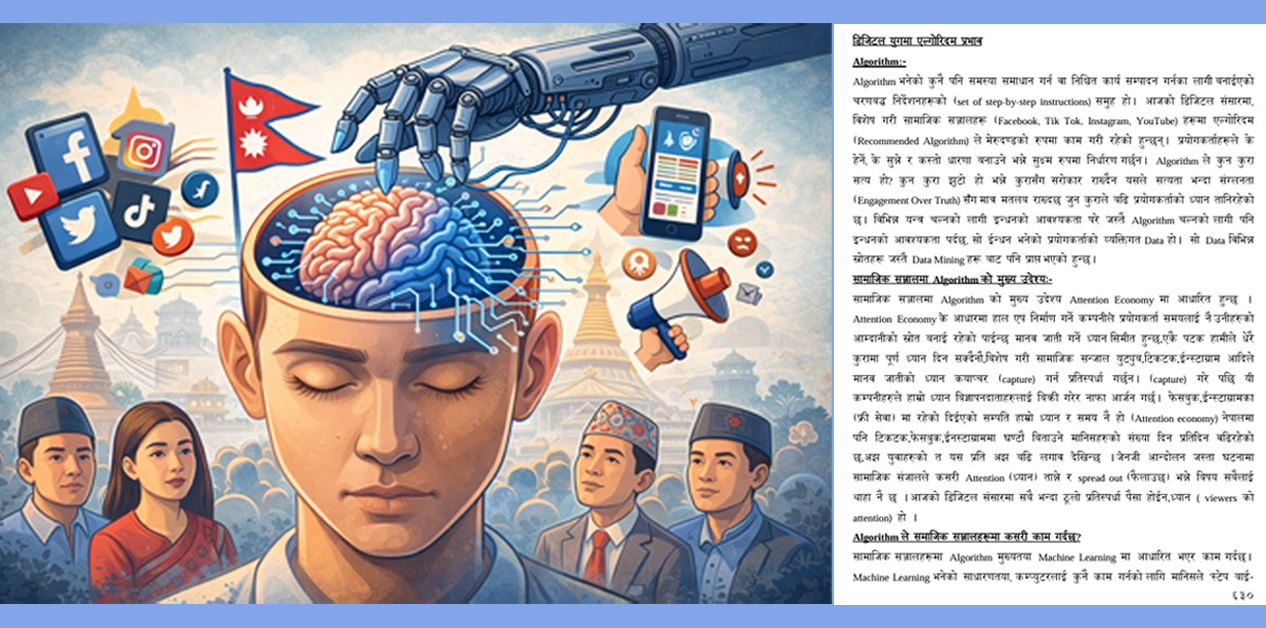
AI-generated image and an excerpt from the Karki Commission report mentioning algorithms.
Before the government released it, the report became public through the media on 23 February. UML leader Shankar Pokhrel then questioned the commission itself, suggesting that the Karki Commission and the 2026 general election were both attempts to give political and legal legitimacy to the influence of algorithms on Nepali society, and that both the election results and the commission’s report came about accordingly. On 26 March, he wrote on social media: “A new force has emerged from a mixture of populism, anarchism, and opportunism through the use of algorithms. The road ahead may not be easy. Both the nation and democracy appear to face challenges for some time.”
UML acting chairman Thapa saw the hand of algorithms in RSP’s near two-thirds election haul. The Karki Commission saw a major role for algorithms in both the Gen Z movement and the electoral atmosphere. And UML leader Pokhrel accused the Karki Commission itself of working to legitimize the influence of algorithms.
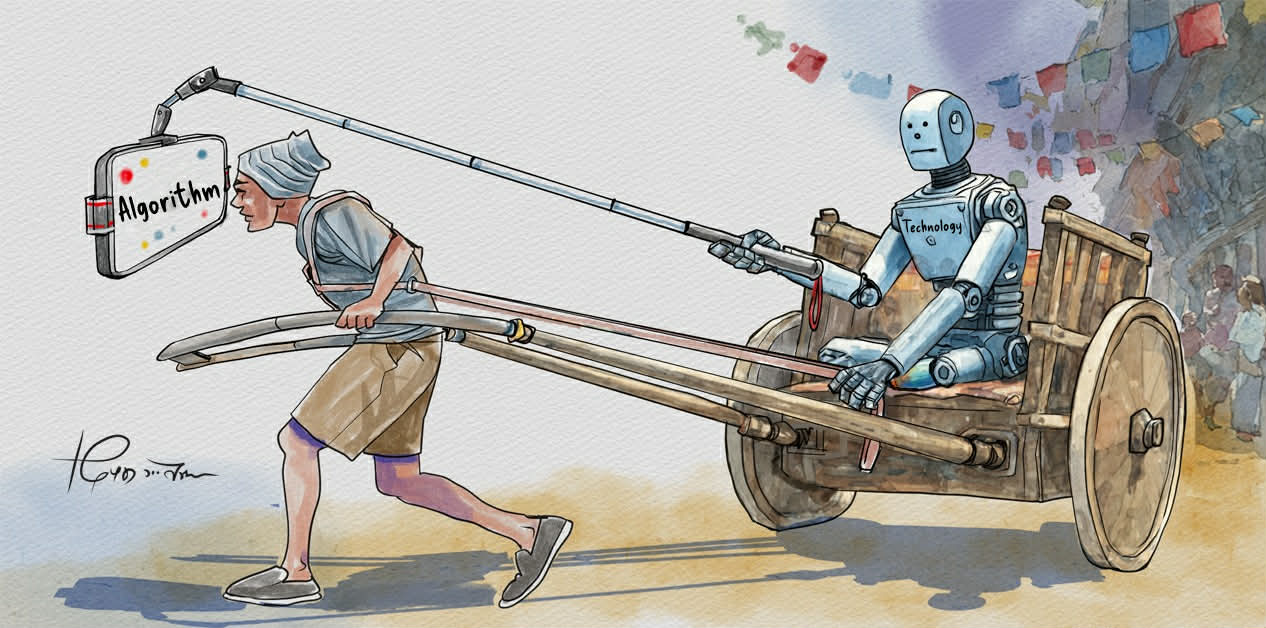
As indicated above, algorithms are exerting major influence on Nepal’s political and social landscape, not only in shaping political events such as movements and elections, but also in spreading any social content to large numbers of people, channeling emotions in a single direction, and making someone a hero or villain overnight.
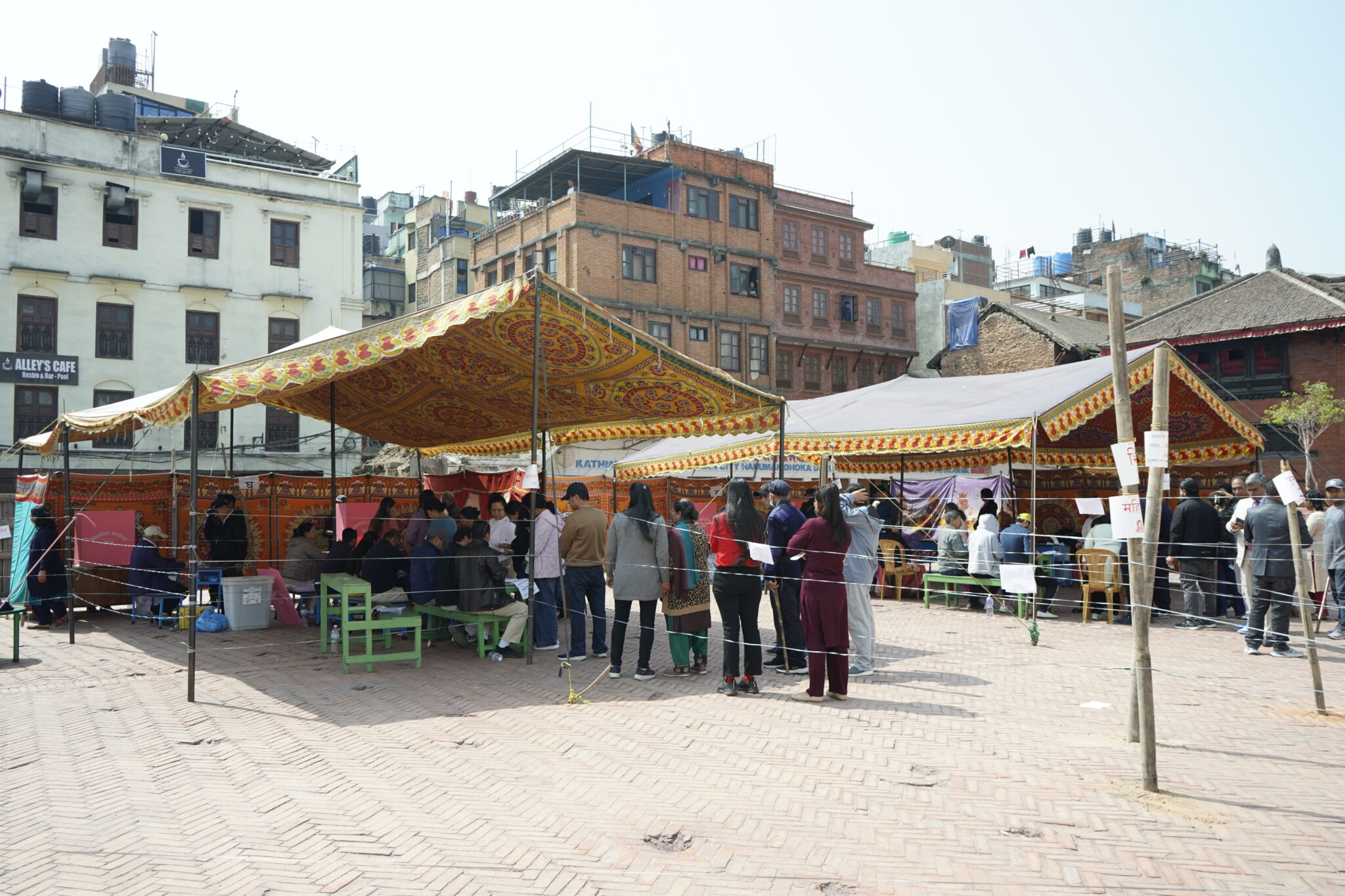
People standing in line to vote in Kathmandu’s Basantapur. Photo: Bikram Rai/Nepal News
In the weeks before the March 5 election, RSP candidate campaign material was far more visible on social media than content about candidates from other parties. Almost all parties had deployed dedicated social media teams for electoral campaigning, and some parties and candidates had outsourced their digital promotion.
But no other party’s digital outreach was as effective as the RSP’s, because the RSP had a technical team that understood algorithms. An analytical report published by The Kathmandu Post on 23 February 2026 showed that algorithms were giving the RSP more prominence than other parties. An analysis of 4,754 posts across 24 high-follower Facebook pages over one month from 23 December 2025 to 22 January 2026 found that 54.1 percent of posts were RSP-related – double the combined total for the Nepali Congress and the UML.
The Gen Z protesters had initially targeted the lavish lifestyles of politicians’ children through hashtag trends such as Nepo Baby and Nepo Kids. As many people posted with these hashtags, algorithms spread them even further, and this was how the ground was laid for the Gen Z movement.
Speaking to Nepal News on 26 February, seven days before the House election, IT expert Rajiv Subba had said, “The dominance of one party on social media reflects the influence of algorithms. This allows us to understand how algorithms are governing the minds of voters.”
Just as the algorithmic dominance on social media before the election appeared, the election results came out to match.
The Karki Commission report also highlighted the major influence of algorithms on the Gen Z movement. While the government had shut down Facebook, Instagram, and other platforms, the Gen Z movement’s preparations had taken place through TikTok and Discord. The Gen Z protesters initially targeted the lavish lifestyles of politicians’ children using hashtag trends such as Nepo Baby and Nepo Kids, and when many people posted with these hashtags, algorithms amplified them further, laying the groundwork for the movement.
During the movement, social media was used to teach people how to make petrol bombs and set fire to government structures, and to identify and target the homes of senior leaders. Algorithms also helped spread these methods rapidly.
This episode also illustrates how algorithms are influencing events. The Karki Commission report notes that in present conditions every person’s mind has become a battlefield because of algorithms, stating: “The main driving force of this war – its commander-in-chief – is the algorithm, which is attempting to confine Nepal in an invisible prison.”
A new problem for the whole world
The debate over the influence of algorithms is not limited to Nepal; it is taking place worldwide. Controversy arose over the use of algorithms to influence voters in the 2016 US presidential election, when the American company Cambridge Analytica was accused of collecting personal Facebook data without consent and using algorithms to exert psychological influence. This was a scandal that ignited a new global debate.
Before algorithmic systems were introduced, social media showed posts from people nearest to you first, followed by posts from friends and content they had commented on or liked.
After 2010, algorithms began to do the work, a system based primarily on machine learning, in which the computer learns and operates on its own from past data and experience without needing continuous human instruction. But those who understand technology can produce large volumes of data tailored to their purposes and spread it through their networks. Machine learning interprets this as popular content and spreads it even further. The misuse of algorithms has thus emerged as a new global problem.
Content can be true or false, but whatever attracts the most views and comments spreads rapidly on social media. Those misusing algorithms open large numbers of fake accounts and use them to like, comment on, and share content they want to promote, which algorithms then identify as popular and spread even further.
The Karki Commission report describes the misuse of algorithms as the spreading of information poison. Page 633 of the report states: “Among the hundreds of millions of social media users, this is a powerful and lethal instrument. It does not only spread falsehoods; it also diverts attention, fosters mutual hatred, and breaks down trust between people.”
On platforms such as Facebook, YouTube, TikTok, and Instagram, algorithms identify user behavior and surface content matching their interests. For example, if you repeatedly watch, like, or comment on a particular type of video, photo, or content, similar content then begins appearing on your screen because algorithms analyze user data on social media platforms, identify their interests, and deliver content accordingly. On one side, when a user repeatedly consumes the same type of content, the algorithm serves up more of the same. On the other, content that attracts many likes, comments, and shares is identified as popular by the algorithm and pushed to an even wider audience.
Algorithms study user digital behavior and then send content that matches their interests and concerns – a phenomenon known as a filter bubble, where only content aligned with the user’s tastes and views reaches them. Since users in this situation only hear echoes of their own thinking, it is also called an echo chamber. This way algorithms can make false information seem true and spread confusion. AI expert Dovn Rai says digital platforms can become dangerous because algorithms are also being used to spread misleading content. “Such promotional activity takes place in an opaque or hidden way,” she says. “Rather than inspiring people, it appears to be manipulating them.”
Content can be true or false, but whatever attracts the most views and comments spreads rapidly on social media. Those misusing algorithms open large numbers of fake accounts and use them to like, comment on, and share the content they want to promote, and algorithms then identify it as popular and push it to an ever-wider audience.
Algorithms study data from the devices people use and from social media to identify user interests. IT expert Subba says those misusing this can make the true appear false and the false appear true and reach large numbers of people. He says the tendency to generate data using algorithms and use it to create illusions in people’s minds is growing dangerously. “Spreading emotionally charged content through algorithms is psychological hacking of people,” he says. “It can have an enormous impact on society.”
The question of transparency
In the March 5 election, political parties and candidates used algorithms to exert psychological influence on voters.
In past elections, parties campaigned through pamphlets, vehicle rallies, media advertisements, loudspeakers, and public meetings. With such traditional methods of campaigning, it was easy to understand who was doing what. Government bodies could also calculate how much was spent on such activities, which kept parties and candidates under pressure to be accountable and transparent.
But the most recent election saw extensive campaigning through social media and the internet. Such content is designed to influence emotions and appeal to desires. It is difficult to identify who has invested in such campaigns.
Debates on algorithmic transparency are taking place worldwide. Calls for special legislation have been growing in the United States. The European Union introduced an AI Act in 2024 with provisions for algorithmic transparency, and other countries are also working on legislation.
Although questions about algorithmic transparency are being raised, the government has paid no attention. Even the Election Commission, which strictly enforces financial transparency in campaign spending, has not been seen questioning parties or candidates who use algorithmic manipulation to influence voters. Experts say algorithms were misused in the election to spread illusion over reality, and the government has not taken it seriously. IT expert Subba says that for algorithmic transparency, parties should be required to disclose their digital spending, and arrangements should be made for the prompt codes used on social media to be printed and submitted to the Election Commission.
Election Commission information officer Suman Ghimire says the commission has long been working to make parties transparent in all matters. He says legal provisions are in place for financial transparency and that the commission has been closely monitoring social media campaigning. “Transparency in all matters cannot be achieved by the commission’s efforts alone,” he says. “Stakeholders must also be committed to it.”
Debates on algorithmic transparency are taking place worldwide. Calls for special legislation have been growing in the United States. The EU introduced an AI Act in 2024 with provisions for algorithmic transparency, and other countries are also working on legislation. In Nepal, however, even the debate has yet to happen, says IT expert Subba. “Transparency about how political parties or anyone else is using algorithms is essential,” he says.
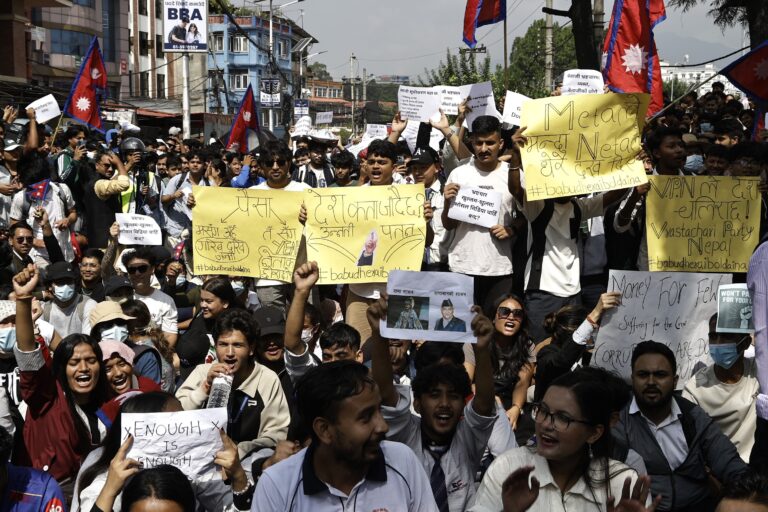
Demonstrators protesting at Maitighar in Kathmandu on the first day of the Gen Z movement. Photo: Bikram Rai/Nepal News
The Karki Commission report defines algorithms as an “enemy that looks like a friend.” Noting that technological development is rapid globally and that the influence of technology companies and algorithms has already penetrated every sector in Nepal, the report states: “As a result, state power is gradually shifting into the hands of tech powers.”
The RSP, which used algorithms in the election, is now in government. Prime Minister Balendra Shah has been at home in the digital world since his days as a rapper. His asset declaration made public on 12 April 2026 records Rs 14.6 million earned from social media. The Balendra-led government is prioritizing digital governance, but the government remains unclear on how to address the misuse of algorithms and make them transparent.
AI expert Rai says there must be no delay in making legal provision for algorithmic transparency, and that the government must pay attention to it.
Advocate Babu Ram Aryal, who has been advocating for a data protection policy, says the government must introduce a data protection act to curb the misuse of algorithms and make them transparent. “The call for a separate law on data protection has been raised repeatedly,” he says. “A separate law is needed both to protect citizens’ data and to control the spread of misinformation through algorithms.”