Kathmandu
Thursday, February 19, 2026





While reformists demand an immediate overhaul to satisfy the youth uprising, the Deuba establishment maneuvers behind a cloud of confusion to delay the inevitable shift in power
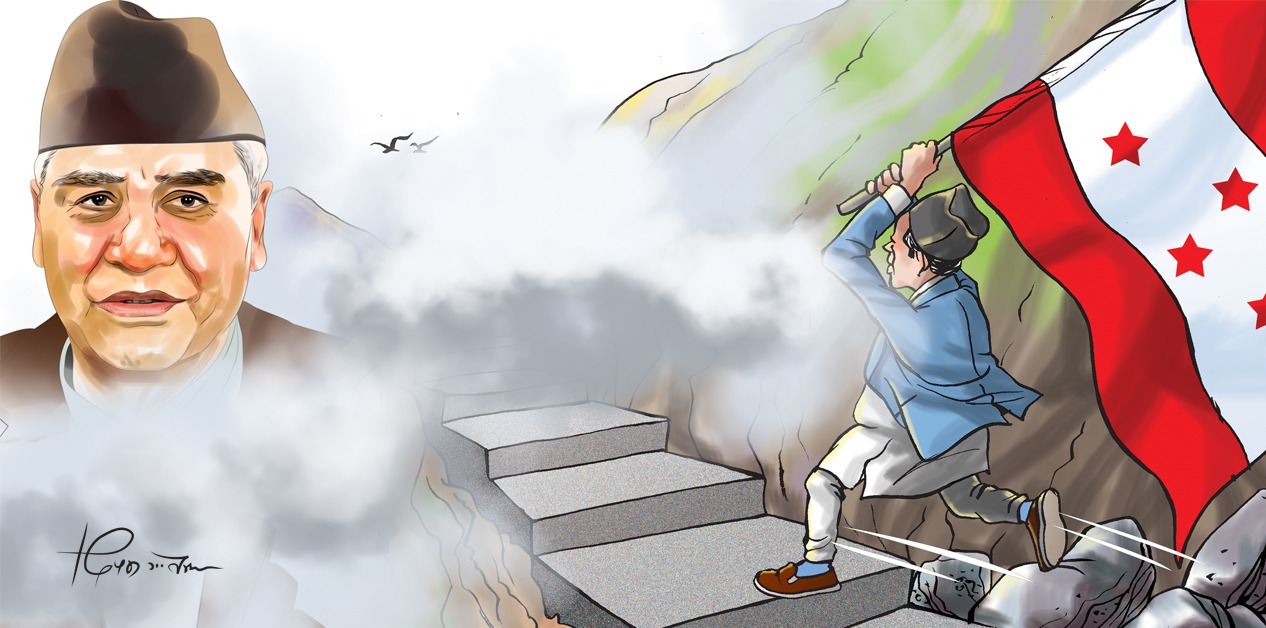
KATHMANDU: During the Gen Z protests on September 8 and 9, Sher Bahadur Deuba, the president of the Nepali Congress (NC) party and five-time prime minister of the country, and his wife, Arzu Rana Deuba, a Nepali Congress leader and former foreign minister, were not only severely beaten by the youth protestors in their own house until they were bloodied, but Deuba also had to lose the prime minister’s post scheduled for him.
With the dissolution of the House of Representatives due to the protest and the formation of a new election government under the leadership of Sushila Karki, Nepal’s politics took a new turn.
The Gen Z protest wasn’t just about replacing old leaders; it was a final warning. It signaled that if traditional parties do not critically examine their own failures and adapt to the modern era, they risk becoming completely irrelevant and fading away.
However, some four months after the protest, the NC leadership is ignoring that warning. In the current political climate, the NC is struggling with a lack of clear solutions and a core set of beliefs to guide them. They are missing a modern vision that actually addresses the problems people are facing today.
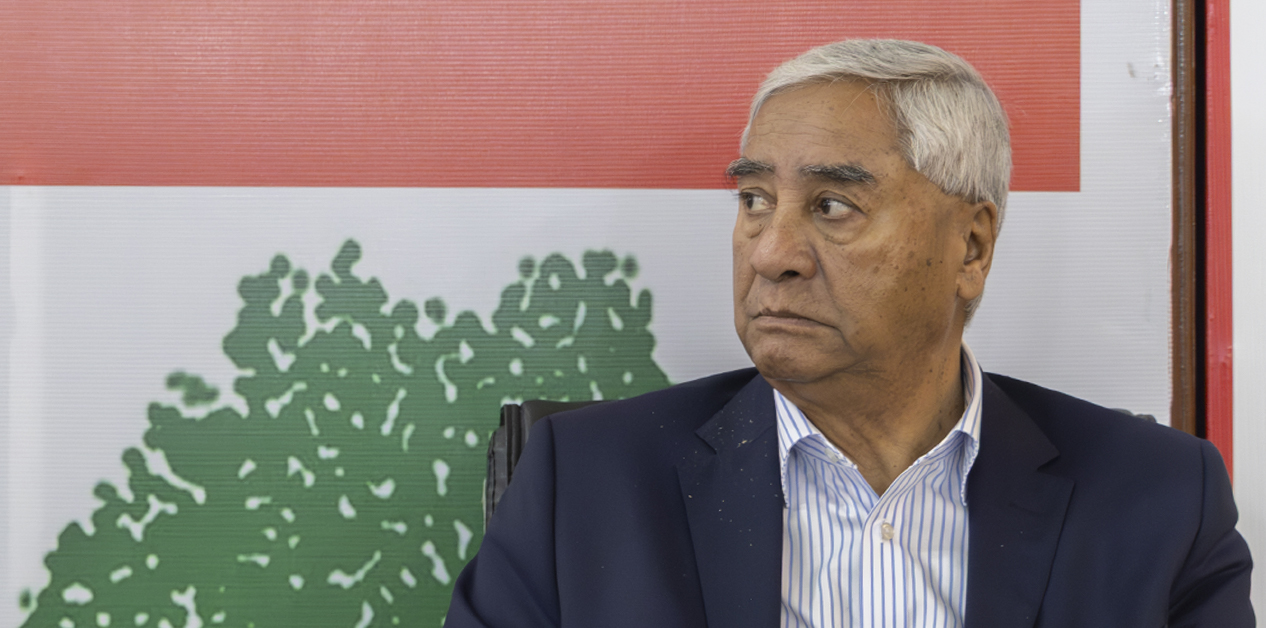
Nepali Congress President Sher Bahadur Deuba/Photo: Bikram Rai
Nepali Congress is passing time under the pretexts of the House of Representatives election, the party convention, or the restoration of the House of Representatives. Nepali Congress is not clear on any of these agendas. When the demand for a special convention arose as a result of the Gen Z protest, the NC announced the convention date for January 10, 2026. The leadership, which failed to hold the regular convention that should have taken place by December 1, was forced to reschedule the convention for January 10 to escape the pressure for a special convention.
However, that schedule has become more like a ‘paper weapon’ to contain growing dissatisfaction rather than a democratic commitment. The leadership’s move to treat internal democracy not as a process but as a management problem to silence the dissatisfied, shift dates, and ultimately preserve the old structure is clearly visible.
Even after the announcement of the January 10 convention, the central leadership of the party is not focused on organizational restructuring and strengthening internal democracy. The party establishment appears focused on managing the March 5, 2026, election. The meeting of the NC Central Work Execution Committee, which lasted for four days starting from December 24, focused solely on the upcoming election.
According to Assistant General Secretary Badri Pandey, the possibility of the regular convention taking place on January 10 is low, and the challenge of revising the convention schedule has also increased.
“There is pressure in the party to hold a special convention if the regular one cannot happen; in such a situation, revising the convention schedule has also become challenging,” says Pandey.
Pandey further added that the meeting focused on election preparations rather than the convention due to the pressure of preparing the proportional representation list for the House of Representatives election and finalizing the members to be sent to the National Assembly.
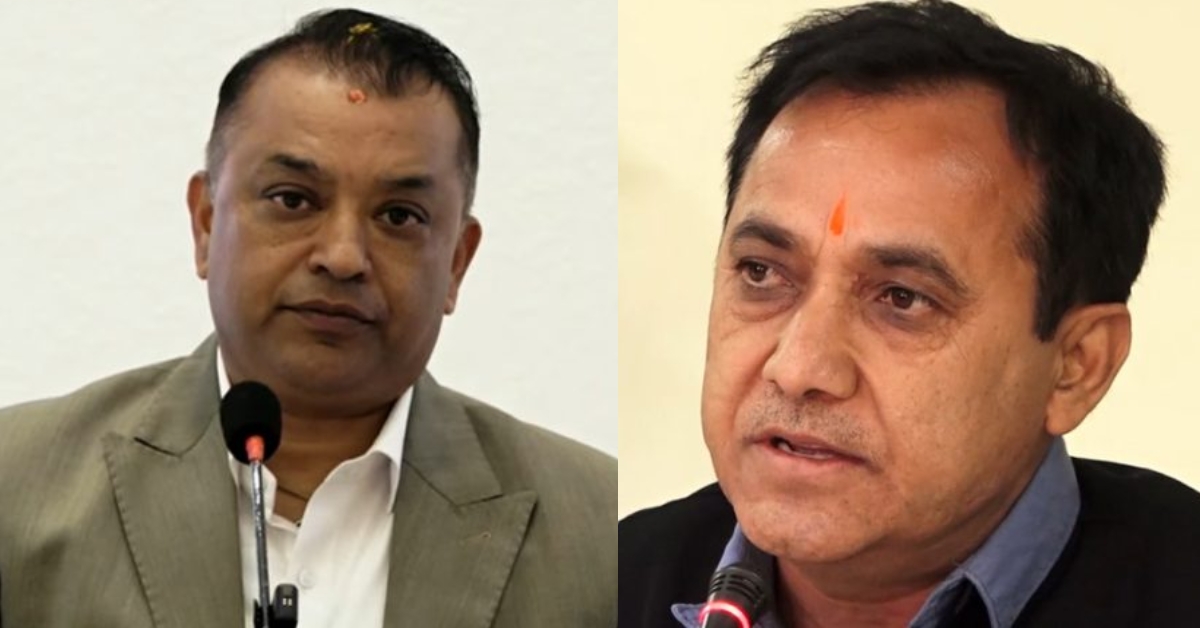
Gagan Thapa and Bishwa Prakash Sharma / File photo
According to the Election Commission, December 30 was the scheduled deadline for parties to submit the proportional representation list. The last day to file nominations for the 18 vacant seats in the National Assembly is January 7.
The National Assembly election is being held on January 25, 2026. The final day for filing nominations for the House of Representatives election is January 20. Because of these looming deadlines, party leaders admit that their meetings are focused entirely on organizing for the upcoming polls instead of finalizing the mandatory party convention.
General Secretary Bishwa Prakash Sharma, however, is not ready to accept right now that the regular convention has been averted.
“We insist that the regular convention proceed as planned, despite internal pressure. While preparations for the March 5 House of Representatives election may cause minor scheduling adjustments, the convention has definitely not been canceled,” stated Sharma.
Another General Secretary, Gagan Thapa, says that while 54 percent of representatives are demanding a special convention, the leadership has pacified them by fixing a regular convention.
“When a situation arises where the regular convention cannot happen at the specified time, the demand for a special convention has increased; the leadership will not be allowed to run away from this; we will place this agenda in the next Central Committee meeting,” says Thapa. “Only after that discussion can we determine if the party will proceed with a regular or a special convention.”
By showing the House of Representatives election and placing the convention as the second priority, the crisis in NC’s internal politics has intensified. Top leaders are saying that they cannot go to the election without holding a convention according to the demands and sentiments of the Gen Z revolt.
Both general secretaries Thapa and Sharma appear firm on this agenda. They have already announced that they will not even run in the election without a special convention.
According to General Secretary Thapa, the tendency to avoid dissatisfaction within the party, organizational weaknesses, and questions regarding leadership by using the election as an excuse will make the Nepali Congress even weaker in the long run. Those demanding a special convention argue that since the convention redetermines the legitimacy of the leadership, internal power balance, and future political direction, it cannot be avoided.
The Nepali Congress is stuck in a state of ‘strategic confusion.’ While the party officially discusses elections, conventions, and parliament restoration, it is actually deeply indecisive, leaving its members and voters without a clear path forward.
Enthusiastic Deuba, confused Nepali Congress
On the one hand, the Nepali Congress is said to be busy preparing for the House of Representatives polls, while on the other, the party’s former members of parliament are signing a petition against the dissolution of the House of Representatives, calling it illegal.
On December 22, when CPN-UML Chairman KP Sharma Oli reached the residence of Nepali Congress President Deuba in Maharajgunj to meet him, at least 65 former Nepali Congress members of parliament (MPs) submitted signatures to the Supreme Court demanding that the House of Representatives be restored. Prior to that, some 75 former UML lawmakers had filed a petition at the Supreme Court, claiming that the dissolution of the House of Representatives was illegal.
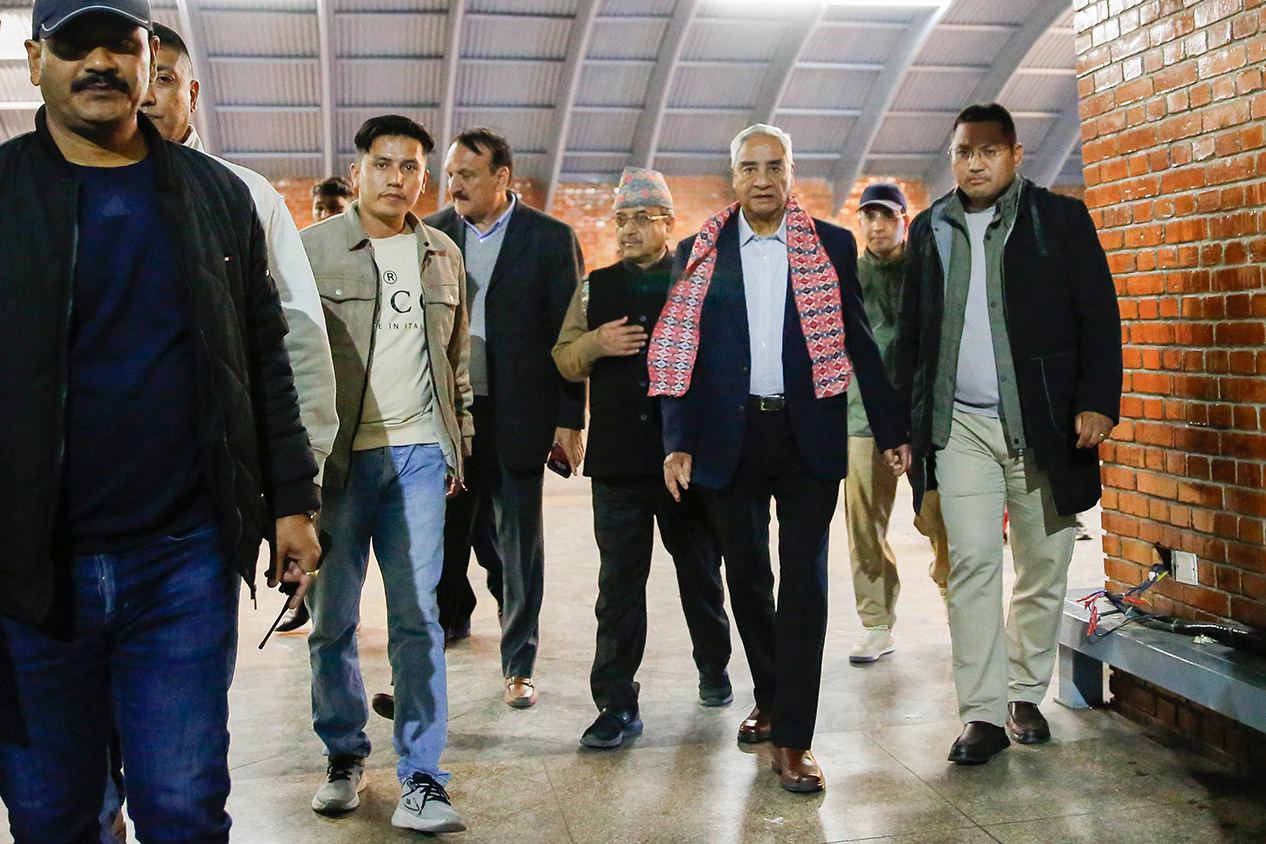
The Deuba couple returns home following medical treatment in Singapore for injuries sustained during the Gen Z protests. Photo: Nepal Photo Library
Political analyst Puranjan Acharya considers the Nepali Congress putting its feet in two boats at once to be Deuba’s strategy. Stating that the demand of the Nepali Congress immediately after the Gen Z protest was not the restoration of the House of Representatives, Acharya sees that after the meeting with Oli, the desire to become Prime Minister again has awakened in NC President Deuba.
“Deuba also seems to be pursuing that issue because if the House of Representatives is restored, CPN-UML alone might hijack that issue. After the meeting with Oli, Deuba’s aspiration to become Prime Minister seems to have increased. Therefore, currently, inside the heart of the Nepali Congress is the restoration of parliament, and outside is the election,” said Acharya.
Although he gave the role of acting president to Vice President Purna Bahadur Khadka, Deuba is currently active again in the decisive role. From the regular convention schedule to the distribution of proportional representation tickets, Deuba is doing it himself.
“If we talk about the past, Krishna Prasad Bhattarai and Sushil Koirala were active in ticket distribution themselves when they became acting presidents; this time, Acting President Purna Bahadur Khadka has been deprived. Acting President has been rendered a mere dummy, as Deuba continues to wield all decisive powers,” says Acharya.
There are also those who believe CPN-UML Chairman Oli is the reason for Deuba’s return to party leadership. Although the Gen Z protest pressured the top leadership of old parties to take rest, Oli rejected it and returned himself to his former status through the convention. Some say this has given strength to Deuba, who is looking after Oli’s establishment. Experts believe the Oli-Deuba meeting also indicates this.
They seem to believe that if the two main political parties join forces on the issue, the possibility of restoring parliament will increase.
Perchance, if parliament is restored, Oli and Deuba are maneuvering to go to the election by forming a government under their own leadership to bring a favorable result. Had Oli not lost power during the Gen Z protest, there would already be an agreement between Nepali Congress and CPN-UML to transfer the Prime Minister’s post to Deuba in the last month of the current fiscal year in 2026.
Is this not the dual character of the Nepali Congress? Chief Secretary of the party Krishna Prasad Paudel considers this natural. Stating that Nepali Congress is properly engaged in election and convention preparations without any confusion, he argues that since parliament was dissolved with half its term remaining, it is natural to say, “I will be an MP for the full term.” “The declared policy of the Nepali Congress is not the restoration of the House of Representatives; the Central Committee has not made a decision either; MPs have taken the decision independently,” he says.
Paudel claims that since President Deuba had already declaredly left the party leadership, the talk of him becoming active again is baseless.
However, analyst Acharya disagrees. He comments that although Deuba cannot become president for a third time according to the NC statute, since shifting the convention benefits him, that is exactly what is happening now. “If the regular convention happens and the leadership changes, all those benefits will move away from Deuba. At such a time, he cannot hold the regular convention; it also doesn’t seem like the regular convention will happen before the election,” he says.
Endless dispute over active membership
The internal situation of the Nepali Congress, the oldest party that contributed the most to the country’s democratic movement, has always been a mess. The party, which fought against the Ranas and the kings, never updates its membership on time to keep the party lean and the organization dynamic. By the time the update of active membership begins, the convention is already around the corner. This affects the election schedule and also leads to delays in leadership selection.
According to Chief Secretary Paudel, the Nepali Congress has no record of holding a convention at the scheduled time from its establishment until the 14th convention. There is a provision in the Nepali Congress statute where the leadership can extend the term by one year. That provision also provides convenience to the leadership to push the convention up to one year later.
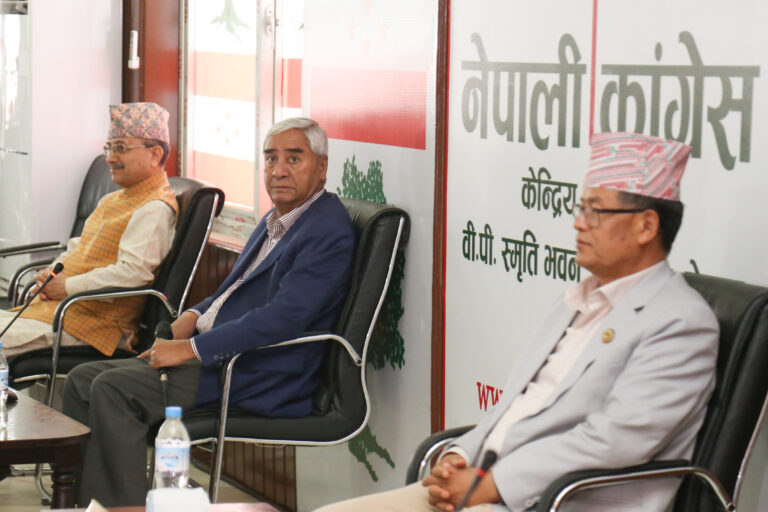
NC President Deuba (center) with Vice Presidents Khadka (left) and Gurung at a recent Central Work Execution Committee meeting of the party
“In the special circumstances after the Gen Z protest, preparations have been started much earlier this time. How can one say there is confusion in the party about the convention?” Chief Secretary Paudel asks.
According to Morang Nepali Congress President and former minister Dig Bahadur Limbu, it has become a disease in the Nepali Congress to hold the convention only a year later than the regular schedule. The party’s statute stipulates that active membership renewal and distribution should not be done in the year of the convention. There is a provision that both these tasks must be completed one year before the convention. However, the party has not been able to implement it.
“The delay in active membership renewal and distribution is precisely because the leadership failed to implement the provisions of the party statute,” says Limbu. “Currently, active membership renewal and distribution are ongoing; the convention will happen only after the final list is prepared.”
After becoming the party’s general secretary, Gagan Thapa had said that the distribution and renewal of active membership would be completed one year before the convention. However, he could not do that either. “Only he knows why he couldn’t do it, but if this matter had been managed on time, it might have helped even in the situation of a special convention,” says analyst Acharya.
Currently, there are 870,000 active members in the Nepali Congress. Among them, some 546,000 active memberships have been renewed. “The party aims for an 80 percent membership renewal rate, though the final data from several districts is still pending,” says Chief Secretary Paudel. The work of active membership renewal and distribution is ongoing in all 6,743 wards of all 753 local units. Since it is in the distribution process, the details of new active members have not been finalized.
Calculated power plays
According to analyst Acharya, the further the convention is pushed back, the longer the period of Deuba’s activity extends. Moreover, Deuba also faces the challenge of managing leaders of his group, especially his wife Arzu, Vice President Khadka, and Ramesh Lekhak, among others, in the convention. Therefore, that has also made him active.
For this, Deuba is looking toward influential Nepali Congress leader Shekhar Koirala and General Secretaries Gagan Thapa and Bishwa Prakash Sharma. He is trying to create an environment for dialogue with whichever group allows for the management of his leaders. However, Deuba has not given his word to anyone.
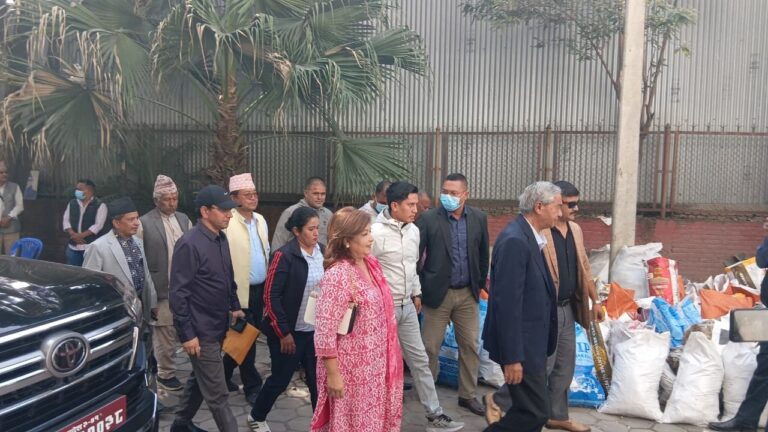
Nepali Congress President Deuba, along with his wife Arzu Rana, arrives at the venue to address the Central Work Execution Committee meeting. Photo: Roman Acharya
Influential Nepali Congress leader Shekhar Koirala was a candidate for president in the 14th convention, forming a team including Vice President Dhanraj Gurung and General Secretary Gagan Thapa. Even when former General Secretary and son of BP, Shashank Koirala, and Sujata Koirala from the Koirala family joined the Deuba group, Shekhar had challenged Deuba by securing 1,855 votes. Deuba won in the second round with 2,733 votes.
That same Shekhar is running for president again in the 15th convention. “I am running for president; I have the support of my siblings (Shashank and Sujata).
I have moved forward with discussions with leaders of all sides; I am confident that I will win,” says Koirala.
Koirala has already brought leaders close to Deuba, such as NP Saud, Mahalakshmi Upadhyay, Bal Krishna Khand, Mohan Bahadur Basnet, Shankar Bhandari, and Bijay Kumar Gachchhadar, closer to him. Therefore, he considers himself strong.
“As far as the regular convention is concerned, work is proceeding according to the schedule,” says Koirala. “Even if it is not possible on January 10, it might be pushed back for some time, perhaps until mid-January. My emphasis is on the regular convention.”
Thapa, who won as general secretary from the Koirala group, has also made a decision to claim the presidency. Another General Secretary, Bishwa Prakash Sharma, appears close to Thapa. Both are demanding a special convention if the regular one does not happen. Leaders close to them have not yet come out openly. Nevertheless, Thapa and Sharma appear to be in a strategy to establish themselves while implementing the mandate of the Gen Z protest in the party.
What does the prevailing confusion and lack of clarity within the Nepali Congress suggest? According to political analyst Hari Sharma, it reflects deepening frustration and despair within the party ranks. “If the Nepali Congress still fails to take a clear decision,” Sharma warns, “it risks losing not only its historical dominance but also its future relevance.”