Kathmandu
Friday, February 27, 2026





Lawmaking will require cooperation among parties even if new parties emerge after March 5 HoR polls
KATHMANDU: In a changed political landscape following the Gen Z movement, elections to the National Assembly, the upper house of Nepal’s bicameral parliament, are scheduled for January 25. Given the alliance led by the traditional parties, the Nepali Congress (NC) and the CPN (UML), their victory in the National Assembly elections appears almost certain.
What this indicates is that, regardless of which party forms the government through the House of Representatives elections slated for March 5, passing laws will not be easy without inter-party cooperation.
The Constitution has designated the National Assembly as a permanent chamber. Members of the National Assembly serve a six-year term. Article 86 of the Constitution provides for the composition of the National Assembly and the tenure of its members. Of the 59 members, 56 are elected, eight from each of the seven provinces, while the remaining three are nominated by the President on the recommendation of the Council of Ministers.
One-third of the members of the National Assembly retire every two years. Elections are held every two years to fill the vacant positions, bringing in one-third new members each time. Of the 19 seats becoming vacant, elections are being held for 18, while one member will be nominated by the President on the government’s recommendation. Through the elections, new members from the Nepali Congress and the UML will enter the National Assembly.
With constitutional amendment as part of their agenda, the two major parties – the NC and the – formed a coalition government on 14 July 2024, agreeing to take turns as prime minister. However, the issue was sidelined after it became clear that a two-thirds majority required for constitutional amendment would not be attainable immediately. Since the Gen Z movement, polarization between new and traditional parties has intensified. In the National Assembly, however, traditional parties continue to hold a majority.
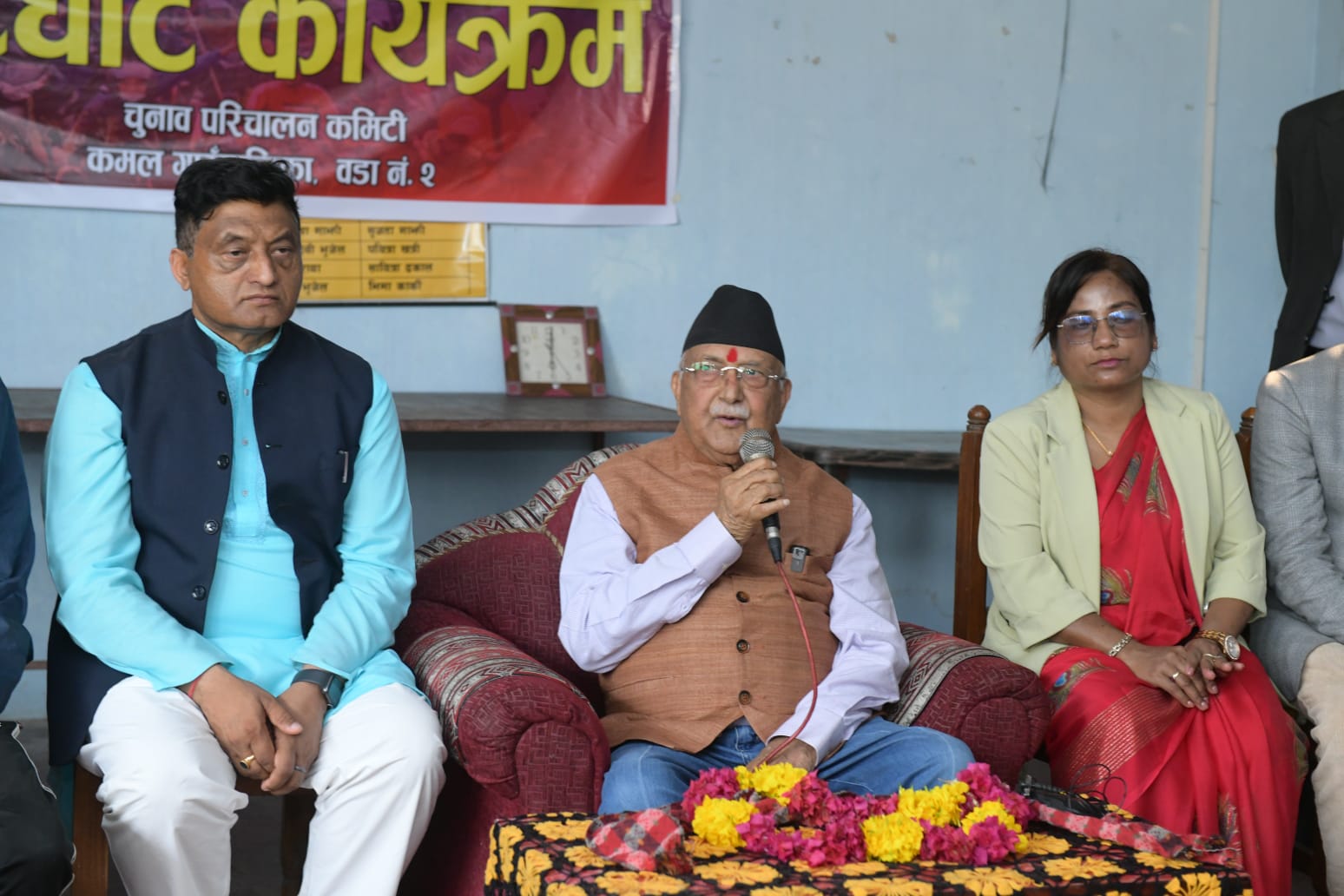
Former National Assembly member Radheshyam Adhikari argues that politics should not be divided into “new” and “old” camps. “We need an environment of dialogue and cooperation, not exclusion. Whoever comes must have the capacity to engage in dialogue and the political awareness to do so. There must be maturity,” he says.
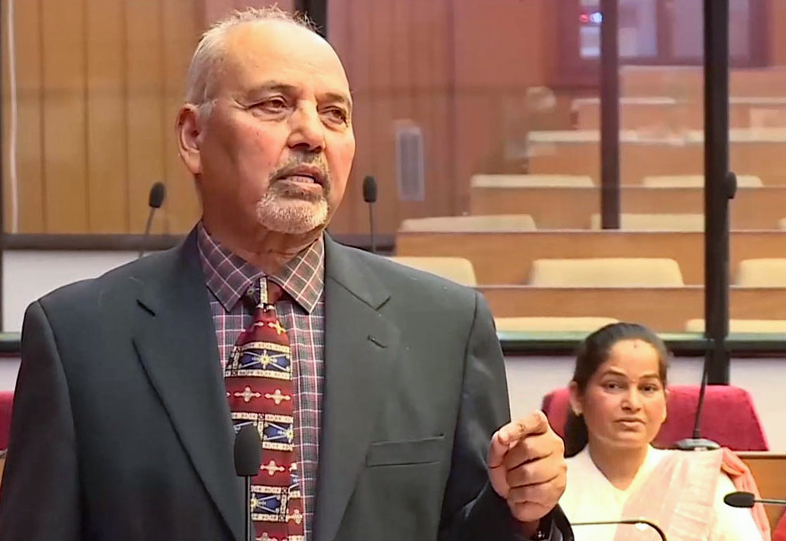
Former National Assembly member Radheshyam Adhikari.
Photo: website of National Assembly
Pointing out that Nepal stands out in South Asia for maintaining relatively cordial relations among political parties, Adhikari argues that until the next local-level elections are held, the current arrangement will remain in place, making it impossible for any party to act unilaterally in parliament.
If votes are cast strictly in line with the coalition, the Nepali Congress will emerge as the largest party in the National Assembly with 25 members after March 4. At present, it has 16 members. From Koshi Province, NC candidate Sunil Bahadur Thapa has already been elected unopposed. Even if the CPN (Maoist Center) fails to win any new seats, it will retain its 17 seats.
Eight UML members who are retiring from the National Assembly are expected to be replaced again through the current coalition, keeping the UML’s strength at 11 members. The victory of Mahantha Thakur, the candidate of the Loktantrik Samajwadi Party, also appears assured, as he has the backing of the NC, UML, and the Janata Samajwadi Party.
For any new law to be enacted, a bill must first be introduced in parliament. According to Ekram Giri, spokesperson for the Federal Parliament, the Constitution requires that a bill be discussed separately and passed by a majority in both the House of Representatives and the National Assembly. Except for finance bills, either house of parliament can originate a bill.
Giri explains that if the National Assembly amends a bill originated in the House of Representatives and sends it back, the House of Representatives has the authority to reject those amendments if it does not agree with them.
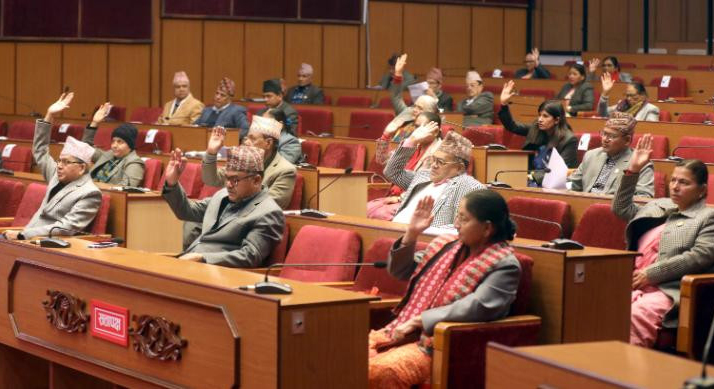
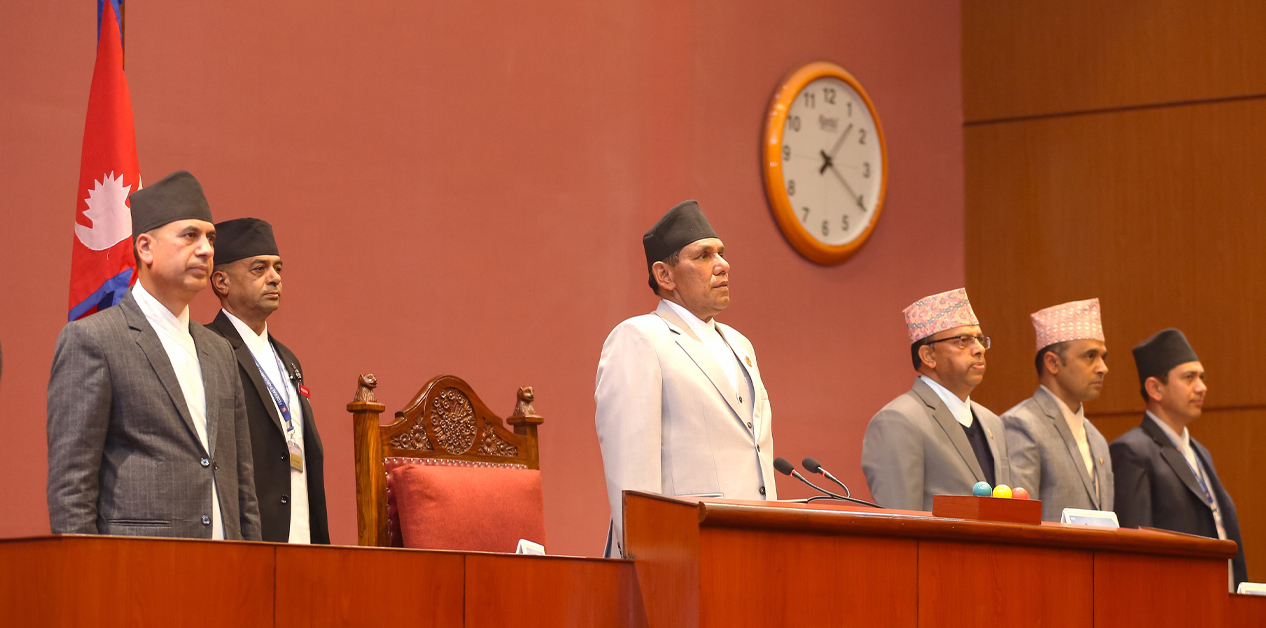
Members of the National Assembly. Photo: website of National Assembly
“Constitutional amendments are introduced in Parliament through a bill. They can be passed by a two-thirds majority in a joint sitting of both chambers. However, in practice, they are usually passed by a two-thirds majority in separate sittings of each chamber,” Giri says.
Structure of the National Assembly
Under federal law, members of the National Assembly are elected through a weighted voting system involving provincial assembly members, chairs and vice-chairs of rural municipalities, and mayors and deputy mayors of municipalities, with different vote weights assigned to each category. Article 86(1) (a) of the Constitution provides that from each province, at least three women, one Dalit, and one person with disabilities or from a minority community must be elected, making eight members per province and 56 elected members in total.
According to the National Census 2021, a separate vote-weight system applies for the election of National Assembly members. The total vote weight in the election is 57,559. Of this, the combined vote weight of provincial assembly members is 29,097, while the combined vote weight of chairs and vice-chairs of rural municipalities and mayors and deputy mayors of municipalities is 28,462.