Kathmandu
Sunday, February 1, 2026





From engineers, businesspeople, artists, and journalists to just about anyone - everyone seems hungry for politics
KATHMANDU: In 2027 BS (1970 AD), an incident took place at Mahendra Morang Campus in Biratnagar. It involved a violent clash carried out by students affiliated with the Nepal Student Union (NSU), close to the Nepali Congress.
Before that, students affiliated with the All Nepal National Free Students’ Union (ANNFSU), close to the Nepal Communist Party, along with students of the pro-Panchayat Rastrabadi Bidyarthi Mandal, used to jointly beat NSU students on campus premises. But that year, NSU students retaliated and severely beat students of ANNFSU and the Mandal.
That incident sent shockwaves across campuses nationwide. Students who had been raising voices in favor of democracy became energized.
A few days after the clash, the NSU students involved traveled to Banaras, India, to meet BP Koirala, the founding leader of the Nepali Congress. BP, who had been released from Sundarijal Prison in October 1968, was then living in exile in India.
The students who went to meet him believed their leader would be pleased and praise them for having “dealt with” the so-called “mandale” (royalist) students. Instead, they were scolded.
BP advised them, saying, “The duty of students is to study, not to get entangled in fights. Democracy will come—surely it will. How long can the king suppress it? Once democracy comes, the country will need skilled doctors and engineers to be built. None of that is possible without education.”
Fifty-five years have passed since Kumud Lohani returned to Biratnagar after hearing BP’s words in Banaras. In the meantime, he has witnessed the restoration of multiparty democracy and lived long enough to become a citizen of the Federal Democratic Republic of Nepal. Yet, he says he has never experienced a situation like the present one.
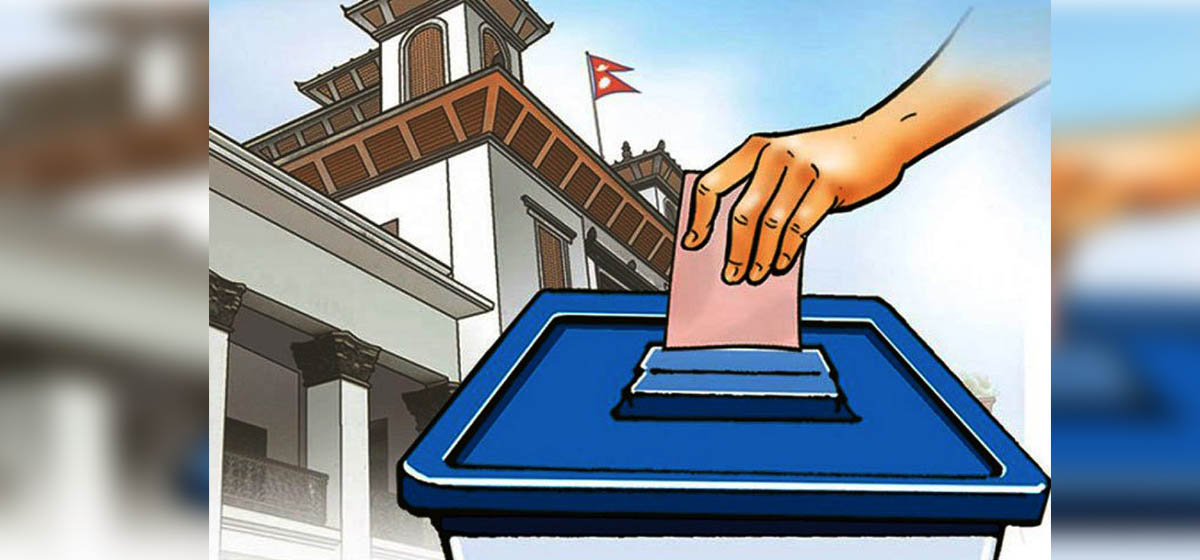
With the House of Representatives election scheduled for March 5, there is a visible queue of professionals – doctors, social activists, entrepreneurs and traders, artists, journalists – entering various political parties. Many of them have even become election candidates.
Why has such a wave emerged? Have Nepalis become disillusioned with their own professions?
Or has there developed a belief that politics alone is the ultimate weapon for national development, and everything else is an illusion?
To explore this, we spoke with respected figures from various fields, including Gen Z activists.
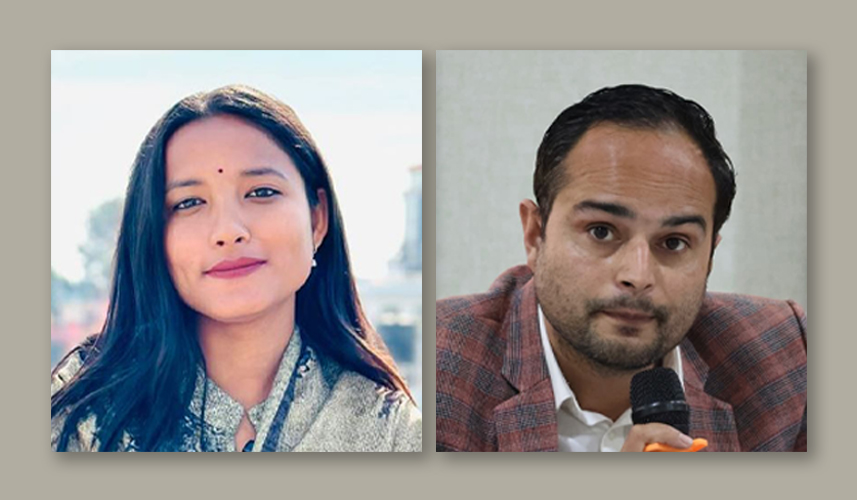
Gen Z activist Rakshya Bam and political analyst Saurav Raj Pant
Two activists who have been in the spotlight since the Gen Z revolt are Rakshya Bam and Miraj Dhungana. However, both remain distant from electoral politics. Mirage had announced the formation of a party without participating in elections, while Rakshya remains completely unaffiliated with any party.
On the influx of people from different professions into politics, Rakshya says, “Since this is linked to an individual’s political freedom, it’s difficult to comment. But I do feel that the misconception—that only politicians can build the country—has played a major role.”
Rakshya herself faced significant pressure to enter politics but declined. She says, “Friends from other professions may have gone into politics thinking they’ll use their expertise there, but there are many civic duties that need to be fulfilled at the citizen level as well.”
While Gen Z leaders remain on the sidelines, Sudhan Gurung, who volunteered to distribute water to protesters during the 8 September 2025 protests, has taken the political plunge. Seen around the citizen government formed through the Gen Z movement’s momentum, he joined the Rastriya Swatantra Party (RSP) and is now a candidate from Gorkha Constituency No. 1.
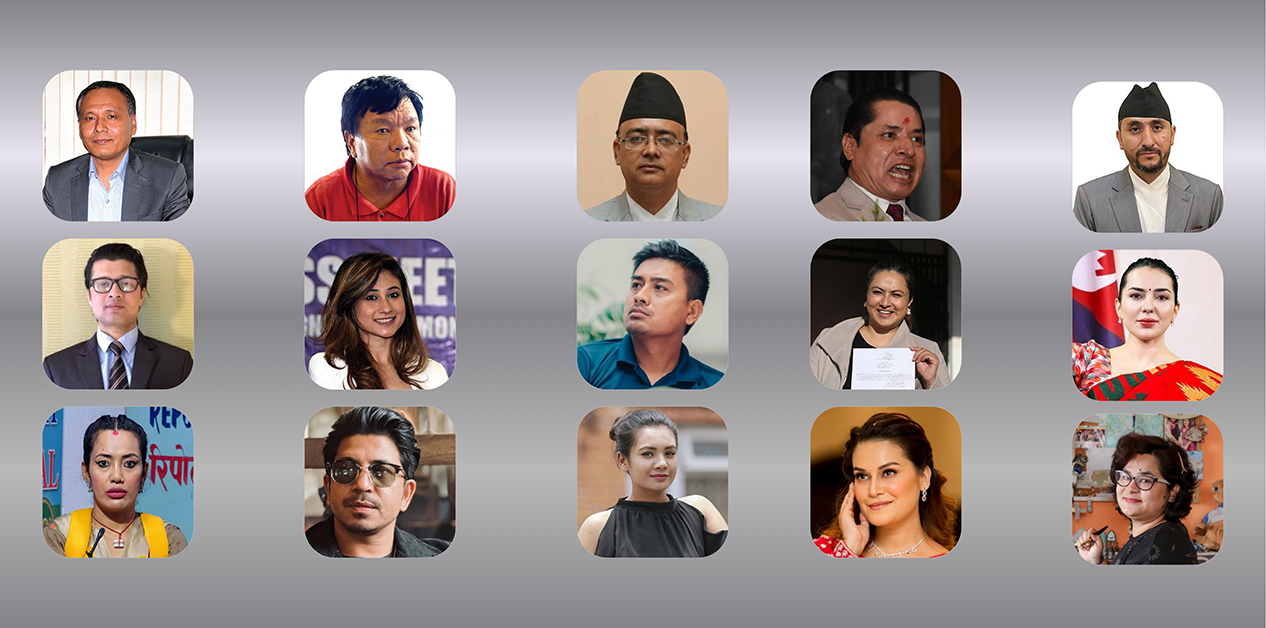
Like him, many non-traditional political faces have emerged in this election: former Nepal Police AIG Bishwa Raj Pokhrel; banker Ashish Sharma; singer Prakash Saput; actresses Rima Bishwakarma, Laxmi Bardewa, and Nisha Adhikari; former Miss Nepal Anushka Shrestha; former cricketer Gyanendra Malla; social media influencer Ashika Tamang; journalist Rishi Dhamala; model Eliza Gautam; businesswoman Vidushi Rana; astrophysicist Manisha Dwal, among others.
The hunger for politics among professionals has been so intense that even ministers in the interim election government – tasked with conducting the March 5 election – jumped mid-way into party politics themselves.
Journalist Jagadish Kharel, who was serving as the Minister for Communications, and social activist Bablu Gupta, who was Minister for Youth and Sports, both joined the RSP and entered the electoral race.
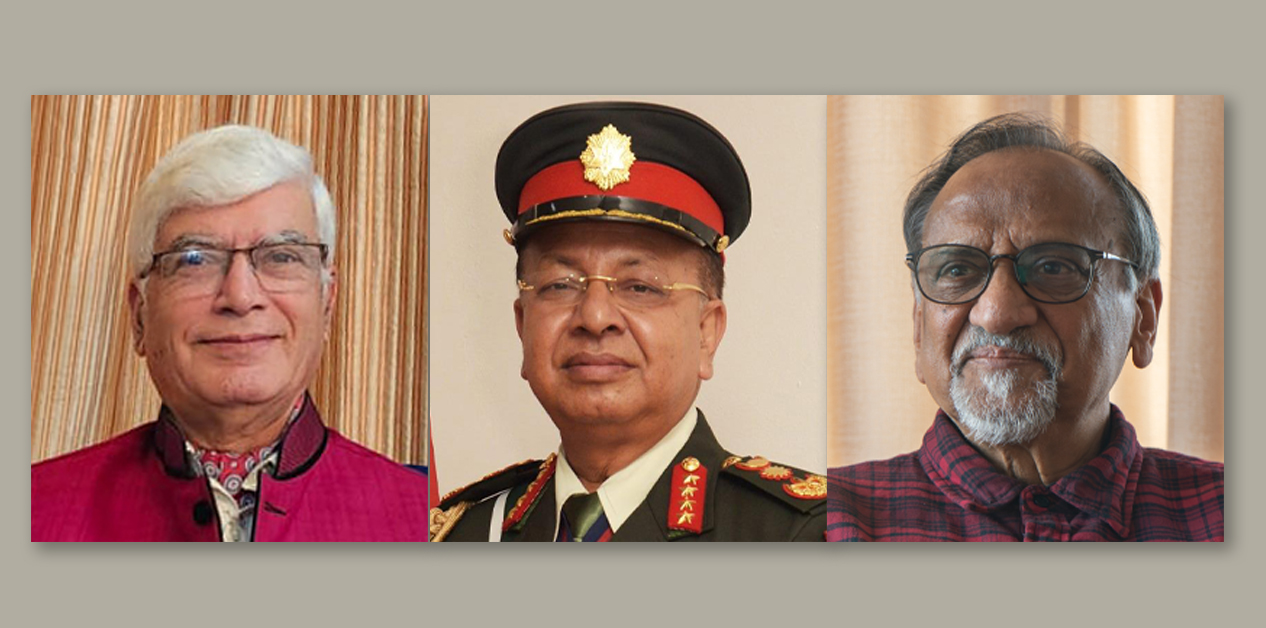
(Left) Diplomat Shambhu Ram Simkhada, (center) Former army chief Rajendra Chhetri and (right) Economist Bishwambher Pyakuryal
Kulman Ghising, widely praised for ending load-shedding in the country, went a step further by founding the Ujyalo Nepal Party, branding it with his own popular image. The party was formed with him as patron while he was still handling three ministries, including energy.
Even scientist Mahabir Pun, known for presenting himself as apolitical, was pulled into the electoral vortex. Leaving the post of Education Minister, he became an independent candidate and headed to his home district of Myagdi.
Nepali politics had increasingly become less accountable to the people and more of a business and party cartel, which triggered the Gen Z rebellion. Whenever citizens are deprived of economic and social justice, they take to the streets. Except for King Mahendra’s 1960 coup, every movement in Nepal has seen mass public participation on the streets.
For national development and progress, political stability and good governance are essential. Yet, in the 10 years since the constitution was promulgated, Nepal has seen 13 changes of government.
Economist Bishwambher Pyakuryal says, “After the establishment of the republic, governments have changed rapidly and corruption has permeated everywhere. Interpreting the Auditor General’s reports shows annual irregularities of 7–8 billion rupees. If we convert court congestion and delays into economic terms, it would amount to hundreds of billions.”
According to him, this explains why people from different professions have abandoned their work to enter politics.
For national development and progress, political stability and good governance are essential. Yet, in the 10 years since the constitution was promulgated, Nepal has seen 13 changes of government.
“They may feel that if they can enter parliament through political parties—the decisive power center of the country—they too will gain the authority to make decisions. That’s why everyone has rushed into politics, leaving their professions behind,” he says.
One mandate of the Gen Z revolt was that Kharel, Gupta, Ghising, and Pun would conduct elections within six months and then return to their respective professions. But instead of focusing solely on holding the promised election, they themselves became competitors and entered the electoral arena.
Former army chief Rajendra Chhetri does not see this trend as entirely misplaced. He says, “It feels as though people are trying to capitalize on the wave of change that is currently sweeping the country.”
At present, two dominant tendencies can be seen in Nepali politics. The first is the belief that old leaders failed to deliver development, making new faces indispensable. The second is the tendency to “fish in muddy waters.”
Chhetri observes, “When you look at the enthusiasm and energy of the younger generation entering politics, it feels encouraging. The kind of work that long-serving political leaders were expected to do simply did not happen. However, the entry of people who lack knowledge, clear purpose, plans, or executive competence will not take us to our destination either. In such situations, the risk of accidents is just as high.”
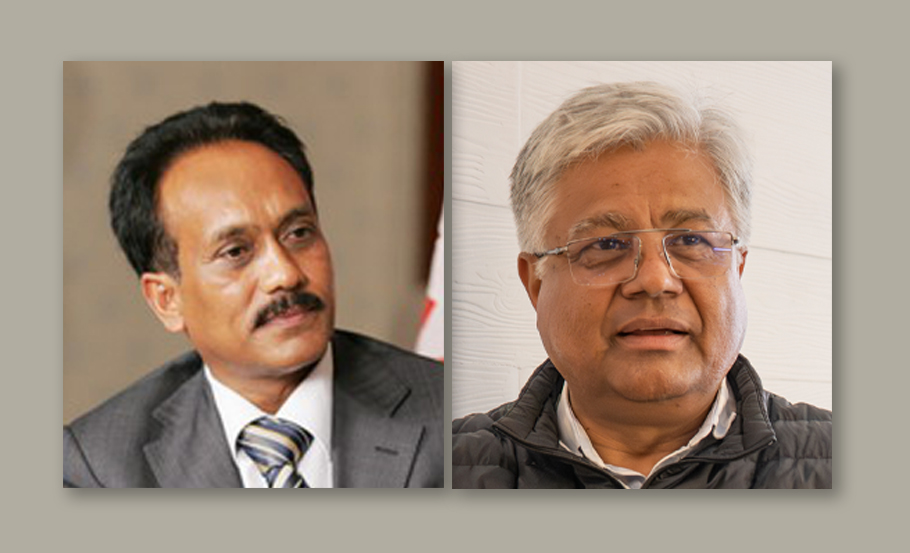
Former Nepali ambassador to China, Tanka Karki, and anthropologist Suresh Dhakal
Engaging in politics and running the state is by no means a light or casual matter. Only long-term patience, unwavering faith in the constitution, and an awakened civic consciousness can make a country prosperous.
Diplomat Shambhu Ram Simkhada compares Nepal’s recent political landscape to a theatre. Politics without policy, he says, turns into mere performance. Global politics itself is currently trapped in a vortex of uncertainty. When individuals from various professions transform themselves into politicians, the central question is whether they will truly excel at nation-building.
Simkhada says, “Extremism dominates global politics today. And in our country, to engage in politics, one needs neither education nor experience—just age is enough. Because the seriousness of politics was never understood, this is the condition our senior leaders have reached.”
For political change, politicians must possess both dedication and a burning urge to contribute. But once political change is achieved, good governance becomes paramount. In the past, failing to grasp this reality caused leaders who had built powerful images during movements to gradually fade away. The same problem persists today.
Simkhada explains, “Our leaders say, ‘We threw stones, took bullets, went to jail—therefore we deserve lifelong space in politics.’ But once in government, they showed no interest in building systems. That is why this situation emerged.”
In recent times, Nepali politics has become driven more by personal gain than by integrity. Professionals experienced extreme frustration when socially discredited individuals were appointed to influential state bodies, leading to incompetence and rampant exploitation of the state. This, according to leftist leader Tanka Karki, pushed many professionals toward politics.
Diplomat Shambhu Ram Simkhada compares Nepal’s recent political landscape to a theatre. Politics without policy, he says, turns into mere performance.
Karki says, “Recently, politics has been dominated by people who have neither political commitment nor subject-matter knowledge. As a result, professionals in various fields began to feel that they themselves were more competent than those in power—and that realization sparked their desire to enter politics.”
In Nepal’s context, entering politics also means acquiring social recognition. In social gatherings, political figures receive far more attention than even the most skilled administrators, doctors, engineers, athletes, or artists.
Because politics offers both recognition and economic benefits, people from all classes and professions are drawn toward it. A recent example is Bablu Gupta, who became a minister from the Gen Z movement. Before becoming a minister, few people even knew his name. As chairman of the “Hundred Group,” he gained respect during the COVID-19 period by distributing free meals. Once appointed Minister for Youth and Sports, he suddenly became a widely discussed figure. Now, leveraging that fame, he is contesting the election from Siraha–1.
The same path has been followed by media professional Jagadish Kharel, Kulman Ghising, and Mahabir Pun. Kharel is an RSP candidate from Lalitpur–2. He also served as the government spokesperson and had previously said his sole task was to conduct elections. Ghising is contesting from Kathmandu Constituency No. 3 under the Ujyalo Nepal Party, while Pun has filed his candidacy as an independent from Myagdi.
Observers view the decision of socially established individuals to abandon their professions and plunge into politics as a consequence of past political parties’ failure to establish basic political standards. Anthropologist Suresh Dhakal says, “Politics requires a specific kind of conduct, competence, and vision. But in Nepal, the idea took hold that anyone can enter politics even without these qualities. As a result, people devoid of ideology have also started entering politics.”
In recent times, Nepali politics has become intertwined with glamour and the business of personal gain. The media attention and prestige that accompany political entry have become major attractions.
“When politics becomes visionless, directionless, and ideologically hollow, glamour begins to pull people in,” Dhakal says.
Observers view the decision of socially established individuals to abandon their professions and plunge into politics as a consequence of past political parties’ failure to establish basic political standards.
Currently in Nepal, anyone who has accumulated social capital seems eager to convert that capital into political power. Dhakal sees this as the outcome of long-serving politicians’ failure to set credible standards.
He adds, “When leaders of established parties are asked to name exemplary leaders, they often mention figures from the past. They are unable to confidently claim that their own parties today have trustworthy leaders worthy of public admiration. This vacuum has made everyone feel that something can be done.”
Politics is widely perceived as easy in Nepal. There are no defined criteria for becoming a leader. In other professions, education, experience, and performance matter. In politics, none of these are essential.
Political analyst Saurav Raj Pant, who closely observes Nepal’s contemporary politics, says, “Here, all you need is to turn 25 and talk. No performance is required.”
After entering politics, one gains publicity and social prestige, opportunities to travel domestically and abroad, easy avenues to earn money, and access to free state facilities. These incentives have made almost everyone eager to join politics. Because of this wave and whim, the country today appears saturated with leaders.