Kathmandu
Monday, June 8, 2026





Home Minister Sudan Gurung resigned after asset disclosures sparked questions over wealth sources, business links, and financial transparency — turning a routine filing into a defining political test for the Balen Shah-led government's commitment to accountability
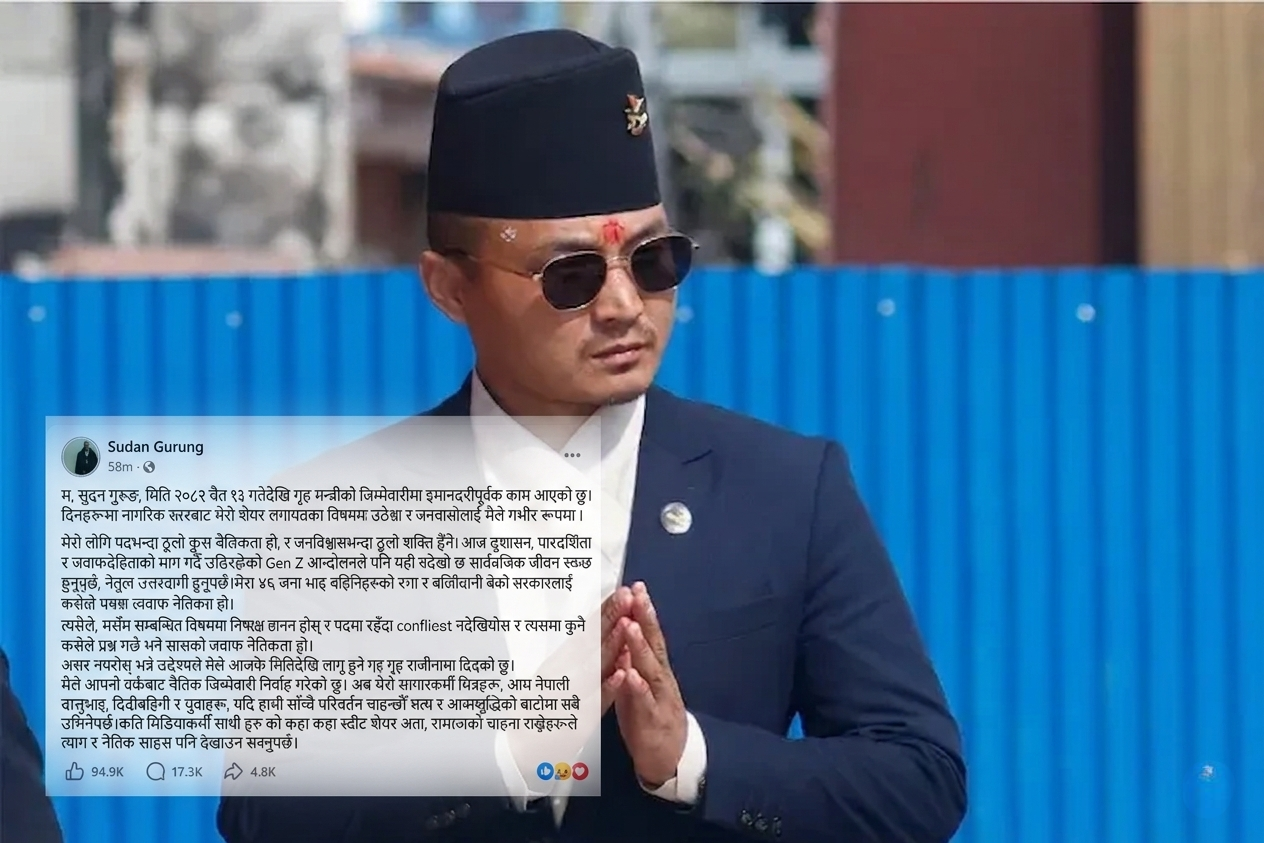
KATHMANDU: Nepal’s Home Minister Sudan Gurung has resigned from office following a meeting with Prime Minister Balen Shah, bringing to a head a weeks-long controversy that began with the publication of ministers’ asset declarations on April 12, 2026, and rapidly escalated into one of the most serious political crises of the new government.
His resignation marks the culmination of intense public scrutiny, opposition demands, and mounting pressure from within his own party — all triggered after his declared assets circulated online and prompted criticism, speculation, and demands for clarification about how his wealth was accumulated.
In response to that initial backlash, Gurung had issued a lengthy Facebook post defending his position, arguing that being born poor is not an individual fault, while accumulating wealth without corruption before entering public office is not a crime. He contrasted this with illicit enrichment while in government, ending his post with a call for public awareness. However, the statement failed to calm the controversy — instead intensifying it.
Critics, including civil society voices and youth activists, publicly challenged his remarks, with some questioning the transparency of his financial disclosures and others demanding proof of the legitimacy of his assets. The debate quickly escalated into a broader political issue, spilling across social media platforms.
The controversy was further fuelled by allegations — so far unproven — of links between Gurung and certain business figures, including individuals previously investigated or criticised in financial misconduct cases. These claims circulated widely in public discourse, further deepening scrutiny of the minister, though no formal findings were confirmed.
As pressure mounted, Gurung deleted his initial Facebook post. The controversy continued to grow, with calls for accountability becoming more vocal.
Opposition parties, including the Nepali Congress and CPN (UML), had demanded his resignation and called for an impartial investigation into the matter.
Some civil society leaders and political activists echoed these demands, arguing that the issue raised questions of ethical conduct in public office.
The government, meanwhile, remained largely silent. No official clarification was issued by the Prime Minister’s Office, despite speculation that the prime minister had sought explanations privately. The matter was also not addressed in detail during a recent cabinet meeting, where ministers moved quickly through routine announcements without reference to the controversy.
The episode became a test of political accountability in Nepal’s post-crisis transitional government — and ultimately claimed its most prominent minister.
Who is Sudan Gurung?
Sudan Gurung, born July 18, 1987, in Gorkha, served as Nepal’s 23rd Home Minister — a position he assumed on March 27, 2026, in the cabinet of Prime Minister Balen Shah, and from which he has now resigned.
A former event manager and nightclub DJ who turned disaster-relief volunteer after the 2015 earthquake, Gurung founded the NGO Hami Nepal and emerged as a central organiser of Nepal’s 2025 Gen Z protests, which brought down the KP Sharma Oli government.
Winning the Gorkha-1 constituency under the Rastriya Swatantra Party banner, his meteoric rise from street activist to the nation’s top law-enforcement post was shadowed by persistent questions over his wealth sources, business associations, and governing methods — questions that ultimately ended his tenure.
How did Sudan Gurung become famous?
Sudan Gurung’s rise was sudden, but not entirely accidental. Previously a little-known activist with a background in disaster relief and youth mobilisation, he became a central figure after Nepal’s Gen Z-led protests in September 2025 — transforming from one of little-known organiser to power broker as the movement escalated.
His visibility surged as demonstrations intensified following a controversial social media ban, tapping into wider public anger over corruption and elite privilege. Initially coordinating volunteers and logistics through his organisation Hami Nepal, Gurung quickly moved to the forefront, shaping both the narrative and direction of the protests. As unrest turned violent — culminating in the forced resignation of KP Sharma Oli — he was widely seen as the face of a generational revolt.

Sudan Gurung representing Hami Nepal
But Gurung’s influence extended beyond the streets. During the political vacuum that followed, he reportedly played a pivotal role in negotiations involving the presidency and the army, helping steer the transition towards an interim government formation. His support proved decisive in the appointment of Sushila Karki as interim prime minister — an outcome she publicly acknowledged, even describing him as an “elder son” for his role in her elevation.
That influence, however, came with controversy. A widely circulated Hami Nepal Facebook page video showed Gurung issuing an ultimatum to the president through military channels — demanding Karki’s swift appointment or warning of forcible removal of the president. The episode deepened concerns about the methods underpinning his rise, blurring the line between popular mobilisation and coercive politics.
Gurung’s trajectory — from nightclub DJ to protest leader and political insider — captured the volatility of moments when institutional authority collapses and new actors move quickly to fill the void. His resignation now raises the question of whether his time in office represented a durable shift in Nepal’s political order or merely the excesses of upheaval.
His rhetoric proved fluid after the Gen Z protests and the formation of the Sushila Karki-led interim government. At times he demanded the resignation of all political appointees and constitutional office-holders; at others, he softened or reversed course altogether.
Even after helping shape a new government, he turned into one of its sharpest critics — publicly targeting then Home Minister Om Prakash Aryal and figures he had earlier supported. Aryal claimed to have been misled by legal advisers during the dissolution of parliament, underscoring an uneasy relationship with both the constitution and the institutions Gurung came to inhabit.
In the end, pragmatism — or opportunism — prevailed. Gurung forged alliances with figures such as Rabi Lamichhane and Shah, while briefly attempting to draw Kulman Ghising into a broader new political realignment. That arrangement, however, proved fragile, fracturing within weeks.
Gurung’s trajectory encapsulates a familiar pattern in insurgent politics: the speed with which anti-establishment energy is absorbed into the establishment itself — and the contradictions that follow.
His ascent from protest figure to power broker was as swift as it was contradictory. Riding a wave of youth support, he broke the traditional strongholds of the Nepali Congress and the Nepali Communist Party to win from Gorkha-1, before securing the powerful Home Ministry in a cabinet led by Balen Shah — a position he has now vacated.
Yet his political rise was marked by shifting positions: once adamant he would never enter politics or accept elections without fulfilling Gen Z demands, he soon found himself at the heart of the very system he had denounced.
What made Sudan Gurung’s working style so controversial?
Sudan Gurung was the most visible — and arguably the most disruptive — figure in the cabinet led by Balen Shah. Eschewing the trappings of office, he preferred to drive himself, appear unannounced at public sites, and broadcast his interventions on social media. To supporters, this projected urgency and accessibility. To critics, it signalled a governing style driven more by spectacle than structure.
The unease ran wide. Security agencies, civil servants and even colleagues within his own party raised concerns that he frequently strayed beyond his formal mandate. From intervening in infrastructure matters outside his ministry to publicly pressuring officials and security chiefs, his approach was seen as blurring institutional lines. What was presented as hands-on oversight was, in the eyes of detractors, an erosion of procedure and hierarchy.
The criticism was not merely bureaucratic. Analysts argued that such hyper-visibility risked substituting process with populism — prioritising quick, visible action over coordination and due diligence. The result was a style that appeared energetic but inconsistent, at times veering between that of an enforcer, an administrator and a political campaigner. Even within the ruling Rastriya Swatantra Party, senior figures signalled that ministers must remain within clearly defined boundaries.
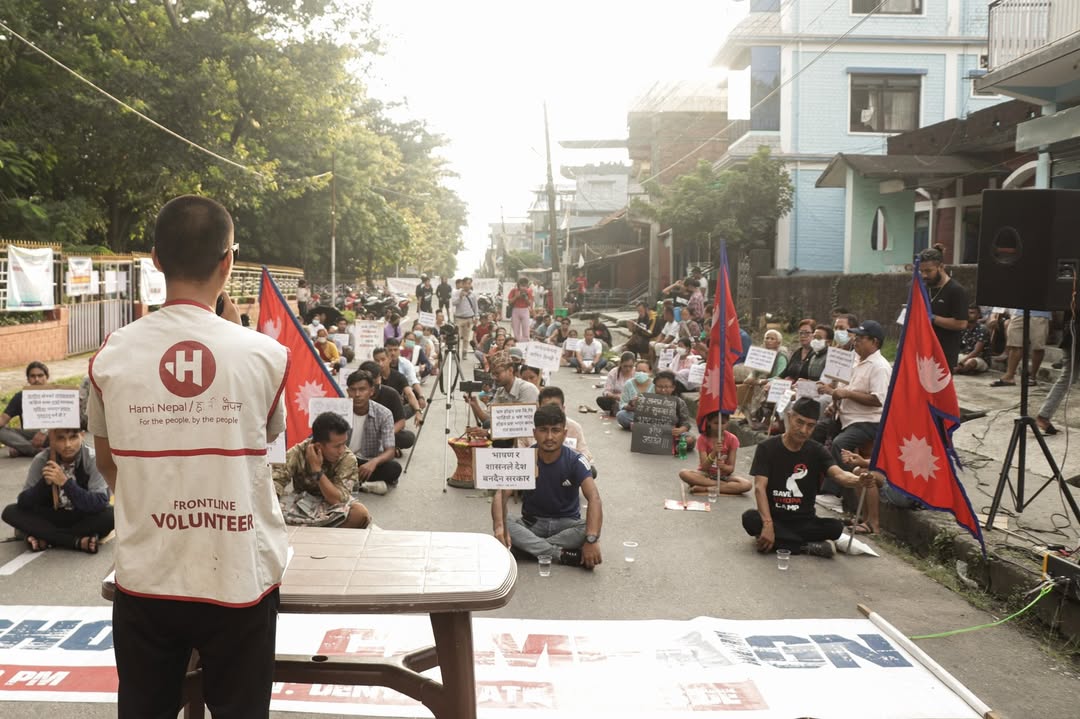
Sudan Gurung addressing followers of Hami Nepal on the streets. Photo courtesy: Hami Nepal
His weeks in office were defined by urgency, spectacle and a willingness to test institutional limits. Gurung moved swiftly from rhetoric to action, overseeing a series of high-profile arrests — including former Prime Minister KP Sharma Oli — surprise inspections and highly public interventions that projected decisiveness, even as they unsettled the machinery of government.
His appointment to the powerful Home Ministry initially drew scepticism. A past marked by erratic public messaging and anti-establishment rhetoric had raised doubts about his suitability for a role requiring restraint and procedural discipline. In office, he sought to counter that perception not with caution, but with constant activity.
The approach divided opinion. Supporters pointed to the reopening of long-stalled investigations and a visible attempt to assert accountability. Critics, however, saw a pattern of overreach: political leadership drifting into operational policing, late-night directives and public displays of authority that blurred the line between oversight and interference. Senior security officials privately warned that such involvement risked undermining the perceived neutrality of investigations.
Nowhere was this tension clearer than in the handling of high-profile arrests. The insistence on rapid action — reportedly pushed through direct pressure on law-enforcement leadership — delivered immediate results, but exposed weaknesses in process. Several cases subsequently faltered in court, with releases attributed to procedural lapses and insufficient preparation, raising questions about whether speed came at the expense of due diligence.
Beyond security, the pattern repeated itself in administrative decisions: unannounced visits, unconventional use of state facilities, and a governing style that prioritised visibility over coordination.
In his few weeks in office, he set a tone that was energetic and disruptive, but also erratic — winning public attention while straining bureaucratic coherence. That momentum could not, in the end, be sustained against the weight of financial scrutiny.
Why the Home Ministry matters and why it is so difficult to run
In Nepal’s state architecture, the Ministry of Home Affairs is less a ministry than the system’s operating core. It oversees internal security, law enforcement and administrative control across all 77 districts, commanding institutions such as the Nepal Police, the Armed Police Force Nepal and the National Investigation Department.
Its mandate extends far beyond policing: from citizenship and immigration to disaster management, border control and the regulation of public order. Few ministries combine such breadth with such immediacy in the exercise of state power.
That reach explains its political centrality. In coalition governments, control of the home ministry is often the most contested prize — not only for its formal authority but for its informal influence over appointments, investigations and the tempo of governance itself.
It is the arena where law, politics and coercive power intersect most visibly. For any ruling party, holding the ministry can shape both stability and narrative: who is investigated, how protests are handled and how the state responds in moments of crisis.
Yet this concentration of authority brings structural fragility. Nepal’s security institutions have long been dogged by allegations of political interference, where transfers, promotions and operational decisions can be influenced as much by connections as by competence.
Legal frameworks governing these bodies — particularly policing and paramilitary forces — are widely seen as outdated, limiting professionalism and adaptability. Intelligence capacity remains uneven, with the National Investigation Department often criticised for failing to anticipate or effectively respond to major developments.
The challenges are not merely institutional but geographic and political. Nepal’s open border, especially with India, creates persistent vulnerabilities — from terrorism, smuggling and organised crime to informal cross-border movement that complicates enforcement. Federalism has added another layer of complexity. Nearly a decade after its adoption, key laws governing the division of authority between federal and provincial governments — particularly in policing and civil administration — remain incomplete, producing friction, duplication and gaps in accountability.
Public trust is another fault line. High-profile scandals, ranging from corruption cases to allegations of selective enforcement, have weakened confidence in law-enforcement agencies. Restoring credibility requires not only action, but visible adherence to due process — something easier promised than delivered in a highly politicised environment.
The Ministry of Home Affairs in Nepal is powerful because it sits at the intersection of Nepal’s most sensitive functions: security, administration and political control. But that same position makes it uniquely difficult to manage. It demands not only authority, but restraint; not only visibility, but discipline. In Nepal, where institutions are still evolving and political pressures remain intense, those qualities are often in short supply.
What triggered the asset and wealth controversy?
The controversy ignited after Nepal’s routine ministerial asset declarations were published on the Office of the Prime Minister and Council of Ministers website on April 12, 2026.
Gurung declared shares worth over Rs 43.1 million, 89 tola of gold, 6 kilograms of silver, more than Rs 6.1 million in cash, a vehicle, and land in Dhankuta — along with additional properties registered in his father’s and grandfather’s names in Chitwan and Gorkha respectively. For someone who had presented himself publicly as a poor boy who made good through civic activism, these figures prompted immediate public scrutiny.
The debate intensified days later when investigative media reports revealed that Gurung had founder-level shareholdings in two microinsurance companies, Star Micro Insurance Company Limited and Liberty Micro Life Insurance, neither of which had yet gone through an IPO. Crucially, these specific shareholdings were not separately identified in his asset declaration, even though Gurung later argued they were included within a broader “shares in securities markets” category. The omission, regardless of legal technicalities, struck critics as a transparency failure.
How did Gurung respond to the allegations?
Gurung’s response unfolded across several social media posts and public statements, shifting in tone as pressure mounted. In his initial reaction to questions about his wealth declaration, he posted on Instagram that “being born poor is not your fault, but dying poor is” — and argued that accumulating wealth without corruption before entering public office is “not a sin.” The statement drew immediate ridicule from civil society figures and even some Gen Z activists who had championed his rise. Gurung subsequently deleted the post.
When the microinsurance share controversy emerged specifically, he issued a longer clarification arguing that he had declared “more than Rs 20 million in stock market investments” in his asset filing, and that Star Micro and Liberty Micro fell within that broad category. He stated that purchasing shares is not a crime and does not constitute a business partnership.
In a later Facebook post, he went further, characterising media reports as “sponsored rumours” orchestrated by corrupt actors frightened by his anti-corruption crackdowns — and pledging that his actions would “not stop.” He submitted a written clarification to Prime Minister Balen Shah on April 21, 2026, following a formal request from the PM’s office. Those responses ultimately proved insufficient to forestall his resignation.
What do the banking records reveal about Gurung’s financial transactions?
Banking records obtained through investigative agencies paint a picture of large, often unexplained financial flows through Gurung’s personal and organisational accounts. His personal account at Nabil Bank received approximately Rs 6 million in May–June 2021, described as COVID-19 relief donations gathered from various sources — yet collected into his personal account rather than Hami Nepal’s institutional account. Of this, Rs 2.59 million was later transferred to Hami Nepal’s Nabil Bank account, raising questions about the initial routing through a personal account.
More pointed are transactions from May 2023: on a single day — May 9, 2023 — Rs 2.25 million was deposited by a person named Chang Agarwal and Rs 3.75 million by Bijay Kumar Shrestha. The very next day, Rs 2.5 million each went from Gurung’s personal account into Liberty Micro Life Insurance and Star Micro Insurance — the same companies at the centre of the controversy.
Investigators claimed the Agarwal-Shrestha deposits were the funding source for those share purchases. Additionally, funds linked to individuals who have repeatedly come under regulatory scrutiny for high-value cash transactions were found deposited in Gurung’s accounts.
The records further showed transactions between his personal account and his three companies — Adventure Villa, Lagom Premium Apartment, and Hope Holdings — raising questions about the separation between personal and business finances.
What businesses did Sudan Gurung own, and what do we know about them?
In his official asset declaration, Gurung disclosed investments in three private companies. The first is Adventure Villa Pvt Ltd, incorporated in June 2016, which held an account at Laxmi Sunrise Bank where roughly Rs 11.3 million was deposited between August 2017 and August 2021, after which transactions ceased.
The second is Lagom Premium Apartment Pvt Ltd, which operated what appears to be a premium accommodation business. Its Prabhu Bank account recorded transactions exceeding Rs 5.7 million between January and September 2025, though only a small fraction came through booking platforms — the bulk from individual depositors whose identities could not be fully established. The company also acquired a vehicle partly through cash and partly through a loan.
The third is Hope Holdings Pvt Ltd, which received Rs 11.9 million into its Prabhu Bank account between December 2024 and May 2025, and conducted multiple transfers to and from both Lagom Apartment and Gurung’s personal accounts. Notably, the non-profit Hami Nepal deposited approximately Rs 450,000 into Hope Holdings on at least one occasion — a transaction whose purpose was never explained. The declared value of his investments in these three companies combined exceeds Rs 15.7 million.
How did the Gen Z protests of 2025 propel Gurung into politics?
The Gen Z protests that erupted in Nepal in September 2025 were catalysed by a mix of economic frustration — youth unemployment, nepotism, endemic corruption — and a specific trigger: a controversial government move to restrict social media platforms.
What began as youth-led street protests rapidly escalated after clashes with security forces left protesters dead and injured. The movement, unprecedented in its pace and reach, ultimately forced the resignation of then Prime Minister KP Sharma Oli and the dissolution of parliament, paving the way for an interim government under former Chief Justice Sushila Karki.
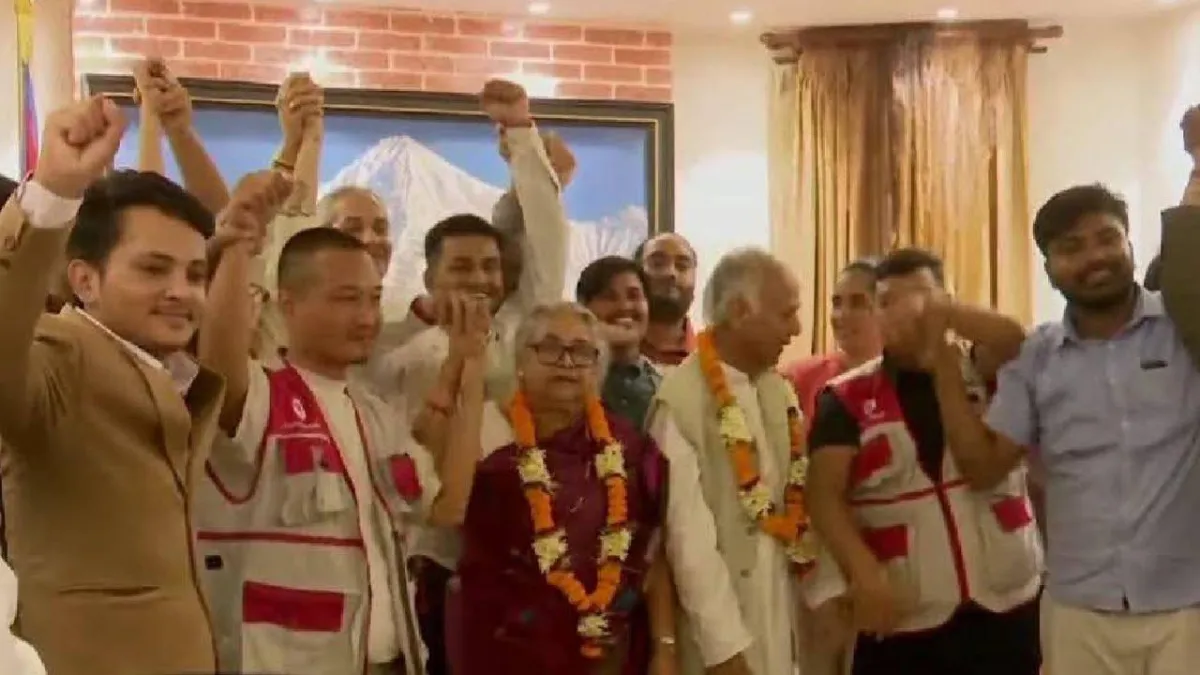
Screenshot of former interim prime minister Sushila Karki with supporters after taking oath of office
Gurung, already known in Kathmandu’s civil society circles through Hami Nepal, positioned himself as a key coordinator of the movement — though his precise role remained contested. He denied being an organiser in the early days, yet subsequent evidence including administrative permissions sought for protest gatherings bore his fingerprints.
As the movement succeeded, he emerged as a power broker in transition negotiations, gaining access to the presidency and army leadership in discussions that shaped the political outcome. That transitional influence became the springboard for his formal entry into politics: he joined the Rastriya Swatantra Party in January 2026, won the Gorkha-1 constituency with 29,896 votes in the subsequent general election, and was appointed Home Minister within weeks — a position he has now resigned from.
What is the Hami Nepal organisation and what role did it play in Gurung’s rise?
Hami Nepal is a non-profit organisation founded and chaired by Sudan Gurung. It was established in the aftermath of the 2015 earthquake, when Gurung — then working as an event manager and DJ — began coordinating volunteer relief efforts through social media, eventually leading a group of around a thousand volunteers to manage aid distribution to rural areas.
The organisation became the vehicle through which Gurung built his public profile over the following decade, carrying out disaster response, community work, and youth mobilisation. It maintained accounts at both Himalayan Bank and Nabil Bank.
The organisation’s financial records, however, attracted scrutiny. Banking documents showed that Hami Nepal’s Himalayan Bank account was closed in February 2025, before which Rs 5.348 million had been deposited; Rs 3.094 million of that was transferred to its Nabil Bank account. The Nabil account received Rs 22.8 million between July 2021 and August 2025 — significant sums for a small civic organisation.
A transfer from Gurung’s personal account of Rs 2.59 million into Hami Nepal’s account, following an initial collection of COVID relief funds into his personal account, raised questions about the management of public donations.
Additionally, the Shankar Group — whose executives are embroiled in a broader money laundering investigation — was identified as one of Hami Nepal’s largest corporate donors.
What is Gurung’s background before politics?
Sudan Gurung was born on July 18, 1987, in Gorkha — a district in the hilly midlands of Nepal — and grew up in Chitwan with his grandparents. He passed his School Leaving Certificate examinations but enrolled in A-Levels without completing the qualification, leaving formal education without a degree.
Before civic activism consumed his life, he worked as an event manager and nightclub DJ in Kathmandu — a biography that, while unconventional for a future home minister, reflected the capital’s emerging private entertainment economy in the 2000s and early 2010s.
The 2015 earthquake changed his trajectory. When a child died in his arms during the disaster — an account he has shared publicly — he pivoted entirely toward humanitarian work. Using social media with unusual effectiveness for the era, he mobilised large numbers of volunteers and coordinated relief logistics at Bir Hospital and in affected rural areas. This work gave him both a cause and a following.
Over the following decade he built Hami Nepal into a recognised civic organisation, cultivated a public persona as an anti-corruption champion, and developed the network of contacts — within youth movements, business circles, and eventually political parties — that would fuel his rapid ascent. His declared religious position is non-conventional: he promotes what he describes as the “religion of humanity.”
What did the political opposition say about Gurung?
The opposition response was swift and vocal. The Nepali Congress issued a formal press statement through spokesperson Devaraj Chalise calling for an independent, evidence-based investigation and demanding that Gurung resign pending the outcome — arguing that a minister under active public scrutiny should not simultaneously oversee the country’s law-enforcement architecture.
The CPN-UML, the other major opposition bloc and the party of former Prime Minister KP Sharma Oli — whom Gurung himself ordered arrested — was similarly aggressive, demanding his resignation and calling on the government to immediately form a high-level investigative mechanism.
Student protesters took the agitation to Singha Durbar, staging a demonstration demanding his immediate resignation; four were detained during the protest. Civil society leaders added weight to the calls, arguing that once serious questions are raised about a minister’s integrity, stepping aside is the appropriate course for a government that came to power on a platform of clean governance.
How did Gurung’s own party, the Rastriya Swatantra Party, react?
The RSP’s reaction was characterised by public restraint and private unease — a tension that reflected the party’s difficult position. The RSP rode to government on the back of the Gen Z movement and a promise of clean, transparent governance.
It had just weeks earlier removed Labour Minister Deepak Kumar Sah from cabinet — without first seeking his clarification — after his wife was found to have been kept on the Health Insurance Board, a conflict-of-interest violation. That precedent made silence over more serious allegations against Gurung politically untenable for party members.
Multiple RSP lawmakers, central committee members, and party office-bearers demanded an investigation. Newly appointed Party General Secretary Bhupadev Shah acknowledged publicly that the party was “studying the issues” but confirmed no formal clarification had yet been sought from Gurung. The RSP’s disciplinary commission was reported to be preparing to question him.
Most significantly, Prime Minister Balen Shah — who had insisted specifically on Gurung’s appointment as Home Minister over the objections of RSP chair Rabi Lamichhane — formally sought a written clarification from Gurung on April 21, 2026. That process ultimately led to the meeting at which Gurung tendered his resignation.
What were Gurung’s most headline-grabbing actions in his first weeks as minister?
Sudan Gurung’s first days in the Home Ministry were defined by a level of visible personal intervention that Nepal’s bureaucratic culture found startling. On the very evening of his appointment, March 27, 2026, he directed the Inspector General of Nepal Police to immediately arrest former Prime Minister KP Sharma Oli and former Home Minister Ramesh Lekhak.

Former Home Minister Ramesh Lekhak (left), former Prime Minister KP Sharma Oli (right)
When police leadership hesitated — citing procedural requirements — Gurung drove himself to Nepal Police Headquarters in Naxal and reportedly told senior officers he would remain there until the arrests were carried out. The Ministry of Law and Justice’s secretary was summoned at midnight for legal consultation. Both Oli and Lekhak were arrested the following morning; Gurung posted “Aayo Gorkhali” on Facebook.
Beyond the high-profile arrests, he conducted unannounced visits to police stations and administrative offices, issued operational directives via social media, and moved into a residential building in Pulchowk that had previously been reserved exclusively for Supreme Court justices — without notifying the judiciary.
The Supreme Court’s Chief Registrar publicly stated that no formal information had been provided to the court. A former justice criticised the move as incompatible with the constitutional separation of powers.
Several cases arising from the early wave of arrests subsequently faltered in court due to procedural inadequacies, raising concerns that speed had come at the cost of due process.
What questions remain unanswered about Gurung’s finances?
Despite multiple social media clarifications and a written response submitted to the Prime Minister’s office, several fundamental questions about Gurung’s finances remain unresolved even after his resignation.
The most pressing concerns the total source of his declared shareholdings worth over Rs 431 million — one of the largest asset portfolios in a cabinet that promised to represent a new, clean political generation. Gurung never provided a comprehensive account of how his wealth was built across the years between 2015 and 2025.
More specifically: the Rs 6 million deposited into his personal account in 2021 described as COVID relief — and subsequently partially transferred to Hami Nepal — sits awkwardly regardless of intent, because public donations were routed through a personal account before reaching the charitable organisation.
The identity and relationship of Chang Agarwal and Bijay Kumar Shrestha, who deposited Rs 6 million into his account the day before his share purchases, was not satisfactorily explained. Gurung claimed the money was a loan, and documents were produced showing a promissory note — but the records are incomplete and the business relationship between the parties remains opaque.
The repeated deposits from individuals under regulatory surveillance, and the financial flows between his personal account and his three companies, were also not addressed in any formal explanation.
How does this controversy fit into the broader story of Nepal’s post-protest political transition?
The Sudan Gurung wealth controversy is inseparable from the broader tensions of Nepal’s political transition following the September 2025 Gen Z uprising. The movement that unseated Oli drew its moral authority from a powerful set of demands: an end to corruption, transparent governance, accountability for elite misconduct, and a fresh political generation uncorrupted by the transactional habits of older parties.
Gurung himself embodied the movement’s promise most visibly — a young activist from outside the traditional political class who had mobilised thousands against the old order. His appointment to the Home Ministry was, for many supporters, the moment the uprising’s values were to be institutionalised.
The revelation that the very person who ordered the arrest of former prime ministers may himself have had financial entanglements with individuals under investigation for money laundering struck at the movement’s credibility at its core. His resignation, while removing him from office, does not by itself resolve those questions.
Political analysts warn that if the underlying questions about Gurung are not answered through credible institutional processes — rather than social media rebuttals — it risks not just his individual reputation but the broader government’s claim to represent a genuine departure from Nepal’s long history of elite impunity.
What is known about Gurung’s political shifts and ideological inconsistencies?
Sudan Gurung’s political trajectory was marked by striking reversals that critics described as opportunism and supporters preferred to frame as pragmatic adaptation. In the early phase of the protests, he insisted publicly that he had no organisational role. Once the movement succeeded, he positioned himself as its indispensable architect.
He initially demanded the resignation of all political appointees and constitutional office-holders — then moderated or reversed those demands as he built alliances with figures inside the establishment. He helped propel Sushila Karki into the prime ministership, then led protests demanding her resignation months later.
Even after entering politics through the RSP, his ideological compass shifted across multiple poles: at times sounding like a populist reformer committed to systemic change, at others operating as a political insider trading influence within existing networks. He won election while previously pledging he would never contest without Gen Z demands being met, then contested anyway.
Analysts describe his trajectory as a textbook illustration of how anti-establishment energy is rapidly absorbed into the very establishment it nominally opposes — and the contradictions that inevitably follow. His resignation adds a further chapter to that story.
What does the law say about ministerial asset disclosure in Nepal, and did Gurung follow it?
Nepal requires ministers to submit asset declarations to the Office of the Prime Minister and Council of Ministers. These declarations are intended to create public accountability by detailing all significant wealth — movable and immovable properties, shareholdings, cash holdings, vehicles, gold, silver, and liabilities.
The legal debate around Gurung’s declaration centred on classification rather than outright non-disclosure. He argued that his shareholdings in Star Micro Insurance and Liberty Micro Life Insurance were captured within the broader declared category of “shares traded in the securities market,” valued at Rs 274.56 million.
Critics, however, noted that both companies had not yet conducted IPOs and their shares are not listed on Nepal’s stock exchange — meaning they are not technically traded on any securities market. Several legal experts argued that non-listed founder shares in private companies should be separately identified to allow meaningful public scrutiny.
At minimum, the ambiguity in the disclosure allowed information to remain effectively hidden until investigative reporting surfaced it — which, regardless of technical legal compliance, undermined the spirit of the transparency the declaration is designed to provide.
What happened when Prime Minister Balen Shah sought a written clarification from Gurung?
The intervention by Prime Minister Balen Shah marked the most concrete official signal that the controversy could not simply be managed through Gurung’s social media responses. On April 21, 2026, Shah formally requested a written explanation from Gurung covering the discrepancies between his public asset declaration and the subsequently reported shareholdings. Gurung’s office confirmed that a written clarification was submitted the same evening.
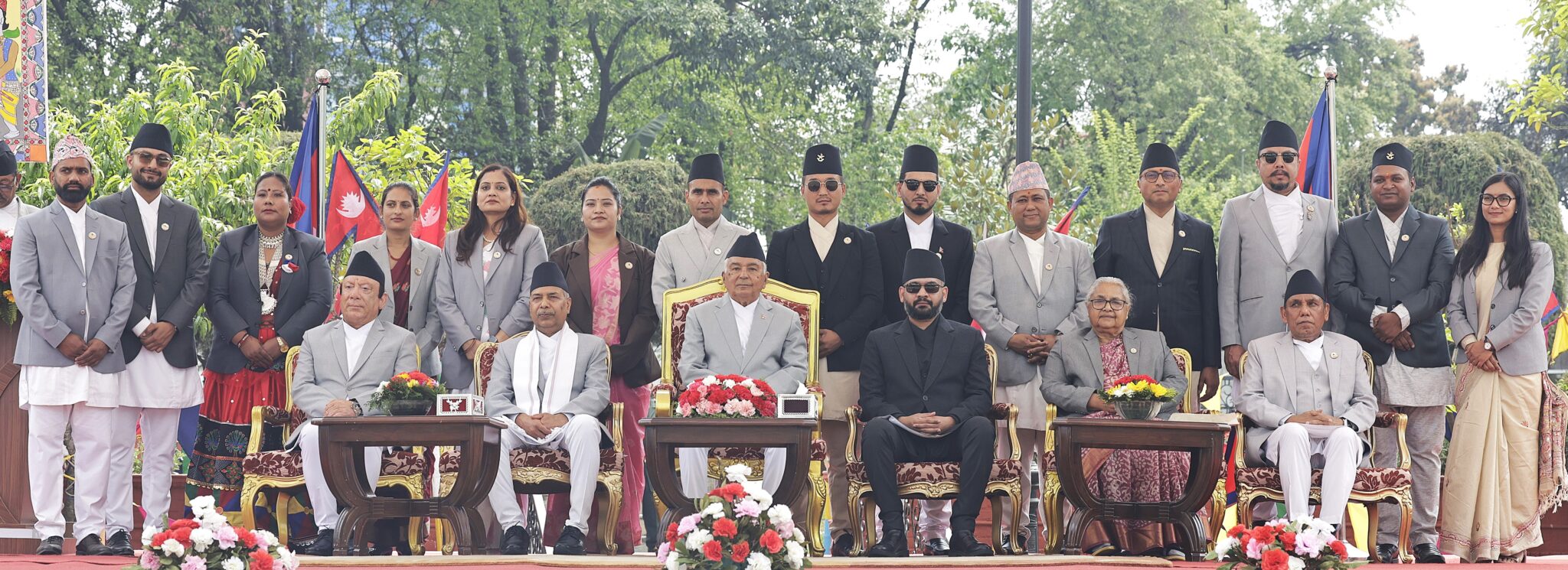
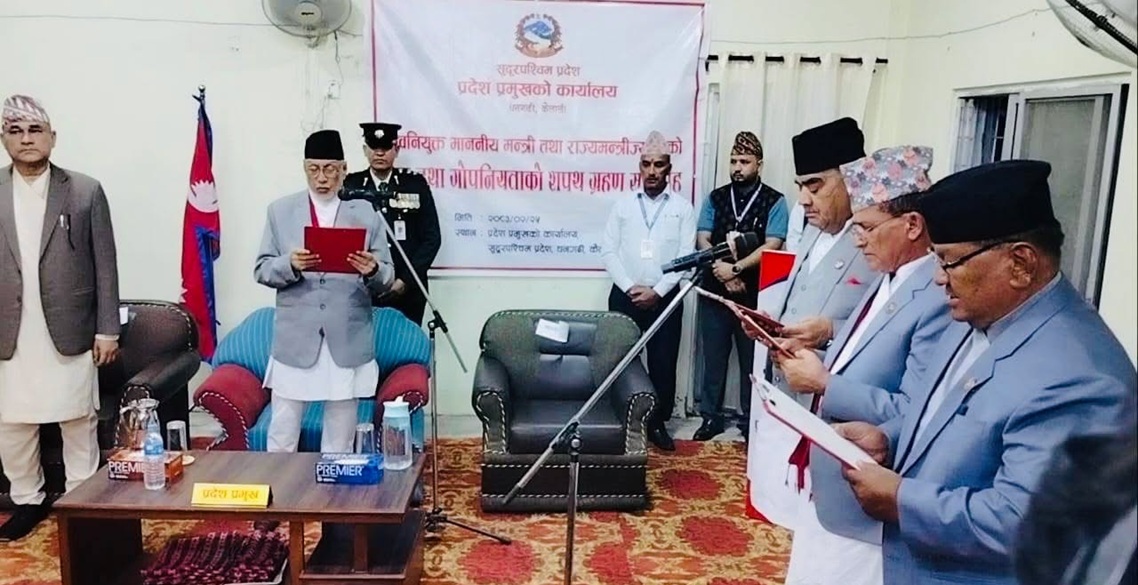
On March 27, after newly appointed Prime Minister Balen Shah took the oath of office and secrecy, he posed for a group photograph with the newly appointed ministers. Photo: Bikram Rai/Nepal News
The significance of Shah’s move was compounded by the fact that it was Shah himself who had insisted specifically on Gurung’s appointment to the Home Ministry, reportedly overriding objections from RSP chair Rabi Lamichhane during cabinet formation discussions. For the Prime Minister to formally demand a written explanation from his own handpicked Home Minister was a significant political moment — one that set in motion the sequence of events culminating in Gurung’s resignation.
The RSP’s disciplinary commission was simultaneously reported to be preparing its own inquiry process, creating parallel tracks of accountability pressure on the minister.
What is at stake for Nepal’s governance after Gurung’s resignation?
The stakes extend far beyond Sudan Gurung’s personal political future. Nepal’s new government came to power riding exceptional levels of public trust — trust built on the promise that a generation of clean, principled leaders would finally break the cycle of elite impunity that had characterised decades of multi-party governance.
Gurung’s resignation removes one source of pressure, but does not by itself answer the underlying questions his tenure raised. If the financial allegations against him are met only with his departure and no further institutional reckoning — as has happened repeatedly in Nepal’s political history — the signal sent is that the new government operates by the same rules as the old one: protect insiders, deflect accountability, manage perception.
Conversely, if institutional mechanisms — whether the RSP’s disciplinary commission, an independent investigation, or formal judicial review — are allowed to function and produce credible findings, it offers evidence that the transition has genuinely altered Nepal’s political culture.
Political scientists who study accountability in fragile democracies argue that the test of any post-protest government is not how it handles its enemies, but how it handles scrutiny of its own members.
For the Balen Shah-led government, Sudan Gurung was exactly that test. His resignation is one answer. Whether it is the right one — or a sufficient one — remains to be seen.