Kathmandu
Sunday, January 18, 2026





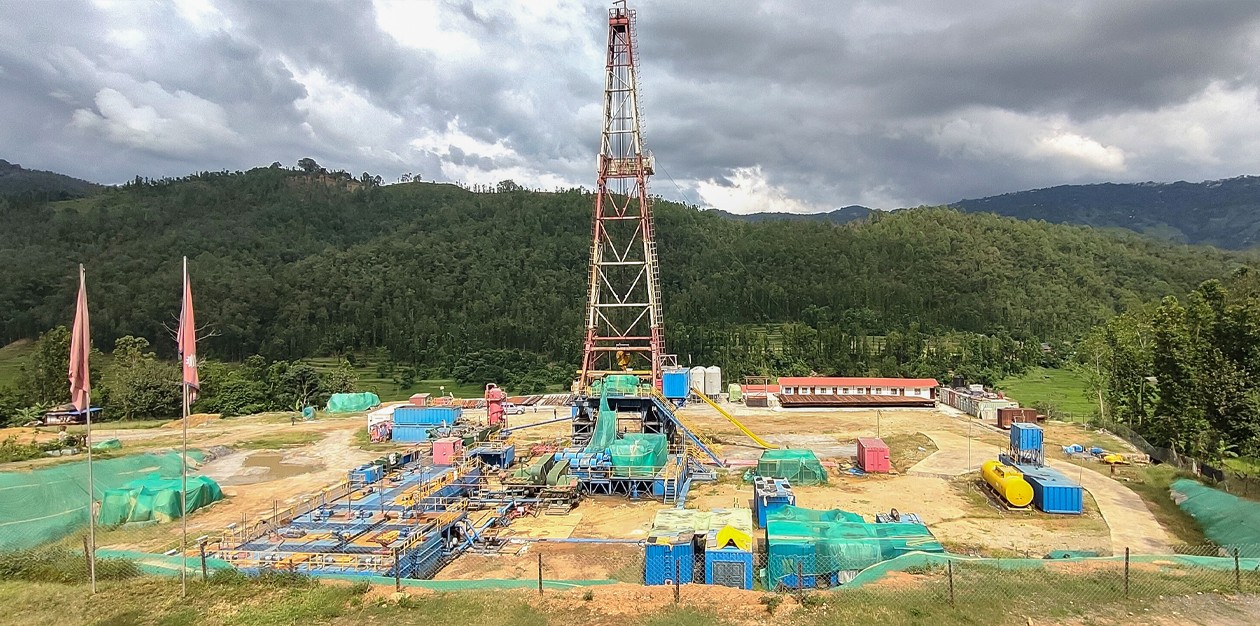
KATHMANDU: The thing we often hear is that the country’s governance runs on a hunch, and driven by publicity. I had a similar experience when I reached the Department of Mines in the last week June. The subject was simple: the natural gas reservoir found in Jaljale, located in ward 1 of Bhairabi Rural Municipality, Dailekh.
The existence of natural gas in Dailekh, where ‘fire always burns,’ has been a local legend since my childhood. I specifically recall the news claiming a massive 111 billion cubic meter gas reservoir existed there. When that huge figure was announced, the story spread like wildfire, instantly triggering a political race among leaders desperate to take credit for the discovery.
Although I heard that news a long time ago, the exploration works only started four years ago. Currently, I am involved in journalism myself. Therefore, I was interested in finding the reality of what I had heard since childhood. This desire is natural for me.
In this context, I had recently reported on the potential for methane gas production in Dailekh. At this point, I realized how far we are from the truth.
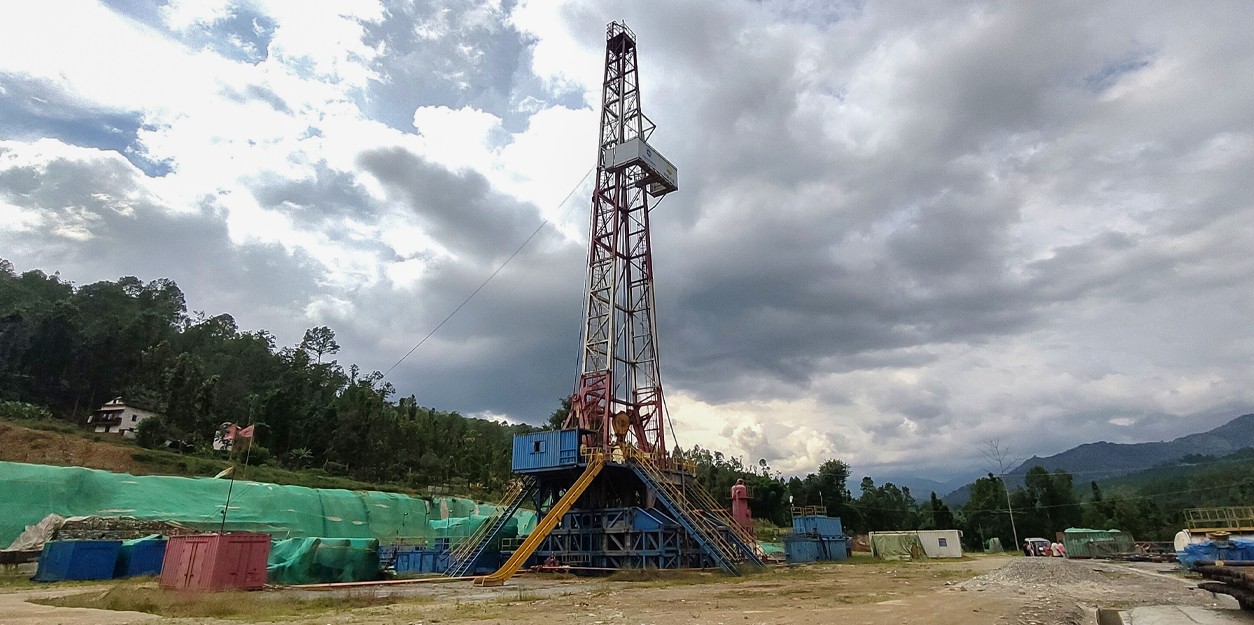
The Chinese company was supposed to start drilling before 2018. However, due to the COVID-19 pandemic, the work could not start at the scheduled time. The process began in 2021. The government had provided 45 ropani of land for the mine excavation. So far, 4,013 meters of drilling work have been completed, and the work of collecting samples is also ongoing. The detailed report remains to be released.
However, the former government publicized the matter in such a way that it seemed as if commercial natural gas production had been completed and had reached the market. The preliminary report received from China estimates that 111 billion cubic meters of methane may be stored in Jaljale. This is just an estimate. The final report has not been released.
But the then-Minister Damodar Bhandari gave a reckless speech at an event, claiming that the gas found in Dailekh would transform the country. What more did the media need after hearing his speech? Everyone rushed to the Department of Mines. Since a sitting minister had spoken, how could one not believe it?
The department’s attitude on this matter was similar. Department officials also started publicizing the matter haphazardly before the final report was released. The then-Director General of the department, Monika Jha, counter-questioned journalists: “How can we go back on a matter the Minister has already spoken about?”
However, there was no definite situation to say this without the detailed report coming out. Yet, the government persisted in its rhetoric. Furthermore, former Prime Minister KP Sharma Oli also endorsed the sitting minister’s baseless statement. He immediately summoned the officials of the ministry and the department and instructed them to start production within the same year.
For this, there was a legal provision that the department first had to propose the matter to the Chinese side. After this, it had to go through the Ministry of Finance’s International Economic Cooperation Coordination Division to the Ministry of Foreign Affairs to talk with China.
The file circulated for two months and reached the Ministry of Foreign Affairs, but there was no sign of its conclusion. Meanwhile, the government was intent on spreading rumors on Facebook and other social media platforms as if natural gas production had started.
This reporting revealed the extent to which Nepal’s system of governance is driven by whim. Learning this finally explained why the natural gas story I heard as a child has remained perpetually unfinished after all these years.
With the current political shift, there is now an optimistic projection that if the Dailekh initiative receives consistent government backing, it will be brought to a conclusion within a year.