Kathmandu
Sunday, February 8, 2026





As many as 99 percent of the families living in Jajarkot’s Junichande Rural Municipality are poor, while eight percent don’t have a toilet
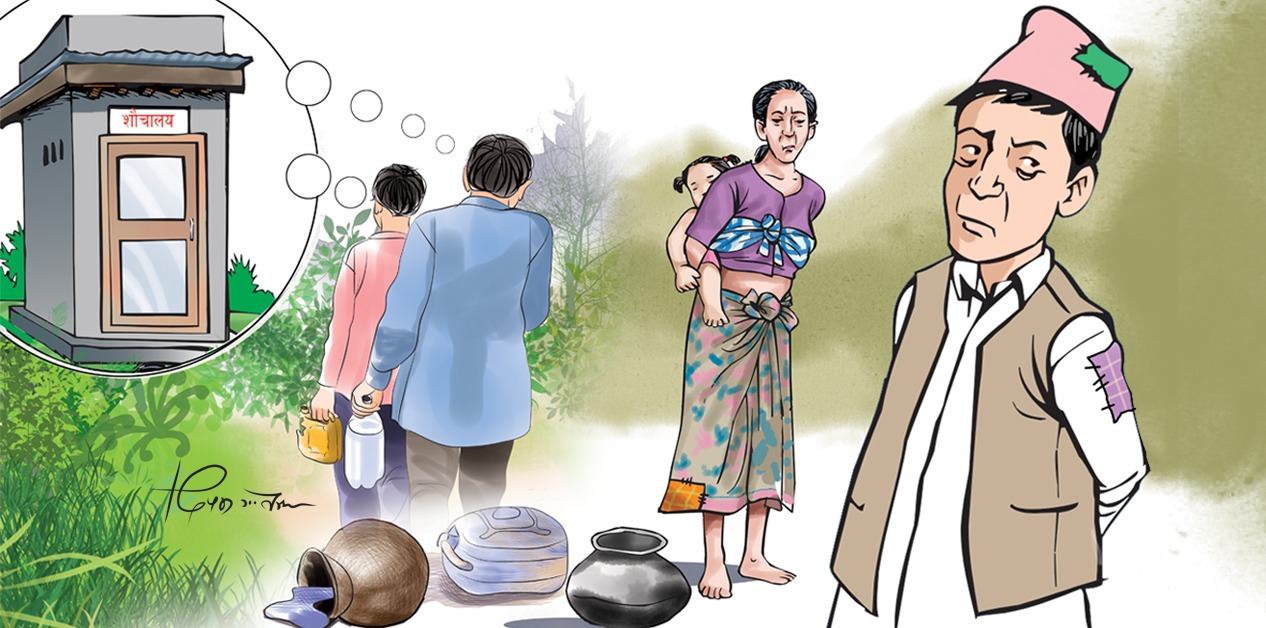
Even Karnali’s Jajarkot district, which has only a single electoral constituency, there is visible excitement ahead of the upcoming election. Nepali Congress candidate Khadka Bahadur BC, UML’s Dambar Singh, Nepal Communist Party’s Shakti Basnet, and Rastriya Swatantra Party’s Raghav Karki, among others, are actively campaigning to secure the result of the House of Representatives election scheduled for March 5 this year. However, so far, none of the candidates has placed Jajarkot’s extreme poverty as their top priority.
What is striking is that most candidates are not even aware of the fact that Junichande Rural Municipality of Jajarkot has been ranked as the poorest municipality in the country. As a result, their election promises and priorities remain far removed from the extreme poverty and deprivation of Junichande.
Electrification work is currently underway in Ward No. 2 of Junichande Rural Municipality. However, the participation of young people in installing electricity poles is minimal. Instead, people over the age of 50 are actively involved in the work. As most young people have migrated to India and Gulf countries for employment, even when small work opportunities exist in the ward, they are taken up mainly by older adults. Ward Chair Ram Bahadur BK says, “It’s not that there are no small employment opportunities in the village, but the income from such work is not sufficient to sustain a family. That’s why youth participation in local development work is low.”
The situation in Ward No. 1 is quite similar. Village youths have gone to Kalapahad and third countries in search of jobs, while some are working as laborers in urban areas within the country. Ward Chair Prem Bahadur Karki says, “The sporadic jobs available in the village cannot cover household expenses. In a place without trade, business, or markets, there are simply not enough employment opportunities.”
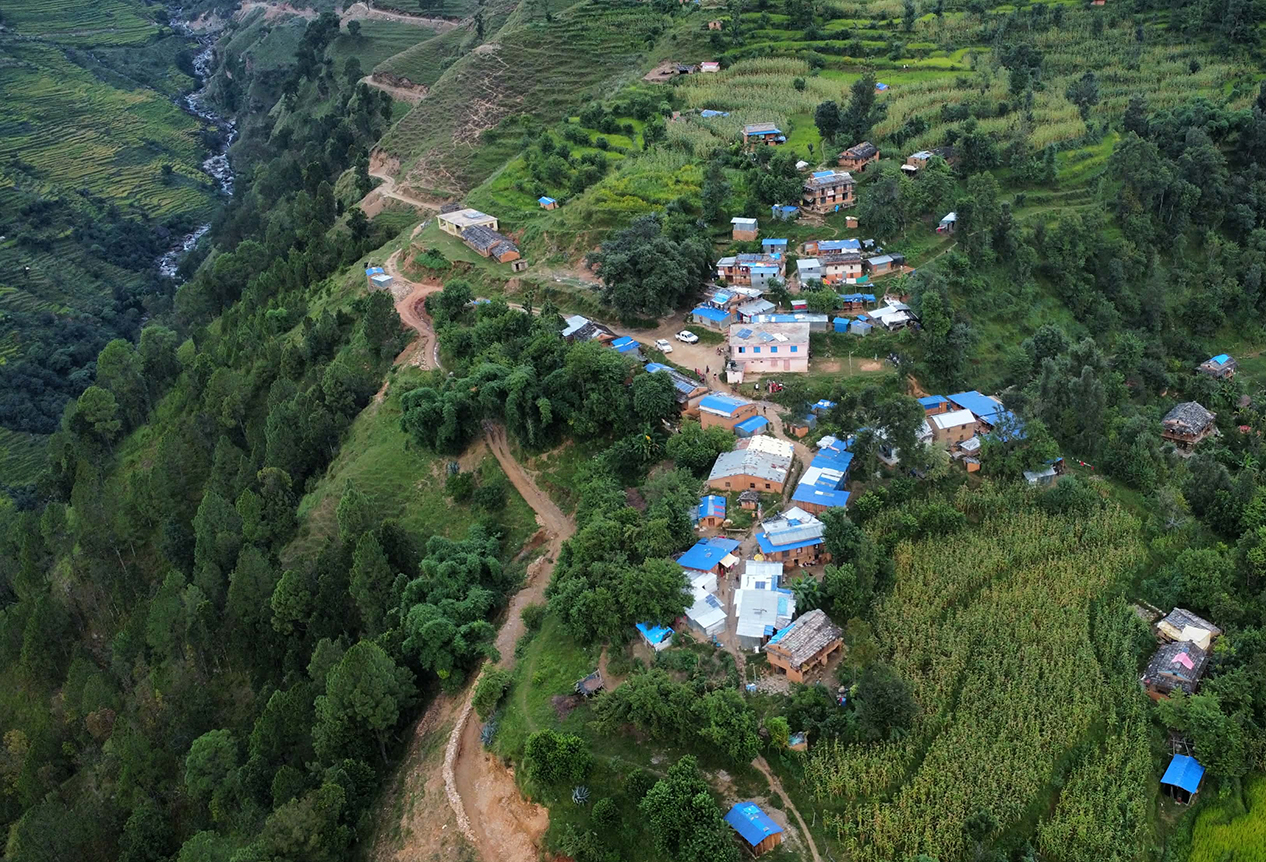
Parale village, the center of Junichande rural municipality. Photo courtesy: Govinda Shahi
These two scenes from Junichande Rural Municipality of Jajarkot serve as windows into understanding the area’s poverty, unemployment, and absence of youth. Alongside economic deprivation, unemployment, and youth migration, the municipality has now acquired another grim identity – it has become the poorest rural municipality in the country. Junichande’s poverty rate is nearly four times higher than the national average. While the national poverty rate stands at 20.27 percent, Junichande’s poverty rate has reached 77.9 percent. According to the “Small Area Estimation of Poverty, 2023 report” published by the National Statistics Office on 9 January 2026, this municipality has been identified as the poorest in the country. The overall poverty rate of Karnali Province, where this municipality is located, is 26.69 percent.
The main hardship of this impoverished municipality is unemployment. About 40.5 percent of its residents have migrated abroad for employment. Among those who migrate, people aged 15–24 dominate. Of those who have left their villages in search of work, 77.3 percent have gone to India. About 86 percent of the rural municipality’s population is engaged in agriculture, while only 10 percent are active in non-agricultural sectors.
The National Statistics Office prepares the ‘poverty small area estimation report’ based on population census, economic surveys, and living standards surveys of municipalities. According to this report, Junichande lags behind other rural municipalities in almost all poverty indicators. The National Census 2021 shows that only 0.1 percent of the population in this rural municipality is wealthy. Similarly, 98.7 percent of households are poor, and among them, 62.1 percent fall under the category of extreme poverty. Associate Professor of Economics at Mid-West University, Leeladhar Tiwari, says that residents of Junichande are suffering from extreme poverty because they have been deprived of both additional and essential state-provided services. He says, “The type and level of services provided by the state to citizens of any municipality determine the poverty rate. State neglect and indifference are the main causes of poverty here.”
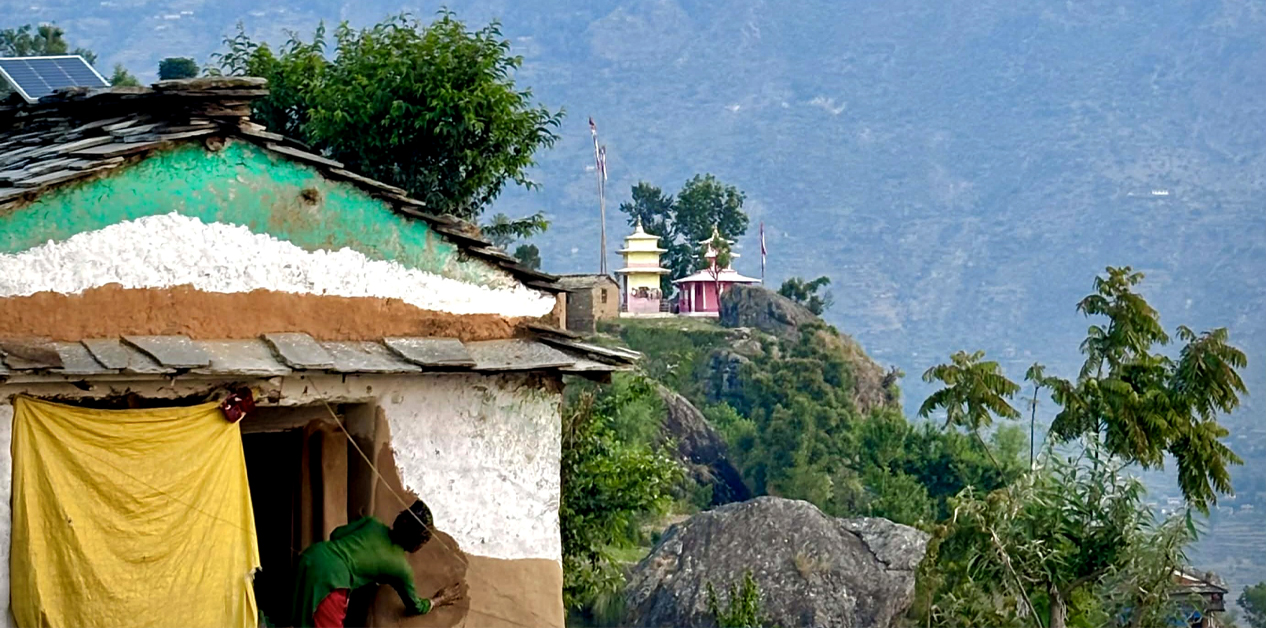
A house in Bhairav Tole village of Junichande Rural Municipality, with the Bhairav Temple in the background.
Photo courtesy: Govind Shahi.
Junichande Rural Municipality was formed by merging the former Majkot, Daha, Kortang, and Garkhakot Village Development Committees. The rural municipality has 11 wards. Of the total population residing in the municipality, 50.2 percent are women and 49.8 percent are men.
According to the National Census 2021, the number of people from the active age group engaged in economic activities in Junichande is low. Only 43 percent of the population is economically active for more than six months a year. About 15 percent are economically active for 3–6 months, and 18.4 percent for only three months. Meanwhile, 25 percent of the population is not engaged in any economic activity at all. Among those not engaged in economic activities, 49 percent are students, 26 percent are confined to household work, 7 percent are elderly, and 1.7 percent are persons with disabilities. Associate Professor Tiwari adds, “The fewer people are engaged in economic activities, the higher the poverty.”
Among those engaged in industrial activities, 86.4 percent of the population depends on agricultural industries. Due to a lack of agricultural modernization, most farmers in Jajarkot rely on traditional farming methods. After agriculture, 3.4 percent are engaged in trade, 2 percent in construction, and 1.9 percent in education. About 84.1 percent of the population considers agriculture as their main occupation, most of whom depend on traditional farming. Associate Professor Dr Tiwari says, “A large population here depends on agriculture. Therefore, the state must provide necessary irrigation, fertilizer, and seed facilities. To free this municipality from poverty, it must be transformed from traditional to modern agriculture. If agricultural products are given fair prices and proper market access, the poverty rate here will decline.”
High rate of child marriage
Junichande Rural Municipality, which is reeling under poverty, also has a high rate of child marriage. More than 45 percent of marriages here are child marriages. About 45.3 percent of men and 42 percent of women marry between the ages of 18–20. Meanwhile, 12.8 percent of men and 33.4 percent of women marry between the ages of 15–17. About 2 percent of men and 6.8 percent of women get married as early as 10–14 years of age.
The municipality also lags behind in education. According to national literacy standards, for any area, district, or country to be declared literate, 95 percent of the population aged 15–60 must be literate. However, according to the National Census 2021, Junichande’s literacy rate is limited to 73 percent. Among the total literate population, 77.8 percent are men and 68.3 percent are women. Ward No. 5 has the highest literacy rate (79.2 percent), while Ward No. 4 has the lowest (68.1 percent).
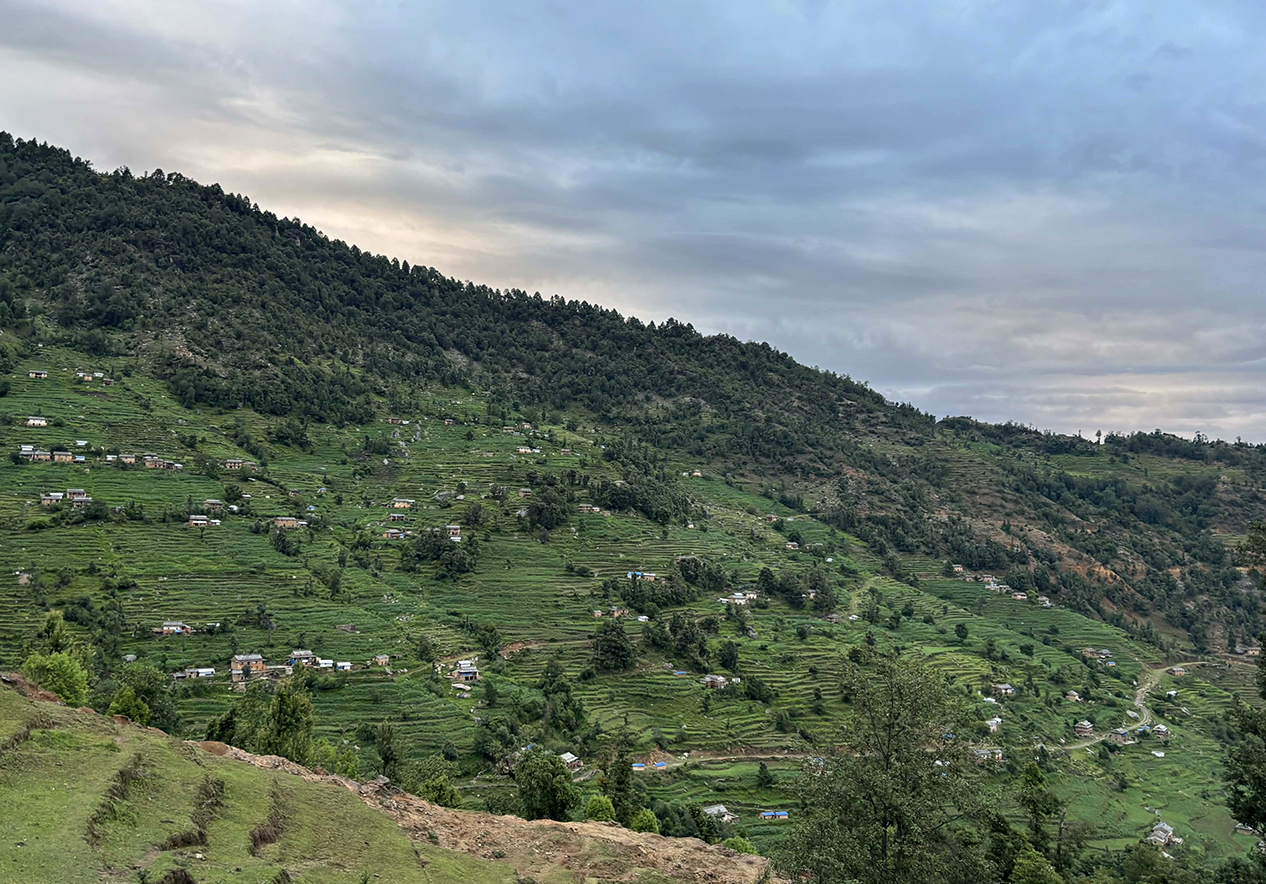
Desipata Tole in Junichande Rural Municipality, which borders Dailekh. Photo courtesy: Govinda Shahi
Student school attendance in the rural municipality stands at 80.8 percent – 81.7 percent for boys and 80 percent for girls. The school dropout rate is also high, with 15.3 percent leaving school annually. About 3.8 percent of school-age children do not attend school at all.
Out of the total households in Junichande Rural Municipality, 98.2 percent are built of stone and mud. Only 1.5 percent of families live in houses made of cement and stone. About 77.4 percent of families live in medium-quality houses, while only 20.4 percent live in well-constructed houses.
The poorest rural municipality in the country is also far behind in modern communication technology. No part of the municipality has access to high-quality fiber internet. Very few households receive internet services through wireless technology. Even in Ward No. 3, which houses the municipal center, only 6.9 percent of households have access to wireless internet. Among the remaining 10 wards, seven wards have an average of only 0.5 percent of households with wireless internet access, while three wards have no internet access at all.
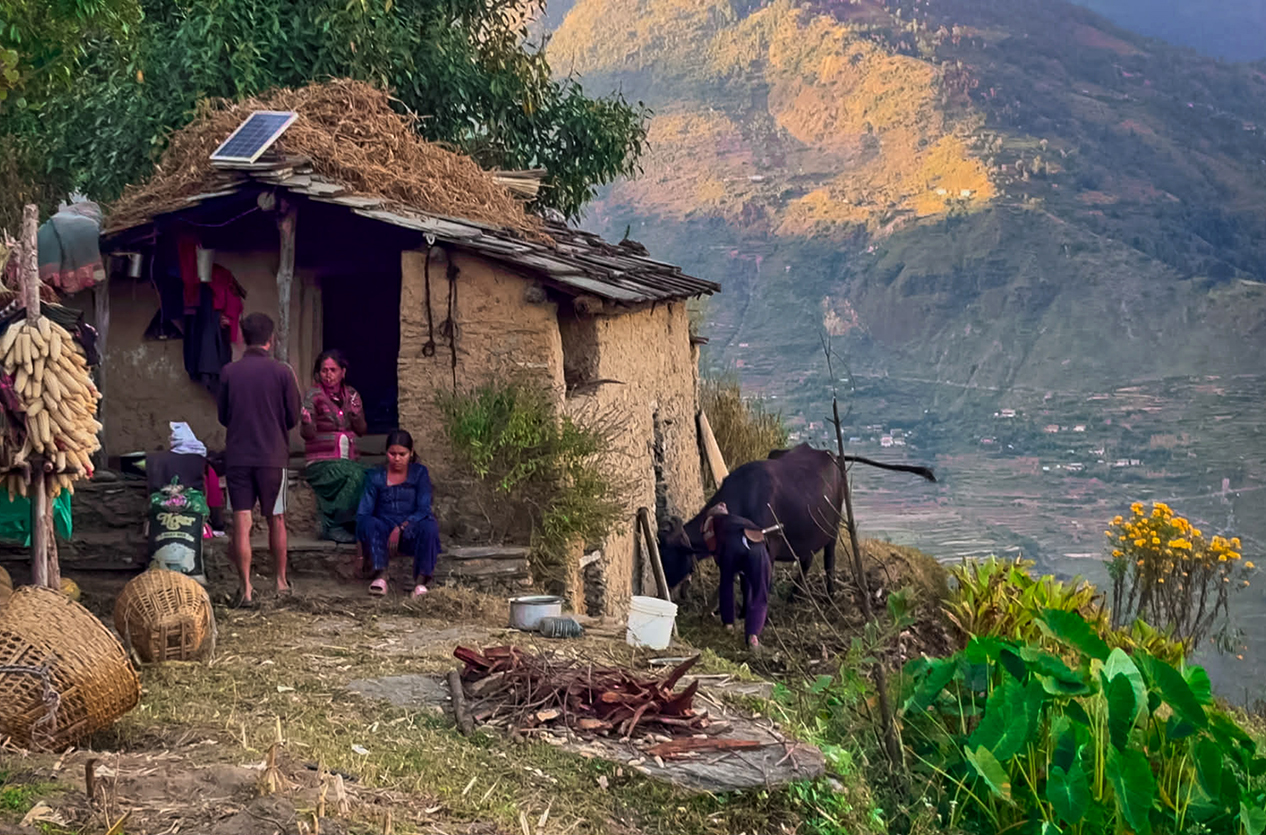
A house inhabited by locals in Junichande Rural Municipality. Photo courtesy: Govinda Shahi
To make matters worse, the national power transmission line has not reached the rural municipality. About 86 percent of households rely on solar energy. About 4.5 percent have access to micro-hydropower, though it is not regular. Around 0.3 percent of households still rely on kerosene or local sources for energy.
About 7.9 percent of households in the rural municipality still lack toilets. Similarly, 96 percent of households use firewood as cooking fuel. About 61.2 percent of households do not have adequate and easy access to drinking water.
From the perspective of internal revenue, the municipality is extremely weak. In the current fiscal year, the municipality’s total budget stands at Rs 595,976,000. This budget is entirely dependent on grants from the federal and provincial governments and revenue sharing. Of the total budget, the municipality’s estimated internal income is only Rs 2.5 million annually – just 0.01 percent of the total budget. Since federalism, the municipality’s annual internal income has never exceeded Rs 2.5 million. Former National Assembly member and federalism expert Khim Lal Devkota says it is necessary to examine whether municipalities with extremely weak internal income receive grants from the federal and provincial governments according to their needs. He says, “For municipalities like Junichande with extremely low income, it is essential to develop a performance-based index and allocate grants accordingly.”
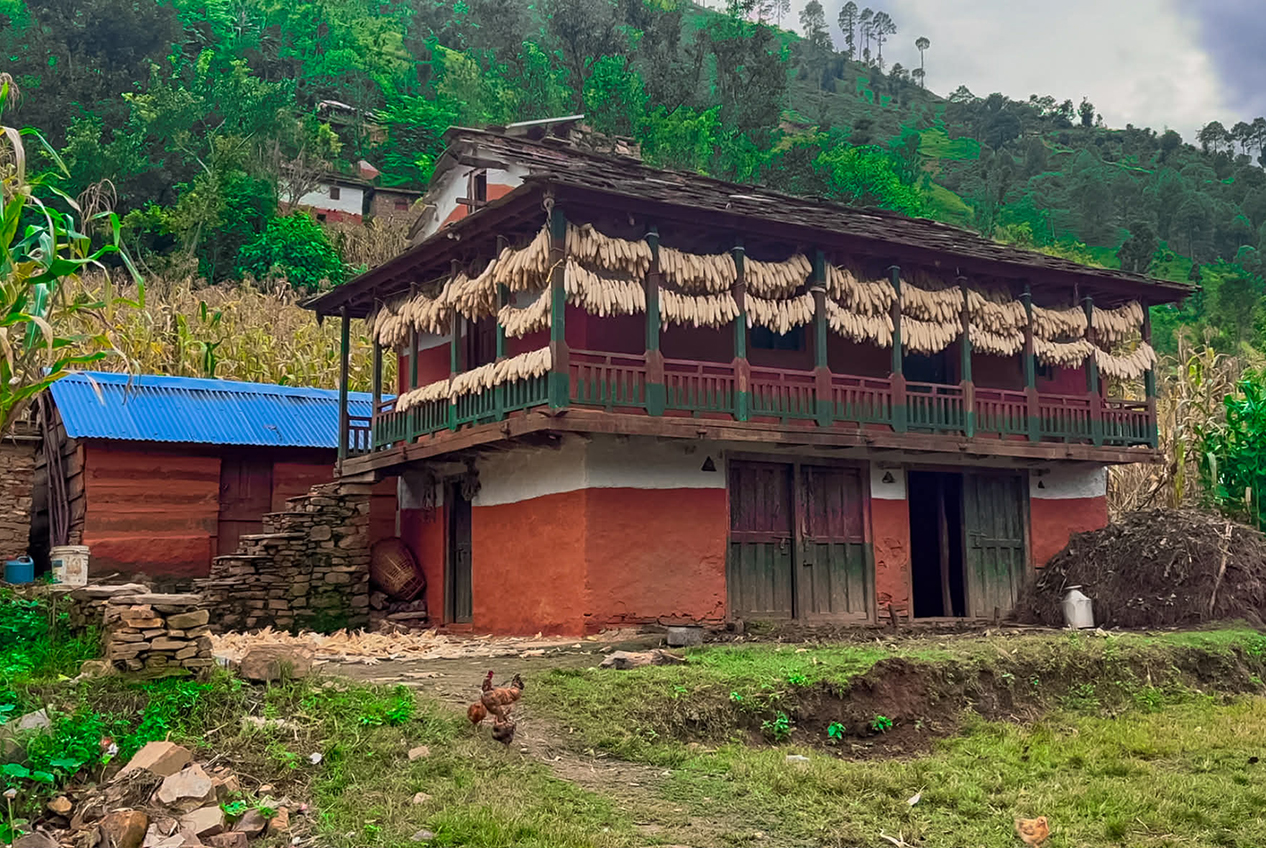
Dried corn at a local home in Junichande Rural Municipality. Photo courtesy: Govinda Shahi
After Junichande, the country’s second poorest rural municipality is also from Karnali Province. According to the ‘Small Area Estimation of Poverty, 2023 report’, 72.36 percent of the 14,277 residents of Soru Rural Municipality in Mugu district are poor.
Bhiu Singh Budha, head of the Department of Anthropology and Sociology at Mid-West University, also believes that extreme state neglect has made Junichande the poorest rural municipality in the country. He says the state must urgently mobilize adequate resources here. “To compensate for long-standing structural and social deprivation, the state must now act. This municipality should become the number one priority in the country’s development agenda,” he says.
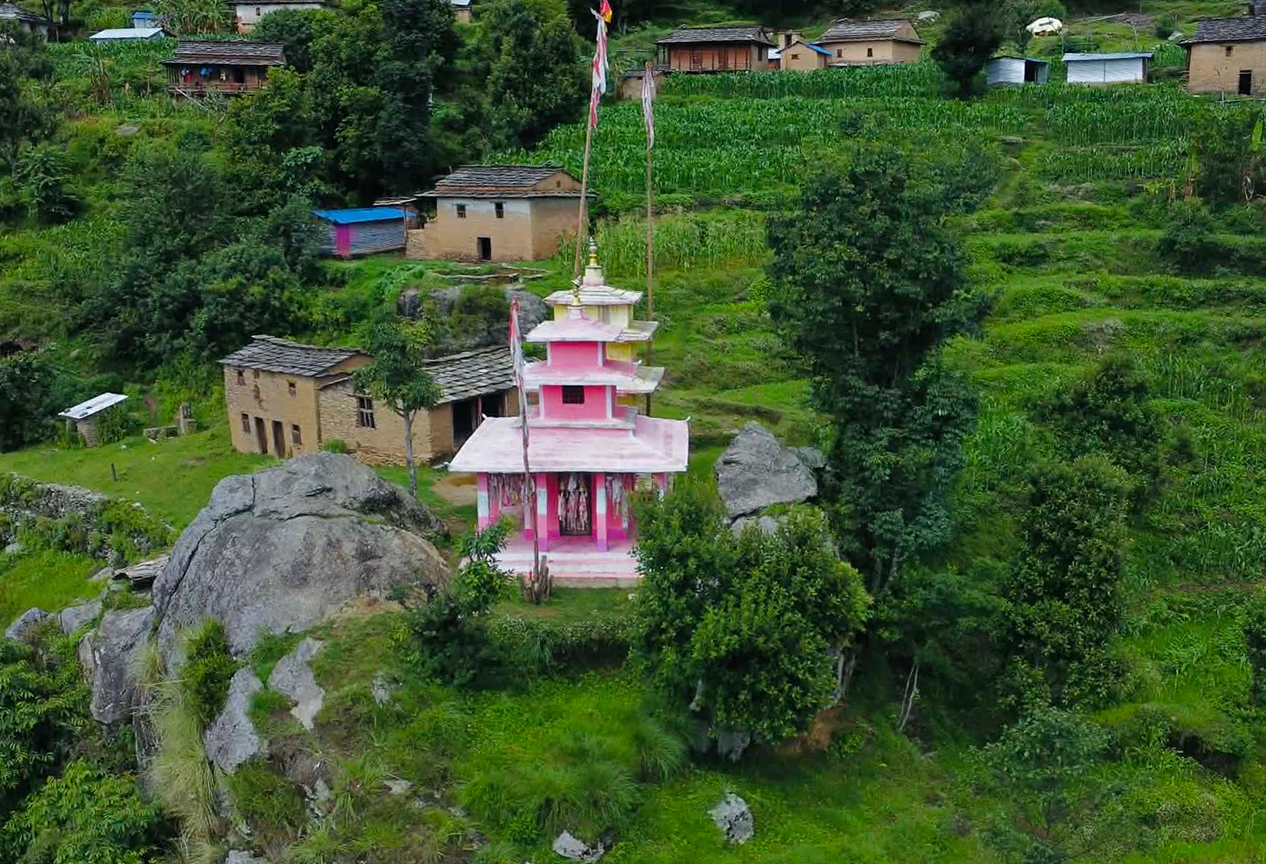
Bhairav Temple in Junichande Rural Municipality. Photo courtesy: Govinda Shahi
Junichande Rural Municipality Chair Bed Bahadur Shahi believes that improving the municipality’s economic condition requires prioritizing agriculture. “We have already been working on agricultural improvement, but now it needs even greater priority,” he says, adding, “We will launch employment-generation programs and work more actively with the province and the federation to reduce poverty.”