Kathmandu
Thursday, February 26, 2026





Elite boards control resources while emerging nations chase opportunity
KATHMANDU: Canada, which made its debut in the T20 World Cup two years ago, participated again in the World Cup currently being jointly organized by India and Sri Lanka.
When playing the World Cup for the first time in 2024, it competed against Test nations like India, Pakistan, and Ireland. At that time, Canada caused a sensation by defeating Ireland, a much stronger team than itself, by 12 runs. Since then, it has participated in 19 International T20s but has not had the good fortune of playing against a single big nation.
Two years later, it got the opportunity to play against Test nations like South Africa, New Zealand, and Afghanistan. However, it was badly defeated in all three matches. With this result, former captain Saad Bin Zafar managed to say, “In the World Cup, teams like us are sent directly to play against big competitors. Therefore, the game becomes weak.”
Nepal, which is included in the Asian region, sometimes gets the opportunity to play against strong nations like India and Pakistan in the Asia Cup. However, Canada does not seem to have found this opportunity either. In the name of regional competitions, it got the opportunity to play in the North American Cup that started last year, in which relatively weaker teams like the USA, Kenya, Ireland, Bermuda, and the Bahamas participated.
Because of this, for Associate nations, the T20 World Cup is starting to become merely an opportunity to play with established cricket countries rather than a place to give an excellent performance.
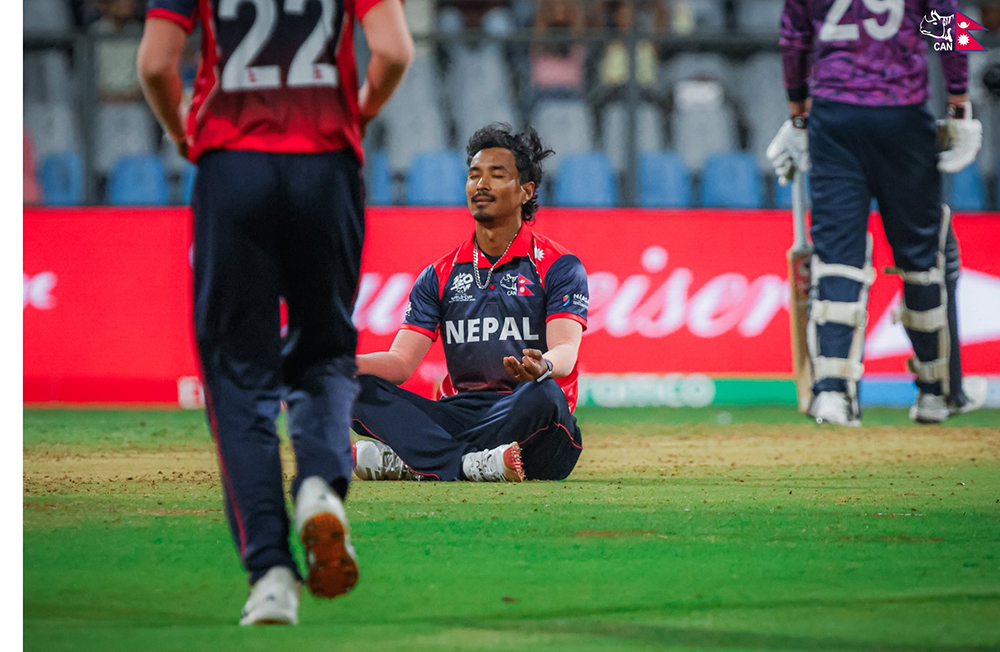
Cricketer Sompal Kami. Photo Courtesy: CAN
Small teams, big possibilities
The International Cricket Council (ICC) had provided the opportunity for five Associate nations to play the T20 World Cup until 2021. This number has been increased to eight from 2024.
In the meantime, small nations have given many shocks in the World Cup. The beginning of which was started by the Netherlands since the 2009 World Cup. It had caused a sensation in that World Cup by defeating England by four wickets. There were many who considered the result of that match a ‘coincidence’ at that time. However, in the 2014 World Cup, after securing first place in the Super-10 by defeating Zimbabwe and Ireland, it again defeated England by 45 runs. After this, those who considered the victory of the Netherlands a coincidence turned toward reality.
The Netherlands has shocked many strong nations in the World Cup. Furthermore, Afghanistan, when it was an associate nation in 2016, proved itself to be a strong nation in world cricket by defeating Zimbabwe by 59 runs.
Similarly, in 2021, Namibia caused a sensation by defeating Ireland, and Scotland by defeating Bangladesh. Hardly anyone might have forgotten the incident in the 2022 World Cup where Scotland defeated the two-time world champion West Indies by 42 runs. Moreover, in 2024, the USA touched a new achievement in the World Cup by defeating Pakistan in a Super Over. In this very World Cup, it became the second Associate nation to make a place in the Super-8.
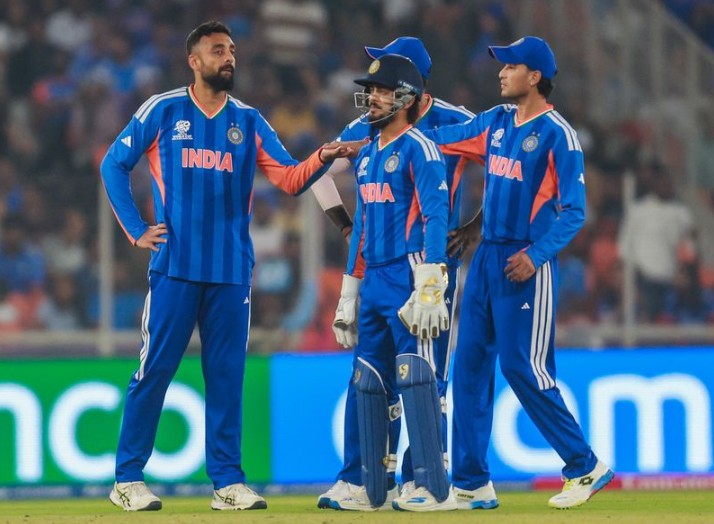
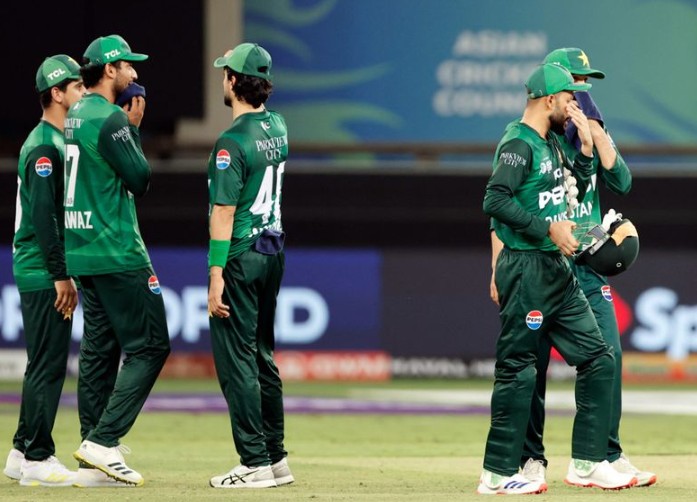
In the current edition of the World Cup, fewer big upsets were seen. However, the challenge from associate nations has appeared strong. Whether it be the situation where Pakistan had to wait until the final three balls for a win against the Netherlands or the moment the defending champion, India, had to struggle to defeat the USA, all these incidents signal that the power balance in T20 cricket is gradually changing.
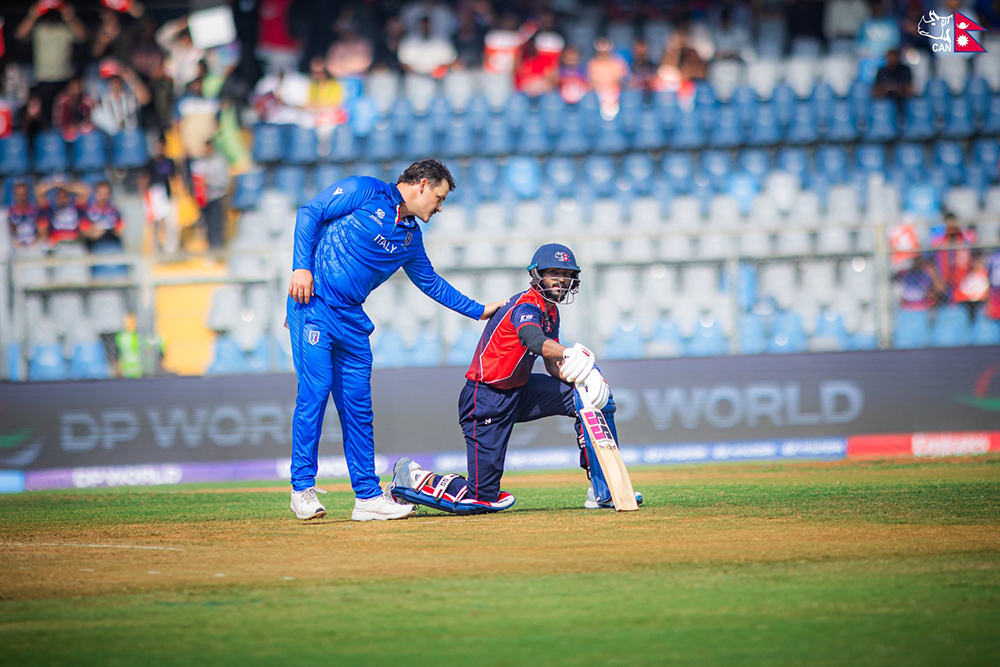
Nepal vs Italy. Photo Courtesy: ICC
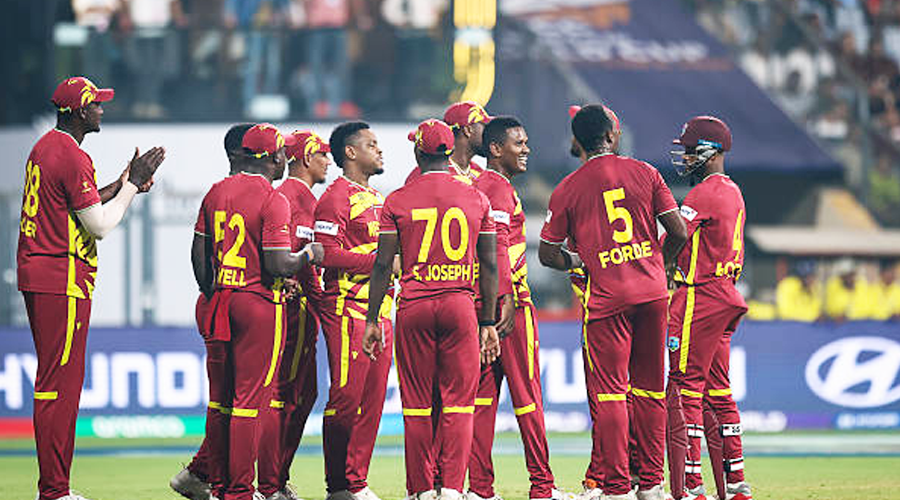
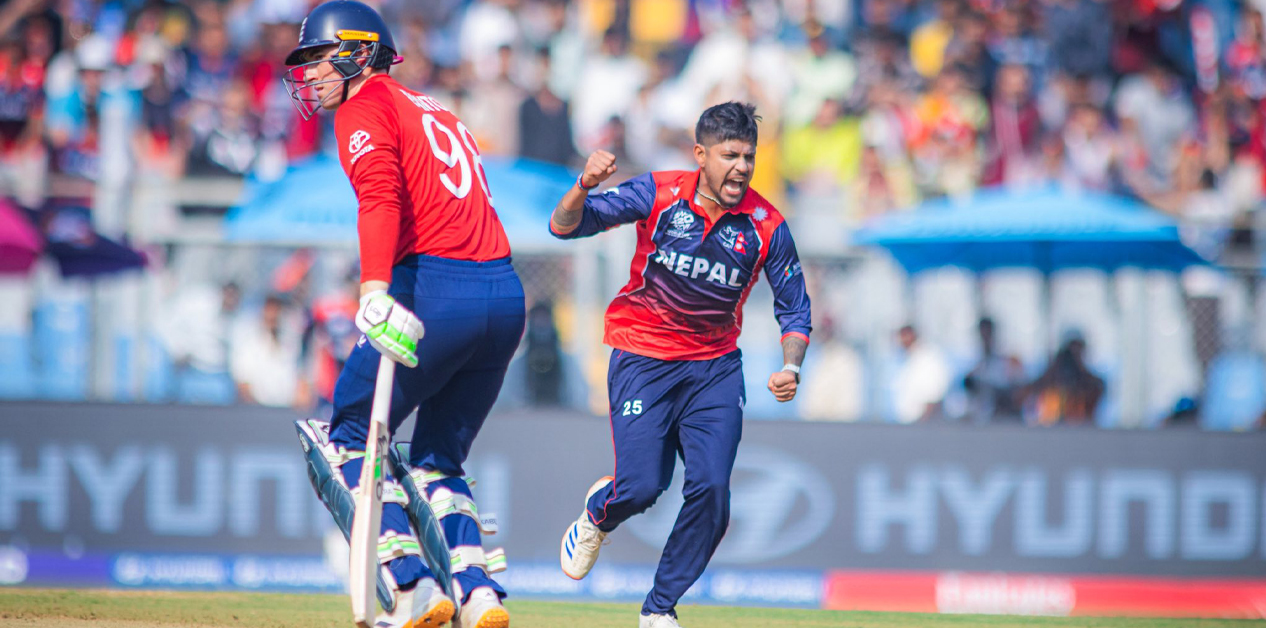
In Group ‘D’ of this very World Cup, Nepal suffered a 4-run defeat after pulling the two-time world champion England to the final ball. Italy, playing the World Cup for the first time, also gave a tough challenge to England, signaling a strong sign of possibility. The head coach of the West Indies, Daren Sammy, insists that the performance of Associate nations should not be considered a mere coincidence. He says that if associate nations get ‘exposure,’ they will do very well. “The Test-recognized teams should contribute to the cricket development of associate countries. In world cricket, not only Nepal but also emerging countries should be helped,” Sammy says.
Test nations do not let them move forward!
The accusation that test nations do not let associate nations move forward has been made from time to time. This is also confirmed by the ICC’s structure, economic distribution system, and competitive format.
The model regarding revenue sharing brought by the ICC in 2014 had invited controversy. According to that model, the ICC has allocated much more money to the Board of Control for Cricket in India (BCCI), England and Wales Cricket Board (ECB), and Cricket Australia (CA) than to other member nations.
Most of the income received from broadcasting rights is shared by these three boards, and a minimal budget falls into the hands of associate nations. The former president of the ICC, Ehsan Mani from Pakistan, used to say, “The structure of cricket is tilted only toward some powerful boards. This affects the development of small nations.”
In the context of competitive opportunities as well, Ehsan Mani’s statement appears similar. The ICC had reduced the situation where 14 nations participated in the 2015 One Day World Cup to 10 in 2019. Because of this, nations like Scotland and the Netherlands ended up being out of the World Cup. In the words of the then Scotland captain Kyle Coetzer, the 10-team World Cup has made cricket narrow.
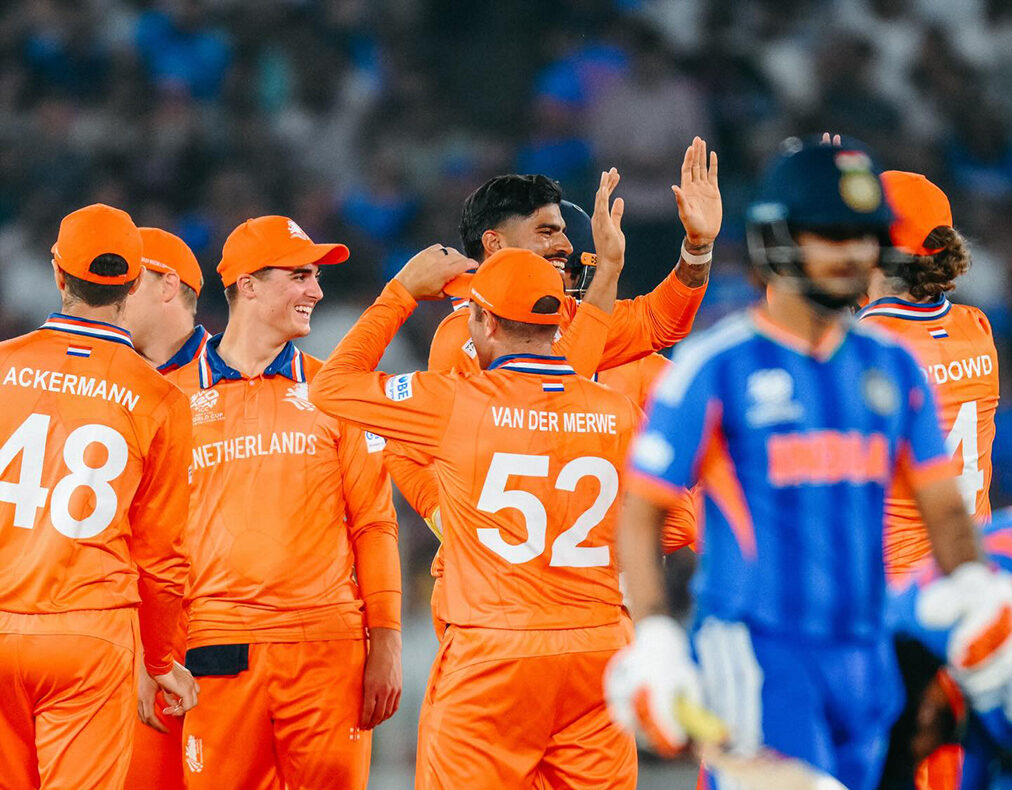
Players from Netherlands and India. Photo Courtesy: ICC
The decrease in the number of teams has not only affected the goal of global expansion of cricket but has also made it difficult for new nations to get Test status. Since Ireland and Afghanistan got Test status in 2017, no Associate nation has been able to move forward.
“Since the previous World Cup, we have faced no major opponents other than the West Indies. This has restricted our progress and made it difficult to bridge the gap to the elite level,” says Nepali captain Rohit Paudel.
Football is considered a more popular sport than cricket. However, Argentina, which is in second place in the FIFA rankings, played a friendly match last year against Puerto Rico, which was in 156th place. In the case of cricket, if the Asia Cup is considered an exception, India played at least 35 T20 matches from 2024 to 2026. However, no associate nations were included in this.
The former captain of Nepal, Uttam Karmacharya, says that because the economic benefit is lower when playing with associate nations, strong nations have refused to play regular series.
“This is affecting not only the game but also the infrastructure development of associate nations,” Karmacharya added.
While the ICC is not paying attention to this, strong nations are becoming even stronger economically, and associate nations like us (Nepal) are becoming weaker. Will the ICC pay attention to this in time?