Kathmandu
Friday, February 27, 2026





Air pollution neither allows tourists to reach destinations on time nor gives them a chance to enjoy the views
KATHMANDU: Every foreign tourist that mountaineer Sharmila Waiba meets shares the same complaint: Kathmandu’s air pollution has made them ‘sick’. Waiba, who also runs a café and restaurant, spends her free time showing foreign visitors around. On 31 December 2025, she took tourists from Chile around Thamel and its surroundings for the whole day.
“They were extremely excited by the geography and culture here,” Waiba recalled, “but when it was time to part in the evening, they said, ‘Your city has terrible air pollution. It made us sick.’”
According to Waiba, it is not only the Chilean tourists but also many other foreigners visiting Nepal who complain about the smoke, dust, and pollution in Kathmandu.
“They come to Nepal with the idea that a Himalayan country must be clean and pristine,” she said. “But the moment they land at the airport and head to their hotels, they see old vehicles racing recklessly, spewing thick smoke, and they are instantly disheartened. After suffering from pollution, they feel like they should not have stayed in Kathmandu at all.”
According to the Department of Environment, air pollution in Kathmandu becomes far worse in winter than in other seasons. From mid-November to March, the air remains stagnant, rainfall is low, and dryness increases, causing smoke, dust, and pollutants to accumulate in the atmosphere. As black smoke, dense haze, and smog intensify, weather conditions deteriorate, affecting air traffic and tourists’ travel plans.
A study titled “Impact of Winter Haze and Fog on the Aviation Sector”, published on ResearchGate a year ago, notes that thick smog and fog over Tribhuvan International Airport significantly reduce visibility, disrupting regular flights. The study analyzed 46 years of data, from 1976 to 2022, on fog, haze, and winter smog at the airport. Climate scientist Binod Pokharel, who was involved in the research, said, “As winter rainfall has weakened over time, air pollution has increased, and the problem of smog in Kathmandu has worsened.”
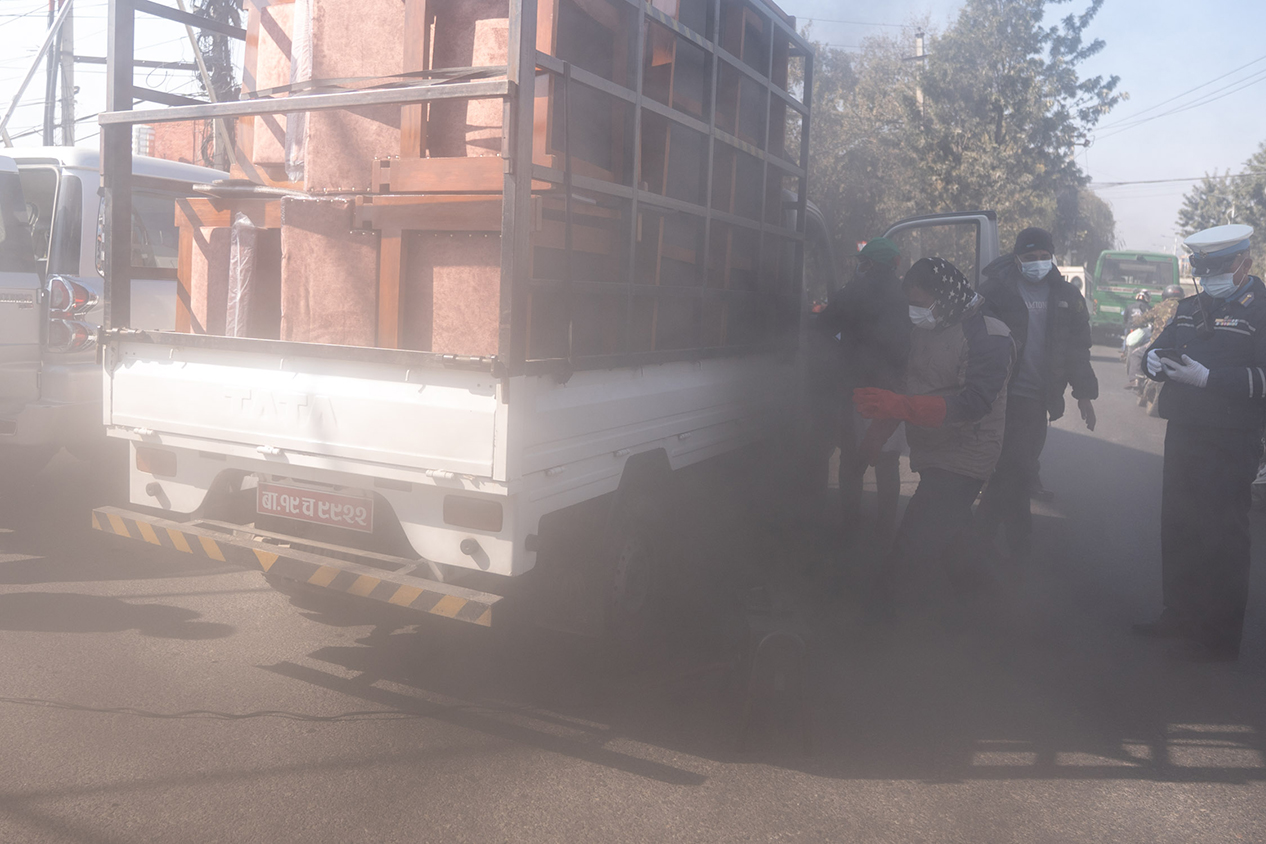
Traffic police controlling a vehicle emitting black smoke. Photo: Nepal Photo Library
Another mountaineer, Prakash Raj Pandey, says that even during the monsoon season, excessive rainfall and cloud cover disrupt flights and add to tourists’ difficulties. In winter, polluted air makes travel even more unpleasant for visitors coming to Nepal.
“Even on days when weather forecasts say the skies will be clear, flights get delayed, and tourists become frustrated,” Pandey said. “I’ve seen many tourists who travel by road from Kathmandu to Manthali to catch Lukla flights end up stranded for three days due to cancellations. This leaves a very bad impression on them.”
The government has been declaring Nepal a tourist destination country for more than a decade now. However, according to civil society leader and journalist Kanak Mani Dixit, there has been little concern about the impact of air pollution on tourists.
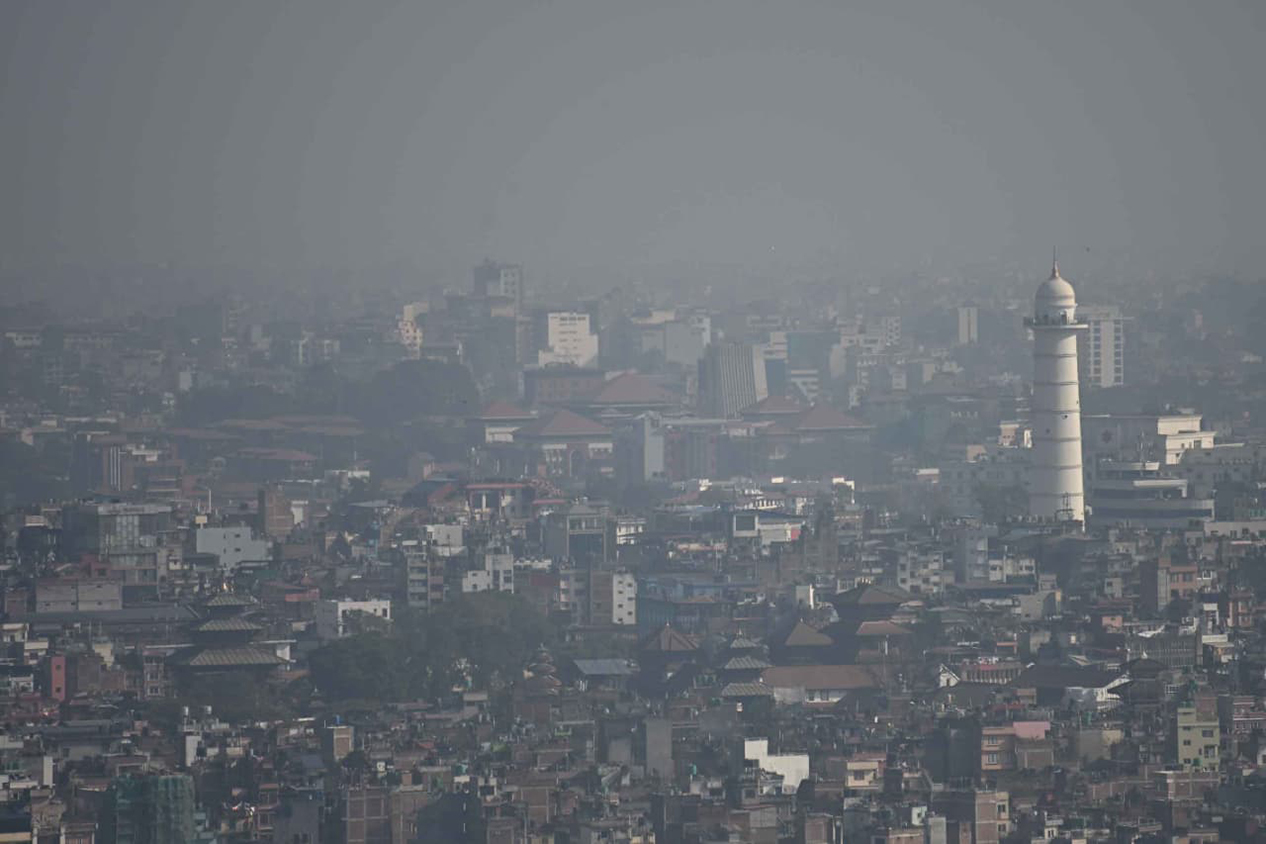
Air pollution visible in the sky over Kathmandu. Photo: Nepal Photo Library
“Foreigners are invited to visit, but air pollution means flights don’t operate on time, tourists can’t reach their destinations, and they don’t get to enjoy the views they came for,” Dixit said while speaking at a discussion on ‘Haze Diplomacy’ held in Kathmandu on 18 November last year.
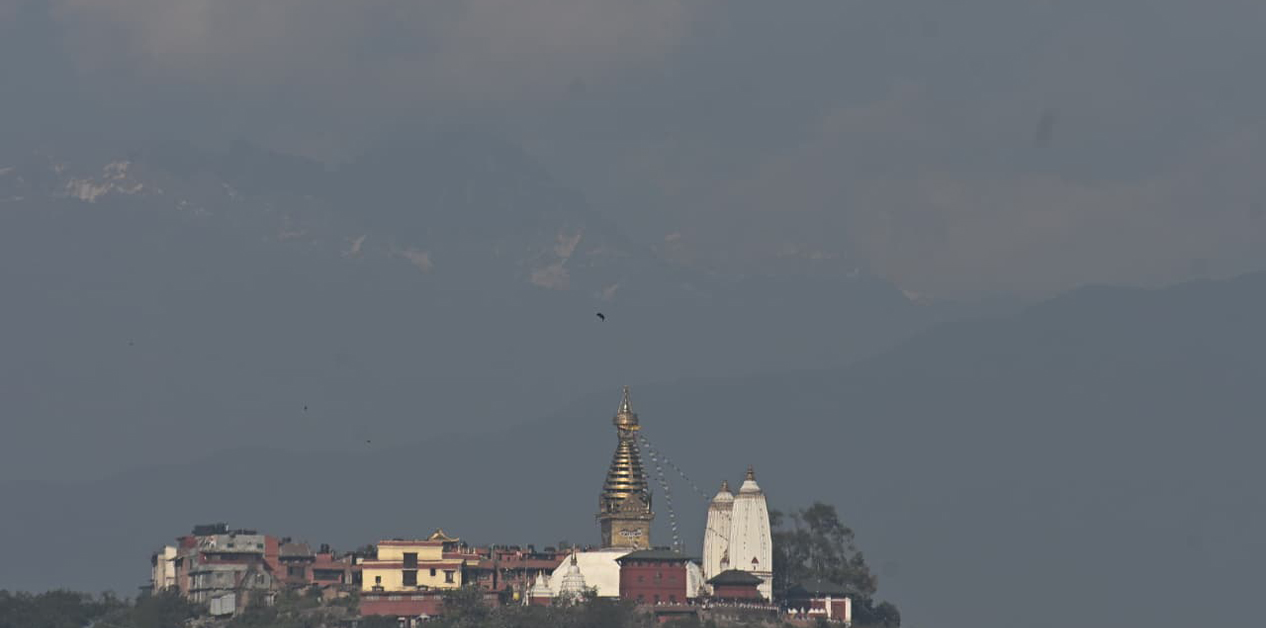
Dixit also recalled an incident from nine years ago during the SAARC Summit, when Indian Prime Minister Narendra Modi visited Dhulikhel but could not clearly see Nepal’s northern Himalayan ranges due to fog, smog, and black smoke.
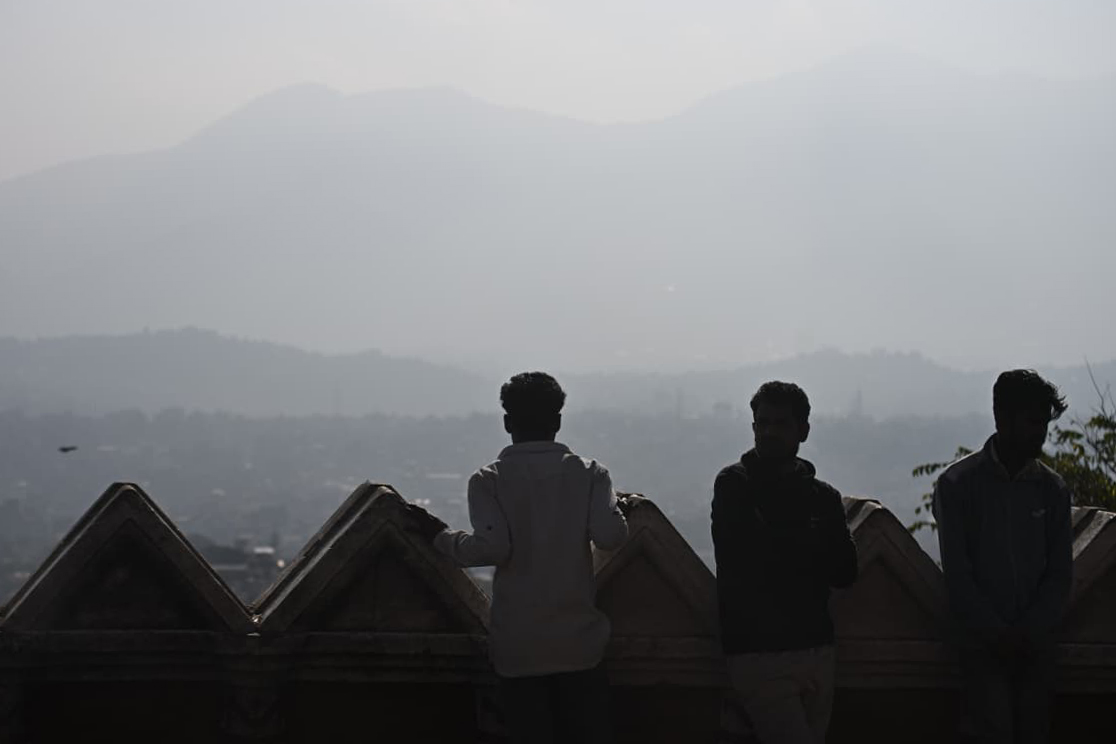
People looking at hazy Kathmandu from Swayambhu. Photo: Nepal Photo Library
“That morning, all of Nepal’s mid-hill regions were blanketed in smoke and haze,” Dixit said. “From Dhulikhel, it was difficult to see even the Jugal Himalayan range, located just about 30 kilometers away.” He noted that the Indian magazine Outlook had published a photograph of Modi attempting to view the mountains through binoculars, only to find them obscured by haze.