Kathmandu
Tuesday, July 21, 2026





Literacy rate in the constituency stands at only 54.7 percent, female literacy 46.5 percent
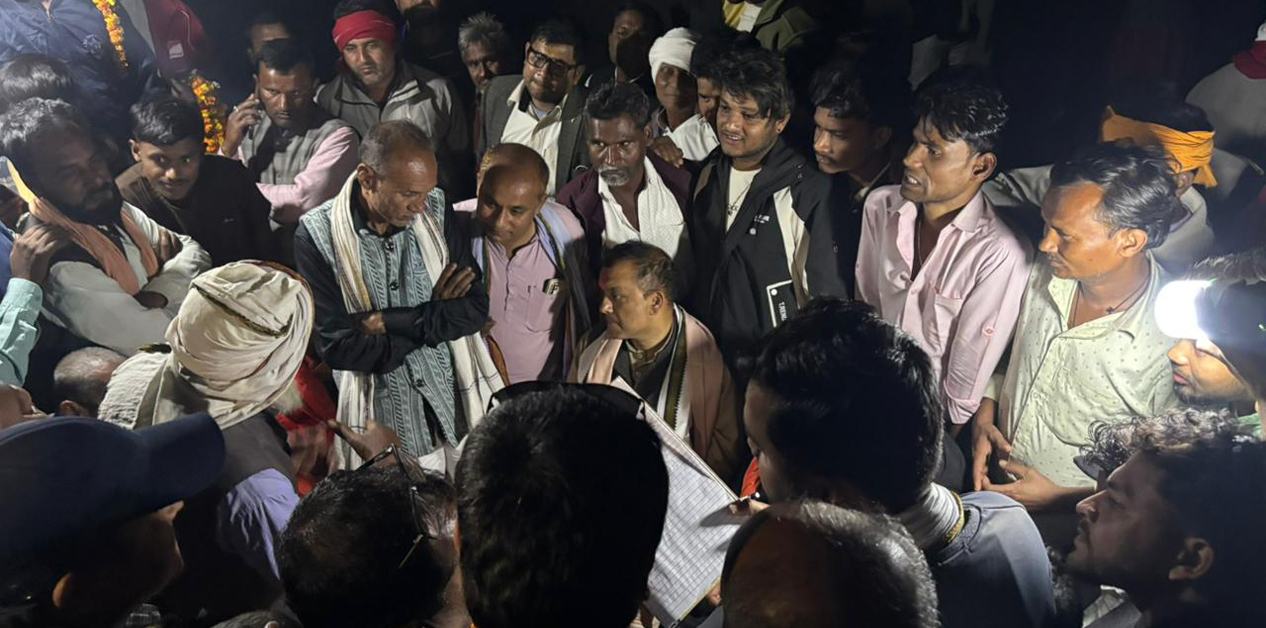
With Nepali Congress (NC) President Gagan Kumar Thapa announcing that he will contest the House of Representatives election to be held on March 5, Sarlahi Constituency No. 4 has come into the spotlight. Leaving Kathmandu-4, which he won consecutively in three elections since the 2013 Constituent Assembly election, Thapa has moved to the Tarai this time.
Among the districts of Madhesh Province, which itself ranks low on the Human Development Index, Sarlahi-4, where Thapa has filed his candidacy, is one of the most underdeveloped constituencies. This constituency lags behind in indicators such as education, urbanization, and child marriage.
While Kathmandu-4 is a fully literate urban constituency, Sarlahi-4 ranks ninth from the bottom in terms of urbanization. According to the National Census 2021, out of a population of 220,087 in Sarlahi-4, only 8.7 percent live in urban areas. The remaining 91.3 percent live in semi-urban or rural areas. By comparison, 27 percent of Nepal’s total population lives in urban areas.
Sarlahi-4 includes Dhankaul Rural Municipality, Ramnagar Rural Municipality, Balara Municipality, and Godaita Municipality. It also covers Wards 1, 2, 3, 4, 13, 14, and 15 of Barahathwa Municipality; Wards 1, 2, and 3 of Basbariya Rural Municipality; and Wards 1 to 4 of Bishnu Rural Municipality.
According to government data, nearly half of the population in Sarlahi-4 is illiterate. As per the constituency-wise demographic report released last Shrawan (mid- July to mid-August) by the National Statistics Office, out of 195,892 people aged five years and above, only 54.7 percent are literate. In contrast, Nepal’s national literacy rate stands at 76.2 percent.
The constituency with the lowest literacy rate in the country is Rautahat-2, also in Madhesh Province, with a literacy rate of 52.4 percent.
When literacy in Sarlahi-4 is analyzed by gender, the situation appears even worse. More than half of the women in the constituency are illiterate. Only 46.5 percent of women are literate, whereas the male literacy rate is 62.6 percent.
The figures are even more alarming among the population aged 15 years and above. In this age group, 65 percent of women and 46 percent of men are illiterate.
In Sarlahi-4, as much as 55.7 percent of families fall under the category of having a moderate level of health risk. Nationally, this figure is only 25.3 percent.
Similarly, Sarlahi-4 is among the top 10 constituencies with the highest incidence of child marriage among underage girls. Out of Nepal’s 165 constituencies, Sarlahi-4 ranks 10th in terms of prevalence of child marriage among girls. Nearly 35 percent of girls are married before reaching legal age, whereas the figure for boys is around six percent.
Sarlahi-4 ranks sixth among constituencies with the lowest proportion of female-headed households. Out of 35,568 households in the constituency, only 11.1 percent are headed by women. This is nearly two-thirds lower than the national average, where 31 percent of households are female-headed. In this indicator, Pyuthan ranks the highest (47.6 percent), while Parsa-3 ranks the lowest (6.6 percent).
According to the National Statistics Office report, the largest population group in Sarlahi-4 consists of “Tarai indigenous nationalities.” This community accounts for more than two-thirds (72 percent) of the constituency’s population, whereas nationally this group constitutes only 16 percent.
In Sarlahi-4, as many as 10.97 percent of households do not have toilets. Only 9.5 percent of people have access to piped drinking water, while 90 percent rely on tube wells. About 57 percent of residents live in mud (kachchi) houses, and 39.6 percent of families live in substandard housing.
The proportion of households without a mobile phone in Sarlahi-4 is 12.5 percent.
Out of 82,572 women aged 10 years and above in the constituency, two-thirds are married, while 5.2 percent are single women.
In the first-past-the-post race for the House of Representatives in Sarlahi-4, a total of 30 candidates are contesting. Among them, 13 represent political parties, while 17 are independent candidates. Only two of the candidates are women.
The main contenders include Gagan Kumar Thapa from the Nepali Congress, Amanish Kumar Yadav from the CPN (UML), Rajnish Raya from the Nepali Communist Party, Amresh Kumar Singh from the Rastriya Swatantra Party, and Rameshwar Raya Yadav from the Janata Samajwadi Party Nepal. In the 2022 House of Representatives election, Amresh Kumar Singh won the seat as an independent candidate.