Kathmandu
Tuesday, June 30, 2026





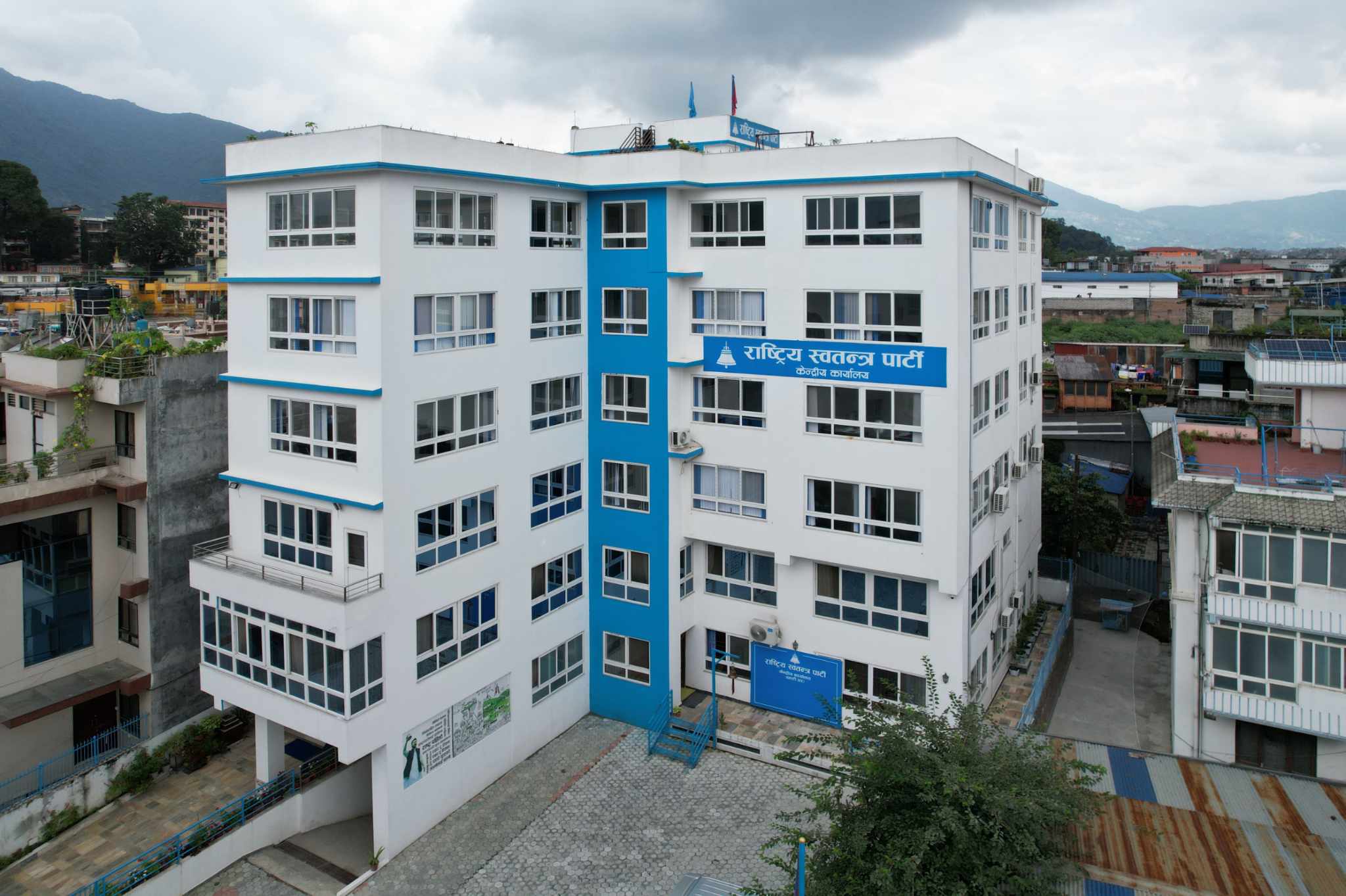
KATHMANDU: As the Rastriya Swatantra Party (RSP) secured a landslide victory, all attention has shifted to who will take the party’s proportional representation seats. By 10 PM, the Election Commission had tallied a total of 10.01 million votes, of which RSP received 5.05 million votes, securing 58 proportional representation seats. Only six parties crossed the 3% threshold; votes for all other parties are invalid for PR purposes. Combined with the 125 directly elected seats, RSP is set to command a total of 183 seats in the House of Representatives.
One notable exception is a constituency in Janakpur, where the RSP candidate’s nomination had been canceled. Despite this, the party still won the seat, though the case remains pending in the Supreme Court. In the meantime, the Election Commission has issued the certificate to the second-highest vote-getter, Matrika Yadav of the Nepali Communist Party. Additionally, independent candidate Mahabir Pun, who is likely aligned with RSP, is expected to support the party, further consolidating its majority.
With proportional representation seats now under final calculation, RSP is preparing to distribute the remaining 58 seats across its candidate list, ensuring both gender balance and ethnic cluster representation, in accordance with Nepal’s electoral law.
How many proportional representation (PR) seats is the Rastriya Swatantra Party (RSP) expected to win?
Based on the latest vote counts, RSP is projected to secure around 58 proportional representation seats. By the final stages of counting, the party had received over 5.1 million votes, leaving only a few hundred thousand yet to be tallied. This places RSP at roughly 53% of PR votes, which, combined with the 125 first-past-the-post seats it already won, gives the party a dominant total of 183 seats in the House of Representatives-just one seat short of the two-thirds threshold. With the possible support of independent candidate Mahabir Pun, the party could still reach the two-thirds mark.
Although a two-thirds majority in the House of Representatives alone is not sufficient to amend the constitution, it would enable the party to exert tight control over state institutions. It would also allow the House to pass impeachment motions against members of the judiciary and other constitutional bodies, review or challenge previous appointments, and significantly expand the government’s leverage over key state mechanisms-granting the administration an unprecedented level of political power.
Pramod
How are proportional representation seats allocated in Nepal?
Proportional representation seats are assigned according to the closed lists submitted by parties to the Election Commission. For the 110 PR seats in the House, each party’s share is calculated based on its overall votes. Importantly, parties must also ensure that at least 33% of their total members are women, combining direct and PR seats. Seats are distributed according to ethnic and regional clusters, including Khas Arya, Janajati, Madhesi, Dalit, Tharu, and Muslim categories, to ensure broad representation across Nepal’s diverse population.
How does the RSP meet the gender quota requirement?
RSP has already won 13 women in the direct contests. To reach the 33% quota for the House-roughly 61 women out of 183 seats-an additional 48 women will be elected via proportional representation. These women are carefully selected to match the cluster percentages mandated by law: Khas Arya 31.2%, Janajati 28.7%, Madhesi 15.3%, Dalit 13.5%, Tharu 6.6%, and Muslim 4.4%. This system ensures that women from all key ethnic and regional groups gain representation in parliament.
Who will the Rastriya Swatantra Party’s 48 proportional representation candidates be in the House of Representatives?
Through proportional representation, RSP’s 48 female candidates will enter the House of Representatives representing Nepal’s diverse ethnic and regional communities. Of the 48 women to be selected through PR: Khas Arya: 15 women, Ethnic (Janajati): 14 women, Madhesi: 8 women, Dalit: 6 women, Tharu: 3 women and Muslim: 2 women.
From the Khas Arya cluster, the selected women include Pratibha Rawal, Rachana Khatiwada, Lima Adhikari, Bidushi Rana, Samiksha Banskota, Shraddha Kunwar Kshetri, Tika Sangroula, Krantishikha Dhital, Aakriti Awasthi, Srishti Bhattarai, Manju Bhusal, Prabha Karki, Shobha Khanal, Ratna Kumari Thapa, and Gyanu Paudel. The ethnic (Janajati) representation will comprise Bashumaya Tamang, Ganga Chhantyal, Sunnima Udas, Anushka Shrestha, Ojasvi Sherchan, Srijana Shrestha, Rajani Shrestha, Kusum Marhajan, Bhumika Shrestha, Pramila Kuluju, Sujata Tamang, Kripa Marhajan, Eliza Gurung, and Gina Bisht. The Madhesi cluster will send Punam Kumari Agrawal, Nisha Mehta, Lalita Kumari, Ankita Thakur, Sarita Mahto, Kamini Kumari, Sunita Kumari Chaudhary, and Punam Sah. Six Dalit women-Rima Bishwakarma, Amrita Bik, Sita Wadi, Smriti Century, Susma Swarnakar, and Tara Bishwakarma-will also enter parliament, along with three Tharu women, Geeta Chaudhary, Urmila Chaudhary, and Karishma Kathariya. Finally, Samina Miyan and Afsana Banu will represent the Muslim community.
How will the RSP’s male candidates distributed under the proportional system?
For RSP, ten male candidates will be selected through proportional representation. These men represent a cross-section of Nepal’s population: Khas Arya males, including Ramesh Prasai, Sudip Dhakal, and Pramod Nyaupane, will take three of these seats. Janajati males such as Dr. Ram Lama and Khushbu Sarkar Shrestha, and possibly Mingma Gyabu Sherpa, will account for two to three more seats. Madhesi males Suprabhat Yadav and Khagendra Karna will secure one or two seats, while Dalit male Prakashchandra Pariyar, Tharu male Surendra Chaudhary, and a possible Muslim male candidate will fill the remaining spots. These selections reflect both vote share and the cluster-based distribution mandated by law.
Who will the 48 female proportional representation candidates be in the House of Representatives?
The 48 women chosen through proportional representation will come from diverse ethnic and regional backgrounds to meet the legal quota. Khas Arya women such as Pratibha Rawal, Rachana Khatiwada, Lima Adhikari, and Vidushi Rana, along with others, will occupy 15 of these seats. Janajati women, including Bashumaya Tamang, Ganga Chhantyal, and Anushka Shrestha, will account for 14 seats. Eight Madhesi women such as Punam Kumari Agrawal and Nisha Mehta will also join parliament. Additionally, six Dalit women, three Tharu women, and two Muslim women will secure seats, completing the RSP’s PR female contingent. This careful distribution ensures both gender balance and fair ethnic representation, reflecting Nepal’s diverse society.
Can the final list of proportional representation MPs change?
Yes. Minor changes may occur depending on representation requirements for marginalized groups or differently-abled candidates. While the RSP has submitted its finalized closed list to the Election Commission, the official seat allocation is determined based on the proportional representation formula. Therefore, the exact composition may vary slightly once the commission completes its formal calculations, but the overall distribution and the number of seats are expected to remain largely consistent.
How are proportional representation candidates assigned once a party qualifies?
Once the Election Commission calculates the number of PR seats for each qualifying party, it formally notifies the party and requests the submission of its closed candidate list. Parties must assign their candidates according to the ethnic and gender cluster quotas mandated by law: Dalit 13.8%, Janajati 28.7%, Khas Arya 31.2%, Madhesi 15.3%, Tharu 6.6%, Muslim 4.4%. Candidates are then selected in the order listed by the party, ensuring compliance with these quotas.
How is Nepal’s Parliament structured?
Nepal’s Constitution establishes a bicameral legislature consisting of the National Assembly (upper house) with 59 members and the House of Representatives (lower house) with 275 members. To elect these members, the Constitution mandates a mixed electoral system, combining direct elections and proportional representation. Of the 275 members in the House of Representatives, 165 are elected directly through first-past-the-post constituencies, while the remaining 110 seats are filled through proportional representation.
How does the proportional representation system function in Nepal?
In the proportional representation (PR) system, the entire country is treated as a single electoral district. Political parties submit a closed list of candidates prior to the election. After counting all votes nationwide, the Election Commission subtracts invalid votes and distributes the PR seats based on each party’s share of the valid votes. Under the House of Representatives Member Election Act, 2074, a party must receive at least 3% of the total valid votes to qualify for PR seat allocation. Parties failing to cross this threshold are excluded from PR seat distribution.
Is crossing the 3% threshold related to being recognized as a “national party”?
Not exactly. To achieve the legal status of a national party, a political party must meet two conditions under the Political Parties Act, 2073: it must win at least one direct seat and receive at least 3% of the vote in proportional representation. This recognition is separate from PR seat allocation. In other words, a party can receive PR seats without being designated a national party, provided it crosses the 3% vote threshold. Confusing these two rules has led to widespread misunderstanding in public discussions.
Are the rules the same for provincial assemblies?
Provincial assemblies operate under a similar mixed system but with a lower threshold for proportional representation—1.5% instead of 3%. For instance, in the 2074 provincial elections, the Bibeksheel Sajha Party did not win any direct seats but secured PR seats because it surpassed the 1.5% threshold. This illustrates that thresholds differ between federal and provincial levels, even though the mechanism of vote-to-seat conversion remains largely the same.