Kathmandu
Tuesday, June 30, 2026






KATHMANDU: Nepal News presents today’s snapshot of Nepal’s economic activities. Get quick updates on major market movements, policy shifts, and financial developments shaping the economy of Nepal. Here are the key economic highlights for today:
NEPSE Falls for Second Day, Index Drops 24.63 Points Despite Higher Turnover
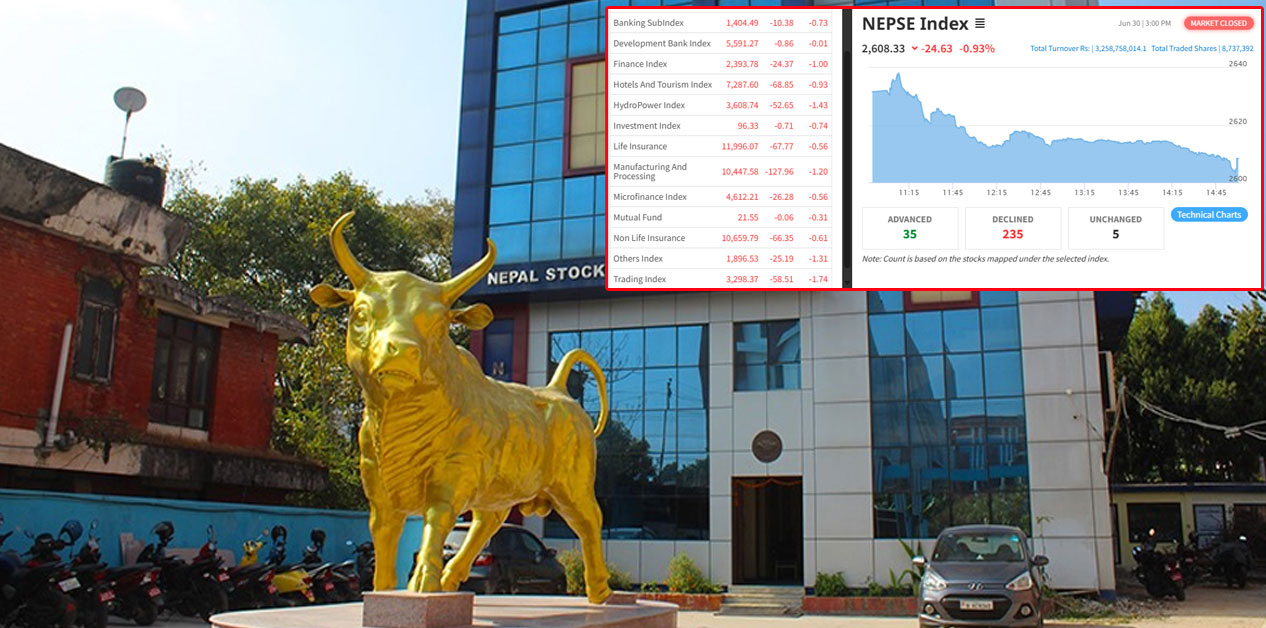
The Nepal Stock Exchange (NEPSE) continued its downward trend on Tuesday, declining by 24.63 points or 0.93 percent to close at 2,608.33 points. This follows Monday’s fall of 16.54 points, extending bearish sentiment across the market. Despite the decline, daily turnover rose to Rs. 3.25 billion from Rs. 2.67 billion a day earlier. Out of 365 listed companies, 235 declined while only 35 gained. All 13 sectoral indices closed in the red, led by Trading and Hydro Power losses. Investors of Sino-Refraction/Snow Rivers saw the highest gain, while Taksar Pikhukhola Hydropower recorded the sharpest decline.
Nepal Faces Year-End Fiscal Rush as Capital Budget Spending Lags at 35.12%
Nepal’s capital budget implementation remains sluggish in fiscal year 2025/26, with only 35.12% (Rs 143.23 billion) of the allocated Rs 407.88 billion spent by June 29. Under the Financial Procedures and Fiscal Accountability Act, payment checks cannot be issued after July 9, leaving the government with just eight working days to clear outstanding bills. To meet the revised annual spending target of 61.63%, authorities must now average daily expenditures of Rs 13.52 billion. Officials say achieving the original budget target would require an impractical daily spending rate of Rs 33.08 billion, highlighting mounting pressure on year-end fiscal management.
Speaker Aryal Stresses Economic Impact of Nagdhunga Tunnel, Calls for Timely Completion
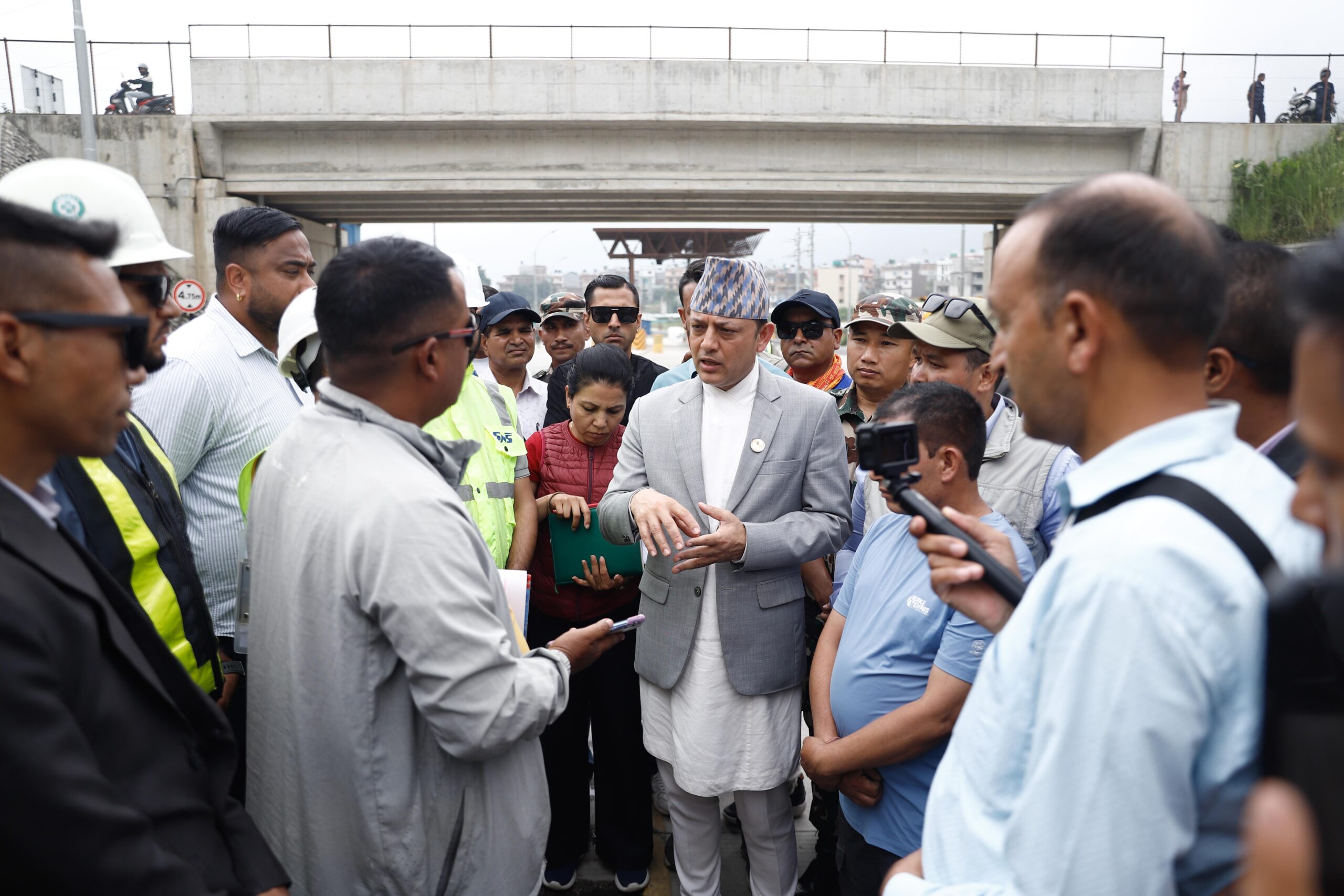
Speaker of the House of Representatives Dol Prasad Aryal inspected the Nagdhunga Tunnel Project, highlighting its economic significance in improving trade flow, transport efficiency, and connectivity in the Kathmandu Valley. During the visit, he discussed compensation, rehabilitation, and livelihood concerns with project-affected residents, assuring coordination with authorities for resolution. Aryal also reviewed construction progress and implementation challenges with project officials. Emphasizing timely completion, he urged concerned agencies to prioritize public interest and accelerate work, noting that the tunnel is expected to reduce transport costs and boost economic productivity.
Foreign Minister Khanal Says Diplomacy Must Drive Nepal’s Economic Transformation
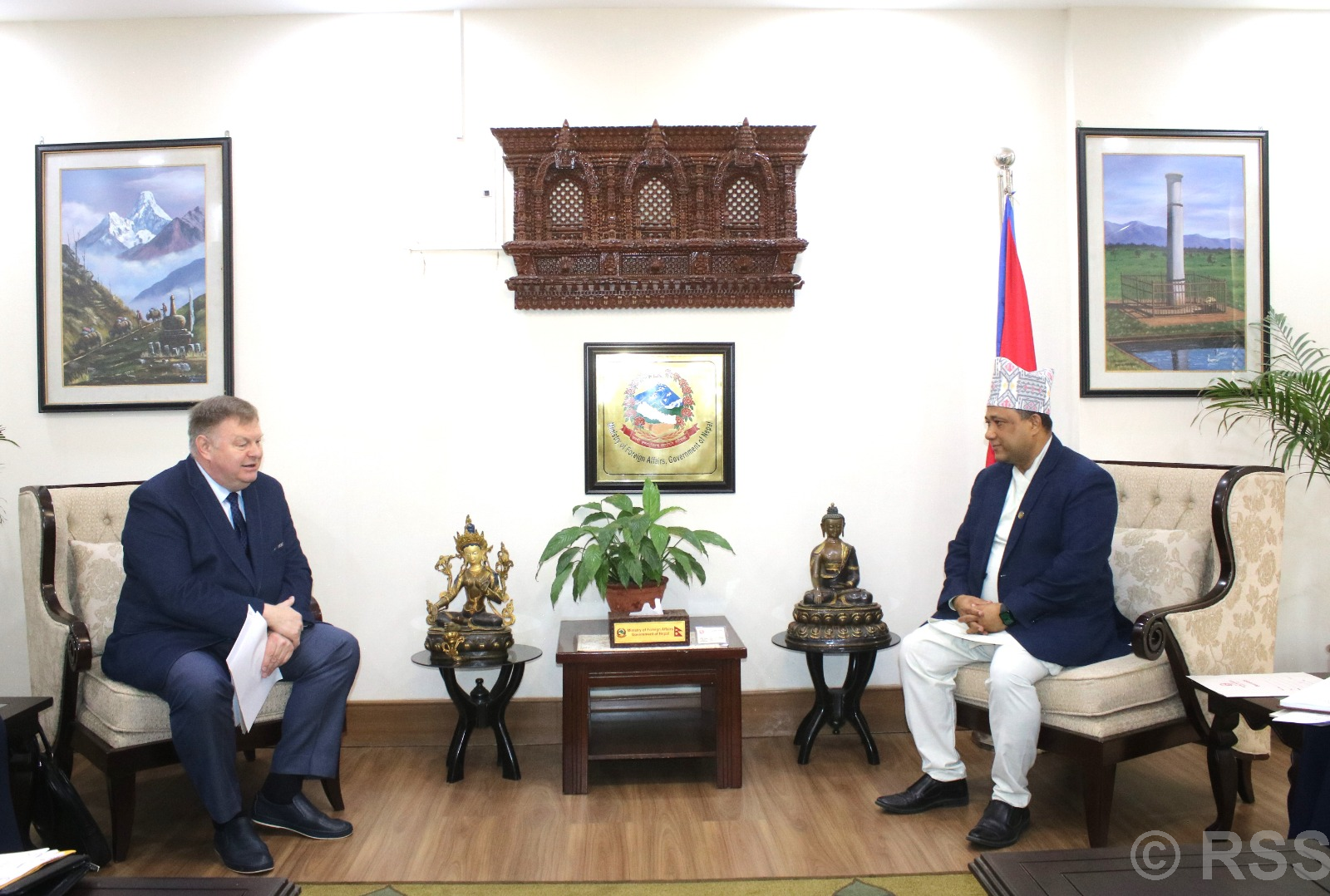
Foreign Minister Shisir Khanal has said Nepal’s foreign policy must directly contribute to the country’s economic transformation, emphasizing results-oriented economic diplomacy focused on trade, investment, tourism, technology, and market access. Speaking at the Prof. Yadunath Khanal Lecture Series in Kathmandu, he noted that global power competition, shifting supply chains, and emerging technologies like artificial intelligence are reshaping international relations, presenting both challenges and opportunities for Nepal. He stressed that Nepal must navigate these changes with clarity while remaining anchored in non-alignment, peaceful coexistence, and national interest. Khanal also highlighted the importance of good governance, diaspora engagement, and leveraging geography for connectivity and development.
Communications Minister Directs Nepal Telecom to Improve Digital Service Delivery
Minister for Communications and Information Technology Dr. Bikram Timilsina has instructed Nepal Telecom to ensure swift, transparent, and high-quality digital services for consumers. During an on-site inspection at the Sundhara Telecom Office and the Business Support System under the IT Directorate, he reviewed billing systems, customer management, and service workflows. He also interacted with service seekers using SIM, e-SIM, and internet facilities. Consumers reported improved service speed and reduced queues. The Minister directed the removal of repeated document submission requirements and emphasized secure data handling. Nepal Telecom officials said services are being shifted toward a fully digital, one-stop online system.
Minister Rawal Moves Against Absentee Civil Servants to Improve Public Sector Efficiency
The Ministry of Land Management, Cooperatives, Federal Affairs and General Administration has issued a 15-day ultimatum to four civil servants found residing abroad on temporary or permanent residency permits and Diversity Visas, citing concerns over efficiency and public service delivery costs. The ministry said civil service rules prohibit foreign residency and require staff to return to duty within the approved leave period to ensure uninterrupted government operations. As the cases violate the Civil Service Act, legal action has been initiated for termination and future disqualification. Minister Pratibha Rawal said stricter monitoring aims to improve workforce productivity and safeguard effective use of public resources.
‘Asar 15’ Drives Yogurt Consumption to 7.5 Million Liters Nationwide
Nationwide yogurt consumption surged to 7.5 million liters on Monday as Nepal celebrated Asar 15 with the traditional Dahi-Chiura ritual, generating an estimated Rs. 1 billion in sales. The Dairy Development Corporation and private dairies reported a sharp rise in demand, with daily transactions nearly tripling compared to normal days. DDC alone sold 100,000 liters, earning Rs. 14 million, while private sector sales dominated overall volumes. Officials attributed the spike to cultural tradition and rising summer temperatures, especially in the Terai. Dairy stakeholders highlighted the event’s growing economic significance and its role in supporting domestic milk producers and rural livelihoods.
Government Mobilizes 1,000 Staff to Stabilize Power Supply Amid Monsoon Disruptions
The government has said continuous efforts are underway to balance electricity flow, strengthen distribution networks, and carry out technical upgrades nationwide. The Ministry of Energy, Water Resources, and Irrigation has placed equipment and workforce on standby to reduce disruptions during the monsoon season. Minister Biraj Bhakta Shrestha said nearly 1,000 employees have been deployed to monitor power imbalances and respond to complaints through ‘No-Light’ emergency centers. Priority measures include replacing old transformers, installing high-capacity units, and upgrading breaker systems. The ministry has also warned of strict legal action against negligence and urged consumers to report unresolved issues through hotline 1151.
Online PAN Certificate Download Launched for New Companies
Service seekers registering new business entities at the Office of the Company Registrar can now download their Permanent Account Number (PAN) and official certificate online. The office announced the rollout of the digital system following an agreement with the Inland Revenue Department to integrate information systems. The feature has been embedded into the Company Registrar’s CAMIS platform and is now operational. Newly registered companies can directly access and print PAN details through the dashboard. Officials said the move eliminates the need for physical visits to tax offices, significantly reducing delays and making the business registration process faster and fully digital.
Traffic Violations Generate Over Rs 2 Million in Fines in Kathmandu Valley
The Kathmandu Valley Traffic Police Office penalized 1,592 vehicles in the past 24 hours for violating traffic regulations, collecting more than Rs 2 million in fines as part of an ongoing enforcement drive. According to the office, 73 motorists were booked for drunk driving, 87 for ride-sharing violations, 74 for running red lights, 78 for speeding, and 47 for lane discipline violations. Authorities also fined drivers for using black-tinted windows, violating no-horn rules, and entering one-way roads. The traffic police said enforcement has been intensified across the Valley to ensure compliance with road safety regulations.
Bagmati Province to Boost Production-Based Cooperatives, Says CM Baniya
Indra Bahadur Baniya, Chief Minister of Bagmati Province, has said the provincial government will prioritize and incentivize cooperatives engaged in production and labor-based economic activities. Speaking at an event in Bharatpur Metropolitan City-29, he announced production-linked subsidies targeting indigenous crops and spices, including ginger, garlic, turmeric, and onion. Baniya also highlighted a new policy, “One Local Level, One Indigenous Product, One Collection Center,” aimed at strengthening processing, branding, and market access. He praised a women-led cooperative for directly sourcing and branding 65 tons of turmeric, calling it a model for reducing middlemen and restoring trust in the cooperative sector through value-based rural enterprise development.
Night Travel Banned on Kanti Highway Amid Rain Risk Alert
Makawanpur District Administration Office has prohibited night travel on the Hetauda–Kathmandu Kanti Highway from 5 pm to 5 am on June 30 and July 1, citing extreme rainfall warnings. The decision follows alerts from the National Disaster Risk Reduction and Management Authority forecasting heavy to extremely heavy rain. Authorities warned of landslides, flash floods, debris flows, and rising river levels along the route. The administration has also restricted high-risk water activities and urged travelers to avoid unnecessary movement near rivers and slopes. Emergency services remain on standby, with citizens advised to follow official updates and safety instructions strictly.
Gen Z Youth Demand Uninterrupted Power Supply in Triyuga
A group of youths representing the Gen Z community has urged authorities to ensure regular and uninterrupted electricity supply in Triyuga Municipality of Udayapur district. A delegation led by Surendra Thapa, coordinator of the Gen Z Youth Front, submitted a memorandum to the Nepal Electricity Authority (NEA) distribution center, citing persistent power outages that have disrupted daily life and public services. The group said frequent blackouts have affected banks and government offices. In response, NEA officials attributed the disruptions to repeated windstorms and said technical teams are working to restore and stabilize the power supply.
Shaligram Sculpture in Jomsom Emerging as Religious Tourism Attraction
A 22-foot Shaligram Sheela sculpture carved on the banks of the Kaligandaki River in Jomsom, Mustang, is emerging as a new religious tourism attraction with potential economic impact for the region. Created during a 15-day workshop organized by Gharapjhong Rural Municipality in collaboration with the Nepal Academy of Fine Arts and co-financed by the Integrated Service Office Mustang, the sculpture has drawn increasing attention from visitors since its completion. More than 36 sculptors transformed river boulders into religious and cultural artworks, including Hindu and Buddhist symbols. Officials say the site is expected to boost religious tourism, local business activity, and community-based economic opportunities in the Himalayan region.
Over 40,000 Chickens and Ducks Culled as Bird Flu Spreads in Kavre
More than 40,000 chickens and ducks have been culled in Kavrepalanchok after outbreaks of avian influenza hit commercial poultry farms. The District Livestock Office in Dhulikhel said 40,729 birds were destroyed in affected farms in Banepa and Panauti municipalities to contain the disease. Officials believe unsafe disposal of infected birds and delays in laboratory test results may have contributed to the spread. Authorities have stepped up poultry inspections, disease surveillance, and biosecurity measures, urging farmers to maintain strict sanitation and safely dispose of dead birds to prevent further infections.
As Modernization Advances, Oxen Disappear from Palpa’s Rice Fields
In Palpa, the once-common sight of oxen plowing rice fields during the monsoon planting season is rapidly fading as farmers shift to tractors and mechanized tools. Locals say that until a decade ago, oxen were essential for cultivating crops such as rice, maize, and wheat, but labor shortages and the growing availability of machinery have led to a sharp decline in cattle-based farming. Elderly farmers recall traditional practices like ropai songs and communal planting rituals now largely replaced by modern equipment. Experts say mechanization has improved efficiency, but warn that it is also eroding traditional agricultural knowledge and rural cultural practices.
Chitwan Launches Trial Night Jeep Safari to Boost Community Ecotourism
Local residents and tourism entrepreneurs have welcomed the trial launch of a Night Jeep Safari in the Barandabhar Biological Corridor, aiming to expand ecotourism beyond national parks into community-managed forests. The initiative, developed jointly by Panchakanya, Chaturmukhi, and Bhimwali community forests, covers a 30-kilometer jungle route under a collaboration with provincial and local tourism authorities. Officials say it is Nepal’s first night jeep safari and could position Chitwan as a safari tourism hub if successful. The corridor, rich in wildlife including rhinos and tigers, is expected to attract more visitors, extend tourist stays, and boost the local economy.
Tulsipur Distributes 500 Electric Iron Stoves Across 19 Wards
Tulsipur Sub-Metropolitan City has distributed 500 iron stoves, providing 26 units in each of its 19 wards. According to officials, the distribution was carried out under a cost-sharing model involving the Alternative Energy Promotion Centre (AEPC), Green Climate Fund (GCF), the local government, and consumers. The municipality covers 15 percent of the cost, consumers contribute 5 percent, while AEPC and GCF bear the remaining amount. Officials said the initiative responds to public demand and promotes cleaner energy use, as the electric-assisted stoves help reduce reliance on firewood and dung cakes.
Paddy Plantation Slows in Kanchanpur as Rainfall Deficit Hits Farming
Paddy plantation in Kanchanpur has slowed sharply due to scant rainfall, with less than 50 percent of arable land cultivated so far compared to over 65 percent during the same period last year. According to the District Agriculture Knowledge Centre, only 45 percent of the district’s 484,960,000 square meters of rice-suitable land has been planted. The region remains heavily dependent on monsoon rains, as only 390,000 square meters have irrigation facilities. Officials said drying fields, declining groundwater levels, and limited pumping capacity have further disrupted transplantation, while major irrigation projects continue to expand coverage in phases.
Raskot Municipality Stockpiles Food Grains to Ensure Monsoon Supply Security
Raskot Municipality in Kalikot district has decided to stockpile food grains at its local depot to prevent shortages during the monsoon season. Mayor Dharma Raj Shahi said the municipality is closely monitoring food stocks, storage conditions, and distribution systems to ensure uninterrupted supply. He noted that floods and landslides often disrupt transport routes, affecting food availability during the rainy season. The stock is being managed in coordination with the Food Management and Trading Company Limited. Deputy Mayor Mani Raj Baral said the municipality will strengthen oversight and inter-agency coordination to ensure food security and smooth distribution during natural disasters.
Nepal Telecom Launches 4G Service at Murma Top Near Rara Lake
Nepal Telecom has launched 4G mobile and data services at Murma Top, a popular viewpoint overlooking Rara Lake in Mugu district. The service, which began on June 29, will provide improved connectivity across the area and nearby trekking routes inside Rara National Park. Murma Top, a major tourist destination known for panoramic views of Rara Lake and surrounding mountain ranges, is accessible after a few hours of trekking from the lakeside. Officials said the expansion will enhance communication for tourists, locals, and businesses, supporting tourism and digital access. The tower will also help extend coverage to remote areas in Karnali and Sudurpashchim provinces.
Gold Price Drops Rs 4,500 Per Tola, Silver Falls Rs 25 in Nepal
Gold and silver prices declined in Nepal’s domestic market on Tuesday, according to the Federation of Nepal Gold and Silver Dealers’ Associations. The price of gold fell by Rs 4,500 per tola (11.66 grams) to Rs 277,900 per tola, down from Rs 282,400 per tola on Monday. Silver also registered a decline, dropping by Rs 25 per tola to Rs 4,285 per tola, compared with Rs 4,310 per tola a day earlier. The latest revision reflects a downward trend in precious metal prices in the domestic market.