Kathmandu
Tuesday, July 28, 2026





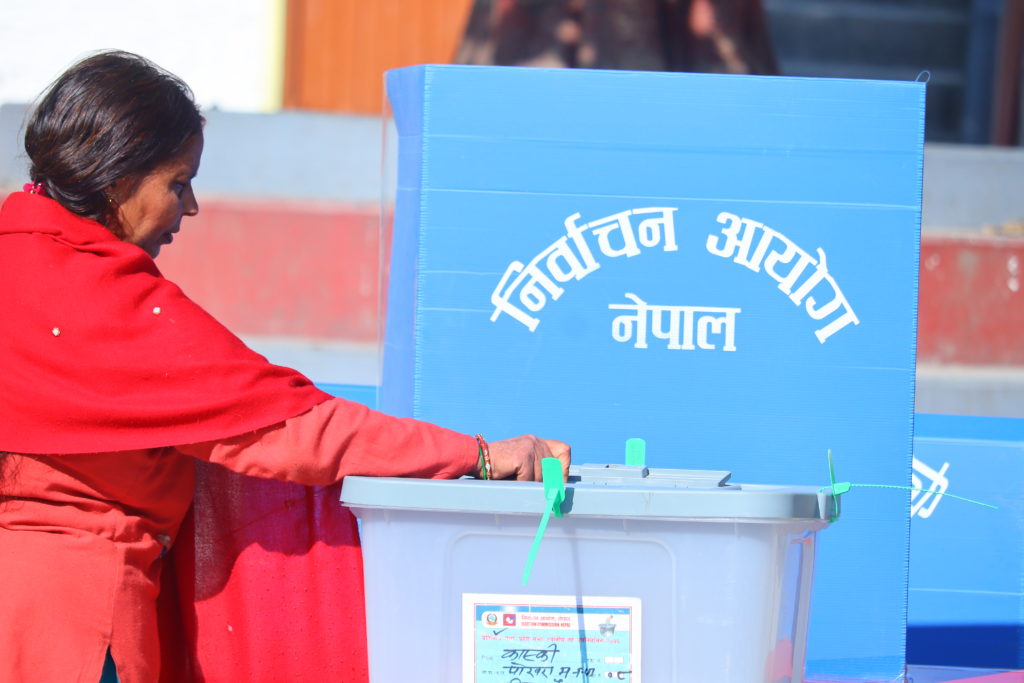
KATHMANDU: As Nepal prepares to convene its new House of Representatives, a host of political and social dynamics are coming into focus. From age and educational profiles to professional backgrounds, and the notable influx of politicians who switched parties to secure victory, the composition of the legislature reflects a complex mix of change and continuity.
The age, profession, and education profile of the new parliament signals a generational shift: MPs under 50 will dominate, heralding the potential for a profound transformation in the country’s political landscape. Many of these younger lawmakers come from professional, academic, or activist backgrounds, bringing fresh perspectives and priorities to parliamentary debates and policymaking.
Taken together, these trends suggest a parliament that is both a product of Nepal’s evolving political culture and a test case for the influence of a younger, more professionally diverse cohort. The following provides a concise overview of the essential takeaways, offering a lens through which to understand the emerging composition and potential impact of the new House of Representatives.
Who will make up the new House of Representatives?
Vote counting for Nepal’s House of Representatives election held on March 5 has been completed. The federal parliament will consist of 275 members in total-165 elected through the first-past-the-post system and 110 through proportional representation.
This election has brought a notable shift in the composition of parliament. A large number of first-time lawmakers and younger candidates have been elected. The vote took place after the September 08-09 Generation-Z protests, which pushed many voters to support younger political figures. As a result, several newly elected MPs belong to the Gen-Z age group, with some under 28 years old, and many will be entering the federal parliament for the first time.
What does the age profile of Nepal’s newly elected House of Representatives look like?
The final results of the 165 directly elected seats in Nepal’s House of Representatives show a clear generational shift in the country’s parliament. With the traditional parties losing ground and newer political forces gaining strength, the new legislature is set to have a noticeably younger profile than previous parliaments.
Of the 165 MPs elected through the first-past-the-post system, 118 are aged 50 or younger, indicating that younger lawmakers now form the clear majority. Within this group, 12 MPs are 30 years old or younger, reflecting the growing presence of the Gen-Z generation in national politics. At the other end of the spectrum, only 11 MPs are over the age of 60, suggesting that older political leaders now make up a much smaller share of the directly elected parliament.
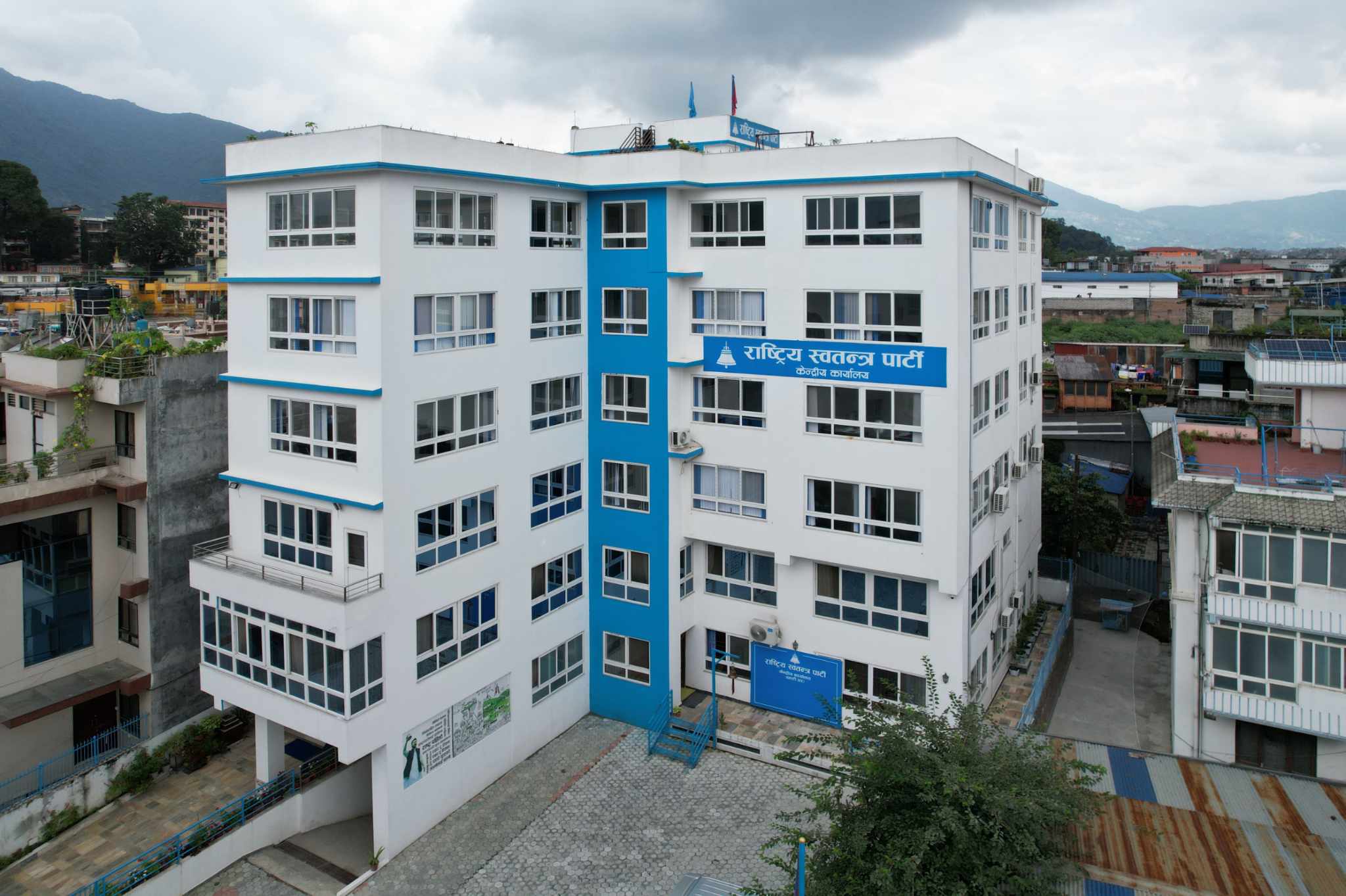
While counting is still underway for the 110 proportional representation seats, the overall age balance of parliament is also expected to remain relatively young. This is partly because the Rastriya Swatantra Party (RSP)-which secured the largest number of directly elected seats—has included a large number of young candidates on its proportional list as well. With 125 directly elected seats, the RSP already dominates the younger age categories.
Among the 12 MPs aged 30 or below, 11 were elected from the RSP, while one represents the Shram Sanskriti Party. The youngest MP in the new parliament is Prashant Upreti, aged 25, who won the Makwanpur-2 constituency. Two other lawmakers-Manish Khanal from Nawalparasi East-2 and KP Khanal from Kailali-2-are 26 years old. Several other MPs in their late twenties also secured victories, including Bablu Gupta from Siraha-1 and Sulabh Kharel from Rupandehi-2, both aged 28, as well as Nisha Dangi, Sasmita Pokharel, and Aren Rai, who are 29.
Beyond the youngest group, 49 MPs fall in the 31-40 age bracket, the majority of whom are from the RSP, though smaller numbers come from the Nepali Congress, CPN-UML, and Rastriya Prajatantra Party. Another 57 MPs are aged between 41 and 50, again with a strong presence of RSP lawmakers but also including members from Congress, the Nepal Communist Party and other parties.
Older age groups are comparatively smaller. Thirty-six MPs are between 51 and 60 years old, while nine lawmakers fall in the 61–70 age group. The oldest MPs in the new parliament are 71 years old-Tek Bahadur Gurung of the Nepali Congress, elected from Manang, Pushpa Kamal Dahal ‘Prachanda’ of the Nepali Communsit Party and Mahabir Pun, an independent candidate elected from Myagdi.
How is Nepal’s Gen-Z generation entering mainstream politics?
Nepal’s population structure currently favors its youngest generation. Backed by sheer numbers, Gen-Z is rapidly emerging as a majority force across society-economically, socially and increasingly politically as well. Nepal’s politics has long faced criticism for being dominated by the same leaders and familiar political faces. Public frustration with this pattern has been growing for years. The March 05, 2026 election, however, suggests a shift. For the first time, eight lawmakers from the Gen-Z generation have entered parliament through the directly elected system. Their presence marks a symbolic and generational change in the country’s political landscape.
These newly elected MPs, all under the age of 30, represent more than just youthful faces in the legislature. Their election signals that young people can move beyond activism and public debate to hold real political power. It also challenges the longstanding perception that Nepal’s politics is reserved primarily for older and established leaders.
The term “Gen-Z” generally refers to people born between 1997 and 2012. This generation has grown up in a highly connected world, making them particularly comfortable with technology and active on social media platforms. They are also considered more politically aware and vocal on social issues compared with previous generations. As a result, their entry into parliament is expected to bring new perspectives, policy priorities and communication styles to the legislative process.
The influence of Gen-Z became more visible in Nepal following the youth-led protests of September 08-09, 2025, after which the term itself became widely used in public discourse. The election that followed those protests has now translated that youthful momentum into formal political representation, reinforcing the idea that younger voters and activists are becoming an important force in shaping Nepal’s democratic institutions.
The growing importance of this generation is also reflected in Nepal’s demographic structure. According to the 2021 national census, Nepal’s total population stands at 29.16 million. Of this, about 9.76 million people belong to the Gen-Z age group, representing roughly 33.5 percent of the population.
The label “Gen-Z”, derived from the last letter of the English alphabet, entered everyday political language in Nepal following the youth-led protests on September 08, 2025, when large numbers of young people mobilized around demands for good governance and an end to corruption. The movement turned tragic when 19 protesters were killed by gunfire on the first day, an event that transformed the term “Gen-Z” into a powerful symbol of both sympathy and political awakening among the Nepali public following removal of the nearly two third majority government on September 09, 2025.
Yet the demographic picture also reveals a striking trend: many young Nepali men, particularly those aged 20-29, are absent from the domestic workforce because they have migrated abroad for employment or education. Labour migration has therefore become a defining feature of Nepal’s youth demographic, shaping both the economy and the social fabric.
More broadly, Nepal’s demographic structure presents what economists often call a “demographic dividend”. The share of the population in the economically active age group (15-64) has reached its highest level in history, accounting for about 65% of the population. In simpler terms, the country currently has more people of working age than dependents.
Children under 14 years make up roughly 28% of the population, while citizens aged 65 and above account for only about 7%. This relatively low dependency ratio creates favorable conditions for economic growth—provided that the labour force can be productively employed.
The shift becomes even clearer when compared with earlier decades. According to the National Statistics Office, children accounted for 42% of the population in 1991, while the working-age population stood at 54.1%. The share of elderly people was just 3.5%, roughly half of today’s level.
As a result of these demographic changes, the generation born between 1997 and 2010—essentially Nepal’s Gen-Z is now entering the labour market in large numbers. Their presence forms a substantial part of the country’s demographic dividend, helping to push the working-age population to its current high level.
How many House of Representatives in Nepal’s new parliament come from business or professional backgrounds?
Among the 165 directly elected members of Nepal’s House of Representatives chosen in the March 05 election, 40 lawmakers come from business or professional backgrounds. Most of them belong to the Rastriya Swatantra Party (RSP), which won 125 seats under the first-past-the-post system. Of those, 35 MPs have entrepreneurial or professional backgrounds. In comparison, only four of the 18 MPs elected from the Nepali Congress are linked to business, while one MP from the Nepal Communist Party (NCP) has a similar background. Lawmakers elected from CPN-UML and several other parties are largely career politicians or social activists rather than business figures.
The result has changed not only the balance of political power but also the social and professional composition of parliament. Unlike previous legislatures dominated by long-time party workers, many new MPs come from business, technology, media, tourism and other professional sectors. The rise of the RSP in particular has brought candidates with careers outside traditional party structures.
Another notable shift is that prominent business tycoons performed poorly, while mid-level entrepreneurs gained representation. Several well-known industrialists from traditional parties contested the election but lost, including Binod Chaudhary, Nepal’s only dollar billionaire, who was defeated in Nawalparasi West. By contrast, many of the business-oriented MPs who won are mid-scale entrepreneurs involved in sectors such as tourism, technology, construction, hydropower, hospitality and digital services.
Supporters say this mix could bring practical private-sector experience into policymaking, particularly on economic reforms, investment and entrepreneurship. Critics, however, warn that the presence of business figures in parliament can create conflicts of interest, especially if lawmakers influence policies related to sectors where they have investments. Experts therefore argue that clear disclosure rules and codes of conduct are necessary to ensure transparency.
Overall, the new parliament reflects a more diverse professional profile, with entrepreneurs, professionals and technocrats entering the legislature in larger numbers than before—potentially reshaping how economic and policy debates unfold in Nepal’s parliament.
Who are the PhD holders who won in House of Representatives elections, and what do their victories indicate?
Nine candidates with doctorates secured seats in the 2026 elections, eight from the Rastriya Swatantra Party (RSP) and one from CPN-UML. Notable winners include Dr. Swarnim Wagle from Tanahun-1, who defeated Govinda Bhattarai of the Nepali Congress by a margin of 21,809 votes, and Dr. Amresh Kumar Singh from Sarlahi-4, who beat Nepali Congress president Gagan Thapa by over 20,000 votes. These victories underscore the electorate’s support for candidates with strong academic and professional backgrounds.
Dr. Bikram Timilsina (Nuwakot-1) won over Prakash Sharan Mahat by 4,012 votes, while Dr. Achutam Lamichhane (Nuwakot-2) defeated Jagdishwor Narsingh KC by almost double votes. Dr. Krishna Hari Budathoki (Ramechhap) won against Madhav Prasad Dhungel by 7,199 votes, and Dr. Dhananjaya Regmi (Syangja-1) secured his seat by 10,214 votes over Bharat Raj Dhakal. These substantial margins highlight strong local support and the growing appeal of well-educated candidates in Nepali politics.
Other winners include Dr. Anand Bahadur Chand (Kailali-5) with a 19,995-vote lead, Dr. Tara Prasad Joshi (Dadeldhura) with 7,010 votes more than his closest rival, and Dr. Arjun Kumar Karki of UML (Sankhuwasabha) who narrowly defeated Mingma Sherpa of RSP by roughly 636 votes. PHDs holders success points to a generational and expertise-driven shift in Nepal’s legislature, signaling that voters are increasingly prioritizing qualifications and policy experience in their representatives.
How many MPs switched from other parties to Rastriya Swatantra Party and won in this election, and who are they?
In this historic election, 42 MPs who previously belonged to other political parties joined the Rastriya Swatantra Party (RSP) and won in the direct elections. This shift reflects a significant realignment in Nepalese politics, particularly in Madhesh Province, where 17 of these MPs emerged victorious. Notable examples include Deepak Kumar Sah from Sunsari-4, who left the Janmat Party and Sarvodaya Party to join RSP and defeated Congress leader Gyanendra Bahadur Karki. In Saptari-3, Amarkant Chaudhary, formerly of the Janata Samajwadi Party, defeated its president Upendra Yadav. Similarly, in Rautahat-1, former Congress member Rajesh Kumar Chaudhary won against UML’s Ajay Gupta and NCP’s Madhav Kumar Nepal. In Morang-4, Santosh Rajbanshi defeated Congress General Secretary Guru Raj Ghimire and UML’s Jeevan Ghimire. Other notable victories include Swarnim Wagle in Tanahun-1, formerly of Congress, Bodhnarayan Shrestha in Dhading-2, previously with the Maoists, and Rukesh Ranjit in Bhaktapur-2, who has a UML background and defeated Nepali Congress’s Nepal Worker’s and Peasants Party’s Prem Suwal. These wins highlight RSP’s growing ability to attract leaders from established parties and consolidate a strong nationwide presence.
Where will Nepal’s newly elected MPs take their oath of office?
The Federal Parliament Secretariat has begun preparations for the swearing-in ceremony of newly elected Members of Parliament (MPs). However, the ceremony will not take place in the main parliament building as originally planned. The new federal parliament complex under construction in Singha Durbar has yet to be completed, forcing authorities to arrange the oath ceremony in an alternative hall within the same compound.
The construction of the new parliament building has faced repeated delays. Despite five extensions to the construction deadline, the project remains unfinished. Because of this, the Parliament Secretariat has decided to temporarily prepare an additional hall within the under-construction complex to conduct the swearing-in ceremony and possibly hold some initial parliamentary meetings.
The oath ceremony will take place only after the Election Commission formally submits the final election results. The government had earlier promised that key parts of the building-including the House of Representatives chamber-would be ready by mid-March, but that now appears unlikely. As a result, officials are preparing a multi-purpose assembly hall inside the new complex as a temporary venue.
Under Article 88 of Nepal’s Constitution, every member of the federal parliament must take an oath of office and secrecy before participating in the first meeting of the House or any parliamentary committee. Once the Election Commission submits the final results, the President must call the first session of parliament within 30 days, and MPs must be sworn in before the session begins.
The oath ceremony itself follows a specific protocol. First, the senior-most member of parliament takes the oath from the President. That member then administers the oath to the rest of the lawmakers. In the newly elected House of Representatives, the two oldest MPs are Nepali Congress leader Tek Bahadur Gurung and independent lawmaker Mahabir Pun, both aged 71. Whichever of them is officially recognized as the senior-most member will administer the oath to the rest of the MPs. Gurung has been convicted on corruption charges by the Special Court and may therefore be unable to administer the oath-taking ceremony.
After taking the oath, lawmakers receive the official identification emblem of a House of Representatives member. Meanwhile, Nepal’s previous parliament building in international convention hall in New Baneshwor is currently unusable after it was burned during the September 09 Gen-Z protests. As a result, parliamentary activities have temporarily been taking place in a hall of the National Assembly’s Agriculture Committee until permanent arrangements are ready.
Do newly elected House of Representatives receive travel expenses to reach Kathmandu?
Yes. When newly elected MPs travel to Kathmandu to assume office, they are eligible to claim reimbursement for their travel costs. The Parliament Secretariat pays the equivalent cost of the actual ticket used for the journey, whether by airplane or public transport.
To receive the reimbursement, MPs must submit the ticket to the Secretariat. For example, a lawmaker traveling from a remote district such as Jumla may submit air tickets for the Jumla–Nepalgunj and Nepalgunj–Kathmandu flights and receive the same amount as reimbursement.
However, reimbursement is based on standard travel routes from the constituency. If an MP chooses an unusual route-for instance flying from Pokhara despite representing Gorkha-they may receive only the equivalent bus fare, not the airfare. The Secretariat determines the reimbursement by evaluating the distance and typical travel options from the constituency.
Do House of Representatives receive allowances for meals during travel?
Yes. MPs are also provided a meal allowance during their journey to Kathmandu. The allowance is capped at Rs 2,500 per day, but it can only be claimed for up to two and a half days. This means a newly elected MP can receive a maximum of Rs 6,250 to cover food expenses while traveling to the capital.
Is there a furniture allowance for House of Representatives?
Newly elected MPs receive a one-time furniture allowance when they begin their term. This payment is meant to help them purchase basic items needed for work or residence in Kathmandu. The allowance is Rs 15,000 and is provided only once in five years, during a parliamentary term. Although modest, it is intended to cover simple purchases such as a chair, sofa, or computer table.
Do House of Representatives get housing support in Kathmandu?
Yes. Because many MPs come from districts outside the Kathmandu Valley, the government provides housing support. Lawmakers without a house in Kathmandu receive Rs 18,000 per month as a rent allowance. Those who already own a house in the valley are given Rs 9,000 per month instead, which is meant to cover maintenance expenses.
What additional monthly allowances do House of Representatives receive?
In addition to salary and housing support, MPs receive several smaller monthly allowances intended to cover routine expenses. They are given Rs 3,000 per month to pay mobile phone bills and to purchase or subscribe to newspapers and online media. Another Rs 2,000 per month is provided to help pay water utility bills.
What is the salary of a House of Representatives?
The basic monthly salary of a Member of Parliament in Nepal is Rs 66,070. MPs also receive a special allowance of Rs 1,000. However, their total earnings can increase depending on how often parliament and its committees meet, as MPs receive additional allowances for attending these sessions.
Do House of Representatives receive allowances for parliamentary meetings?
Yes. MPs are paid meeting allowances whenever they attend sessions of parliament or parliamentary committees. For each day of attendance, MPs receive Rs 1,000 as a meeting allowance and another Rs 1,000 as a transport allowance. If parliament sits for about 15 days in a month, these payments alone can add roughly Rs 30,000 to their monthly income. However, if a parliamentary session and a committee meeting occur on the same day, MPs cannot claim both allowances simultaneously.
What is the approximate total monthly income of an House of Representatives?
In general, an MP without a house in Kathmandu earns around Rs 90,000 per month in salary and allowances when parliament is not sitting continuously. For MPs who already own a house in the capital, the total is about Rs 9,000 lower. When parliamentary and committee meetings are held regularly throughout the month, an MP’s total monthly income can exceed Rs 100,000.
Do political parties collect money from House of Representatives?
Yes. Many political parties in Nepal collect a monthly contribution from their MPs, commonly known as a party levy. The parliamentary party leader can instruct the Parliament Secretariat to deduct this amount directly from MPs’ salaries and deposit it into the party’s bank account. The Rastriya Swatantra Party (RSP), for example, previously collected Rs 16,500 per MP per month. If the same levy continues with its new parliamentary strength, the party could receive more than Rs 3 million every month from its lawmakers. In general, political parties in Nepal collect between Rs 10,000 and Rs 20,000 per MP.
Do House of Representatives receive offices inside parliament?
Currently, MPs do not receive individual offices or rooms in the existing parliament complex. However, the new parliament building under construction is expected to provide at least a working desk for each lawmaker once it is completed.
Do House of Representatives get personal secretaries?
Previously, MPs were allowed to appoint a personal secretary equivalent to an officer-level government position. This privilege was later abolished after concerns about misuse, as many MPs were accused of appointing relatives to the position primarily to collect the salary. The facility was removed by a government formed after the Gen-Z protests. Restoring it would require amending the law governing the salaries and benefits of federal parliament members. Some lawmakers argue that a research assistant would help them perform their legislative duties more effectively.
Do House of Representatives receive laptops or computers from parliament?
No. The Parliament Secretariat does not provide laptops or computers to MPs. Instead, documents and bills introduced in parliament are delivered through small compartments known as “pigeonholes.” Each MP has a designated pigeonhole inside the parliament building. Once a bill is placed there, it is considered officially delivered to the member.
Do House of Representatives receive official email and diplomatic passports?
The House of Representatives can request an official email address under the parliament’s domain, although many lawmakers in previous parliaments rarely used these accounts. When MPs travel abroad for official parliamentary or government work, they may receive a red diplomatic passport, which helps facilitate smoother immigration procedures and official travel abroad.