Kathmandu
Monday, July 27, 2026





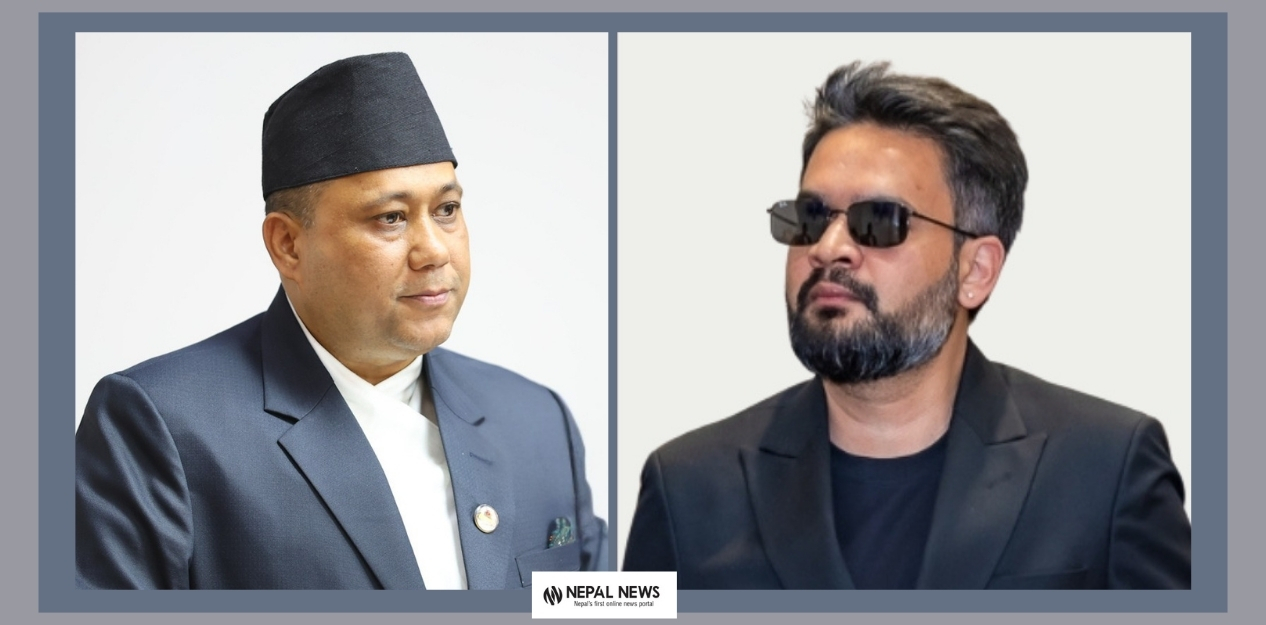
The Cabinet has indefinitely extended the tenure of six ambassadors after putting five proposed appointments on hold. Officials say tensions between Prime Minister Balendra Shah and Foreign Minister Shisir Khanal have left Nepal without ambassadors in 17 countries, with vacancies set to rise to 22.
KATHMANDU: The Council of Ministers meeting on July 22 decided to extend the tenure of ambassadors to six countries whose terms had expired for an indefinite period. The Cabinet extended the terms of Nirmal Raj Kafle for Brazil, Sushil Lamsal for Egypt, Tirtha Raj Wagle for Bahrain, Ghanshyam Bhandari for Bangladesh, Harishchandra Ghimire for Myanmar, and Bharat Regmi for Austria. Among them, the government had already announced through the current fiscal year’s budget that it would close the Nepalese Embassy in Brazil.
After the terms of ambassadors in five embassies expired and new appointments could not be made, the Ministry of Foreign Affairs took a proposal to the Cabinet to extend the tenure of the incumbents. Unsure of when new appointments would be finalized, Foreign Minister Shisir Khanal himself took the proposal to the Cabinet to extend the ambassadors’ tenures.
It is not that Minister Khanal had not previously initiated the process of appointing ambassadors to those countries. According to Foreign Ministry sources, Khanal had sought to appoint ambassadors to all countries except Brazil. In line with the practice of appointing 50 percent of ambassadors from career diplomats within the foreign service, Minister Khanal sent five names to the Cabinet.
Those recommended were Joint Secretaries Kumar Kharel, Bhrigu Dhungana, Ganesh Dhakal, Dilip Paudel, and Vishnu Gautam. Among them, Dhungana is retiring in mid-September and Dhakal in late December. The Ministry of Foreign Affairs has been giving priority in ambassadorial recommendations to joint secretaries who are close to retirement.
However, the Cabinet put all five names on hold without making any decision. Foreign Ministry sources say ambassadorial appointments were halted because Prime Minister Balendra Shah was displeased with Minister Khanal. The source claims that the strained relationship between Prime Minister Shah and Minister Khanal has impacted ambassador appointments.
The relationship between Prime Minister Shah and Foreign Minister Khanal has not been cordial over the past month. Their relationship deteriorated over a passport printing contract dispute. Prime Minister Shah had pressured to cancel the passport printing contract awarded to the German companies Mühlbauer and Veridos by the previous government and hand it over to the French company Idemia. However, Khanal openly sided with the German companies. Claiming corruption in the bidding process, advisors from Prime Minister Shah’s secretariat had pressured the Chief Commissioner of the Commission for the Investigation of Abuse of Authority (CIAA), Prem Kumar Rai, along with other commissioners, to file a case against the German company and cancel the contract process.
On June 16, the Prime Minister’s secretariat group held Rai and other officials hostage at the Prime Minister’s Office and pressured them to immediately arrest and charge officials, including Director General of the Department of Passports Tirtha Raj Aryal. On that very day, the CIAA arrested Aryal and others.
At that time, Foreign Minister Khanal was on a visit to China. He returned to Kathmandu from China on June 18. Even before calling and pressuring CIAA Chief Rai and others, advisors from the Prime Minister’s secretariat had pressured Khanal to cancel the contract.
The Ministry of Foreign Affairs stated that it was only aware of the tenure extension of the six ambassadors. “The tenure of six ambassadors has been extended,” says Ministry of Foreign Affairs spokesperson Lok Bahadur Chhetri. “Since no decision has been taken regarding the appointment of new ambassadors, I do not have information about it.”
According to him, the ambassador appointment process is underway. It is uncertain when the process will conclude. “Ambassador appointment is a matter of searching for and evaluating suitable individuals who can contribute to the national interest, so it cannot be said when the process will conclude,” Chhetri says.
An official from Khanal’s secretariat, however, claims that the allegation that the Prime Minister rejected the names sent by the Foreign Minister is false. “There is a long process including parliamentary hearings, so it was put on hold to be done all at once later,” he says. “The issue of ambassador appointments will be settled within two weeks.”
Foreign Minister Khanal declined to speak on the halting of the recommendation of five ambassadors.
Where are the ambassadorial posts vacant?
The government has already announced through the budget for the fiscal year 2026/27 that it will close Nepalese embassies in Brazil, Denmark, and South Africa. Apart from those countries, the post of ambassador is currently vacant in 17 countries: India, China, Germany, Japan, Israel, Malaysia, Qatar, Russia, Saudi Arabia, the United Kingdom, the United States, Spain, Australia, Denmark, South Korea, Portugal, and Sri Lanka. Since the Cabinet only extended the tenure of five ambassadors whose terms had expired, new appointments will also need to be made in their places. In that sense, the government appears to need to appoint ambassadors to 22 countries.
On October 16, 2025, the government led by Sushila Karki recalled ambassadors from 11 countries. Political appointees under the previous government—Lok Darshan Regmi (US), Krishna Prasad Oli (China), Shail Rupakheti (Germany), Dhan Prasad Pandit (Israel), Dr. Netra Prasad Timsina (Malaysia), Ramesh Chandra Paudel (Qatar), Jang Bahadur Chauhan (Russia), Naresh Bikram Dhakal (Saudi Arabia), Sanil Nepal (Spain), and Durga Bahadur Subedi (Japan)—were recalled.
Similarly, on April 5, 2026, the government led by Balendra Shah decided to recall Shankar Prasad Sharma from India, Chitra Lekha Yadav from Australia, Sumnima Tuladhar from Denmark, Purna Bahadur Nepali from Sri Lanka, Shivamaya Tumbahangphe from South Korea, and Kapil Man Shrestha from South Africa. Ambassadors have not been appointed to any of these 17 countries so far. Right at this time, ambassador appointments have been delayed as relations between the Prime Minister and the Foreign Minister have turned cool. However, the official from the Minister’s secretariat maintains that there is no bitterness in the relationship between the Prime Minister and the Foreign Minister. “Now the Minister will take the proposal forward again,” he says.
The ministry called for applications on May 28 to appoint ambassadors to 17 countries. Around 3,000 people submitted applications. The Foreign Minister has been given the authority to select and forward suitable candidates from among them.
After the government was formed under the leadership of the Rastriya Swatantra Party (RSP), applications were invited through open competition for the first time to make ambassador appointments transparent. Previous governments used to appoint cronies, party workers, and relatives of leaders and ministers from their pockets. Although a clean process was adopted this time, it remains to be seen what kind of individuals reach the position, as there are no set standards for ambassadorial appointments. Deep Kumar Upadhyay, Nepal’s former ambassador to India, says, “It is good if awareness has dawned to learn from past mistakes, but no matter how eligible and transparent they claim the selection will be, there are no standards for ambassador appointments.”
When embassies remain without leadership for long periods, the impact is not limited to daily administration alone. It weakens the country’s diplomatic presence and impairs bilateral relations, economic diplomacy, attraction of investment, and the effectiveness of services provided to Nepalese living abroad. “Even though interim heads handle routine administration, they do not take risks on policy or long-term decisions, as a result of which leaderless embassies cannot function at full capacity, and the diplomatic agenda that the government needs to advance also gets affected,” says Upadhyay.