Kathmandu
Monday, June 22, 2026





The voter education has not been as effective as expected
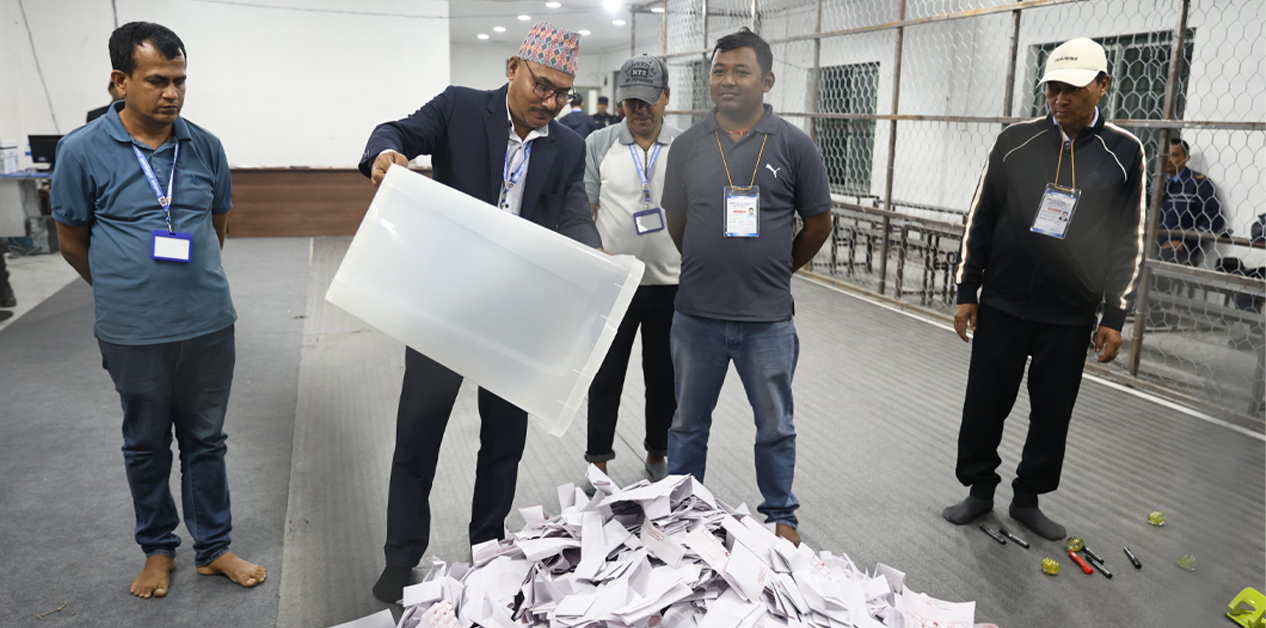
KATHMANDU: Just two weeks before the election, on 19 February, the Election Commission held a press conference at its own office and predicted that the overall voter turnout would increase and invalid votes would decrease in this election. However, as soon as the results of the March 5 election were made public, both of these projections by the Commission proved wrong. Overall voter turnout fell, and invalid votes increased.
In the 2022 House of Representatives election, a total of 61.41 percent of votes had been cast. This time, only 59.08 percent was cast. In the previous election, 5.06 percent of votes were invalid in the first-past-the-post category; now this rose to 5.45 percent. Although fewer votes were invalid in the proportional representation category compared to the previous two elections, invalid votes in the first-past-the-post category were the highest since 1991.
According to Election Commission data, out of 18,903,689 registered voters across the country, 11,168,032 votes were cast in the first-past-the-post category. Of the votes cast, only 10,559,017 votes (94.55 percent) were valid. The remaining 609,015 votes were declared invalid.
The Ministry of Finance had released Rs 19.21 billion for this election. Dividing the released amount by the votes cast shows that the election cost Rs 1,720 per voter. By this calculation, over Rs 1.0475 billion was wasted on invalid votes alone in the last election. This is only the government expenditure figure. If the spending by political parties and candidates is also added, the cost per voter and the cost of invalid votes both increase further.
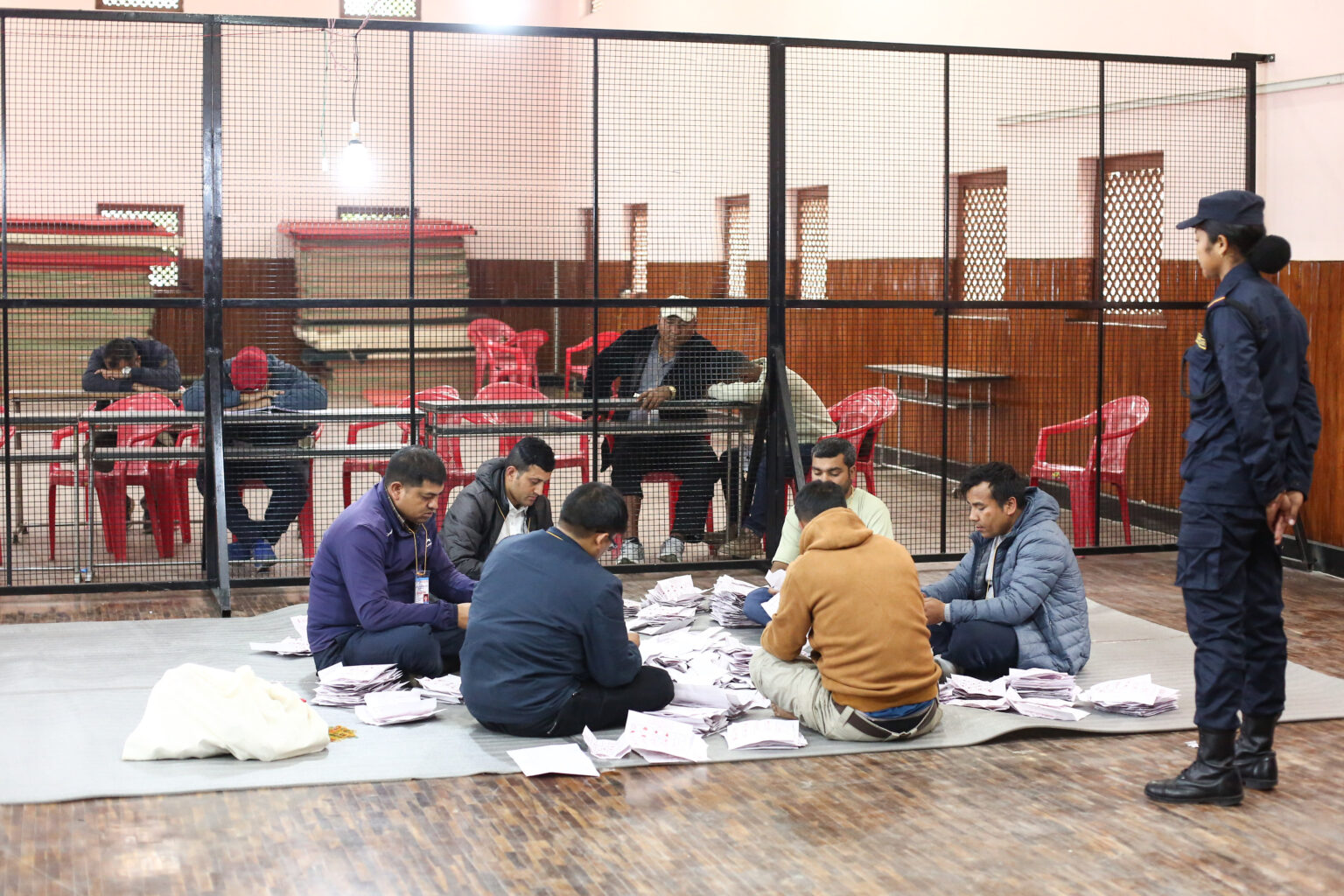
Vote counters counting ballots in Kathmandu Constituency No. 7.
If one examines the invalid vote figures across the eight parliamentary elections held from 1991 through the recent March 5 election, more than Rs 2.82 billion of state treasury funds has already been wasted. This is an amount that once covered the entire cost of an election — the total expenditure of the 2008 Constituent Assembly election was just Rs 2.966 billion.
In the 1991 general election, out of 11,191,777 registered voters, 7,291,084 participated. Of those, 322,023 votes (4.42 percent) were declared invalid. In that election, which cost a total of Rs 110 million from the state treasury, Rs 4.83 million alone was wasted on invalid votes.
In the 1994 election, invalid votes decreased to 240,961 (3.16 percent). However, since election expenditures had risen compared to before, the cost per voter also increased. That election cost Rs 240 million, and by that proportion, Rs 7.58 million was wasted on invalid votes.
In the 1999 election, of 8,894,566 votes cast, 244,902 (2.75 percent) were declared invalid. In that election, which cost Rs 360 million, Rs 9.91 million rupees was spent on invalid votes.
Although invalid votes declined across the three elections from 1991 to 1999, the financial burden of invalid votes kept increasing. After this period, the Maoists launched their armed conflict in the country.
After the 2006 People’s Movement, a peace agreement was reached between the Maoists and the government. As stipulated in the agreement, a Constituent Assembly election was held in 2008 to draft a new constitution.
The 2008 election was different from before, because that was when Nepal adopted a mixed electoral system. Ballots were large, and there were many parties and candidates. The percentage of invalid votes in that year’s election jumped sharply to 5.15 percent. Of the 10,866,131 people who voted that year, 560,011 votes were declared invalid. In that election, which cost Rs 2.966 billion, Rs 152.86 million was wasted on invalid votes.
After the first Constituent Assembly failed to promulgate a new constitution, another Constituent Assembly election was held in 2013. That year, of the 9,516,734 votes cast, 471,826 — that is 4.96 percent — were invalid. In that election, which cost Rs 5.989 billion, Rs 296.9 million was spent on invalid votes.
In the 2017 House of Representatives election, 548,570 votes were declared invalid. Of the 10,594,044 total votes cast, the share of invalid votes was 5.18 percent. In that election, which cost Rs 8.986 billion, Rs 465.3 million alone was spent on invalid votes.
Similarly, in the 2022 House of Representatives election, 559,076 votes — that is 5.06 percent of votes cast — were declared invalid. In that election, which cost Rs 16.5 billion, Rs 835 million was wasted on invalid votes.
With invalid votes rising in every election this way, the state has continued to bear losses.
With the aim of reducing invalid votes and producing well-informed voters, the Election Commission established the Election Education and Information Center in 20612. The government has been running voter education programs to reduce invalid votes in every election, with separate budget provisions made for this purpose. However, the Commission’s own data shows that voter education has not been effective.
Although invalid votes declined from 1991 to 1999, they increased notably in 1999. As noted in the book Election History of Nepal published by the Election Commission, an excessive number of parties had registered for that election, but only a few submitted closed candidate lists. This caused the ballot to become very large, creating considerable inconvenience for voters. Former Chief Election Commissioner Bhojraj Pokharel says the ballot paper itself was the main reason invalid votes increased that year.
Pokharel says that from 1991 to 1999 there was only one ballot paper and fewer candidates, making it straightforward for voters. But with the first Constituent Assembly election in 2008, the mixed system began. “With many candidates, the ballot itself was nearly three-quarters of a meter long. On top of that, voters had to stamp two ballot papers and got confused. That caused invalid votes to increase and state treasury money to be wasted,” he says.
The shortfall in voter education
Election Commission Information Officer Suman Ghimire says that looking at the trend of invalid votes in this election most cases involved two stamps placed on the same ballot paper. In some places, first-past-the-post ballot papers were found in the proportional representation box. For instance, in Okhaldhunga, a win or loss was decided by just five votes, yet 152 first-past-the-post ballot papers were found in the proportional representation box. Ballots found in the wrong box are declared invalid under existing rules.
Some ballot papers also had thumbprints instead of the official stamp. Ballot papers without an officer’s signature were also found. Krishna Man Pradhan, secretary general of the election observer body General Election Observation Committee (GEOC), says it was observed that fewer votes were invalidated for symbols in the upper rows of ballots and more for those in the lower rows. “During observation, between 50 and 200 first-past-the-post ballot papers were found in the proportional representation boxes at many polling booths. Since voters only receive the proportional ballot after stamping the first-past-the-post one, this could have been done intentionally,” he says. He also notes that poor quality ink caused smearing which led to further invalidations.
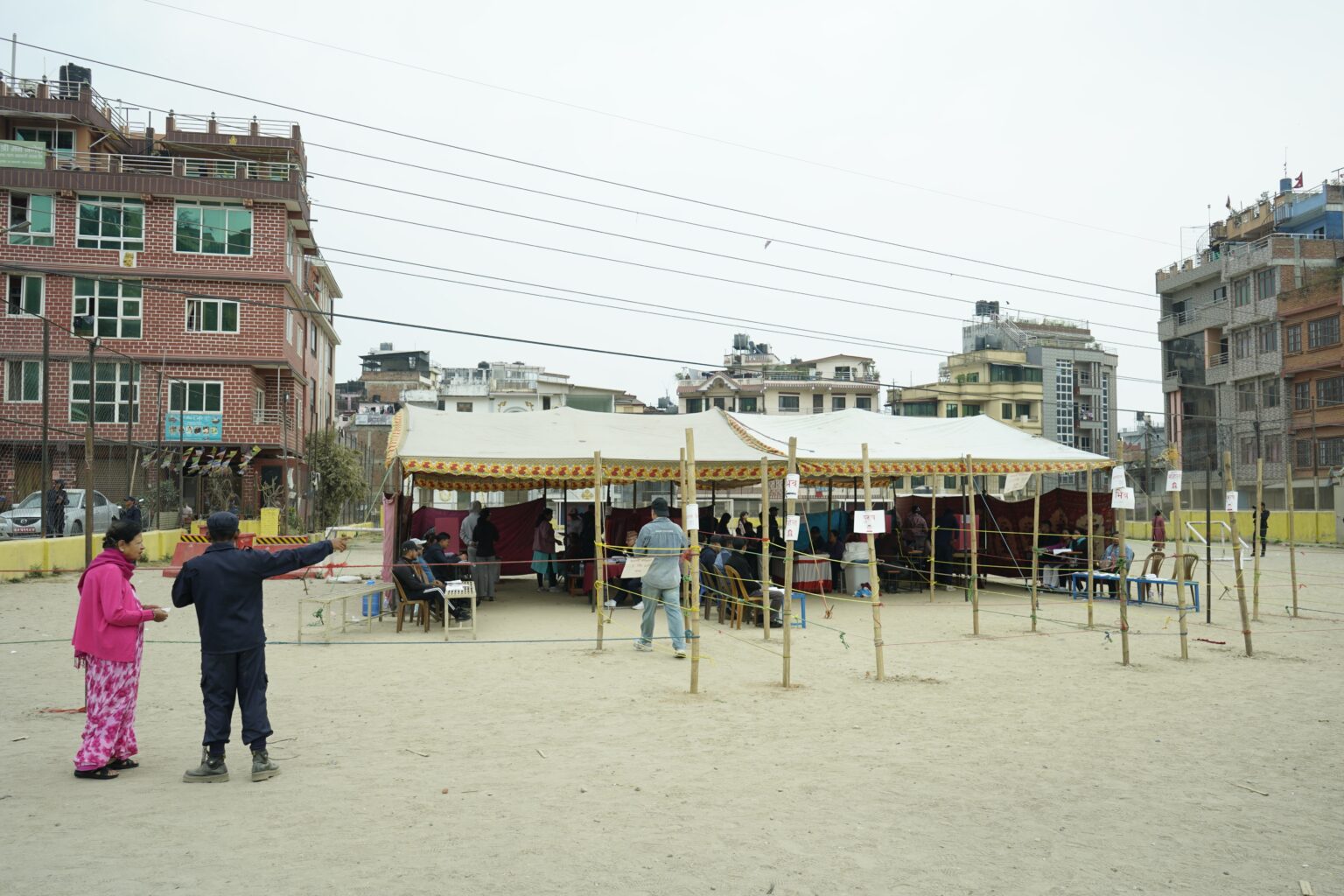
Polling station in Kathmandu Constituency No. 7. Photo: Bikram Rai.
Shekhar Parajuli, executive director of the Democracy Resource Center, says invalid votes have not decreased because voter education remains inadequate. “People were told to stamp two papers — one for first-past-the-post and one for proportional — but because the difference between the two ballots wasn’t explained clearly enough, cases were found where two stamps had been placed on the same paper,” he says. He also states that negligence by government staff contributed to invalid votes in some places.
Ballot papers have a symbol provision for voting for one candidate or another. However, experts say the absence of a ‘NOTA (None of the Above)’ option — a way to indicate rejection of all candidates — has also contributed to the high number of invalid votes. Parajuli also notes that some voters, not finding a candidate they wanted, have been found stamping their ballots randomly.
In the election souvenir published by the Election Commission in 2019, former deputy secretary of the Commission Desh Bandhu Adhikari wrote that the use of electronic voting machines would bring invalid votes down to zero.
The Auditor General’s report has repeatedly flagged the ineffectiveness of voter education. Commission Information Officer Ghimire says that to reduce invalid votes, not only the Commission but also parties and candidates must pay attention. “Parties and candidates only ask for votes but don’t really teach people how to vote correctly,” he says. Former Chief Election Commissioner Pokharel says that since state expenditure also increases as invalid votes rise, there is no alternative but for the Commission, parties, and candidates to all work together to make voter education effective.
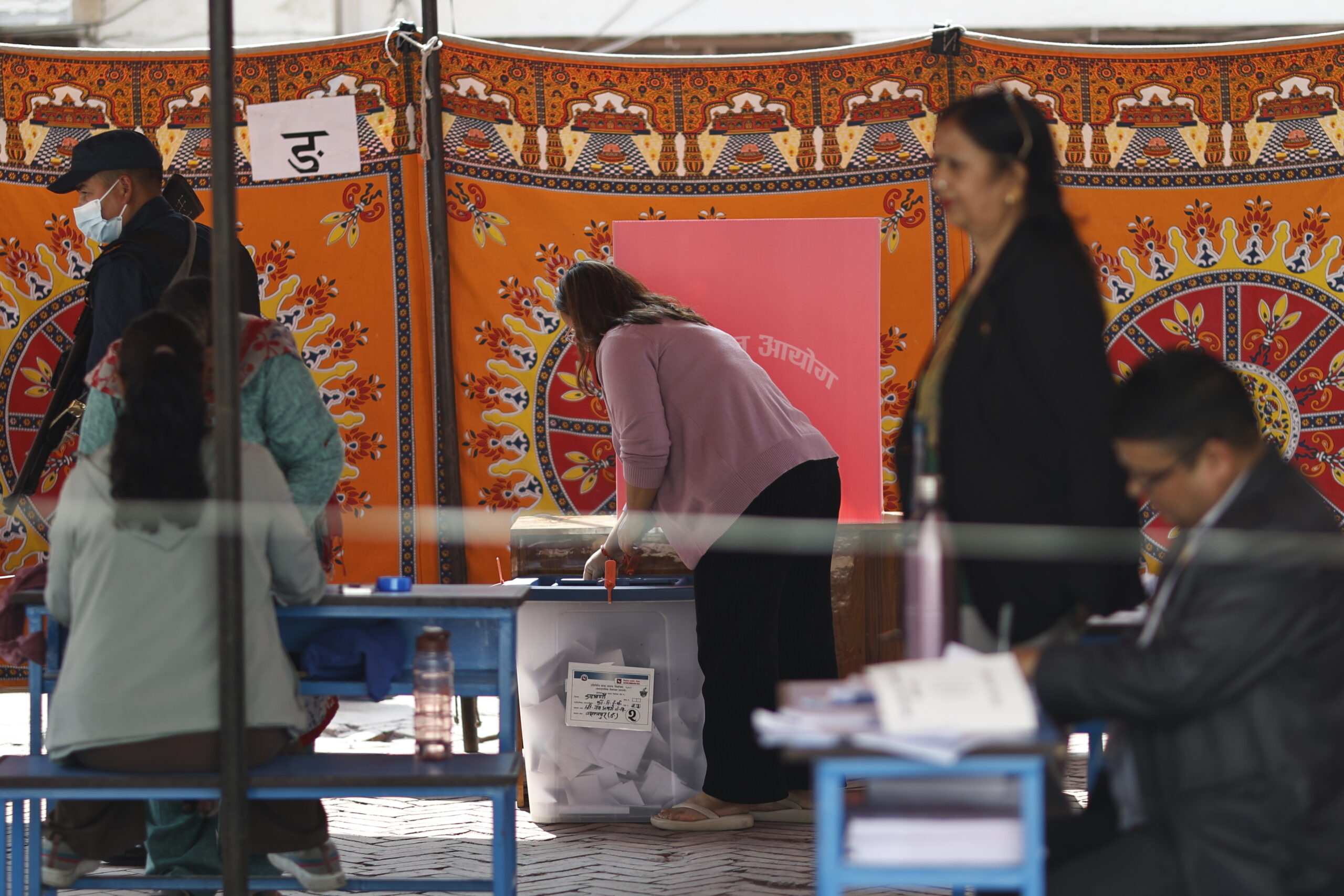
voters casting their votes at a polling center in Kathmandu. Photo: Bikram Rai
Joint Secretary Narayan Prasad Bhattarai, who also serves as the Election Commission spokesperson, claims that since the percentage of invalid votes decreased in the proportional category, it has decreased overall as well. This time, the Commission printed ballots only after the closed lists were submitted, tailored to the candidates in each constituency. “Voter education was provided down to the ward level, but we are preparing to review why invalid votes still increased in the first-past-the-post category,” Bhattarai says.