Kathmandu
Friday, June 26, 2026






KATHMANDU: Nepal News presents today’s snapshot of Nepal’s economic activities. Get quick updates on major market movements, policy shifts, and financial developments shaping the economy of Nepal. Here are the key economic highlights for today:
NRB Proposes Five-Stage Capital Account Liberalization
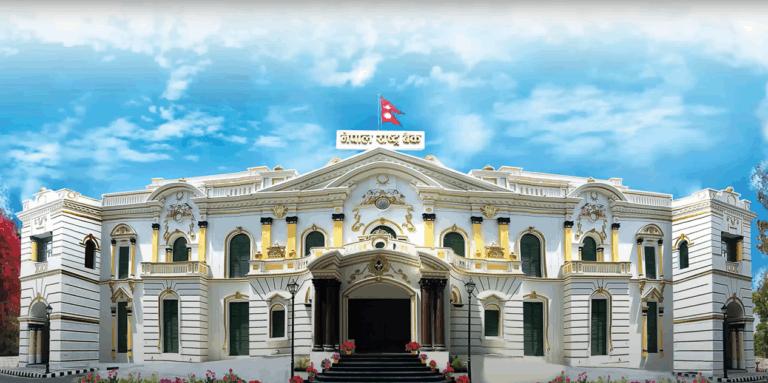
A new report titled “Liberalization of Foreign Exchange Policy and Capital Flow Management-2025” by Nepal Rastra Bank (NRB) outlines a strategic transition toward capital account convertibility. While Nepal achieved full current account convertibility in the fiscal year 1993/94, the report suggests a five-stage roadmap for further opening. Initial phases prioritize Foreign Direct Investment (FDI), followed by allowing non-residents into the share market and government bonds. Ultimately, the policy envisions a shift from the current fixed exchange rate with the Indian Rupee (INR) to a more flexible system. NRB emphasizes that maintaining fiscal discipline and low inflation are essential prerequisites for successful implementation.
Outgoing Finance Minister Begins Mandatory Cooling-Off Period
The outgoing Finance Minister Rameshore Khanal has officially entered a mandatory cooling-off period starting Friday. Following the completion of his tenure, Khanal announced via social media that he will no longer participate in any ministry-related activities or decision-making processes. Khanal specifically urged the public and media to refrain from spreading speculative rumors or “trial-balloon” news linked to his name regarding future fiscal policies or administrative actions. This transition marks the formal end of his leadership at the Ministry of Finance, moving the administration toward a period of interim management until a successor is officially appointed to lead the country’s economic affairs.
Finance Ministry Releases Rs 52 Billion for 2,042 Projects
The Ministry of Finance has lifted the suspension on 2,042 development projects, releasing funds totaling Rs 52.9 billion. These projects were among the Rs 119 billion worth of schemes previously frozen due to lack of preparation or low economic priority. According to the outgoing finance minister’s report, the release targets ongoing projects or those currently in the bidding phase. Additionally, the ministry has established an Rs 18.9 billion budget ceiling for the upcoming fiscal year. The report also noted that Rs 122 billion has been collected in infrastructure tax for the Budhigandaki Hydroelectric Project, with Rs 45 billion already spent on preparatory work.
Insurance Claims for Gen Z Protest Damage Reach Rs 23 Billion
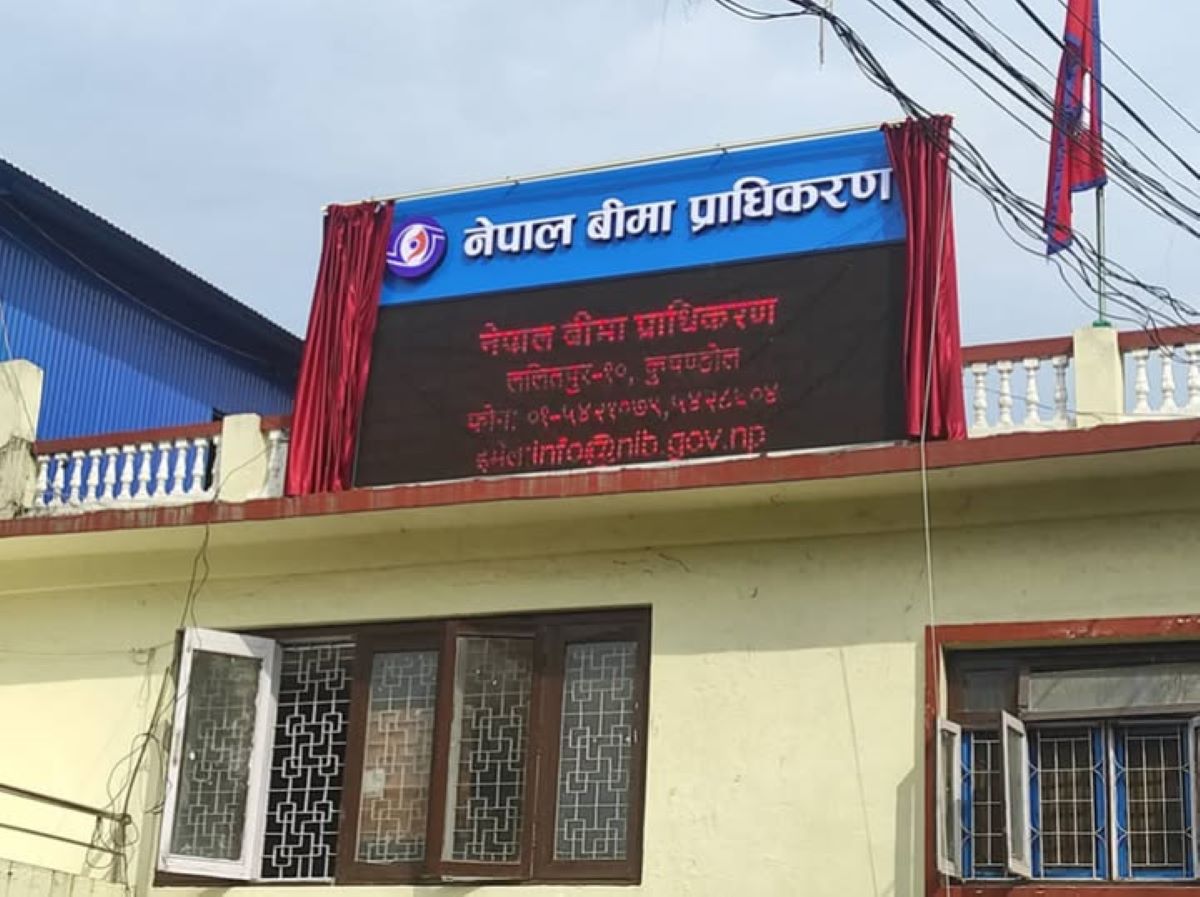
Insurance companies have received claims totaling Rs 23.381 billion following the Gen Z protests on September 8 and 9, 2025. By mid-March companies had paid out Rs 7.015 billion, approximately 30% of the total claims. This represents the largest claim volume in Nepali history, surpassing the 2015 earthquake. Motor insurance accounts for 70.54% of the claims, with 2,330 vehicles damaged. Geographically, Bagmati Province saw the most damage, with 1,839 claims. The Insurance Authority stated that while initial payments have been made, larger property claims await final surveyor reports and technical evaluations.
Commission Sets Internal Borrowing Limits for Three Government Tiers
The National Natural Resources and Fiscal Commission has recommended internal borrowing limits for federal, provincial, and local governments for the fiscal year 2026/27. Under the Intergovernmental Fiscal Management Act, 2017, the federal government is restricted to borrowing a maximum of 5.5% of the Gross Domestic Product (GDP). Provincial and local governments are limited to 12% of their total revenue from internal sources and federal transfers, subject to prior approval from the federal government. The commission emphasized that these funds must not be used for administrative expenses but should be directed toward projects with high economic returns, employment generation, and infrastructure development to ensure long-term debt sustainability.
Commission Recommends Rs 151 Billion in Equalization Grants
The National Natural Resources and Fiscal Commission has recommended Rs 151.707 in fiscal equalization grants for provincial and local governments for the fiscal year 2026/27. The recommendation allocates Rs 61.05 billion to the seven provinces and Rs 90.204 billion to local levels. This unconditional grant aims to bridge the gap between expenditure needs and revenue capacity. To ensure all 753 local units can fulfill their constitutional duties, the commission adjusted allocations to ensure a minimum of Rs 70 million for 40 lower-income municipalities.
Labor Ministry Resumes Work Permits for 7 Middle Eastern Nations
The Ministry of Labor, Employment, and Social Security has decided to resume labor permit renewals for Nepali workers in Saudi Arabia, the UAE, Qatar, Oman, Yemen, Jordan, and Turkey. This decision applies to workers currently on home leave who wish to return to their jobs following a reduction in regional tensions. However, the suspension remains for Iran, Israel, Bahrain, Kuwait, Iraq, and Lebanon. To date, nearly 74,000 Nepali citizens have registered their details on a government portal since March 3 to track their safety. Government authorities stated they are prepared for evacuations if necessary, though current assessments do not require such measures.
Over 700 New Small Industries Registered in Mid-March
A total of 717 new small and cottage industries were registered in the district by March 14 of the current fiscal year. According to the Office of Cottage and Small Industries, this includes 316 industrial firms and 401 commercial entities. During the same eight-month period, 1,262 existing firms were renewed, while 213 were officially dissolved. The office collected Rs 13.5 million in revenue from various registration and administrative fees. Authorities noted that while official closures remain relatively low, many unregistered or unrenewed businesses may have quietly ceased operations due to shifting economic conditions or administrative negligence.
Cyber Bureau Issues High Alert Over Online Scam Surge
The Cyber Bureau of Nepal Police has issued a high alert following a rapid increase in online fraud involving hijacked WhatsApp accounts. Scammers are reportedly hacking accounts to send distress messages to the victims’ contacts, requesting urgent financial help via digital wallets or QR codes. Frequent tactics include claims of medical emergencies or technical issues with banking apps to lure people into sending money. Police authorities have advised the public to never click on suspicious links or scan unverified QR codes. They emphasized that individuals must verify such requests through a direct phone call before performing any financial transaction to avoid falling victim to these increasingly sophisticated social engineering attacks.
Tourist Arrivals Increase in National Park Over 11 Months
Visitor numbers at the national park and surrounding community forests have risen by 12,412 compared to the previous year. During the first 11 months of the current fiscal year, a total of 168,695 tourists visited, up from 156,283 last year. This includes 104,096 Nepali citizens, 9,544 from SAARC nations, and 55,055 from other countries. The park collected Rs 175.7 million in total revenue, primarily from ecotourism at Rs 166.3 million. Other income sources included sales of forest products and legal penalties. The rise is attributed to the popularity of wildlife sightings, including tigers and rhinos.
Declining Market Prices Discourage Spring Paddy Cultivation in Jhapa
Farmers in Jhapa are showing reduced interest in Chaite cultivation this year due to low market returns for the spring-harvested crop. Despite the government increasing the minimum support price for Chaite to Rs 2,869 per quintal in the fiscal year 2024/25, farmers reportedly received only Rs 1,500 to Rs 1,750 from private millers. Consequently, the Agriculture Knowledge Center predicts a decrease of 3,000 to 4,000 hectares in the Chaite area this season. Although production reached 106,134 metric tons from 19,950 hectares last year, the ongoing mismatch between government-fixed prices and actual market rates has discouraged farmers from maintaining previous production levels.
Humla Requests Additional 1,500 Quintals of Subsidized Salt
A multi-party meeting in Humla has requested an additional 1,500 quintals of iodized salt to meet the current fiscal year’s shortage. The Salt Trading Corporation branch in Simkot confirmed that the initial quota of 4,319.68 quintals has mostly been sold, leaving a deficit for the remaining four months. The request includes 500 quintals each for the Tanjakot-Adanchuli, Chankheli-Sarkegard, and Kharpunath-Simkot-Namkha clusters. Additionally, a total quota of 6,130 quintals has been proposed for the fiscal year 2026/27. Due to government transport subsidies, residents of Humla are able to purchase salt at the controlled rate of Rs 9 per kilogram.
Commercial Poultry Farming Survey Reveals Rs 61 Billion Meat Market
The National Statistics Office has released the Nepal Commercial Poultry Survey 2024/25, revealing that commercial poultry farming is active in 75 (75) districts, excluding Manang and Mustang. The report identifies 22,928 commercial farms, with 21,104 focused on meat and 1,706 on egg production. Annually, the sector generates Rs 60.96 billion in meat sales, Rs 14.82 billion in eggs, and Rs 10.22 billion in chicks. Despite the scale, only 63.7% of farms are registered, and a mere 4.1% have insurance. Bagmati Province leads the industry with 34.4% of the nation’s total poultry farms.
Hatchery Chick Prices Reach Cost Recovery Level After Two Years
Hatchery operators in Nepal report that chick prices have reached production cost levels for the first time in over two years. Currently, broiler chicks are selling for Rs 90 and layers for Rs 160 per unit, surpassing production costs of Rs 65 and Rs 120, respectively. Industry representatives noted that previous slumps saw broiler prices drop to Rs 25, forcing many small farmers and over 250 broiler hatcheries to shut down. The recent price recovery is attributed to reduced domestic production and stricter border controls on Indian poultry imports. Operators continue to lobby the government for permanent measures against illegal cross-border trade to protect the domestic poultry sector’s long-term stability.
Commerce Department Fines 2 Firms for Consumer Act Violations
The Department of Commerce, Supplies and Consumer Protection has fined two firms following market inspections in Kathmandu and Bhaktapur. An agency based in Sinamangal was fined Rs 205,000, while a hardware business in Sallaghari faced a penalty of Rs 20,000. Both were penalized under the Consumer Protection Act, 2018, for conducting business against legal provisions. Additionally, 11 other firms received corrective instructions to improve their business practices. The department confirmed that regular monitoring continues in coordination with local administration and consumer rights activists to ensure market transparency and prevent the exploitation of consumers through illegal trade practices.
Nawalpur Community Forest Begins Organic Fertilizer Production
The Madhyabindu Partnership Forest Users Group in Kawasoti-14, Nawalpur, has initiated organic fertilizer production using forest waste. This project, the first of its kind in Gandaki Province, utilizes dry leaves, shrubs, and biomass that otherwise pose fire hazards during the dry season. Forest officials stated the initiative aims to reduce forest fires while providing affordable, high-quality organic manure to local farmers. The production involves mixing shredded forest waste with cattle dung, ash, and red soil under technical supervision. Beyond environmental benefits, the program creates local employment in waste collection and processing. The first batch of fertilizer is expected to be ready for market distribution in approximately 100 days following a cost analysis.
Land Offices Resume Operations After Protests and Fire Damage
All 22 Land Reform and Revenue Offices and 14 Survey Offices damaged during the September 9, 2025, protests are now operational. According to the Department of Land Management and Archive, 10 offices that suffered total destruction have been relocated to rented buildings or repaired. The Kalanki office alone has restored 30,000 out of 300,000 burnt records using the Land Records Information Management System (LRIMS). Since the fiscal year 2020/21, digital backups have allowed authorities to reissue land ownership certificates. Residents with original titles and tax receipts can apply for new records, which are typically processed within one to two days to facilitate property transactions.
Dhangadhi Transport Office Collects Over Rs 481 Million Revenue
The Transport Management Office in Dhangadhi has collected a total revenue of Rs 481.9 million so far in the current fiscal year 2025/26. According to government authorities, the highest collection came from vehicle taxes, totaling Rs 378.3 million, while the lowest was from business registration fees at Rs 1.2 million. Revenue from driver’s licenses, renewals, and fines accounted for Rs 93.5 million, with an additional Rs 8.8 million from route permits and pollution tests. In the previous fiscal year, 2024/25, the office collected Rs 755.6 million, notably maintaining zero financial arrears.
Delayed Road Construction Paralyzes Business in Dhulabari Market
The stalled construction of the Sahidmarga road in Mechinagar has severely impacted local trade, leading to business closures in the once-thriving Hong Kong Market area. Business associations report that dust and stagnant drainage work have made shops unusable, leaving entrepreneurs unable to pay bank interest or rent. The project, funded by a USD 7.8 million World Bank loan, covers 5.3 kilometers from Dhulabari Mode to Khuttidangi. Contractors claim that while only 100 meters of blacktopping remains in one ward, the municipality’s failure to clear construction sites and a pending payment of Rs 27.5 million have halted further progress.
Blacktopping Begins on Rs 300 Million Khotang Road Project
Construction has commenced for the blacktopping of the Khanidanda-Yamkha-Ratmata road connecting to the Diprung Chuichumma rural municipality office. Funded by the Koshi Province government with a multi-year budget of Rs 300 million, the contract was awarded to a joint venture for Rs 173 million. The project covers 8.2 kilometers from Ahale to Yamkha and is scheduled for completion within two years. This road provides a vital link to southern Khotang and is expected to significantly reduce travel time and transport costs for local residents. Government authorities have urged strict monitoring to ensure the project meets its deadline before this year’s monsoon.
Land Disputes Stall 4 Strategic Bridges on Nagma-Gamgadhi Road
Construction of four out of 10 concrete bridges along the Nagma-Gamgadhi road, a vital route to Rara Lake, remains stalled due to unresolved land compensation issues. Although a contract worth Rs 320 million was signed on February 21, 2022, with a completion deadline of mid-December 2025, local residents have halted work, demanding immediate payment for their land. While six bridges are operational, the 25-meter Kalikakhetu bridge and structures at Rokayabada, Guthijyula, and Gamgadhi are abandoned. Government authorities have forwarded compensation files for departmental review to resume work and complete the remaining 35% of the financial progress.
Two Concrete Bridges Completed on Dhangadhi-Dipayal Expressway
Under the Dhangadhi-Khutiya-Vipinagar-Dipayal Fast Track project, two concrete bridges have been completed in the Dhangadhi-Syaule section. According to project engineers, the bridges were constructed over the Jonapur and Rasikuti rivers at a total cost of Rs 31.5 million. The infrastructure includes asphalt blacktopping and riverbank embankments to ensure durability. The construction company officially handed over the completed structures to the project office last week. These bridges are expected to enhance connectivity along the strategic expressway, facilitating smoother transit between the Kailali and Doti districts. The completion marks a significant milestone in the provincial government’s efforts to upgrade regional transport networks and improve accessibility for far-western residents.
New Suspension Bridge Completed Over Triyuga River in Udayapur
A new suspension bridge has been constructed over the Triyuga River at Belahi, Chaudandigadhi Municipality-5, Udayapur, following the destruction of a partially built concrete bridge by floods. The new structure, measuring 280 meters in length and five meters in width, was completed at a cost of approximately Rs 6 million. According to municipal authorities, the bridge will serve nearly 5,000 residents of wards 5, 9, and 10, who previously relied on boats during the monsoon to reach Beltar Market. A concrete bridge project initiated in the fiscal year 2010/11 with a budget of Rs 112.7 million was abandoned after floods destroyed its pillars in the monsoon of 2021.
Gold Prices Drop in Nepali Market on Friday
The price of gold has fallen in the Nepali market on Friday. According to the price list published by the Federation of Nepal Gold and Silver Dealers’ Association, the price of gold has decreased by Rs 7,800 per tola (11.66 grams). The Federation stated that the pure gold, which was traded at Rs 294,500 per tola on Thursday, is being traded today, Wednesday, at Rs 302,300. Likewise, the price of silver has also declined today. Silver, which was traded at Rs 5,010 per tola on Thursday, has decreased by Rs 185 today and is being traded at Rs 4,895.