Kathmandu
Tuesday, July 28, 2026





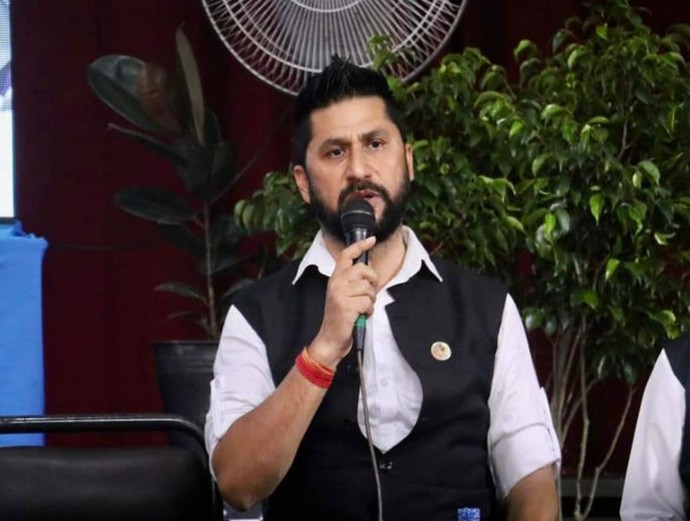
KATHMANDU: Satyaram Joshi, the jailer at Nakkhu Prison in Lalitpur during the release of the Rastriya Swatantra Party president Rabi Lamichhane, has presented a detailed account to the Gauri Bahadur Karki-led probe commission that contradicts Lamichhane’s version of events. Joshi described how the situation escalated inside and around the prison on Bhadra 23–24, 2082 BS (September 8–9, 2025), leading to a chaotic mob takeover.
In his statement, Joshi said he was regularly present in his office during the period in question. “On Bhadra 23 (September 08), the situation was normal. From early morning on Bhadra 24, I observed inflammatory content spreading on social media and unauthorized surveillance increasing around the prison.
Here is a English translation of the testimony of Satya Ram Joshi, Jailer of Nakkhu Prison:
“I was regularly present at my office on Bhadra 23 and 24, 2082 (September 08 & 09, 2025). While the situation was normal on the September 08 provocative content began appearing on social media on the morning of the September 09. After noticing unauthorized surveillance around the prison perimeter, I informed the Chief District Officer (CDO), the Ministry of Home Affairs, the Peace and Security Division, and the Department of Prison Management, and called an emergency security meeting. We discussed crowd control strategies, alternative exit plans, and overall security preparedness.
At approximately 13:40, thousands of protesters began attacking the prison’s main gate with stones and vandalism, chanting slogans to ‘Free Rabi Lamichhane.’ Seeing the situation spiral out of control, I again made both written and verbal requests to the CDO and the Home Ministry to mobilize the army; however, additional security forces were not immediately available. Around 13:50, the mob breached the main gate and forcibly took control of the prison.
At that time, there were 1,281 prisoners in the facility. As the crowd targeted Rabi Lamichhane, I decided to temporarily move him to the Psychosocial Disability Prisoner Hospital within the prison for the safety of all inmates. Later, he requested a microphone, stating, ‘I will try to reason with the crowd.’ Security personnel then sent him before the crowd, who subsequently took him away from the prison premises. I immediately reported this incident to the Home Ministry and the CDO.
After he was taken out, the mob grew even more violent. Arson was committed in the prison administration’s record room and the police building, forcing both the Police and Armed Police Forces to retreat. My staff and I sought refuge inside the hospital building to save our lives. It was during this period that the mob, through extreme threats and fear of death, forced me to sign an unknown letter. I had no prior knowledge of the letter’s contents. As the signature was obtained under duress and in a state of terror, it carries no legal standing.”