Kathmandu
Monday, July 27, 2026






KATHMANDU: Nepal News presents today’s snapshot of Nepal’s economic activities. Get quick updates on major market movements, policy shifts, and financial developments shaping the economy of Nepal. Here are the key economic highlights for today:
Govt. Slashes Fuel Customs Duty and Infrastructure Tax by 50%
The Council of Ministers has decided to reduce the customs duty and infrastructure development tax on petroleum products by 50 percent. During a cabinet meeting held on Tuesday, the government approved the tax relief measure to mitigate the impact of rising international fuel prices. According to the Ministry of Federal Affairs and General Administration, this reduction is intended to provide immediate financial relief to consumers as energy costs continue to climb due to regional conflicts.
Kiran Pandit Appointed as Deputy Governor of NRB
The government has appointed Kiran Pandit as the new Deputy Governor of Nepal Rastra Bank (NRB). The decision was finalized during a cabinet meeting on Tuesday following a proposal from the Ministry of Finance. Pandit, who previously served as an executive director in the Foreign Exchange Management Department, fills one of the two vacant deputy governor positions. He brings extensive experience from various departments within the NRB to his new leadership role at the central bank.
NEPSE Falls 2.61 Points Today Amid Lower Turnover
The Nepal Stock Exchange (NEPSE) declined by 2.61 points, or 0.09 percent, closing at 2,757.40 on Tuesday, the third trading day of the week, with lower transaction volume than previous days. The sensitive index fell 0.78 points to 471.13, while the float index and sensitive float index dropped 0.14 percent and 0.20 percent, respectively. A total of 1,746,616 shares of 345 companies were traded through 81,582 transactions, recording a turnover of Rs 6.737 billion. Of 13 sectors, four rose, led by hotel and tourism (up 1.08 percent), while nine sectors, including development banks and trading, recorded declines.
Govt. Accepts Rs 11.39 Billion World Bank Loan for Greater Lumbini Project
The Council of Ministers has decided to accept a concessional loan of USD 85 million (around Rs 11.39 billion) from the World Bank to implement the Greater Lumbini Resource Efficiency and Heritage Recovery Project. Announced by Minister for Federal Affairs and General Administration Pratibha Rawal following a cabinet meeting on Tuesday, the funding will revitalize the Buddhist circuit across Kapilvastu, Rupandehi, and Nawalparasi (Bardaghat Susta Paschim). The project includes infrastructure development such as roads, drainage, and electrification, alongside the construction of meditation centers, rest areas, and information centers for pilgrims. The World Bank’s board in Washington D.C. approved the credit on March 13, aiming to establish Lumbini as a global spiritual and cultural hub while boosting local tourism and employment.
SEBON Approves New Circuit Breaker Limits for NEPSE
The Securities Board of Nepal (SEBON) has approved a proposal from the Nepal Stock Exchange (NEPSE) to modify the “Circuit Breaker” system to allow for longer trading windows. Under the new rules, the first circuit break will trigger at a 5 percent fluctuation within the first two hours, halting trade for 15 minutes, replacing the old 4 percent trigger. Furthermore, the limit for a full-day market closure has been increased from 6 percent to 8 percent. These changes, aimed at addressing investor demands for market stability, are expected to be implemented immediately to manage volatility in the share market.
Petroleum Imports Generate Rs 86.58 Billion in Revenue Amid Rising Prices
The Nepal Oil Corporation (NOC) reported that petroleum imports worth Rs 177.12 billion between July 17, 2025, and February 14, 2026, generated Rs 86.58 billion in government revenue. Currently, taxes account for Rs 65.84 per liter of petrol and Rs 48.35 per liter of diesel. Despite international price hikes, the NOC claims it is still incurring losses of Rs 34.36 per liter on petrol and Rs 416 per LPG cylinder. To curb consumption, the government has already implemented a two-day weekend (Saturday and Sunday), as daily national demand remains at 2.5 million liters for petrol and 5 million liters for diesel.
Finance Ministry Slashes Fuel Allowances for High-Ranking Officials
Minister for Finance Swarnim Wagle has approved a significant reduction in fuel allowances for government employees and high-ranking officials to stabilize the economy against rising energy costs. Under the amended “Operating Guidelines, 2081,” the monthly fuel quota for secretaries and special class officers has been cut from 125 liters to 70 liters. Joint secretaries will now receive 50 liters, down from 100 liters, while two-wheeler allowances were reduced from 12 to eight liters. The Ministry also mandated that “pool vehicles” must be shared by at least three people to discourage single-use transport and curb public expenditure.
Govt. Freezes Rs 58 Billion in Development Projects Amid Budget Cuts
The interim government has frozen approximately Rs 58.168 billion from the budgets of various development ministries for the current fiscal year. While Rs 119 billion was initially suspended following the Gen Z protests to eliminate unproductive spending, only Rs 52.9 billion for 2,042 projects has been released. The Ministry of Urban Development remains the most affected, with 1,400 projects still stalled. Officials from the Ministry of Finance noted that new contracts for these projects are unlikely to be awarded this year as the fiscal cycle nears its end.
Cabinet Accepts Resignations of Cooperative Management Committee Members
The government has formally accepted the resignations of the chairman and two expert members of the Problematic Cooperative Management Committee. Chairman Shriman Gautam and expert members Lalit Kumar Maharjan and Dhruv Acharya submitted their resignations to the Ministry of Land Management, Cooperatives and Poverty Alleviation on Tuesday. The trio had been appointed on May 2, 2024, for a two-year term but chose to step down before their tenure concluded. The Council of Ministers approved the departures during their latest session.
Department of Transport Management Ramps Up License Printing to 40,000 Daily
The Department of Transport Management (DoTM) has significantly accelerated the production of driver’s licenses, increasing daily output from 2,500 to 40,000 cards. This surge follows the government’s “100-Day Governance Reform Agenda,” which aims to deliver licenses directly to citizens’ homes via a modernized postal service. Following the October 29, 2025, agreement with the Security Printing Center, 300,000 licenses have already been dispatched to various districts. The Department is currently working to clear a backlog of nearly 3 million licenses and plans to implement a new software system by mid-August to ensure licenses are issued within 24 hours of revenue payment.
Bagmati Province Mandates 10% Free Beds for Impoverished Patients
The Ministry of Health of Bagmati Province has issued a mandatory directive requiring all hospitals within the province to allocate at least 10 percent of their total beds for free treatment of the poor and marginalized. Citing Section 3(6) of the Provincial Health Services Act, 2018, the Ministry stated that hospitals operated by private entities and NGOs across 13 districts must implement this immediately. Facilities are required to establish social service units to identify and assist helpless, disabled, and impoverished individuals. The Ministry warned that non-compliant institutions will face strict legal action.
Karnali Province Cited as Food Secure Due to Organic Initiatives
The Ministry of Land Management, Agriculture and Cooperatives of Karnali Province has identified the region as the most food-secure among the seven provinces regarding food quality. During an orientation program in Birendranagar on Monday, officials noted that the province’s focus on discouraging chemical fertilizers in favor of organic production has improved the safety and nutritional value of local crops. However, the Food Technology and Quality Control Office emphasized that maintaining this status requires continued coordination between local administrations and consumers to prevent foodborne illnesses and ensure responsible food distribution.
Local Representatives Urge Immediate Operation of Bhairahawa Airport
Elected representatives of Siddharthanagar Municipality, Rupandehi, have called upon the federal government to ensure the immediate and regular operation of Gautam Buddha International Airport. During the inauguration of a new administrative building in Bhairahawa on Monday, local leaders highlighted that the lack of international flights has pushed regional businesses and industries toward collapse. They argued that the multi-billion investment in the airport is crucial for revitalizing the national economy and promoting tourism in Lumbini. Municipal officials pledged to continue lobbying the central government until regular flight schedules are established.
Local Unit Gifts Bank Accounts to 36 Newborn Girls
Hupsekot Rural Municipality in Nawalparasi (Bardaghat Susta Purba) has deposited Rs 5,000 each into the bank accounts of 36 newborn girls under the “Golden Future for Our Daughters” program. The local government has released a total of Rs 180,000 for children born through February/March. To qualify, parents must be permanent residents and register the birth at the ward office. The program, active since fiscal year 2020/21, aims to encourage higher education savings, discourage feticide, and promote institutional births and timely birth registration within the community.
Irrigation Expansion Benefits 300 Farmers in Kanchanpur
Commercial farming in Shuklaphanta Municipality-5, Kanchanpur District, has received a boost following the installation of 30 shallow tube wells and two autogen borings over the last three years. The initiative, funded through ward office subsidies, has extended irrigation facilities to approximately 50.1676 hectares of land, benefiting over 300 farmers. For the current fiscal year, the ward has allocated Rs 400,000 to install an additional 10 tube wells and one boring. Technically, a single shallow tube well can irrigate 33863.13 square meters, while an autogen boring covers over 7.52514 hectares, significantly reducing local reliance on seasonal rainfall.
Remote Local Unit Begins Construction of New Administrative Building
Tyamkemaiyum Rural Municipality in Bhojpur has officially laid the foundation for a new administrative building with a total investment of Rs 57.1 million. The project is being funded through a cost-sharing model, with the federal government covering 60 percent and the rural municipality contributing 40 percent. Currently operating out of rented and temporary structures, the local government aims to complete the permanent facility by October 6, 2027. The new building is expected to centralize administrative and judicial services, improving efficiency for local residents.
NSO and CNI Partner to Enhance Economic Data Analysis
The National Statistics Office (NSO) and the Confederation of Nepalese Industries (CNI) have signed a Memorandum of Understanding (MoU) to cooperate on collecting and analyzing reliable economic data. The partnership aims to strengthen the national statistics system by focusing on industrial expansion, private sector economic activities, and policy research. Under the agreement, both organizations will collaborate on national economic censuses and capacity-building programs. Officials from the NSO and CNI emphasized that quality, timely data is essential for effective policymaking and the overall economic development of the country.
Local Cooperatives Stop Milk Supply to DDC Over Non-Payment
Dairy cooperatives in Nawalparasi (Bardaghat Susta Paschim) have ceased selling milk to the state-owned Dairy Development Corporation (DDC) due to chronic payment delays. Despite collecting cash from consumers, the DDC reportedly owes cooperatives in the district over Rs 100 million, with some payments pending for over six months. As a result, major suppliers like the Bhumahi and Chandrodaya cooperatives have shifted their daily collection of thousands of liters to private dairies such as Himalaya Dairy and Nepal Dairy. While private firms also face some payment irregularities, cooperative leaders stated they are more reliable than the government entity.
Nepal Telecom Ends Automatic Balance Deductions After Data Exhaustion
Nepal Telecom (NTC) has initiated comprehensive service improvements, including the termination of automatic balance deductions once a user’s data pack expires. Following directives from the Ministry of Communication and Information Technology, the state-owned utility is transitioning to a “Pay-As-You-Go” system where customers will receive a notification at 90 percent data usage and must explicitly choose to continue using the internet or purchase a new pack. According to ministry officials, this feature will be integrated into USSD services within three to five days and the mobile app within 10 days. The reforms also include a “One-Time KYC” system to be implemented within 30 days and the full digitization of services such as e-SIM distribution and SIM ownership transfers.
British ambassador inaugurates Unilever plant in Hetauda
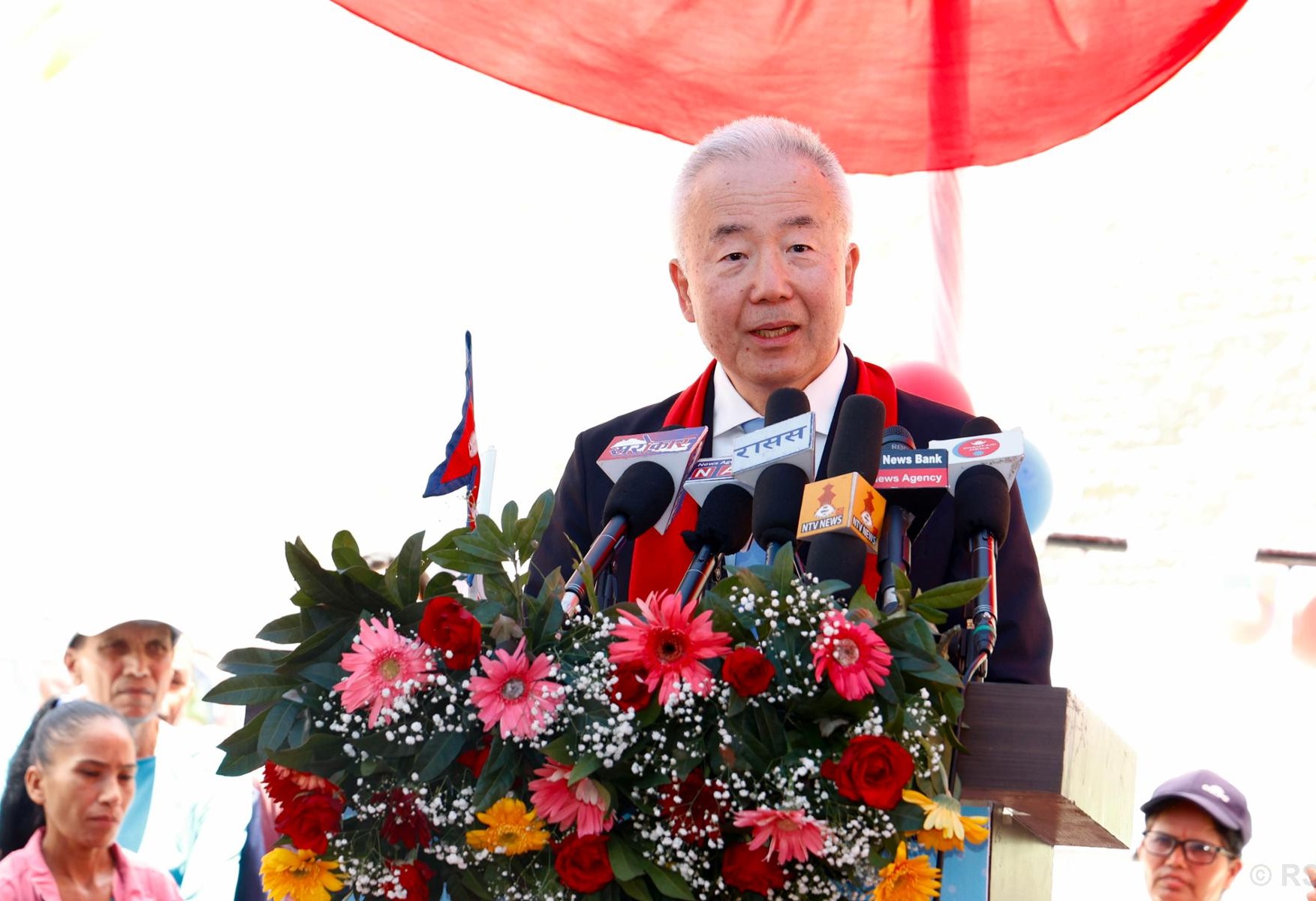
British Ambassador to Nepal Rob Fenn visited the Hetauda factory of Unilever Nepal, a British multinational company, where he inaugurated the company’s Home Care Liquid Plant. During the visit, he observed the manufacturing facility and its practices related to safety, quality, and environmental responsibility. The Hetauda plant is regarded as one of Unilever’s top manufacturing facilities in South Asia. Unilever Nepal has been operating in Nepal for more than 30 years, contributing to economic growth by creating jobs and promoting domestic innovation.
Gold, Silver Prices Rise
Gold prices have increased moderately in the market today. According to the Federation of Nepal Gold and Silver Dealers, the price of gold has increased by Rs 400 per tola (11.66 grams) to Rs 291,800 today. Earlier, gold was traded at Rs 291,400 per tola yesterday. Similarly, the price of silver has also increased moderately today. Today, silver is trading at Rs 4,820 per tola, up by Rs 40.