Kathmandu
Monday, July 27, 2026





The generation that rose by challenging the political establishment now faces a greater test: proving it can govern with the accountability.
KATHMANDU: It is frequently said that rights and duties are two sides of the same coin in a democracy. However, in Nepal’s current political landscape, this is not merely a moral sermon; it has become a fundamental question of governance. Until yesterday, many of the youth speaking out against corruption, unemployment, inequality, and state arbitrariness have today reached decisive positions in the government and parliament. Therefore, their identity is no longer limited to citizens demanding rights. They have also become duty-bearers responsible for safeguarding the rights of other citizens.
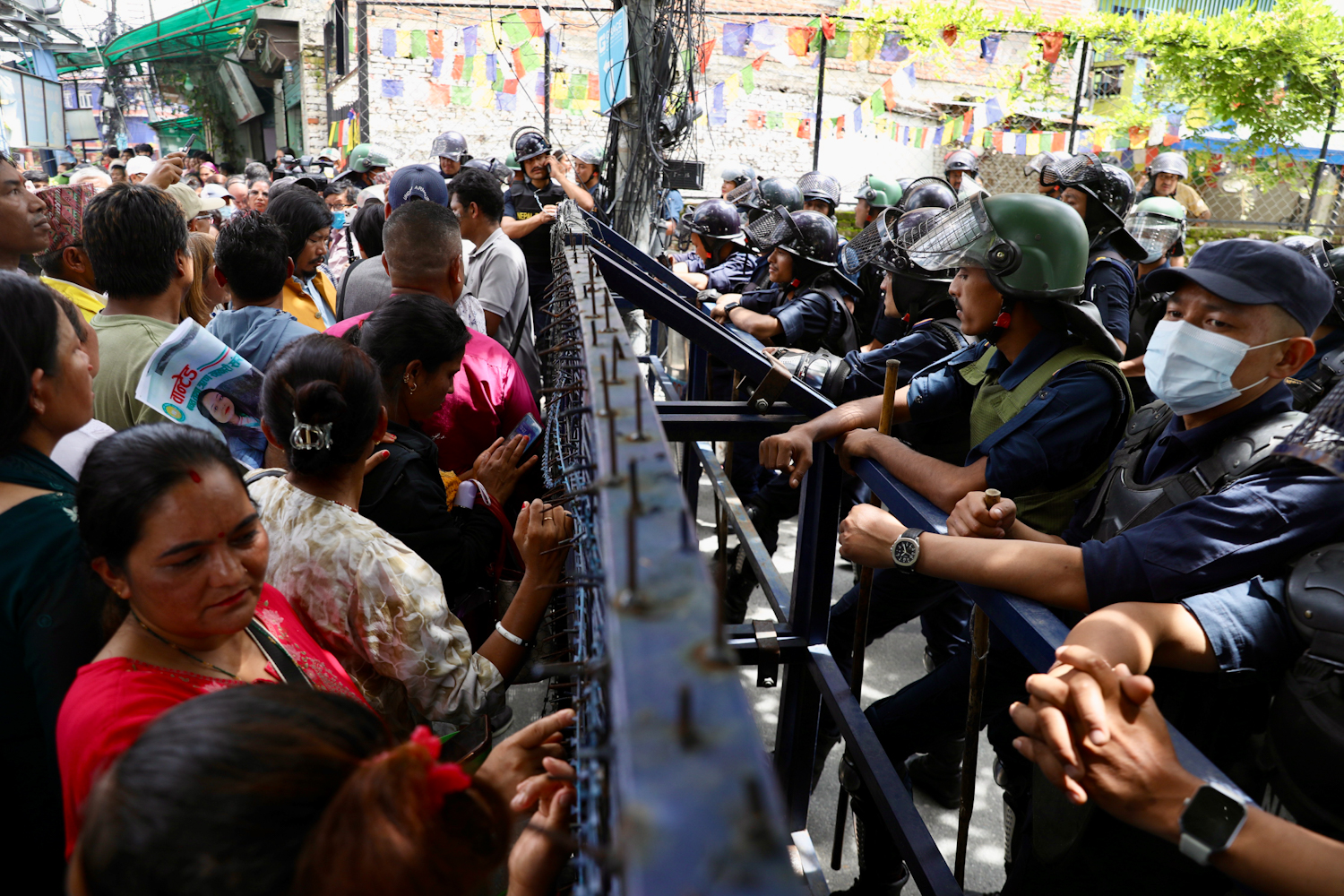
The youth protest that erupted in August 2025 against corruption, unemployment, and the ban on social media transformed Nepal’s political direction. Following the protest, the then-government led by K.P. Sharma Oli collapsed. An interim electoral government was formed. The House of Representatives was dissolved, and parliamentary elections were held on March 5, 2026. Over 800,000 new voters were added to those elections, with more than two-thirds belonging to the younger generation. This provided an opportunity to institutionalize the energy of the protest through elections.
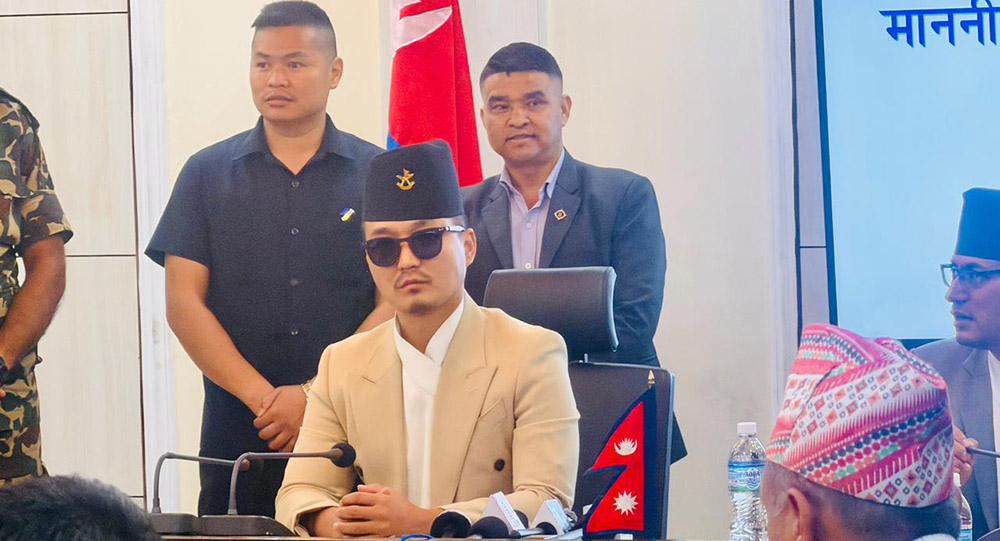
In the House of Representatives formed after the election, 61 lawmakers aged up to 40 were elected. The youngest lawmaker is 25 years old, and the Deputy Speaker is also of this age. Some new and young candidates even defeated top leaders of established parties. Among the initial 15-member Council of Ministers, 10 were under the age of 40. This can be considered a significant generational shift in Nepali politics, but it cannot be regarded as the final proof of governance reform. Youth representation is an achievement in itself, but the true success of youth leadership will depend on the outcomes it delivers.
One’s rights, another party’s duties
Legal philosopher Wesley Hohfeld explained rights not as isolated privileges possessed by an individual, but as relationships between two parties. According to him, if one person has a right that can be claimed, another person or institution has a duty to respect or implement it. When citizens have the right to freedom of expression, the state has a duty not to impose undue control. When citizens have the right to justice, the police, administration, and courts share the responsibility of ensuring a fair legal process.
In this sense, the existence of rights depends on the fulfillment of duties. Simply writing the right to education, health, employment, or a clean environment into the constitution does not make those rights a reality. Citizens experience rights only when the institutions and individuals responsible—teachers in schools, medicine in hospitals, employment in the market, and a clean environment in the community—fulfill their responsibilities.
The moral philosophy of the renowned philosopher Immanuel Kant also places duty above personal gain, fear, or praise. The right thing must be done not because it is popular, but because it is morally required. A person holding public office should not make decisions based solely on whether they benefit their supporters. When making decisions, they must consider whether they are lawful, fair, and in the public interest. In this sense, the ultimate test of leadership after acquiring rights is demonstrated by the sense of duty they adopt.
To say this does not mean that duty should suppress rights. Demanding duty without rights can give birth to authoritarianism. The state cannot strip citizens of their rights to expression, justice, and equality while asking them to be merely obedient. However, if responsibilities are rejected in the name of rights, democracy can drift toward self-interest, anarchy, and the abuse of power. A healthy democracy requires both the protection of rights and the fulfillment of duties.
Provisions of duty in the constitution
The Constitution of Nepal places fundamental rights and duties together within a single constitutional framework under Part 3. The constitution ensures rights ranging from the right to live with dignity to freedom, equality, communication, justice, information, privacy, education, health, employment, food, housing, social justice, and constitutional remedies. Provisions have also been made to seek remedies from the courts when rights are violated.
However, the constitution does not stop at a list of rights. Article 1 of the constitution clarifies that the constitution is the fundamental law of Nepal and that observing it is the duty of every person. This means that the President, Prime Minister, ministers, lawmakers, civil servants, and ordinary citizens are all subject to the constitution. Even a majority coming from an election does not have the right to place itself above the constitution.
Article 48 of the constitution outlines four key duties for citizens: First, to remain loyal to the nation and defend the nationalism, sovereignty, and integrity of Nepal. Second, to abide by the constitution and laws. Third, to render compulsory service when the state deems it necessary. Fourth, to protect and conserve public property. Although these duties appear basic, they are extremely important in the context of Nepal’s recent political experience.
Looking at Nepal’s constitutional system, the list of citizens’ duties is shorter compared to rights. Paying taxes, participating responsibly in elections, maintaining social harmony, preserving the environment, and avoiding the spread of misinformation are not explicitly mentioned separately in Article 48. However, such responsibilities stem from other laws, policy principles, and civic morality. Therefore, understanding duty as limited to a single article of the constitution is inadequate.
The duties of elected representatives are even more extensive. A lawmaker has the right to speak in parliament, but also bears the responsibility of engaging in fact-based debate. They have the right to vote on bills, but also the duty to read bills, listen to citizens’ opinions, and consider their long-term impact. A minister holds the power to direct the administration, but also bears the obligation to maintain fairness in appointments, contracts, budgets, and service delivery.
Key reforms initiated by young lawmakers
Since only a few months have passed since the formation of the new House of Representatives, it would be hasty to label all actions taken by young lawmakers as established achievements. Proposing laws, raising issues in parliament, and setting schedules are preliminary stages of reform. True success is proven only after those actions are implemented and citizens experience the results.
Nevertheless, the impact of the younger generation has begun to show in certain areas. The first significant aspect is the massive expansion of youth representation in parliament. The entry of 61 lawmakers aged up to 40 into the new House of Representatives has reduced the old imbalance in age-based representation. Parliament has not yet resolved youth issues on its own, but a generation that has directly experienced issues such as employment, education, technology, entrepreneurship, and foreign brain drain has now reached the center of lawmaking.
Second, an effort has begun to make lawmaking systematic. The Ministry of Law, Justice, and Parliamentary Affairs declared the fiscal year 2026/2027 as the “Year of Law Reform and Legislation” and made public an annual plan to present 166 bills in parliament. Among them, 97 are new bills and 69 relate to amendments to existing laws. Proposed bills have been categorized by priority level, and preparations are underway to form a high-level Law Reform Committee to review old laws.
This effort holds the potential to correct past tendencies where the government abruptly introduced bills according to necessity and parliament passed them without adequate study. If the annual legislative calendar, priority ranking, and system for monitoring the progress of bills are effective, the work of parliament can become predictable and transparent. However, the large number of 166 bills is not an achievement in itself. Merely increasing the number of bills without quality consultation, compatibility with the constitution, implementation resources, and parliamentary scrutiny is insufficient.
Third, a new bill concerning the National Cadet Corps has been presented in the House of Representatives. It proposes providing training to school students and youth to develop a sense of public service, discipline, national unity, and volunteerism, and mobilizing trained individuals for national service as needed. The basis of this proposal is the state policy outlined in Article 51 of the constitution, which aims to make citizens ready and capable for national service.
This bill is directly related to a sense of duty, but its parliamentary scrutiny is essential. The freedom of youth must not be curtailed in the name of national service. Clear provisions must be made regarding the nature of training, voluntary or mandatory participation, civic oversight, inclusivity, and budget. Education on duty should focus on democratic citizenship, disaster management, and community service, rather than mere obedience to orders.
Fourth, there are signs of making parliament’s working procedures technology-friendly. The Federal Parliament has incorporated training on artificial intelligence, cybersecurity, and digital literacy into its activities. The digital experience of the younger generation of lawmakers holds the potential to improve public access to bills, citizen feedback, parliamentary broadcasting, and digital monitoring of government work. However, conducting training and achieving institutional transparency are different matters. Evaluation should be based on how accessible public information becomes and how much citizen participation increases.
Abuse of rights when duties are not fulfilled
The abuse of rights occurs when an individual ignores the responsibilities attached to their rights or position and uses them for personal, partisan, or group gain. Freedom of expression is a citizen’s right. However, that right does not protect deliberate spread of misinformation, incitement to violence, or attacks on the reputation of others without basis. Freedom is also tied to responsibility toward the truth.
In the political sphere, the impact of this is even more serious. If a lawmaker uses parliamentary privilege to make allegations without evidence, if a minister uses the power of policy decisions to benefit their supporters, or if a majority suppresses the voice of the opposition, rights cease to be instruments of public service and become weapons of domination. The mandate won to form a government does not grant unlimited rights to control all institutions of the state.
Similarly, protest is a democratic right of citizens. However, burning public property, or damaging hospitals, schools, or parliament during protests is not the exercise of rights, but a violation of responsibility. Public property is not the private ownership of any government or leader. It is shared property built from taxes paid by citizens. The constitution makes the protection of public property a clear civic duty.
The state also abuses its rights when it fails to fulfill its duties. The police have the right to enforce the law, but they also have the duty to use only necessary and proportionate force. If the state suppresses peaceful protests or arrests critics in the name of maintaining public order, it constitutes an abuse of state power. Duty applies not only to citizens, but even more so to the state and public officials.
From slogans to results
Yesterday, the younger generation asked questions: Where did public money go? Why were appointments made based on connections? Why didn’t youth find opportunities within the country? And why wasn’t the law equal for everyone? Today, representatives of that same generation are in the government and parliament. Therefore, the arrow of questioning has now turned toward them.
The test of youth leadership will not be measured by age, popularity, or social media reach. It will be evaluated based on whether merit was maintained in appointments, whether the budget reached priority areas, whether a fair investigation was conducted when corruption allegations were leveled against their own side, and whether parliament effectively checked the government.
Raising voices for rights is democratic courage. However, ensuring the rights of others after acquiring rights and power is leadership. Protests can change governments, and elections can hand power to a new generation. But only devotion to the constitution, protection of public property, institutional discipline, respect for dissent, and result-oriented work can change the country.
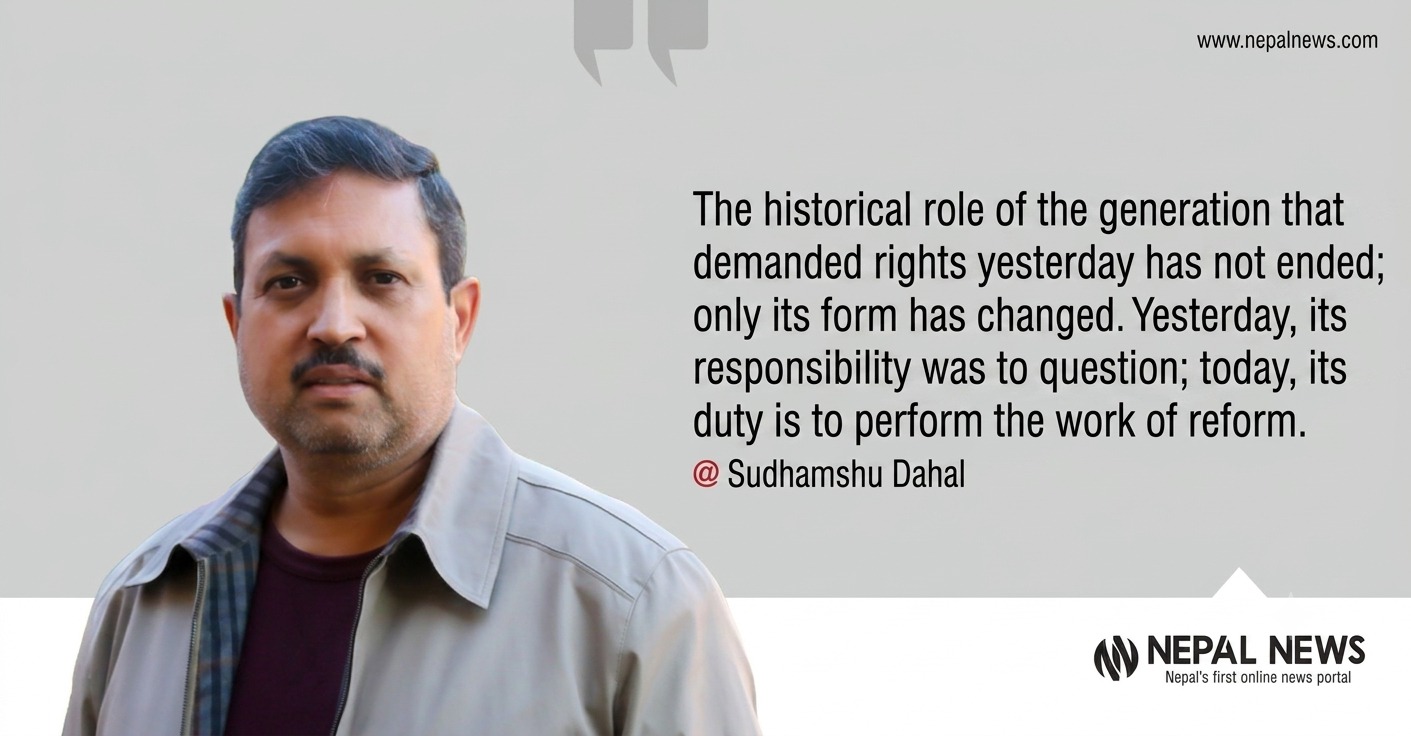
The historical role of the generation that demanded rights has not ended. Only its form has changed. Yesterday, its responsibility was to ask questions. Today, its duty is to provide answers.