Kathmandu
Friday, June 12, 2026






KATHMANDU: Nepal News presents today’s snapshot of Nepal’s economic activities. Get quick updates on major market movements, policy shifts, and financial developments shaping the economy of Nepal. Here are the key economic highlights for today:
NRB to Withdraw Rs 40 Billion to Manage Excess Liquidity
The Nepal Rastra Bank (NRB) has initiated a process to withdraw Rs 40 billion from the banking system to manage excess liquidity. The central bank is using a 160-day deposit collection instrument as credit demand remains low. Licensed “A”, “B”, and “C” class financial institutions participated in an online bidding process, with priority given to those offering the lowest interest rates, currently averaging around 3%. Participating institutions must bid a minimum of Rs 100 million. The principal and interest for this liquidity siphon are scheduled for payment on October 7. This move follows standard open market operations where the central bank can collect deposits for up to six months.
NEPSE Slips 2.95 Points as Turnover Climbs to Rs 7.81 Billion
The Nepal Stock Exchange (NEPSE) edged down by 2.95 points on Wednesday to close at 2,804.17, a 0.10 percent decline. However, the Sensitive Index rose 0.65 points to 471.22, up 0.13 percent. A total of 17.58 million shares of 342 companies were traded through 121,433 transactions, generating a turnover of Rs 7.813 billion, higher than earlier sessions this week. Market performance was mixed, with 121 companies gaining, 138 declining, and 10 unchanged. Five sector indices posted gains, including Finance and Non-Life Insurance, while eight declined, led by a 2.36 percent drop in the Hotel and Tourism group.
SSF Increases Home Loan Limit to Rs 15 Million
The Social Security Fund (SSF) has doubled its home loan limit for contributors to Rs 15 million, effective April 17. Previously, the maximum loan amount was capped at Rs 7.5 million. The fund is offering these home loans at an annual interest rate of 5.85%. Contributors can access loans based on their collateral value and monthly installment repayment capacity. In addition to housing, the SSF provides credit facilities under four categories: home loans, educational loans, social work loans, and special contributor loans. This move is intended to leverage the fund’s resources to provide more substantial financial support to its contributing members.
Birgunj Customs Records Rs 694 Billion Imports in 9 Months
Imports through the Birgunj border reached Rs 694.05 billion during the first nine months (July 17, 2025, to April 13, 2026) of the fiscal year 2025/26, marking a 13% increase compared to the same period last year. Petroleum products remained the highest import at Rs 148.16 billion, up from Rs 140.10 billion in the previous year. Other significant imports included iron and steel products worth Rs 62.26 billion and crude soybean oil valued at Rs 50.40 billion. Machinery and spare parts accounted for Rs 49.13 billion. The customs office collected a total revenue of Rs 177.66 billion during this timeframe.
Inland Revenue Office Collects Rs 3.976 Billion in 9 Months
The Inland Revenue Office reported a total revenue collection of Rs 3.976 billion during the first nine months (July 17, 2025, to April 13, 2026) of the fiscal year 2025/26. The amount was slightly below the target of Rs 4.338 billion. Breakdown of the collection includes Rs 1.888 billion from excise duty and Rs 1.149 billion from income tax. Value Added Tax (VAT) contributed Rs 819.4 million. Authorities have initiated legal action against 125 firms for non-payment, resulting in 10 firms immediately depositing Rs 43 million. The office currently oversees 166,652 registered taxpayers.
Ministry Reserves Market Stalls for Farmers to Cut Middlemen
The Ministry of Agriculture and Livestock Development has mandated that 10% of stalls in wholesale markets and 50% of stalls in local farmers’ markets be reserved exclusively for farmers. This decision aims to reduce the influence of middlemen and ensure farmers receive fair prices by selling directly to consumers. The ministry directed the mandatory management of “Farmers’ Sheds” in 11 wholesale markets, including the Kalimati Fruit and Vegetable Market. For local markets, at least half of the total area must be allocated for local production. If existing structures are currently non-operational, authorities have been ordered to bring them into use immediately to facilitate the direct sale of indigenous and commercial agricultural products by Nepalese farmers.
Cross-Border Shopping Drops by 80% in Mahottari Districts
Shopping activity in Indian border markets neighboring Mahottari has plummeted by 80% following strict enforcement of customs duties on goods valued over Rs 100. Local traders in Jaleshwor and Matihani report a significant decrease in consumers crossing into India for daily essentials. Consequently, local markets like Bardibas are experiencing increased footfall, positively impacting the regional economy for groceries and electronics. However, consumers have expressed dissatisfaction regarding higher prices and limited choices in domestic shops compared to Indian markets like Madhwapur. While individual cross-border shopping has declined, authorities noted that organized smuggling groups remain active, prompting 24-hour surveillance by the armed police force and police to secure the border and ensure legitimate trade.
Government to Invite Tenders for Sunkoshi Marin Diversion ‘Headworks’
Tenders for the construction of civil structures, including the Headworks and powerhouse for the Sunkoshi Marin Diversion Multipurpose Project, will be invited within April. This follows an executive order issued on April 16 to restart the procurement process within 120 days. Previously, a contract with Patel-Raman JV for Rs 14.08 billion was terminated in November 2025 due to slow progress, which stood at only 10% despite Rs 2.14 billion in payments. The project, valued at Rs 49.42 billion, aims to provide year-round irrigation to 122,000 hectares across five districts in Madhesh Province and generate 31 megawatts of electricity.
Planning Commission Recommends Rs 44 Billion for Major Road Projects
The National Planning Commission recommended multi-year source approvals totaling Rs 44.336 billion for 13 infrastructure projects as of April 17. A significant portion, Rs 29.071 billion, was allocated for seven sections of the Postal Highway, including bridges. Other major allocations include Rs 3.15 billion for the Beni-Jomsom-Korala section of the Kaligandaki Corridor and Rs 3.94 billion for the Mirchaiya-Katari-Ghurmi road. Additionally, Rs 2.43 billion was approved for the Dobhan-Barun section of the Khandbari-Kimathanka road. The commission also recommended Rs 323.7 million for the feasibility study of the Kathmandu Valley Metro Rail.
Embankment Construction Intensifies to Protect Susta from Narayani River
Construction of a 900-meter embankment in the Susta region of Nawalparasi (Bardaghat Susta Paschim) is progressing rapidly to mitigate erosion risks from the Narayani River. The project, valued at approximately Rs 140 million, is being managed by the Irrigation and Water Resources Management Project Office in Chitwan. A monitoring team, including the chief district officer, inspected the site on Wednesday to ensure quality standards and adherence to deadlines. Authorities have directed the construction company to complete the work before the onset of the monsoon season. The embankment is viewed as a critical long-term solution to safeguard local land and residences that face annual threats from high river currents.
Renewable Pellet Fuel Production Begins Using Local Waste in Jhapa
The Parajuli Biomass Briquette Industry started the production of renewable pellet energy in Mechinagar-15, Jyamirgadi, utilizing discarded local resources. The facility has a production capacity of up to 70,000 kilograms of pellets every 12 hours. These pellets serve as an eco-friendly alternative to coal and firewood for industries such as tea, cement, and iron. The process involves using advanced technology to convert sugar cane husks, dried leaves, bamboo scraps, and wood fragments into granular fuel. Authorities noted that this initiative contributes to fuel self-sufficiency by substituting imported coal with domestic biomass, with plans to export the product to other districts and India.
Babai Irrigation Project Costs Double Due to Construction Delays
The estimated cost of the Babai Irrigation Project in Bardia has escalated from an initial Rs 16.43 billion to Rs 33.19 billion. Although the project began in the fiscal year 1967/68, it remains incomplete as of 2026 due to design changes, financial management issues, and flood damage. Currently, over Rs 12.28 billion has been spent, with the goal to irrigate 36,000 hectares. While a dam was completed in 1992 for Rs 679.5 million, extensive work remains on 91 kilometers of main canals and 313 kilometers of branch canals. The project is now targeted for completion by the end of the next fiscal year.
Banke Farmers Adopt Triple-Cropping System Following Irrigation Expansion
Farmers in Banke have transitioned to a three-crop annual cycle following the expansion of irrigation facilities, moving away from a reliance on rainwater. Previously limited to monsoon paddy, farmers are now cultivating potato or mustard after the autumn harvest, followed immediately by spring maize. The Sikta Irrigation Project has been instrumental, providing direct irrigation to 24,000 hectares of land out of a target of 42,766 hectares by April. In areas beyond the canal’s reach, authorities have distributed boring equipment with a 50% subsidy. Currently, the district sees paddy on 33,780 hectares and spring maize on 3,500 hectares.
Local Unit in Makwanpur Launches Local Taxpayer Service Center
Manahari Rural Municipality in Makwanpur commenced local taxpayer services on Wednesday, aligning with federal policies to decentralize financial administration. The center, staffed by personnel trained at the Inland Revenue Office Hetauda, now allows residents to obtain personal and business Permanent Account Numbers (PAN), convert PAN types, and register for income tax locally. Additionally, the municipality will facilitate the collection and preliminary verification of documents for excise duty licenses, with final approvals granted digitally by the Inland Revenue Office. This initiative is expected to save time and reduce travel costs for local business owners who previously had to visit Hetauda for these administrative tasks.
Banana Prices Surge Amid Artificial Shortage and Import Ban
Businessmen have caused an unnatural price hike in bananas by creating an artificial shortage following a government ban on imports from India. Market prices for a dozen bananas have skyrocketed to between Rs 300 and Rs 400, despite farmers receiving only Rs 50 to Rs 70 per dozen for raw bananas. The Nepal Banana Producers Federation held a press conference on Tuesday, condemning the black marketing. Nepal requires 900,000 metric tons of bananas annually, with current domestic production at 700,000 metric tons. The federation has formally requested relevant authorities to intervene and control the price manipulation during the peak consumption months of April, May, and June.
Sarbottam Paints to Issue IPO for Migrant Workers in May
Sarbottam Paints Industries is set to launch its Initial Public Offering (IPO) for Nepalese citizens employed abroad starting May 4. The company received approval from the Securities Board of Nepal to issue 850,000 shares, representing 25% of its Rs 340 million issued capital. In the first phase, 85,000 shares will be offered at a par value of Rs 100 per share, totaling Rs 8.5 million. Interested investors can apply for a minimum of 10 and a maximum of 5,000 shares until May 7. Global IME Capital has been appointed as the issue and sales manager for this offering.
Gold and Silver Prices Drop Today
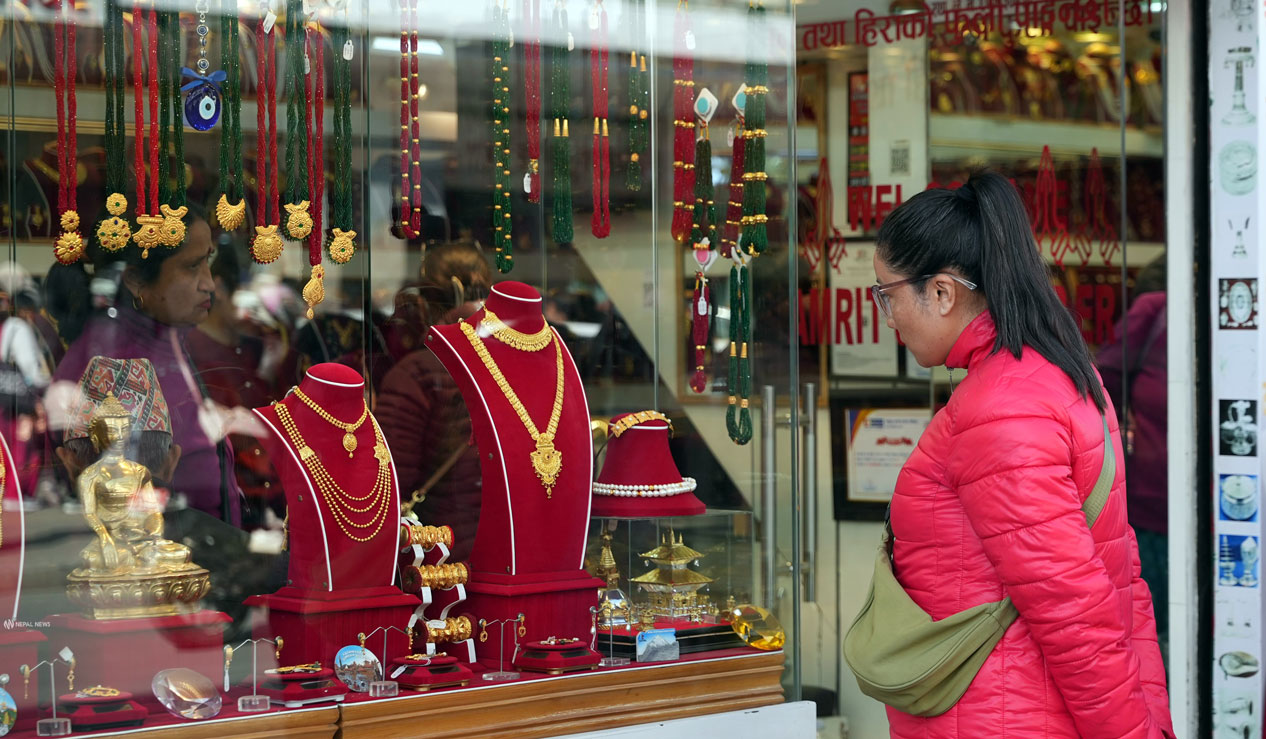
The price of gold in the market has decreased slightly on Wednesday. According to the Federation of Nepal Gold and Silver Dealers’ Association, the price of gold has fallen by Rs 800 per tola (11.66 grams) compared to yesterday. According to the rates set by the Federation for today, the price of fine gold has been fixed at Rs 300,500 per tola. On Tuesday, gold was traded at Rs 301,300 per tola. Similarly, the price of 10 grams of gold has been set at Rs 257,630 today. Along with gold, the price of silver has also seen a slight decline today. According to the Federation, silver is trading at Rs 5,130 today, down by Rs 30 per tola. Yesterday, the price of silver was Rs 5,160 per tola.