Kathmandu
Tuesday, July 14, 2026





Katahari's youth preserving their culture
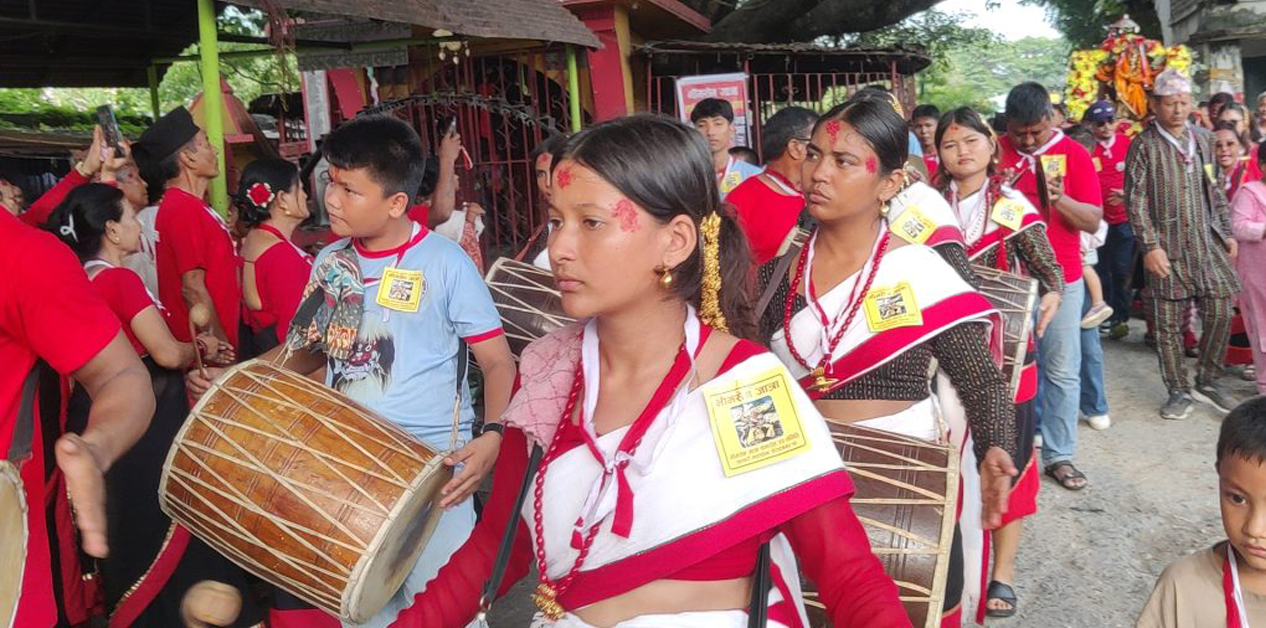
BIRATNAGAR: These days, 14-year-old Aashika Shrestha’s hands are not confined to notebooks and pens alone. Outside of school hours, she has started immersing herself in Newari rhythms with a dhime drum slung over her shoulder.
Aashika, from Katahari Rural Municipality-1 in Morang, has been following in the footsteps of her elders for a year now, devoting herself to preserving the dhime drum. She is not alone; this youth group in Katahari also includes 19-year-old Ritu Shrestha, 25-year-old Ashish Shrestha, 20-year-old Angel Tuladhar, and 25-year-old Laxmi Rajbhandari.
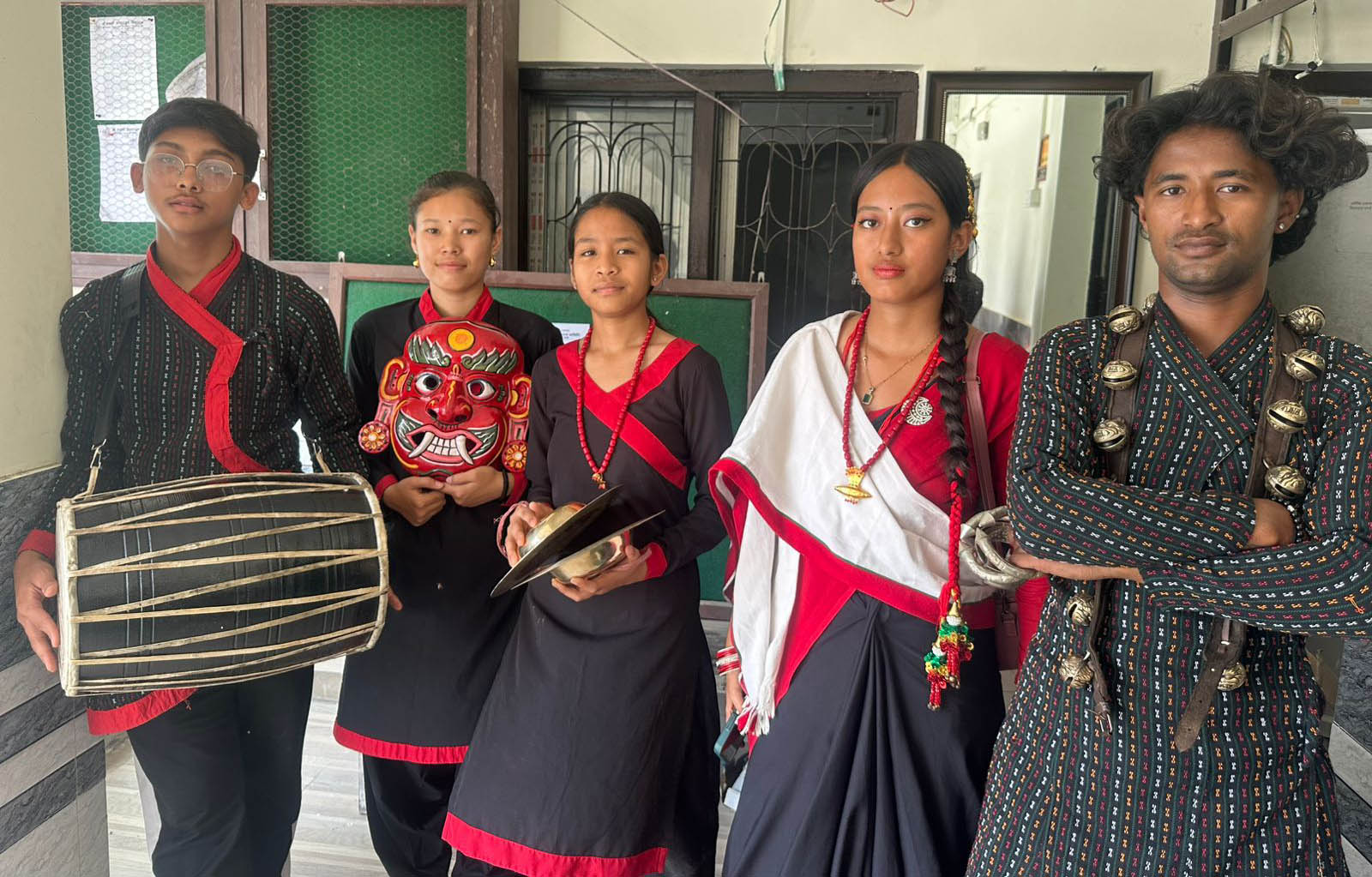
Newar youths who play the dhime drum and other traditional instruments.
They can now be found travelling to rural settlements across Morang, spreading the melodies of Newari tradition. As the fascination with Western culture grows among the younger generation, this group has committed itself to preserving the language, religion, and culture upheld by their ancestors. “Before, being Newar but not knowing how to play my community’s instrument used to make me feel sad,” Aashika says, “Now that I have started learning the rhythms, I am happy. It brings me joy to be able to play an instrument I had only ever seen on television.”
A campaign of generational transmission
In the Newar community, the dhime is played on all auspicious occasions except times of mourning. After it became apparent in recent times that this art form was nearing extinction, youth in Katahari formed ‘Newa: Deya Dabu’ and launched a conservation campaign. According to the organization’s chairperson Laxmi Bhakta Rajbhandari, more than 20 young people are currently receiving instrumental training through this group.
“Our art and culture is not confined to the Kathmandu Valley alone. Its importance is just as great outside the Valley too,” says chairperson Bhandari, “If the younger generation failed to show interest, there was a fear that our identity would be lost. That is why we began training with the goal of generational transmission.” This group does not only play instruments; it has also prepared a separate team for the Lakhe dance. The moment a fair, festival, or any cultural program takes place in the villages, this team arrives carrying jhyali, madal, and dhime.
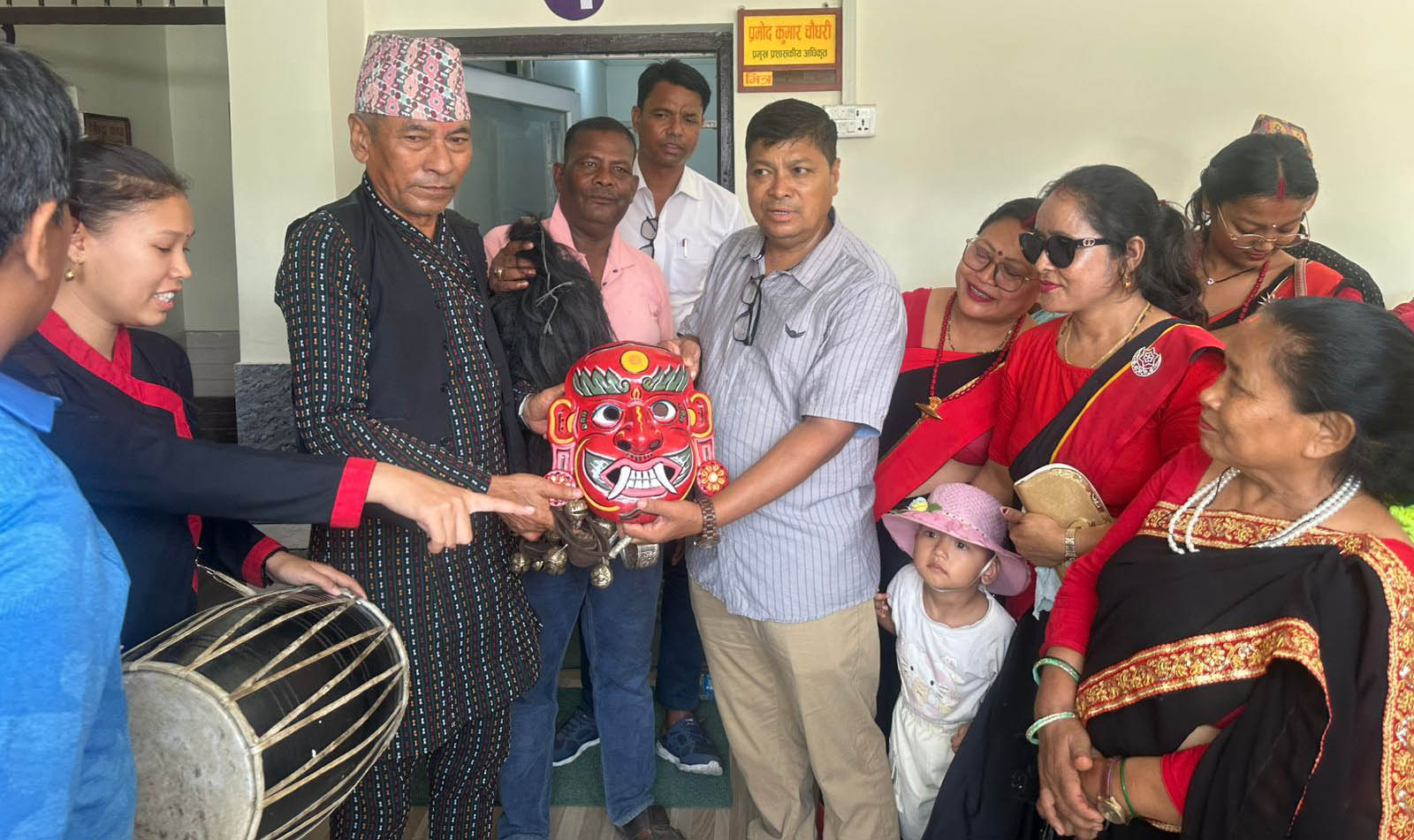
Participants, including Katahari Rural Municipality Chairperson Dev Raj Chaudhary, distributing materials for the Lakhe dance to Newa: Deya Debu.
The dhime, madal, and jhyali were traditionally known as instruments played exclusively by men. In Katahari, however, this social norm has changed. Women too have begun joining the dhime’s rhythm with the same enthusiasm as men. Young women like Ritu have taken the initiative themselves to learn this art. “Now we can play instruments confidently at any cultural program,” Ritu says, “Although it felt a little awkward at first to hold the instrument and keep the beat, I have started finding real joy in it now.”
Support from the municipality
Katahari Rural Municipality has also extended support to the campaign started by the youth. On Tuesday, the municipality provided Newa: Dey Dabu with jhyamta, Lakhe costumes, madal, and other cultural materials. According to Katahari Rural Municipality chairperson Dev Raj Chaudhary, preserving the language and culture of every community within the municipality is a responsibility of local government. “We have been providing the necessary materials and support to preserve the identity not just of the Newar community but of all communities within the municipality,” chairperson Chaudhary says, “Only if culture is preserved will our distinctive identity endure.”
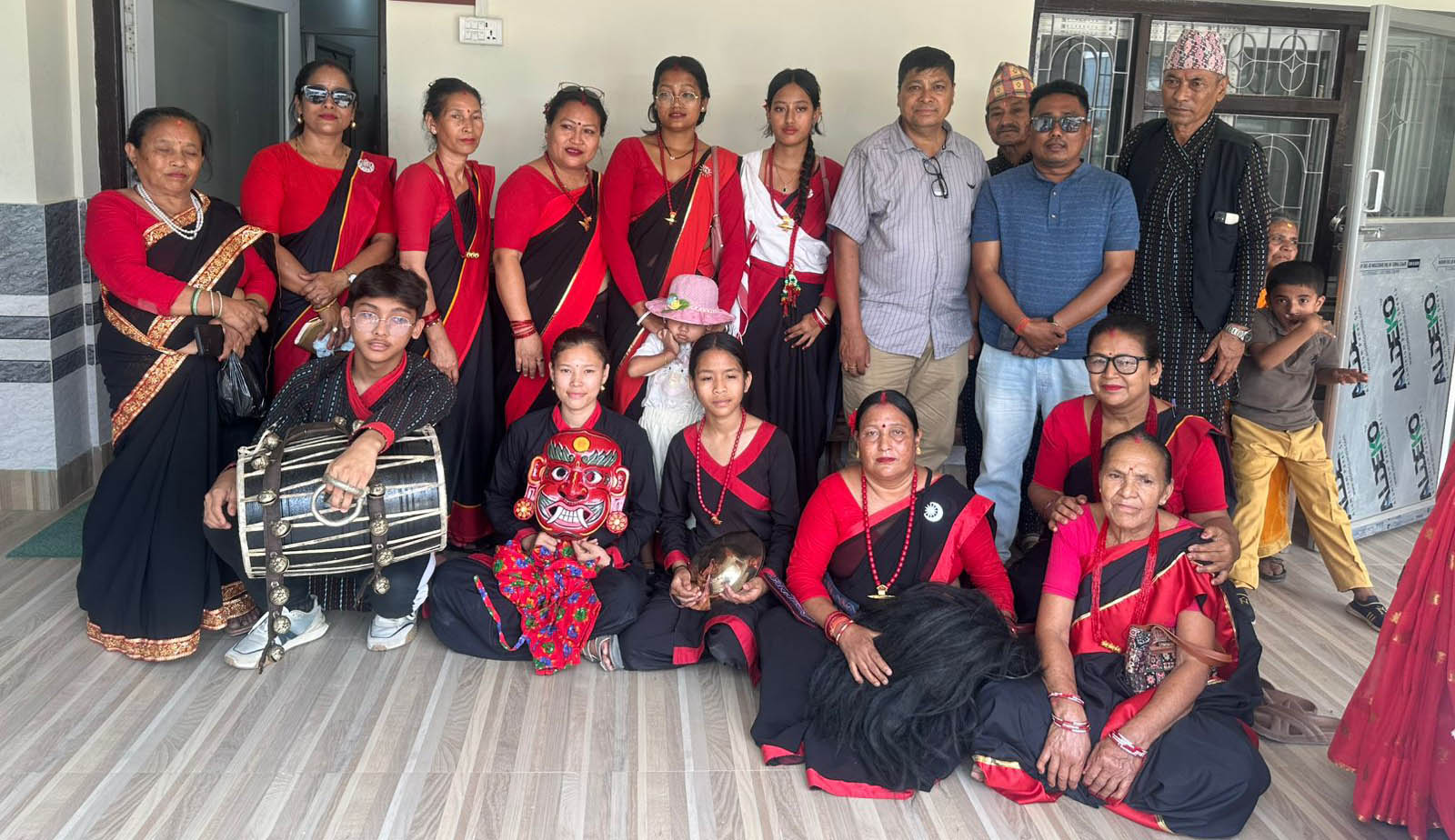
Office bearers and members of the committee who have been working by forming Newa Deya Debu in Katahari-1 to preserve the language, religion, and culture of the Newar community.
The enthusiasm of the younger generation and the support of local government have given Newari culture new life in Katahari. This art, being passed from the older generation to the new, has become an exemplary cultural link for the rural areas of Morang, says ward chairperson of Katahari Rural Municipality-1, Hari Narayan Rajbanshi.